"Playing football was like being somewhere, it was like your own world inside a world, with it’s own rules, where I was happy. Yes, for Christ’s sake, that was what it was all about: happiness. Being somewhere else apart from inside yourself."
- Karl Ove Knausgaard
I’m glad to see that @MightyHeaton has rereleased his excellent 2024 episode of The Political Orphanage podcast , “Cicero and the Founding Fathers,” featuring @RosenJeffrey .
https://t.co/H44fst8Dy2
The old BBC "Industrial Revelations" series is a great overview of what makes an Industrial Revolution
Steam alone wasn't enough, it required thousands of skilled workers figuring out how to apply this new power to their old work
There's a lesson there. https://t.co/ovQNFduLHI
If you’ve ever found yourself watching YouTube videos on Tudor England (or fictional depictions thereof), there’s a good chance you’ve encountered @Joanne_Paul_. Her breakdowns of shows like Wolf Hall and movies like The Other Boleyn Girl have been viewed millions of times.
A historian at the University of Sussex, she tells @tylercowen that she's drawn to the 16th century because it sits between the medieval and the modern, and because its paths not taken are a way of asking whether our own world had to turn out this way.
Her latest book is a biography of Sir Thomas More, a man she argues was central to the making of modern Europe.
Questions from this episode:
· If More was so dogmatic, what about him did Erasmus admire so much?
· More oversaw the persecution of heretics, endorsed torture, and was misogynistic... Was he just a bad guy?
· When history is portrayed in movies, what's the biggest general bias that you feel?
· What precursors of the scientific revolution do you see in Tudor England, other than education?
· Other than being a woman, what was it that ruled you out of being upwardly mobile?
· What’s the biggest puzzle in Canadian intellectual history?
· Not counting London, Cambridge, or Oxford, where is your favorite place in England?
· How is the Anglican Church doing these days? Do you despair?
Watch here or search for Conversations with Tyler on your favorite podcast app.
https://t.co/zniqZpcZ4f
Michael Pollan tells the story of George Plimpton, co-founder of The Paris Review, and how he persuaded the Detroit Lions to let him start as quarterback in an exhibition game.
"George Plimpton had this idea that he could revivify sports writing by getting on the field himself.
Instead of the cigar-chomping guy on the sidelines, the cynical voice of the usual sports writer in the press box, you were on the field.
And you had this experience you could only get when you do something for the first time. No number of interviews would give you the same vividness."
Plimpton kept throwing himself into the arena and gaining perspectives no other journalist could match:
"He did cymbals with the New York Philharmonic under Leonard Bernstein. He pitched a baseball game.
He used this technique several times, and I just loved what it produced. You get humor from it, because invariably you're a fish out of water. You're not very good at what you're doing. You might get killed."
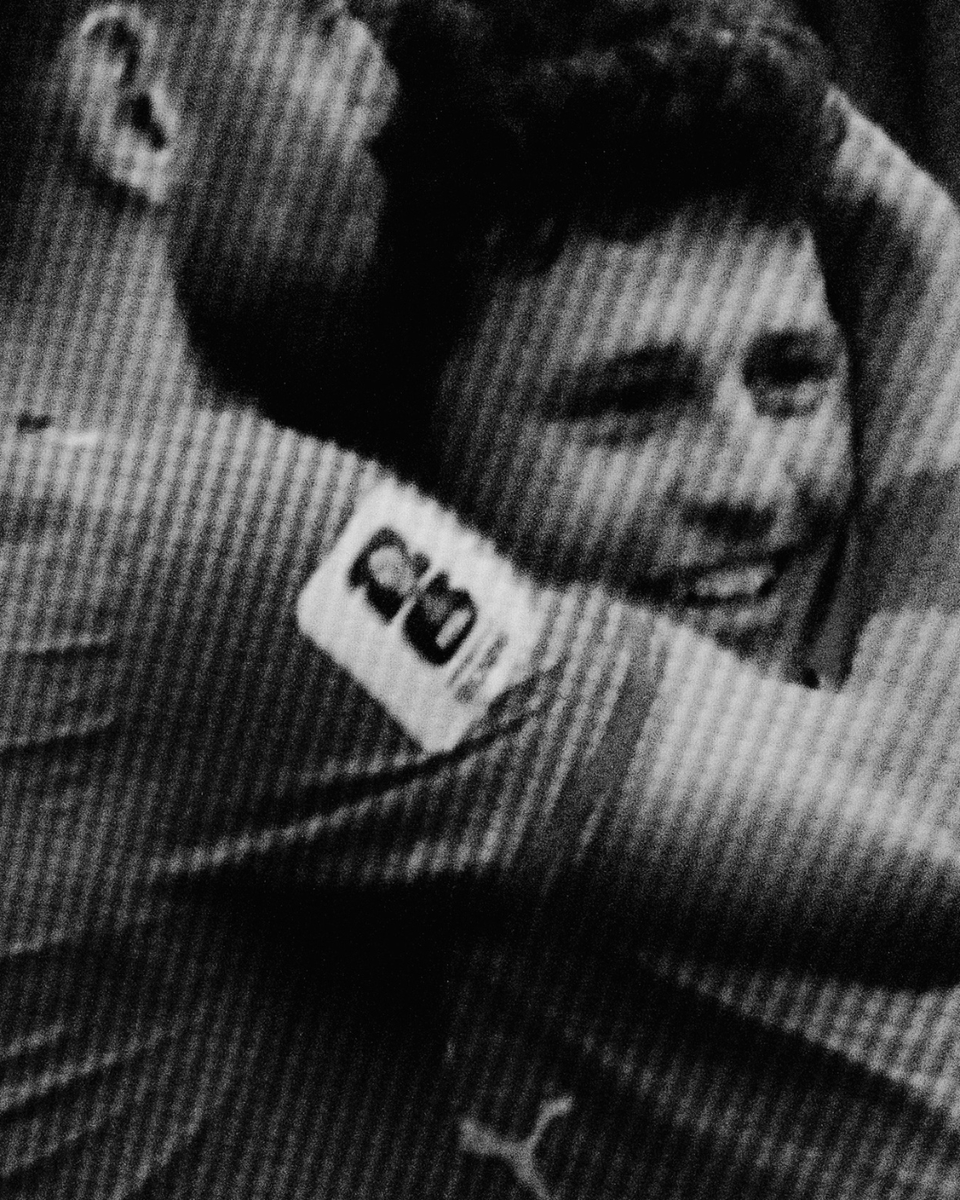
Là où certains voient un match à l’écran, Florence Pernet a vu une matière à photographier.
Reflets, pixels, ralentis, cadrages imparfaits : en shootant la Coupe du monde depuis son salon, elle transforme la diffusion télé en terrain d’expérimentation visuelle.
Une série qui ne cherche pas à documenter le sport comme on le voit d’habitude, mais à en capter les accidents, les textures et les instants presque abstraits.
La preuve qu’une grande image ne dépend pas toujours de l’endroit où l’on se trouve, mais surtout du regard qu’on pose dessus.
📷 : @Flo_Pernet
Joyce Carol Oates has published 66 novels; 50 short-story collections; more than a dozen novellas, plays, essay collections, children’s books, and books of poetry; and several memoirs. But her public image isn’t only about the books anymore. For an author who has been a rumored Nobel contender on and off since the ’80s, she is curiously underread. In another way, she has become very well known for her second life on X, which she joined at her former publisher’s suggestion in 2012. Now, she posts many times a day, sometimes late into the night. Her account there is excessive and loose, a counterweight to her essays and memoirs, which can seem opaque and professorial.
In one day this May, for instance, she tweeted 36 times about the following subjects: boxing, the Lincoln Memorial Reflecting Pool, shortened attention spans, Jonathan Swift, ‘Madame Bovary,’ ‘Jude the Obscure,’ people who read works of classic literature too quickly, her late husband, the Elizabeth Taylor ‘Cleopatra,’ the Unabomber, and her cats, Zanche and Lilith. Once, she shared a picture of several giant yellow and purple-brown blisters on her bare foot. Some of her tweets have become minor classics, like one from 2021 describing “wan little husks of autofiction.”
“At the time, I was reading Percival Everett about lynching in America, and here’s some little auto thing about somebody who got divorced, some white woman,” she tells Emma Alpern. “Like, what?” She seems ambivalent about the platform. “I think, ah — it’s sort of just a waste of time, basically.”
Read Alpern’s full profile of the author: https://t.co/lg0fICt49r
A very kind endorsement of @WorksInProgMag from the peerless and inspiring @kevin2kelly. https://t.co/iE6P1PO2h7
You can (and should!) subscribe over at https://t.co/lqpiAsucr2.
This week, the podcast welcomes @tylercowen on aesthetics, new and otherwise.
Link below. Clips here:
* David Hockney: underrated?
* New Aesthetics and modern architecture
* Tech wealth and public spaces
* AI art: a portfolio approach
I broke. I am starting my substack. But not in the way you think.
For years, I kept writing myself research notes about ongoing work; thoughts about future research; thoughts about how to expand on a given item of work I was doing; ideas on how to build up new work; comments about papers I read; ideas from papers I read.
I kept all of that in my booklets. Written by pencil since there ain’t no better school than the old school. But maybe I was wrong. Ideas need to be shared to copulate. Others may have better ideas than I do. And so, here it is, I am simply shifting from pencil and paper to substack and keyboard.
I’ll share my research “thoughts” as a diary. Read it. Or don’t if the topic bores you. I am just doing what I was already doing but showing it to all to see if ideas can indeed copulate, be taken up or expanded.
I'll cross-post them here anyways.
Best
V
NEW: In our annual report, we wrote about the potential of agentic philanthropy.
Today, I’m excited to announce Overhang, our first project on how AI can accelerate philanthropy itself.
Our goal will be to rapidly test, iterate, share, and partner. Ideas and help are welcome!