What drives microbes to be more (or less) antagonistic to hosts? Check out our new review @kaylacking @emstevens93 to explore some of the driving factors with lots of examples. #symbionts#evolution
https://t.co/ZOUJZzM9Mv
Another computational chapter during my PhD is out on bioRxiv! Using a meta-analysis compiling experimental studies from 1996-2021, we found that how warming impacted pathogen virulence depends on pathogen kingdom and host-pathogen evolutionary history more than host traits!
Looking for a PhD position on host-microbe interactions? Consider applying to our international graduate program @MPI_Bio: From Molecules to Organisms!
My lab is currently recruiting a student as part of our funded @DFG_Public grant to work on insect-microbe symbioses!
Microbes can help us recycle plastics, make foods and survive pathogen infections. Sign up to an evening of science + art to find out more. Next Tuesday👉 https://t.co/S0c38ezfRA
Talks from @OxfordBiology@oxfordgeography
Supported by @BritishEcolSoc @OxResServ @OxfordUniEvents
Some viruses do this crazy thing where the genome is split into different fragments, which are then each transmitted separately. We show that this can evolve quite easily by selection for 'cheating'. https://t.co/Ade6tth3ia
We hear about the harm microbes cause, but what about all their benefits? From gut microbiomes to plant symbioses, join this event to find out more about these unseen workers and the part they play in our lives 🦠
Register 👉 https://t.co/bwrV4jOYIn
Are you dab hand at ecology and evolution with experience of field teaching? Then come and join us! @ModEviPol and @ecology_ncl are advertising for a Lecturer in Ecology and Evolution. Get in touch if you are interested! See https://t.co/4qC1myfrRn
Finally out, thanks to the wonderful coauthors:
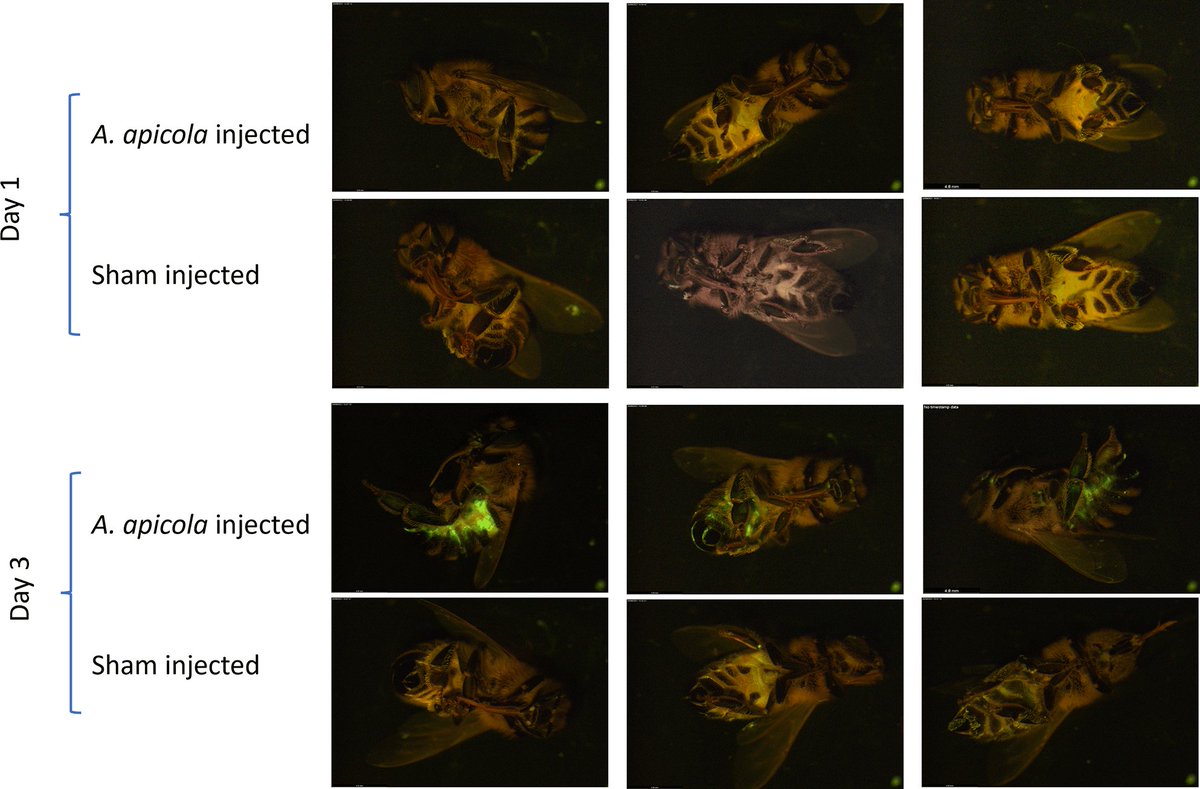
Isolation, culture and characterization of Arsenophonus symbionts from two insect species reveal loss of infectious transmission and extended host range https://t.co/FENmbQf9mn
Major initiative in ecological sciences at @LivUni_IVES
3x lectureships and 1x chair available in ecology (defined broadly). Be part of a collegial dept. Great facilities to support your research @CGR_UoL
Closes 16th March
https://t.co/xuUlDNHdjc
https://t.co/qge9vU0p7q
In this new preprint @AmelieCabirol shows that a defined community of bee gut bacteria, but not its individual constituents, promotes cognitive performance in honey bees. This suggests that the effect on the host is an emergent property of the community! https://t.co/dj26jREfO7
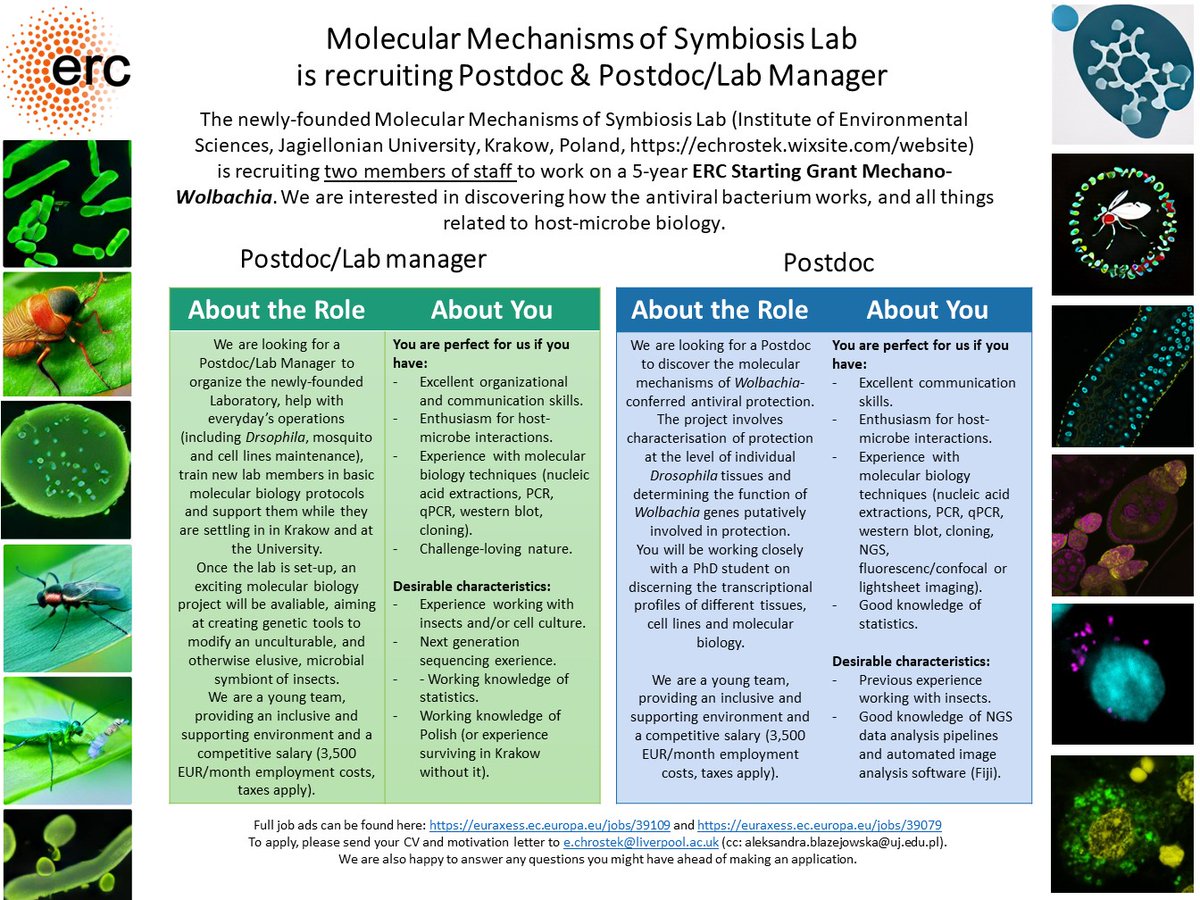
Happy New Year everyone! If you want a new job in molecular mechanisms of symbiosis in 2023, you are in luck, our calls are still open! Deadline 20th Jan! #Wolbachia 🪰🦠👩🔧👨🔧🧰
https://t.co/qSMSDZqJAc
https://t.co/15LlwqnuE8
The ZSL Scientific Medal is awarded to 3 researchers who have made an outstanding contribution to their field within 15 years of completing their PhD
Professor Kayla King, University of Oxford, is awarded the ZSL Scientific Medal
👉https://t.co/8QLsmifdLF
7/12
How does Angomonas control the number of its bacterial endosymbionts? New paper from our lab finally out! Great team effort, guys! #endosymbiont#protist#evolution https://t.co/V8HERoOYMP
December issue's #EditorsChoice
OA Immune-mediated competition benefits protective microbes over pathogens in a novel host species https://t.co/QcJELjeJi9
@kaylacking @SuzanneAFord@GC_Drew
My newly-founded lab in Poland is hiring two postdoctoral researchers :)
Deadline 20th January 2023
Come, join us in beautiful Krakow!
https://t.co/qSMSDZ98bC
https://t.co/15LlwqF5vG
#postdoc#postdocjobs#symbiosis
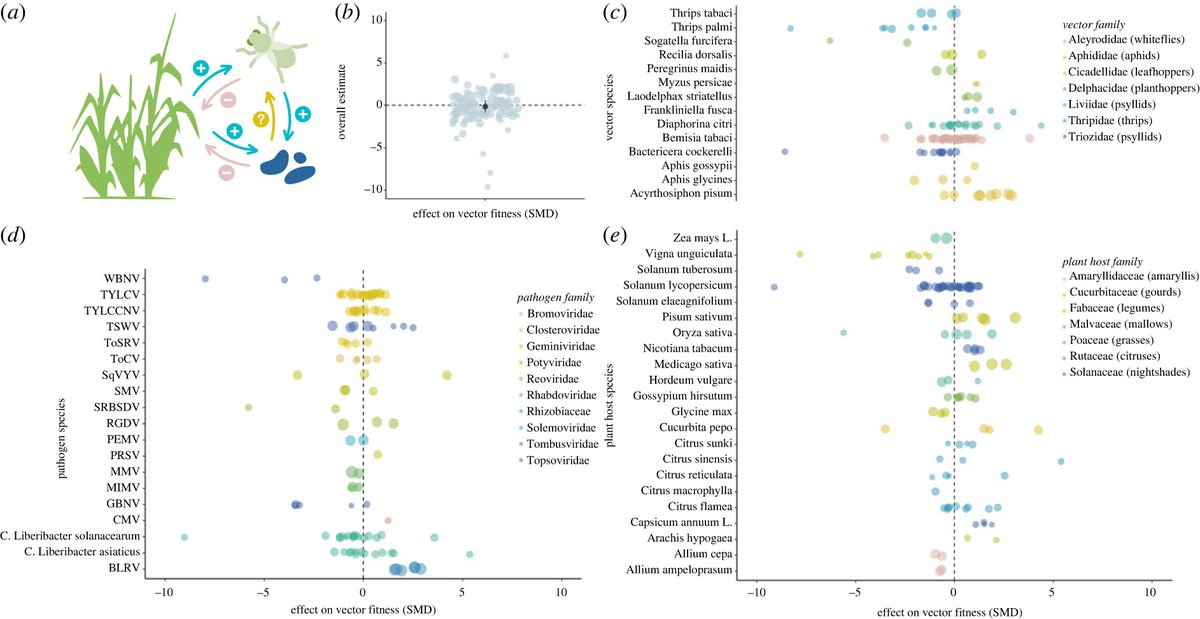
It’s often thought #vectorbourne microbes should cause little harm to their vector host, as they rely on this host for transmission. We explore this idea in our preprint👇 on #plantpathogens, with @kaylacking and the hardwork by @santiago_mf_ 🌿🪲
https://t.co/SxCwBB7BOa