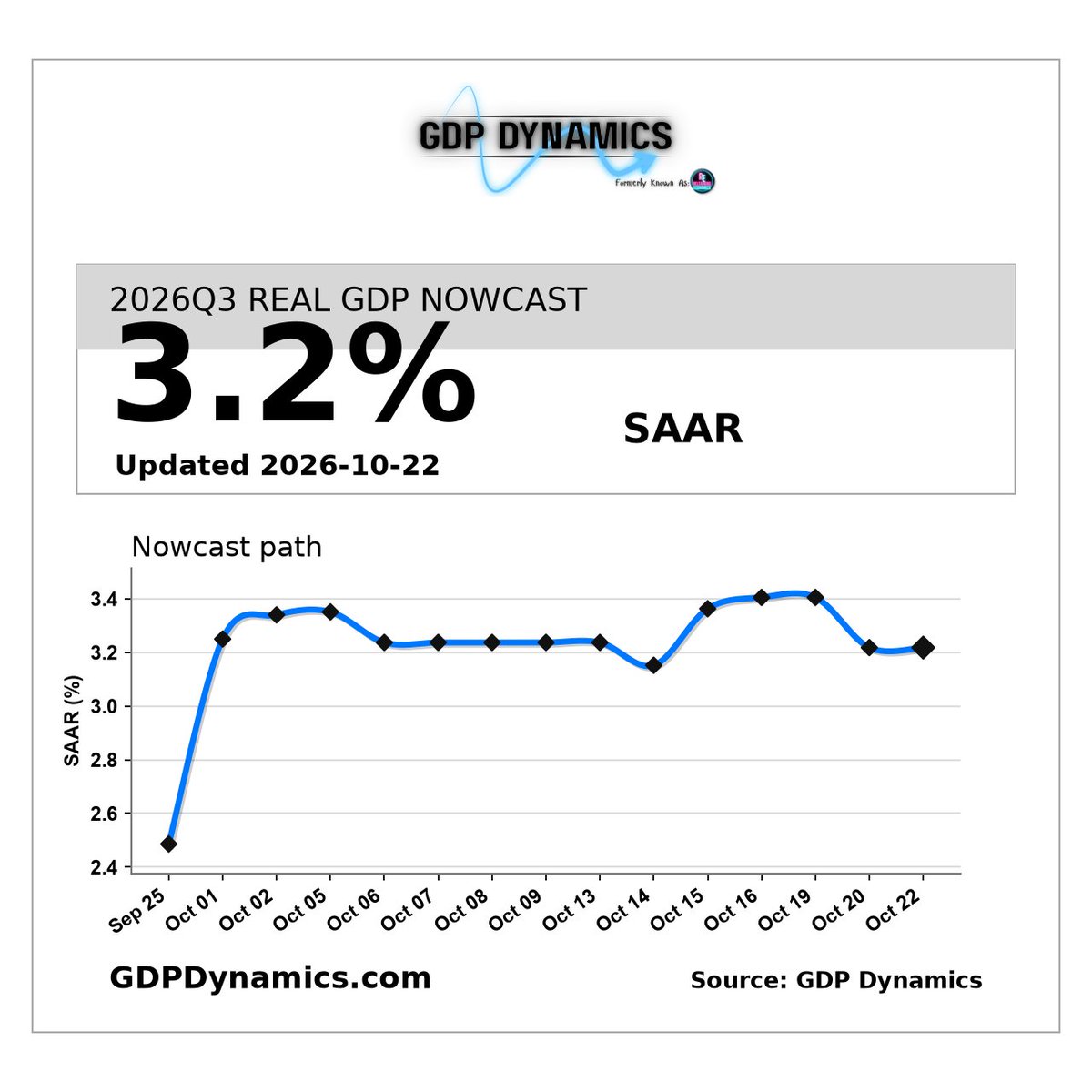
The GDP Dynamics Q3 GDP nowcast remains unchanged at 3.2% annualized as of October 26.
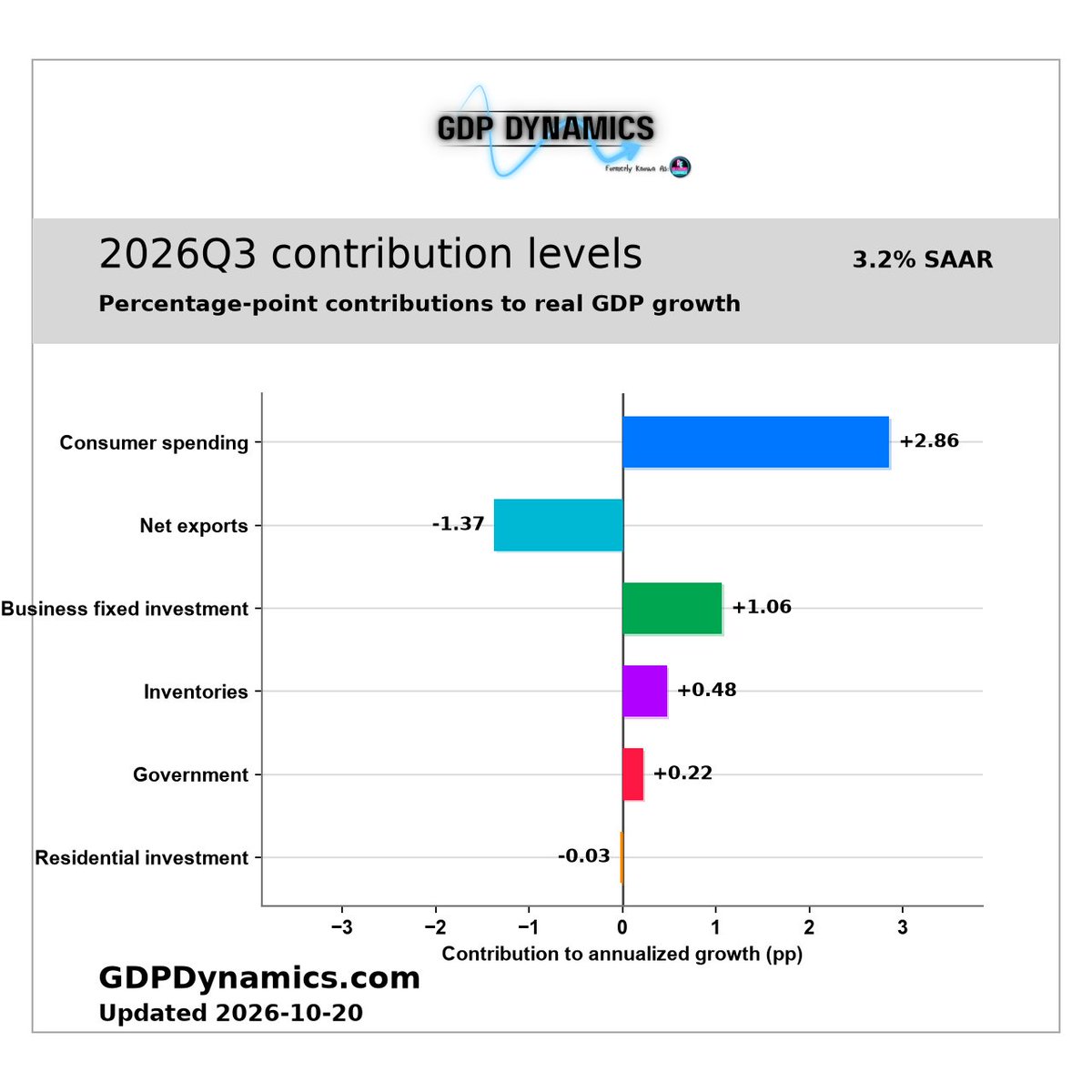
Consumer spending and business investment continue to support growth, while net exports remain a significant drag.
Just 3 days until the official GDP release.
Full article below 👇
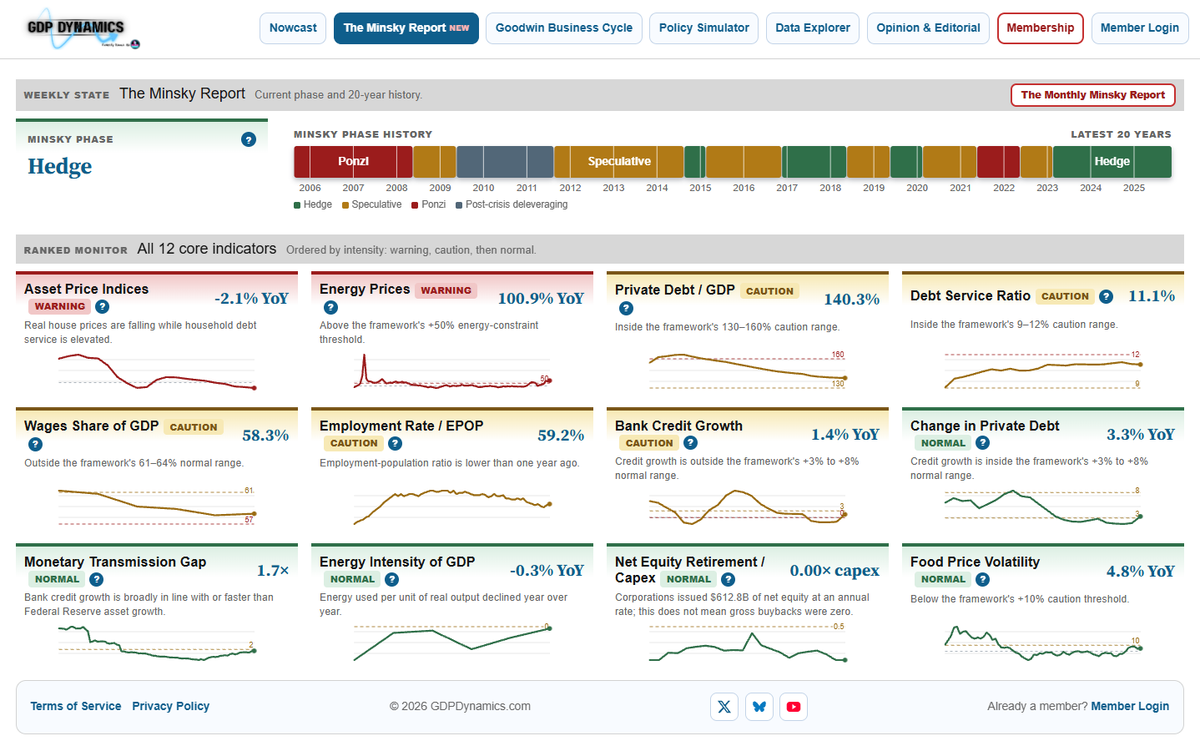
The Minsky Report has been launch at: https://t.co/zm1JioZ3OH
A free dashboard is available for all, and a in depth monthly report for paid subscribers at: https://t.co/0sxg0OXcUs
The GDP Dynamics Q3 GDP nowcast holds at 3.2%.
The underlying estimate slipped from 3.218% to 3.178%, as consumer spending softened slightly.
Business investment remains strong, while net exports drag on growth.
Full article in the next post below. 👇
The GDP Dynamics Q3 GDP Nowcast remains unchanged at 3.2% annualized growth.
Business investment continues to contribute positively, while net exports remain a substantial drag on growth.
No revisions since October 20.
Full article in the post below. 👇
The GDP Dynamics Q3 GDP nowcast fell from 3.4% to 3.2% today.
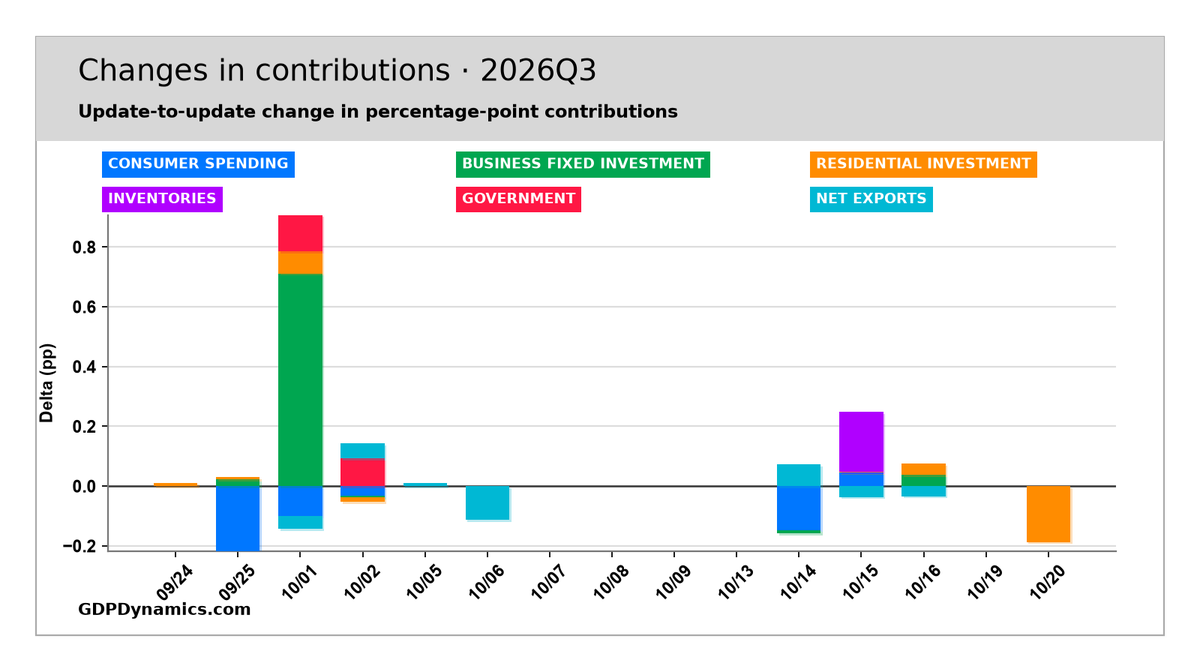
Weakening housing starts and building permits knocked 0.2 percentage points off estimated growth, as residential investment continues to struggle.
Full article in the next post below. 👇
A new dashboard is coming to GDP Dynamics next week. The dashboard board will be free for everyone at https://t.co/BF9pfGpuXg while the monthly in-depth report will be available to paid members at: https://t.co/0sxg0OXcUs
Beta testing is available for Pro & Platinum subscribers.
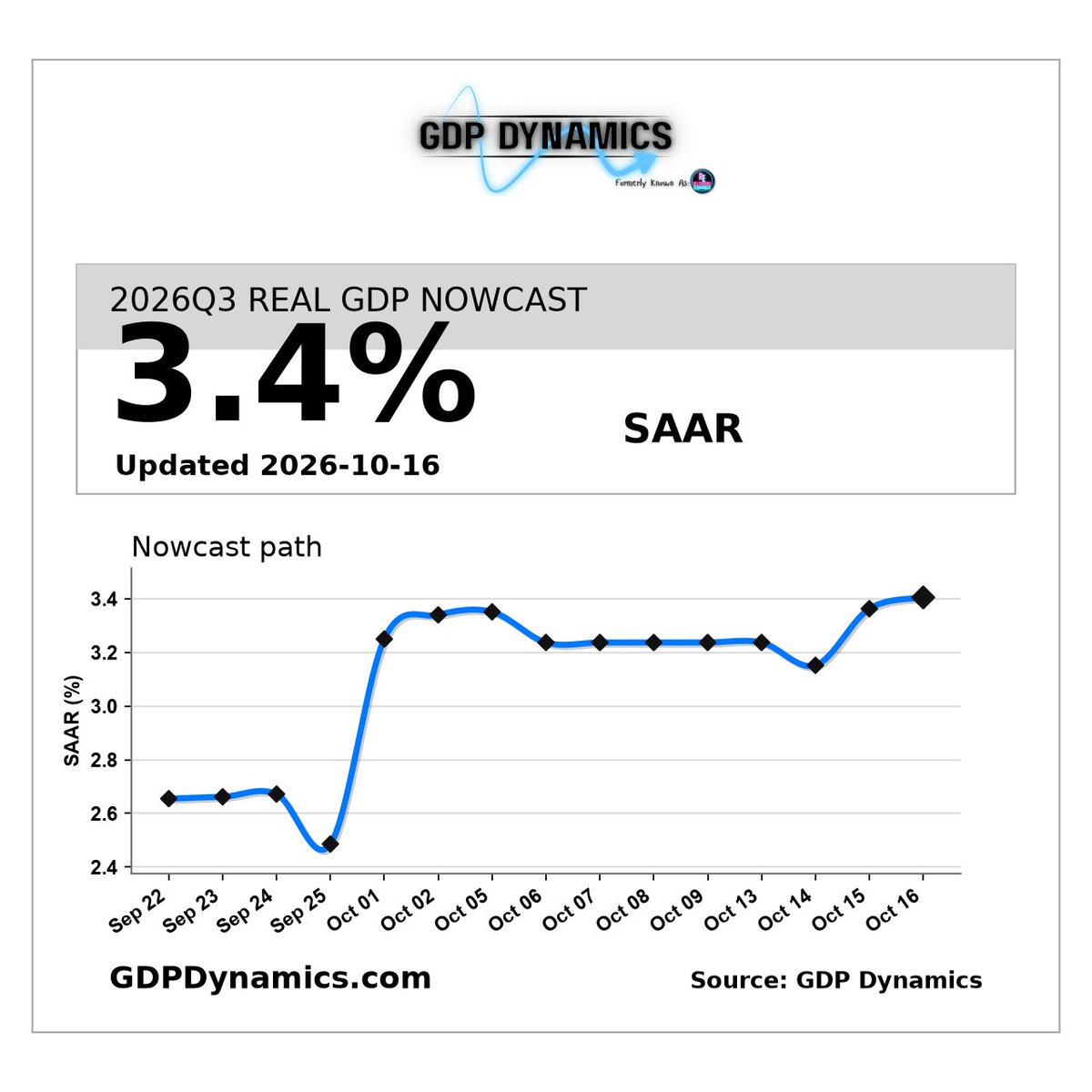
The GDP Dynamics Q3 2026 U.S. GDP nowcast remains unchanged at 3.4% annualized.
Consumer spending: +2.9 pp
Business fixed investment: +1.1 pp
Net exports: −1.4 pp
Just 10 days until the October 29 advance GDP release.
Full analysis below.👇
Every data series in the library are used in one of the 3 models in thr site a great deal of them are used in the nowcast model which you can view in the updates and release schedule. The others are used for the initial conditions in the policy model, and the balance is use for the Goodwin Business cycle model.
The GDP Dynamics Q3 2026 GDP nowcast holds at 3.4%.
The underlying estimate edged up from 3.363% to 3.405%.
September industrial production rose 0.7%, but manufacturing growth slowed sharply over Q3.
Full analysis and charts below 👇