GLOBE connects students, teachers, scientists, and the public from around the world to better understand the Earth. @NASA @NSF @NOAA and U.S. State Dept.
#ICYMI: Watch the GLOBE Program's 31st Anniversary Broadcast here. Thanks to everyone who joined us live to celebrate this incredible milestone! 🌏🥳
https://t.co/LYumRnAATT
Have you checked out the recap for GLOBE’s “Observe Like Artemis Challenge” that was held 22 April through 22 May? Find results from the Challenge and more at https://t.co/BwLaZM1UWK! Be sure to watch the recording of the GO Connect conversation with members of NASA’s Artemis II Lunar Science team.
During the World Cup, @GLOBEProgram invites you to help investigate the environment where soccer is played in your area.⚽️
Join your region's GLOBE Cup Challenge team to gather temperature & land cover observations.
Ready to kick things off? Visit: https://t.co/kkipaW0nuo
This #WorldRainforestDay, take a GLOBE Trees observation and contribute to science!
We observe trees to understand changes in biomass and effects on the carbon cycle. Your observations can also help scientists working on NASA missions like the Ice, Cloud and land Elevation Satellite-2 (ICESat-2).
Learn more at https://t.co/XL3fyNY8l6
Last chance to contribute to the spring North American Phenology Campaign! Measure leaf growth using GLOBE’s Green-Up protocol. Be sure to submit your observations using the GLOBE Observer app or data entry on https://t.co/ezbcq8Nus6 before the end of June to participate.
Learn more at https://t.co/EawuZgcZA6.
Decorate your classroom, home, or office with the GLOBE Community Poem, now available as an 18” x 24” easy-to-frame poster.
The GLOBE Community Poem is now also available as a book or greeting cards—and even as free downloadable PDFs—so you can experience it your way and share it widely. https://t.co/SGPOFBb0GB
Even from afar, wildfires are creating unhealthy air.
A NASA-supported study found wildfires have worsened ground-level ozone, or smog, across the U.S., with larger changes in the West and Midwest. Wildfires can increase surface ozone thousands of miles away from active fires.
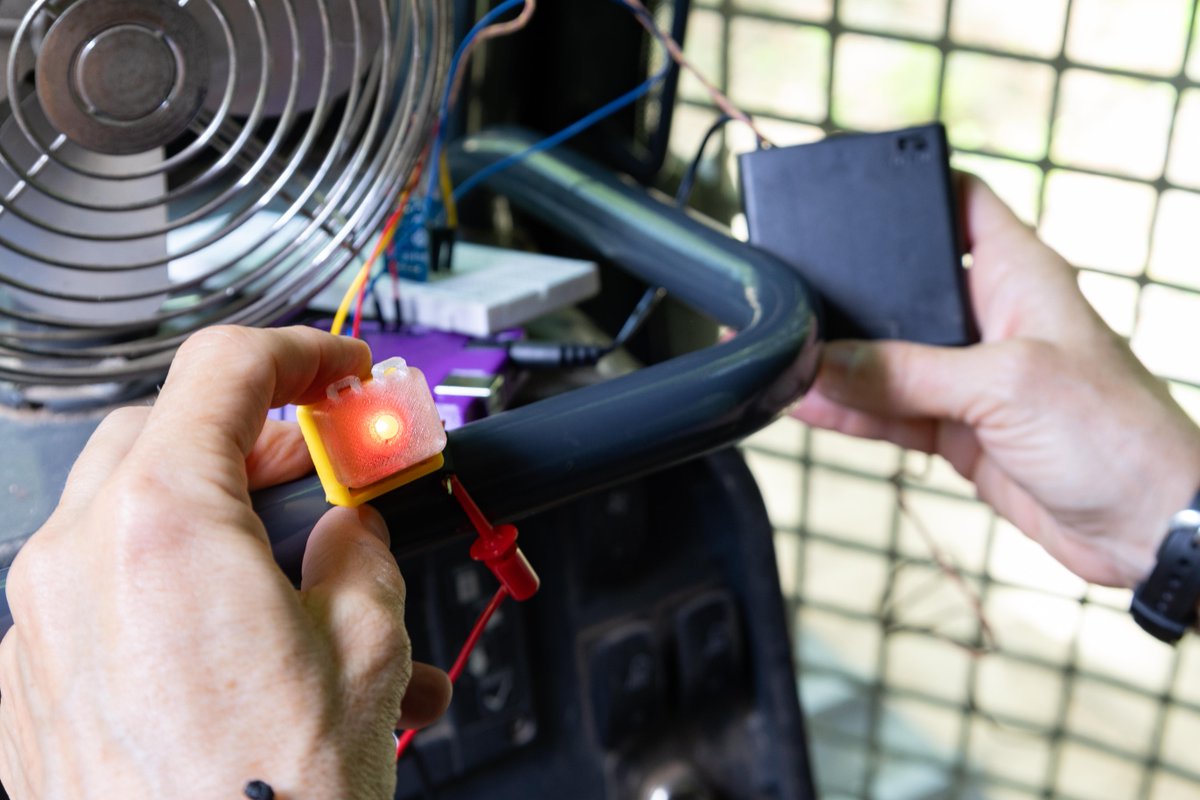
A NASA sensor is helping firefighters stay safe — and gathering critical science data! 🔥👨🚒
NASA’s FireSense project installed the sensors on fire bulldozers to alert the firefighters driving them when their surroundings are getting too hot.
How does @NASAEarth observe and measure global precipitation, aerosols & atmospheric chemistry, clouds, fires, sea ice cover, ozone, wind, biosphere, and sea surface temperature from space? Explore visualizations from the NASA Scientific Visualization Studio at @NASAGoddard showing how current and past satellite missions work together, orbiting Earth, to make their observations. See more at https://t.co/fp3WGjIDeu!
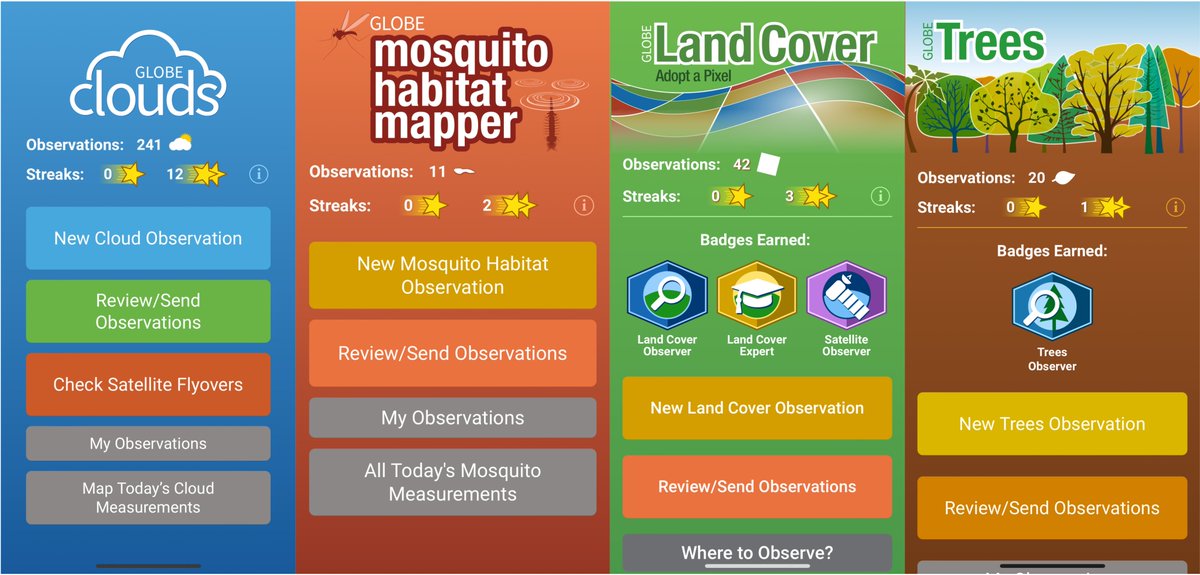
#DYK The GLOBE Observer app has streak awards and milestone badges?
You earn your first “milestone badge” when you submit your first observation. Earn “streaks” by making observations for 2 or more days in a row. The longer you submit daily data, the larger your streak will become. Learn more at https://t.co/FRa9pHnCUp.
Are you a long-time GLOBE observer? Share your longest observation streak or proudest milestone badge in the comments below!
New #GLOBEResearch!
📃Title: Pixels and Pupils: A Comparative Analysis of Remote Sensing and Citizen Science Land Cover Data in Los Osos, CA
👥Authors: Shelby Taylor, Peder V. Nelson, and Rusty Low
This study evaluated the accuracy of localized remote sensing data. Using citizen science data collected through the GLOBE Observer App and Collect Earth Online, the study compared the datasets with open-source remote sensing data sets obtained through the Earth Map platform. The findings showed that remote sensing was often associated with the incorrect consolidation of land cover elements or confusion between similar features.
🌐Read it here: https://t.co/d49JBpod7W
Have you checked out the comprehensive @NASA Missions website? Here, you can find all currently active, future, and past NASA missions. From Airborne Science to Earth Science to Human Spaceflight to Weather Satellite missions, this website is a one-stop-shop for all NASA Missions: https://t.co/MbrhNlH7fh!
Ready to join the GLOBE Cup Challenge? Check out our collection of quick tips and resources to help get you started! https://t.co/H9WIUccLsz
Once you join your Regional GLOBE Team, submit your land cover, air temperature, and/or surface temperature observations any time — now through the 19th of July — to contribute to the Challenge. Each observation counts!
#QuickGLOBETip for making GLOBE surface temperature observations!
How can you help prevent inaccurate readings? If the air temperature varies more than 5 degrees Celsius from where you store your infrared thermometer, leave it outside for 1 hour.
Get started with your surface temperature observations and learn more at https://t.co/TVjPp5GoMj.
We are preparing our June News Brief! If you haven’t already, sign up for the GLOBE News Brief to stay up to date with GLOBE news, opportunities, and events! Subscribe here: https://t.co/29EczQsCnL
Are you ready to join your GLOBE Cup Challenge team? ⚽ Find your regional team: https://t.co/OL63JayYmA
To join from the GLOBE Observer app, go to your settings and select “Find a GLOBE Team.” Search for your team’s name and hit join.
To join from the GLOBE website, go to https://t.co/CKMqr7lekZ and select “Join a GLOBE Team.” Open the filter, find and select your team, and click “Join Team” in the upper right corner of the screen.
Find additional tips and resources on making Land Cover observations and taking temperature measurements at https://t.co/H9WIUccLsz
Do you like books, science, and poetry? The GLOBE Community Poem is now a visual, hardcover book that shares the joy of discovery and the power of science through poetry.
The GLOBE Community Poem is now also available as a poster or greeting cards—and even as free downloadable PDFs—so you can experience it your way and share it widely. https://t.co/n49UvCdkUw
Educators from the GLOBE Mission Earth project participated in a community of practice (CoP) led by NASA Langley Research Center to refine how students interact with NASA's land cover data from MODIS, Landsat, and Sentinel-2. The CoP focused on data collection, curriculum integration, student research, and validation to refine how students interact with NASA's land cover data.
Learn more in this NASA article: https://t.co/5lTbnOla7R
#QuickGLOBETip for making GLOBE Trees observations!
How should you measure the tree you are observing? Tip #3: When searching for a tree, find a spot 7–15 meters (25–50 feet) away from the tree that allows you to clearly see the top and bottom.
Explore this page for more tips and resources: https://t.co/z3UwPsC10A
Calling all soccer fans! ⚽
During the #FIFAWorldCup, you can help @NASA gather science data by taking photos and temperature measurements at your local field, park, or wherever you play soccer.
Get started: https://t.co/bGx5tZXwfp