RWP 21st CENTURY WHERE BUSINESS MEETS SCIENCE WE PROMOTE GREEN BUSINESSES INDUSTRIAL HEMP ORGANIC ORCHARDS HEMP FUEL HEMP BATTERIES FOR EV'S HYDROELECTRIC POWER
Nobody could figure out why the abandoned Hendricks apple orchard suddenly bloomed in April 2019. The trees hadn't produced fruit in eleven years. County agriculture office sent two inspectors. They found sixty thousand honeybees working the property - a massive colony that had escaped from Tomás Vega's apiary three miles south. Tomás had reported the swarm missing in March. He expected them dead. Instead they'd colonized the hollow barn on the Hendricks lot and cross-pollinated every surviving tree. That October, the orchard produced twenty-two tons of Cortland apples. The Hendricks family offered Tomás a permanent lease. He moved his entire operation there the following spring.
More than 150 giant tortoises have been released on Ecuador’s Floreana Island in the Galapagos, nearly 150 years after they disappeared.
The reintroduction is part of a long-term effort to restore the island’s ecosystem.
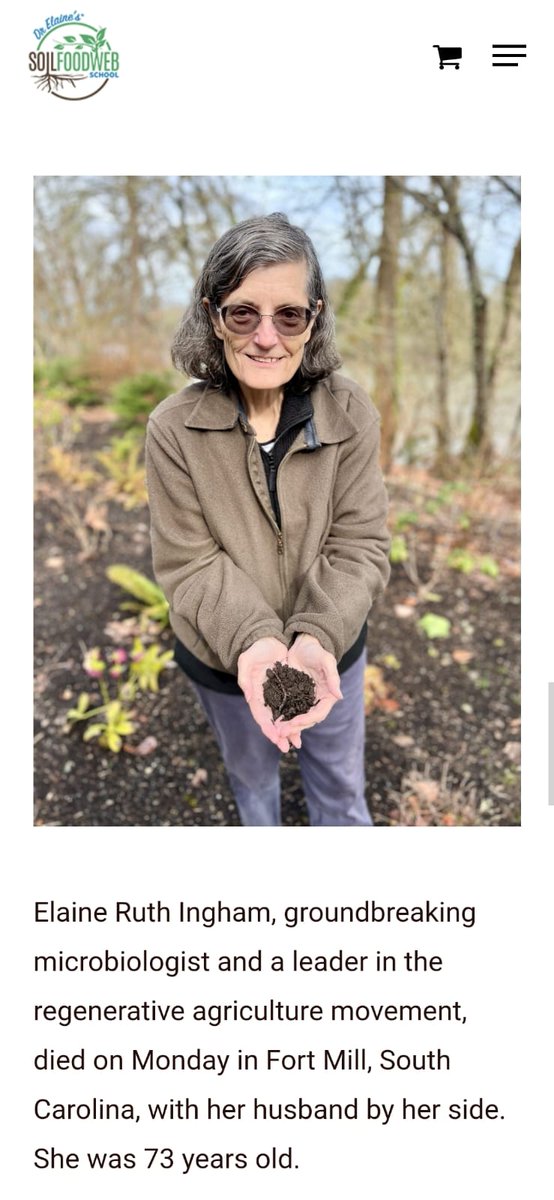
Remembering Dr. Elaine Ingham — Microbiologist, Founder of the Soil Food Web School, and a fearless voice for life in soil.
Through her lifelong, pioneering work on the Soil Food Web, she touched farmers, scientists, land stewards’, and citizens across the globe, transforming our understanding and relationship to soil as a living ecosystem that sustains all life above it.
Save Soil & Cauvery Calling will dedicate & nurture 74 saplings in memory of Elaine and her care & concern for the Future of our planet. Our hearts go out to her family, friends, and colleagues, and we cherish and celebrate the incredible work she has left behind.
To the dedicated team at the Soil Food Web School, who will carry forward her legacy - we are with you in this.
With deep respect,
Save Soil Volunteers
One of the most fascinating facts about the ocean, is that there are whales alive today who were born before Moby Dick was written.
Some of the bowhead whales in the icy waters off of Alaska today are over 200 years old.
When building bird boxes, every detail matters 🏠🪚
Head to my YouTube channel to see some of the nest boxes I've built & the birds that use them https://t.co/O1pb1FfTSV
The Amazon is reaching a critical tipping point.
Long considered the lungs of our planet, new data shows that the Amazon rainforest is now releasing more carbon than it absorbs. A comprehensive study published in Nature Communications found a net deficit of 370 million tons of carbon over the last decade.
While we often focus on deforestation, forest degradation is a silent but equally dangerous driver. Fires, illegal logging, and fragmentation are "nibbling away" at the forest's capacity to store carbon. These human-driven factors, combined with climate events like El Niño, are weakening one of our most important natural defenses against climate change.
Protecting the Amazon means more than just stopping the clearing of land; it requires restoring the health and integrity of the entire ecosystem. Comprehensive soil policy and diligent implementation is key.
Action Now: https://t.co/uVnQCIZBeZ
Citation: Qin, Y., Xiao, X., Wigneron, J. P., Ciais, P., Brandt, M., Fan, L., ... & Moore, B. (2021). Carbon loss from forest degradation exceeds that from deforestation in the Brazilian Amazon. Nature Climate Change, 11(5), 442-448. (Re Soil Foundation, 2025).
#SaveSoil
Incredible camouflage
A close-up clip of the moss-mimicking stick insect (Trychopeplus sp.) filmed in Ecuador’s endangered Choco rainforest.
https://t.co/oHK5XB4QYs
New Boston winter strategy: go full Alaskan wood frog. ❄️🐸
Freeze solid. No heartbeat. No brain activity. Flood system with glucose.
Hibernate through February.
Thaw in April.
Resume life like nothing happened.