Don't trade these growth stocks at all!
1. $ONDS | Aerial and Ground Defense Leaders
2. $IREN | AI Data Center Infrastructure Leader
3. $NBIS | Full-Stack AI Cloud Leader
4. $AAOI | AI Optical Networking Leader
5. $ALAB | AI Connectivity Semiconductor Leader
6. $AMPX | High-Energy Battery Leader
7. $CIFR | High-Performance Computing Leader
8. $RKLB | End-to-End Space Infrastructure Leader
9. $ASTS | Space-Based Cellular Broadband Leader
10. $PL | Earth-Observation Intelligence Leader
11. $OUST | LiDAR and Physical AI Leader
12. $WYFI | AI Data Center Infrastructure Leader
13. $IBRX | Cancer Immunotherapy Leader
14. $PENG | AI Factory Infrastructure Leader
15. $FLY | Space and Missile-Defense Leader
16. $HIMS | Digital Healthcare Platform Leader
17. $HOOD | Retail Financial App Leader
18. $PLTR | Defense and Enterprise AI Leader
19. $DDOG | AI Observability and Cloud Monitoring Leader
20. $OSCR | AI-Powered Health Insurance Leader
These companies are building the next generation of infrastructure across AI, space, and defense.
Have patience!!! Compounding is one of the most powerful forces capable of changing our lives.
Everyone knows $O for its monthly dividend.
Fewer people realize it’s quietly evolving into something much bigger.
For decades, Realty Income built one of the highest-quality real estate portfolios in the world 98%+ occupancy, thousands of properties, investment-grade tenants, and a dividend that’s been raised for over 30 consecutive years.
Now it’s using that same playbook to invest in one of the fastest-growing real estate sectors on the planet: AI data centers.
This isn’t a bet on becoming a data center operator.
It’s a bet on providing the capital while partnering with experienced specialists—exactly how Realty Income has compounded shareholder wealth for decades.
AI needs massive computing power.
Massive computing power needs data centers.
Data centers need billions of dollars in real estate investment.
That’s where Realty Income can win.
If management executes well, investors won’t just own a retail REIT anymore.
They’ll own a diversified real estate platform with exposure to retail, industrial, gaming, Europe, and one of the biggest secular growth trends of the next decade.
You still get:
• Monthly dividends
• A strong investment-grade balance sheet
• Reliable cash flow
• A growing dividend
But now you also get an AI infrastructure growth story.
Sometimes the best investments don’t abandon what made them successful—they simply add another long runway for growth.
I’m increasingly bullish on $O.
The largest ETF in the US Vanguard's S&P 500 ETF $VOO just paid out its dividend this week
$1.96 is the largest quarterly dividend VOO has paid out
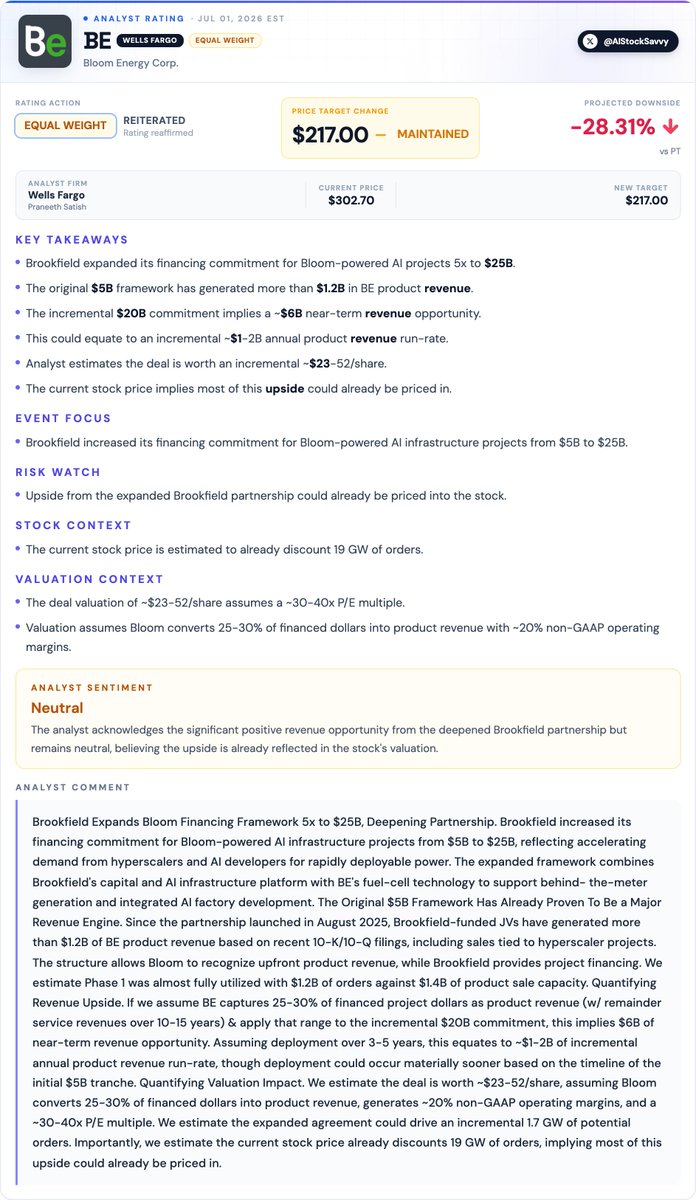
$BE | Wells Fargo reiterates 𝐄𝐪𝐮𝐚𝐥 𝐖𝐞𝐢𝐠𝐡𝐭 on 𝐁𝐥𝐨𝐨𝐦 𝐄𝐧𝐞𝐫𝐠𝐲, maintains 𝐏𝐓 𝐚𝐭 $𝟐𝟏𝟕
Analyst notes Brookfield expanded its financing framework with Bloom 5x to $25B, but sees the upside as mostly priced into the current stock price.
$ASTS - AST SpaceMobile has now secured integration into the US FirstNet public safety network (in coordination with AT&T) and effectively won Japan’s J-LEO initiative via its joint venture with Rakuten Mobile.
When the world’s two most demanding telecommunications and public safety regulators independently audit a technology and reach the exact same conclusion, it sets a global precedent.
These aren't just commercial deals, they are sovereign mandates for national security and disaster resilience.
The underlying reason AST SpaceMobile triumphed in both arenas reveals exactly why it makes overwhelming economic sense for the rest of the world to adopt the same solution.
The core differentiator, and the reason AST SpaceMobile defeated alternatives like SpaceX's Starlink in Japan's strict procurement process, is data sovereignty.
Most LEO mega-constellations rely on inter-satellite laser links to route traffic across the globe. While highly efficient for standard global broadband, this introduces a massive national security liability: a citizen's data (or a first responder's transmission) can cross international borders before being downlinked to a ground station.
AST SpaceMobile utilizes a "bent pipe" architecture. The massive BlueBird satellites act as space-based cell towers, catching the signal from an unmodified smartphone and bouncing it straight down to a local gateway within that specific country's borders. All data routing, core network control, and encryption keys remain strictly on domestic soil. For governments prioritizing disaster resilience and national security, this is the only acceptable architecture.
In the wake of geopolitical tensions, countries from the EU to the Middle East are attempting to build their own sovereign LEO constellations. However, orbital mechanics dictate that LEO satellites circle the globe at roughly 17,000 mph; they cannot simply hover over a single nation.
If a country builds a sovereign constellation to ensure continuous overhead coverage, those multi-million dollar satellites will spend over 90% of their orbit flying over other nations, providing zero value to the state that paid for them. It is a wildly capital-inefficient strategy.
AST SpaceMobile solves the "Sovereign LEO Dilemma" by offering a shared global infrastructure with strict local partitioning.
Nations do not need to spend billions designing, launching, and replacing their own orbital hardware. They leverage a network funded and maintained by private capital.
The network utilizes the standard sub-6 GHz spectrum already owned by domestic mobile network operators (MNOs). It doesn't require carving out new global spectrum allocations or navigating complex regulatory workarounds.
First responders and citizens don't need expensive proprietary satellite phones or specialized ground terminals. The network connects directly to the standard 5G smartphones they already have in their pockets.
By adopting the FirstNet/J-LEO model, governments guarantee nationwide, domestically routed emergency communications at a fraction of the cost of a bespoke space program.
The blueprint has been validated by the United States and Japan.
Here is a list of the major sovereign (and heavily state-backed) Low Earth Orbit (LEO) satellite initiatives globally. They are driven by a mix of national security, digital autonomy, and disaster resilience.
Japan: J-LEO
A roughly $1 billion state-backed constellation focused on disaster resilience and consumer direct-to-device (D2D) connectivity. It mandates that all network control and data routing remain entirely within Japan to prevent communication blackouts during natural disasters.
Taiwan: Beyond 5G (B5G)
Spearheaded by the Taiwan Space Agency, this program is developing independent LEO communication payloads to ensure Taiwan’s command systems and internet survive if its highly vulnerable subsea cables are severed by geopolitical conflicts or earthquakes.
India: ISRO & Jio Platforms
Driven by strict data localization laws, India's space agency (ISRO) and national telecom champions like Jio are developing sovereign LEO networks. The goal is to connect rural India without allowing sensitive domestic data to touch foreign-owned infrastructure.
South Korea: Project 425 & Hanwha Systems
A dual-track approach. Project 425 is a sovereign military constellation for independent reconnaissance of North Korea. Concurrently, defense contractor Hanwha Systems is building a government-supported commercial LEO network to power 6G and urban air mobility.
European Union: IRIS²
The €10.5 billion Infrastructure for Resilience, Interconnectivity and Security by Satellite. Spurred by the war in Ukraine, this multi-orbit network of nearly 300 satellites will provide highly encrypted communications for EU militaries and governments, ensuring independence from American commercial operators.
United Kingdom: The Sovereign Stake (OneWeb)
Instead of building a network from scratch, the UK government invested £400 million to rescue OneWeb (now Eutelsat OneWeb) from bankruptcy. This secured a "golden share," guaranteeing the UK prioritized access and veto rights over a global LEO network for defense and remote connectivity.
Saudi Arabia: Vision 2030 LEO
As part of its economic diversification strategy, Saudi Arabia is actively planning a sovereign LEO network to ensure absolute national autonomy over its digital infrastructure. The current challenge is structuring international partnerships to make a localized network financially viable.
Oman: Omansat & Space Policy 2023–2033
Oman is embedding space infrastructure directly into its national security strategy. By developing domestic satellites (like Omansat-1) and strict regulatory frameworks for orbital slots, Oman is prioritizing sovereign data control and regional trust over rapid, massive scale.
United Arab Emirates (UAE): MBRSC LEO Programs
The UAE is heavily investing in localized satellite assembly, integration, and testing (AIT). Programs out of the Mohammed Bin Rashid Space Centre are rapidly building sovereign Earth observation and communication fleets (such as the upcoming Sirb radar constellation) to reduce reliance on foreign hardware.
Canada: Telesat Lightspeed
While Telesat is a commercial operator, the Lightspeed LEO constellation is heavily backed by over $2 billion in Canadian federal and provincial loans and subsidies. The government considers it a strategic sovereign asset, required to guarantee secure connectivity for Canada’s vast, unserved Arctic territories and its national defense forces.
AST SpaceMobile could win them all.
A TON OF THINGS HAPPENED IN THE STOCK MARKET TODAY.
Here's a full recap:
1. Tomorrow’s FOMC meeting will be Kevin Warsh’s first as Fed Chair, and the market will be watching closely to see how he frames inflation, rates, and the path toward potential cuts. One major tailwind is that oil came down to $77 today, which helps ease inflation pressure and lowers the risk of another energy-driven CPI spike. If Warsh acknowledges that cooling oil prices are helping the inflation picture, it could give markets more confidence that the Fed has room to turn less restrictive over time.
2. The 2x SpaceX ETF had more than $3 billion in volume today versus about $1 billion yesterday. Nearly every product is already around $100 million or more in volume, while $SPCH led the pack with $1.3 billion traded, reportedly the highest Day Two volume ever recorded for an ETF, far above $IBIT’s roughly $500 million. SpaceX also officially announced plans to acquire Cursor parent company Anysphere for $60 billion. Ahead of the $SPCX IPO, Gwynne Shotwell described the relationship as a close AI collaboration, saying both companies were evaluating each other’s models and that Cursor’s training data was “excellent,” while SpaceX brings major compute capacity.
3. Wells Fargo raised its year-end 2026 $SPX S&P 500 target to 7,950, citing several supportive market factors. The firm pointed to a reset in investor sentiment following the Nasdaq 100 selloff, an improving setup for CTA buying, easing macro risk after the peace deal, continued supportive liquidity, and a higher 2026 EPS forecast of $340.
4. The top 10 most active options today by contracts traded were $TSLA with 2.0M contracts, $NVDA with 1.8M contracts, $SPCX with 1.7M contracts, $AAPL with 881K contracts, $INTC with 648K contracts, $NFLX with 573K contracts, $MU with 559K contracts, $AMZN with 511K contracts, $MSFT with 486K contracts, and $SOFI with 477K contracts. Tesla led the market with more than 2.0M options contracts traded, followed by Nvidia at 1.8M and SpaceX at 1.7M.
5. $AAPL Apple reportedly plans to launch camera-equipped AirPods in late 2027, according to Bloomberg. The cameras are not expected to be used for taking photos or videos, but instead to help Siri understand the user’s surroundings and provide more visual context. The new AirPods could debut around the same time as Apple’s second-generation foldable iPhone and its 20th-anniversary iPhone.
6. Microsoft $MSFT is reportedly moving Copilot Cowork to a usage-based pricing model and may introduce a Microsoft-hosted DeepSeek model as a lower-cost AI option for enterprise customers, according to Bloomberg. The cheaper model is expected to roll out in the coming weeks as Microsoft looks to give businesses more flexible and affordable AI tools.
7. Foreign investors sold another $801 million worth of Kospi-listed shares on Monday, adding to the $10 billion in outflows seen last week. According to Goldman Sachs, foreign investors have now sold South Korean stocks every trading session over the past month, bringing year-to-date net sales to roughly $75 billion. Meanwhile, domestic retail and institutional investors have absorbed much of the selling, buying about $69 billion over the same period.
8. The Financial Times reports that the Trump administration is considering a deal framework that could include sanctions relief and a $300 billion private-sector reconstruction fund for Iran if Tehran agrees to a final nuclear agreement and maintains peace. The fund would reportedly depend on Iran’s compliance and be financed by companies rather than governments, with potential interest from businesses in Europe, Asia, and the U.S. because of Iran’s large population and energy resources. If accurate, the proposal would effectively act like an economic rebuilding package for Iran while also opening the door for U.S. and global companies to enter the Iranian market if sanctions are lifted.
9. Robinhood $HOOD plans to cut about 10% of its workforce, or roughly 290 roles, as the company looks to operate more efficiently and flatten management layers. CEO Vlad Tenev said Robinhood’s business “has never been stronger,” but emphasized that the company cannot operate as a heavily layered organization and needs to remain a lean, hyper-focused team.
10. SoFi CEO Anthony Noto purchased 13,888 shares of $SOFI at $18.06 per share, spending roughly $250,000 on the open-market buy. Following the purchase, Noto now owns 11,960,507 shares of SoFi, worth about $211.8 million.
11. Snap $SNAP launched standalone consumer AR glasses priced at $2,195, but the stock was down 10% on the day. The glasses do not require a phone, puck, or tether and feature a 51° field of view with transparent LCoS displays, up to four hours of mixed use plus four extra charges from the case, electrochromic lenses that tint outdoors, and a built-in AI assistant that can see what the user is looking at. Snap has spent 11 years and more than $3 billion trying to make AR glasses a mainstream product.
12. Amazon $AMZN plans to invest several billion dollars to build a new data center campus in Montgomery County, Missouri, creating more than 400 full-time data center jobs, thousands of construction roles, and funding upgrades to local road and water infrastructure.
WALL STREET IS THE GREATEST SHOW ON EARTH.
$EXE – Worst-performing large-cap in the energy sector year to date. Market cap $21.2 billion at $88.78/share (239.2M shares). EV $24.1 billion. 2025 revenue $11.6 billion, net income $1.82 billion.
Price to tangible book value 1.1x. Long-term debt $4.1 billion, cash $2.2 billion. 2025 net income/interest expense 7.7x. Paid down $1.3 billion of debt in Q1. Insiders are buying (CEO and CFO).
“Global natural gas demand is set to rise sharply, with LNG consumption expected to increase by over 50% by 2040. Gulf Coast liquefaction facilities, connected to our leading Haynesville position, will deliver this secure supply.” – Interim President and CEO Mike Wichterich (Q1 2026 earnings call)
Formed in 2024 via the combination of Chesapeake Energy and Southwestern Energy. North America’s largest natural gas producer.
When you realize Americans will always ❤️ beer, cigarettes, pizza, junk food, and gasoline and you can make serious money off it in a safe way. 💋💰
$CASY
#holdingshares
🚨 WARNING: THE NEXT 48 HOURS WILL CRASH GLOBAL MARKETS!!
In 48 hours, SpaceX goes public at $1.77 TRILLION - the biggest IPO ever
I've been trading for over a decade, and I have never seen them rewrite the rulebook like this
Nasdaq, MSCI, and the biggest brokers in America all bent their own rules for ONE private company
That doesn't happen by accident
Let me show you exactly what they did:
First, Fidelity dropped its minimum account size from $500,000 to $2,000
A 99.6% cut
Think about that:
The most exclusive door on Wall Street, thrown wide open to millions of small investors - days before the biggest debut in history.
Ask yourself one question
Why do they suddenly want YOU in?
Because somebody needs people to sell to.
SpaceX reserved 30% of the deal for retail
THREE TIMES the normal share
And even then, most people didn't get a full allocation.
So to grab more at Thursday's open, they're dumping everything else TODAY to raise cash.
That's half of the selling you're seeing.
The other half? The smart money front-running July.
Here's the trick:
SpaceX doesn't join the Nasdaq 100 on day one.
It joins 15 days later, because Nasdaq cut its own waiting period from 3 months to 15 days
Just for this.
The moment it joins, every QQQ fund on Earth is FORCED to buy.
$22–27 billion in automatic buying.
Translation: imagine 50 buses all forced to pull into the same gas station on the same morning.
The funds know the stampede is coming.
So they're selling now to free up cash for it. Retail selling. Institutions selling. At the exact same time.
THAT is your selloff.
Now here's the part nobody will say out loud:
When the most connected money on the planet builds a $1.7T exit door and hands the keys to the smallest investors in the market…
That's NOT generosity
That's distribution at the top.
We've seen this movie twice:
- 2000 Dotcom
- 2021 SPAC mania
Insiders cash out at insane valuations while the crowd chases the hype.
The math ain't mathing.
So you've got two choices in the next 48 hours:
Chase the most expensive IPO in history at the open…
Or read the prospectus and realize you might BE the exit.
The next few days will be INSANE, but don't worry - I'll break down every move as it happens, like I always do.
Like it or not, I called every major top and bottom of the last decade publicly. I'll call this one too.
Many people are going to wish they followed me before June 12, 2026.
Soon, you'll understand why.
🚨 THE US REGULATORY SYSTEM JUST BROKE
In 48 hours, SpaceX goes public at $1.77 TRILLION - the biggest IPO ever
I've been trading for over a decade, and I have never seen them rewrite the rulebook like this
Nasdaq, MSCI, and the biggest brokers in America all bent their own rules for ONE private company
That doesn't happen by accident
Let me show you exactly what they did:
First, Fidelity dropped its minimum account size from $500,000 to $2,000
A 99.6% cut
Think about that:
The most exclusive door on Wall Street, thrown wide open to millions of small investors - days before the biggest debut in history.
Ask yourself one question
Why do they suddenly want YOU in?
Because somebody needs people to sell to.
SpaceX reserved 30% of the deal for retail
THREE TIMES the normal share
And even then, most people didn't get a full allocation.
So to grab more at Thursday's open, they're dumping everything else TODAY to raise cash.
That's half of the selling you're seeing.
The other half? The smart money front-running July.
Here's the trick:
SpaceX doesn't join the Nasdaq 100 on day one.
It joins 15 days later, because Nasdaq cut its own waiting period from 3 months to 15 days
Just for this.
The moment it joins, every QQQ fund on Earth is FORCED to buy.
$22–27 billion in automatic buying.
Translation: imagine 50 buses all forced to pull into the same gas station on the same morning.
The funds know the stampede is coming.
So they're selling now to free up cash for it. Retail selling. Institutions selling. At the exact same time.
THAT is your selloff.
Now here's the part nobody will say out loud:
When the most connected money on the planet builds a $1.7T exit door and hands the keys to the smallest investors in the market…
That's NOT generosity
That's distribution at the top.
We've seen this movie twice:
➮ 2000 Dotcom
➮ 2021 SPAC mania
Insiders cash out at insane valuations while the crowd chases the hype.
The math ain't mathing.
So you've got two choices in the next 48 hours:
Chase the most expensive IPO in history at the open…
Or read the prospectus and realize you might BE the exit.
The next few days will be INSANE, but don't worry - I'll break down every move as it happens, like I always do.
Like it or not, I called every major top and bottom of the last decade publicly. I'll call this one too.
Many people are going to wish they followed me before June 12, 2026.
Soon, you'll understand why.
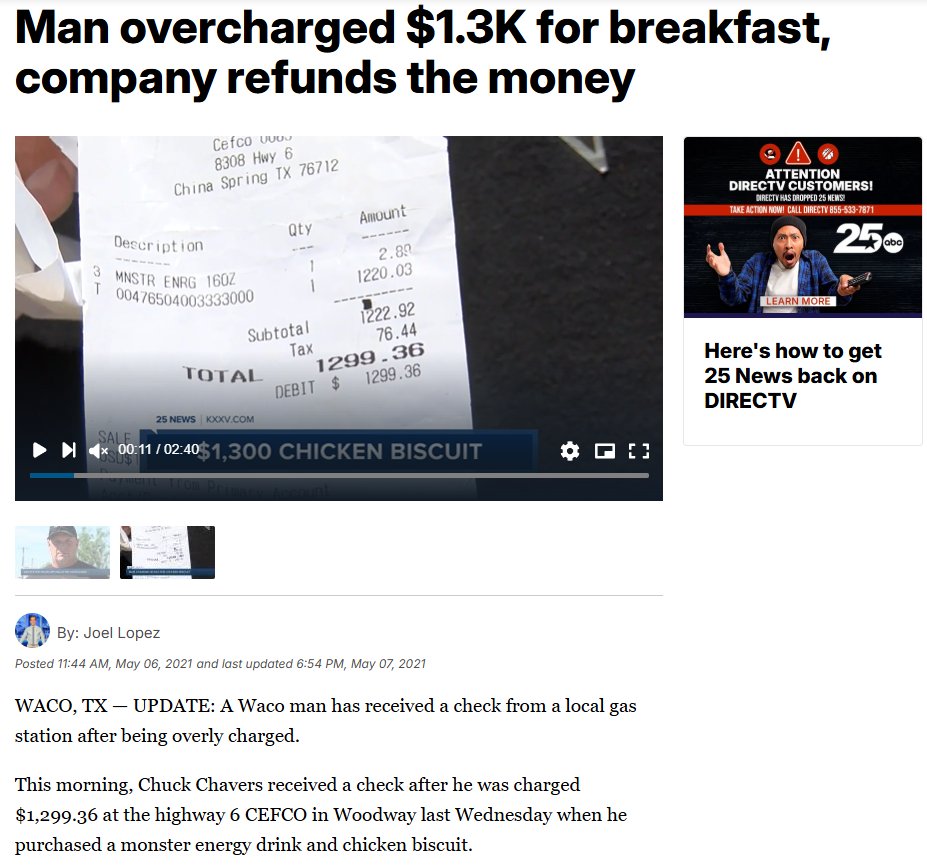
A man in Texas was overcharged for an energy drink and a chicken biscuit at a gas station
His debit card was charged almost $1,300 for this breakfast
He immediately saw the charges, but the store did not fix on the spot due to "system glitch"
They asked him to talk to their corporate offices and file a dispute with his bank
He spent 8 days given a runaround to get his money back
That's because once you file a dispute, it could take a very long time, before you could get your money back
His exact words were: "It took 10 seconds to come out of my account, its taken 8 days so far and I was the one that was gonna have to go fix the issue by going to my bank. That's what i'm upset about. I shouldn't have had to leave that store without my money"
After his story was posted on the news however, they immediately refunded his money
This shouldn't have happened in the first place. The store shouldn't have charged them $1,300 for a breakfast meal. Then the store should've refunded the overcharge.
To me the moral of the story is to never use a debit card
That's because the money goes out of your bank account, and you are the one on the hook right away
You want to have an intermediary in place, a firewall of sorts to prevent bad things from happening
If this man had used a credit card, he could've disputed the charges directly with it, and wouldn't have been on the hook
Plus, the money would not have left his bank account
This is why you always use a credit card for purchases
The sad part is that you shouldn't have to publicly shame companies for them to do the right thing, but if all else fails, it is a good way to approach it. Otherwise, you need to pursue legal action to defend your rights.
To summarize:
Do not use a debit card for purchases, always use a credit card
Check your receipts
Be vigilant in monitoring your accounts and activity
$CLSK $HUT $CIFR $WULF $RIOT $IREN
Which of these companies are severely undervalued compared to their contracted power? 🤔
If you guessed @CleanSpark_Inc, you're correct 😉
The Hardest Lessons in Stock Investment Retail Investors Must Learn
1. Patience
2. Holding Power & Dry Powder
3. Filtering Out Market Noise on X
4. Following a Small Group of Proven Voices
5. Position Sizing
6. Stock Selection
My portfolio went up over 1,100% after I made one change:
I started investing in disruptive themes.
Photonics → $AAOI $AXTI $AEHR
Space → $RKLB $ASTS $LUNR $PL
Robotics → $OUST $VPG $AMBA
AI Infrastructure → $NBIS $IREN
Power Semis → $NVTS $VICR
Defense → $ONDS $KTOS
Energy → $VST $TE $BE
That shift changed everything.
Still trying to catch up with @DeepValueBagger
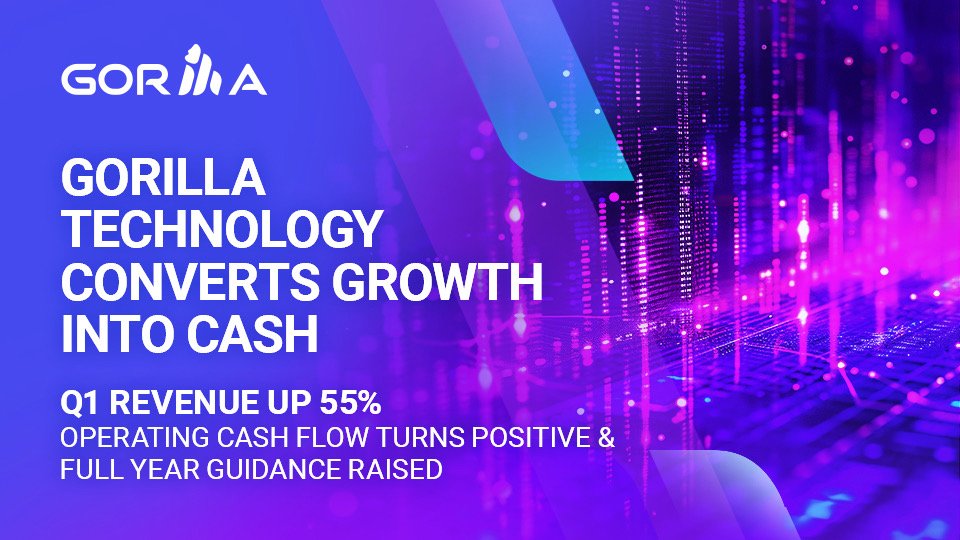
Growth is meaningful. But converting growth into cash, that’s execution.
In Q1 2026, we delivered both.
Full Press Release Here: https://t.co/VuadSfFwgV
We recorded US$28.2M in revenue, up 55% year over year, reflecting strong demand and disciplined delivery across our global portfolio.
More importantly, we achieved a critical inflection point: operating cash flow turned positive to US$6.6M, a US$17.3M improvement from the prior year.
Our balance sheet continues to strengthen, with cash and cash equivalents reaching US$98.4M, which is up 373% YoY. This gives us the foundation to scale with confidence.
With increasing visibility into our pipeline and milestone-based programs, we are raising our outlook for 2026, with full-year revenue guidance now set at US$160M–US$200M.
From national-scale AI infrastructure to mission-critical intelligence platforms, we are moving decisively from turnaround into scale. We are building capacity, closing contracts, and delivering outcomes.
The takeaway is simple:
We are scaling with financial discipline.
#GorillaTechnology #GRRR $GRRR #AIInfrastructure #DigitalTransformation #Growth #Execution #CashFlow #Scale
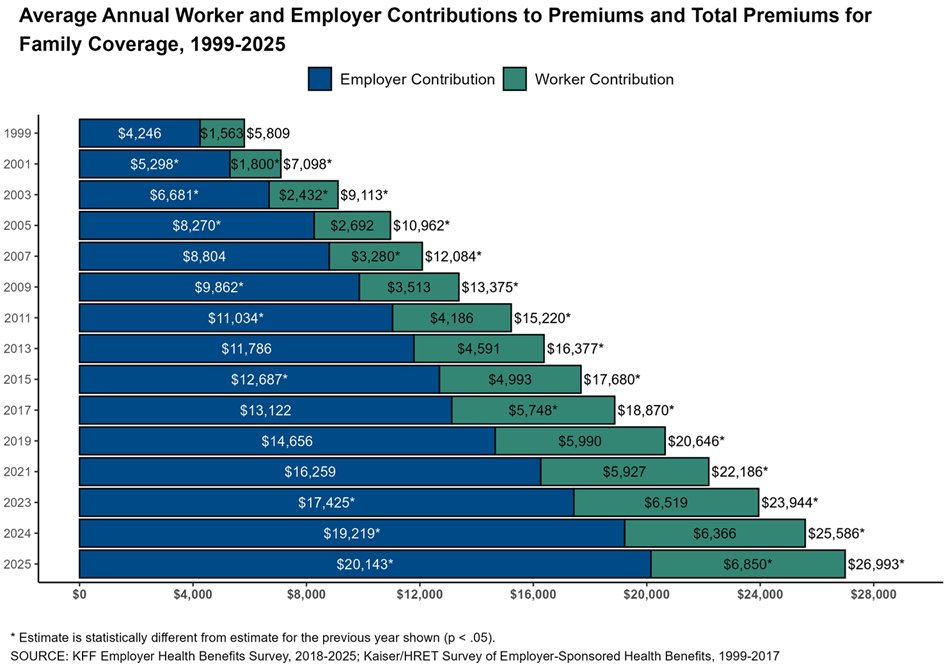
Nearly $27,000 a year for family health insurance premiums, up from $6,000 in 1999.
And that’s before deductibles, copays, and surprise bills.
The system is fundamentally broken.
“What do you do when there are so many stocks to choose from?”
There are thousands of stocks in the market, and when you follow multiple people online, especially on X, you end up seeing different stock picks every single day. It can become overwhelming very quickly.
This is personally what I do.
The first thing I do is create a simple table on Excel. I list every stock I’m bullish on. If I follow ten different X accounts and they are all buying different stocks, I write every single one down.
Then I start narrowing things down.
The first filter I use is sector strength. I ask myself: where is the money flowing right now? Which sector is attracting the most attention, capital, and momentum?
Right now, for example, I do not think software is the strongest place to have money. That could change next month or even next week because markets constantly rotate, but at this moment, a lot of capital is flowing into the AI infrastructure trade. That includes data centers, memory, energy, cooling, networking, semiconductors, and everything connected to that ecosystem.
Once I identify the strongest sector, I remove stocks that are not relevant to it.
After that, I filter by market cap.
Personally, I am more interested in small and mid cap companies because I believe they offer the biggest upside potential. Some people prefer large caps, and that is completely fine. Everyone has different goals and risk tolerance.
For me, I usually remove large cap stocks and focus on smaller companies with real potential. At the same time, I avoid most penny stocks. I generally want companies above a certain market cap because I still want some level of quality, structure, and legitimacy behind the business.
Then I go deeper.
I study the company’s position within its sector. I compare it against competitors and other companies operating in the same space. I want to understand what makes it unique.
Does it have a real advantage?
Does it have strong technology?
Does management have a good track record?
Is there something special that the market is missing?
Because I focus on smaller companies, I am honestly less concerned about current financials if the company has something truly unique. Some of the biggest winners in the market started with almost no revenue. Those are the types of companies I’m interested in because they have the potential to become something much bigger in the future.
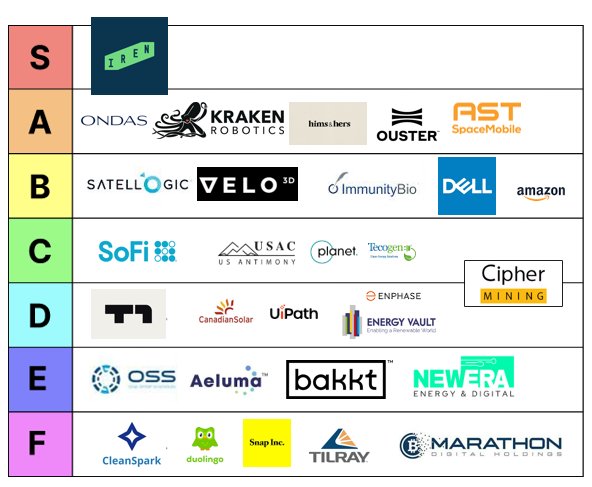
The below is an example of a tier list of bunch of stocks I've done research on. I ranked them based on my conviction.
Note - this is part one. I made this post for my subscribers, aimed at beginner investors. Because of how well it was received, I decided to share it with everyone on X.
There will be three parts.
$ZETA’s MOAT isn’t just data.
They’ve become the agnostic orchestration layer for enterprise marketing.
- CTV
- Meta
- Netflix
- Spotify
- OpenAI
- YouTube
- Open Web
- Email/Publisher
At a certain scale, not using $ZETA starts becoming a competitive disadvantage.
$ZETA