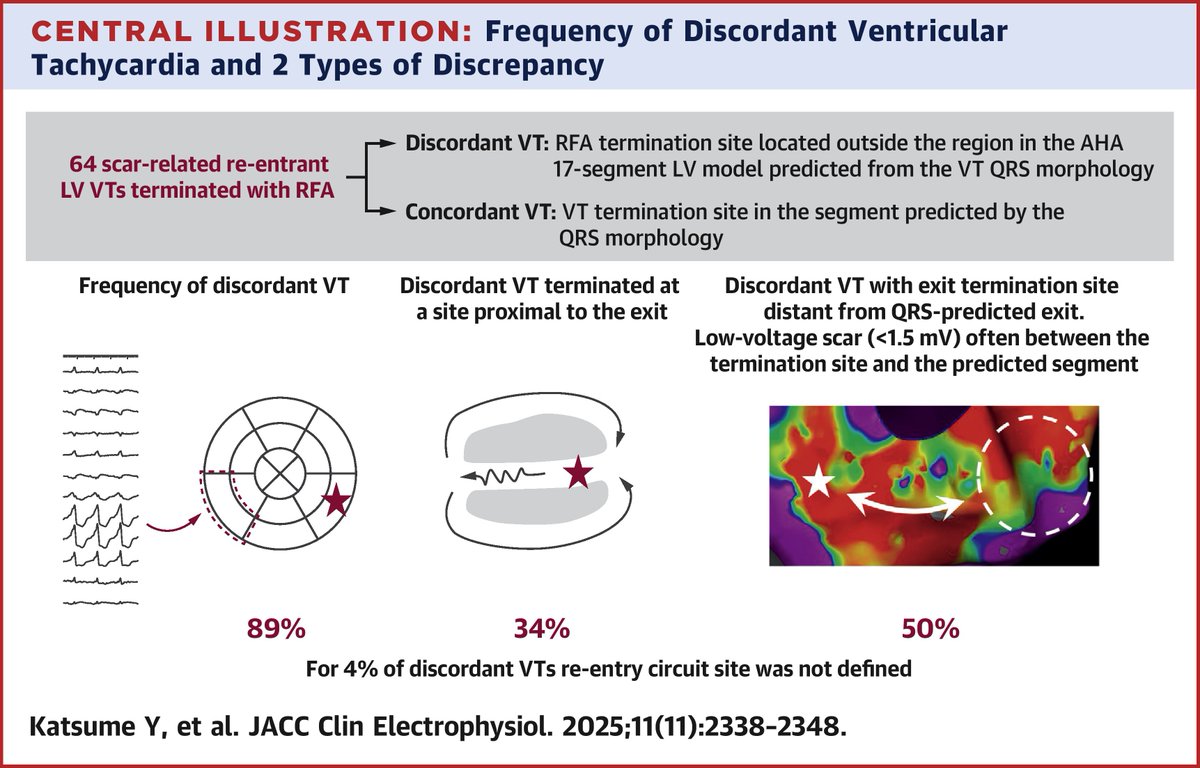
For scar-related VTs, the exit predicted from a vector-based #QRS algorithm often differs from the location where ablation terminates the VT. This is an important consideration for use of the QRS to guide VT ablation strategies. https://t.co/WYqqJr3cTI
#JACCCEP#epAblation
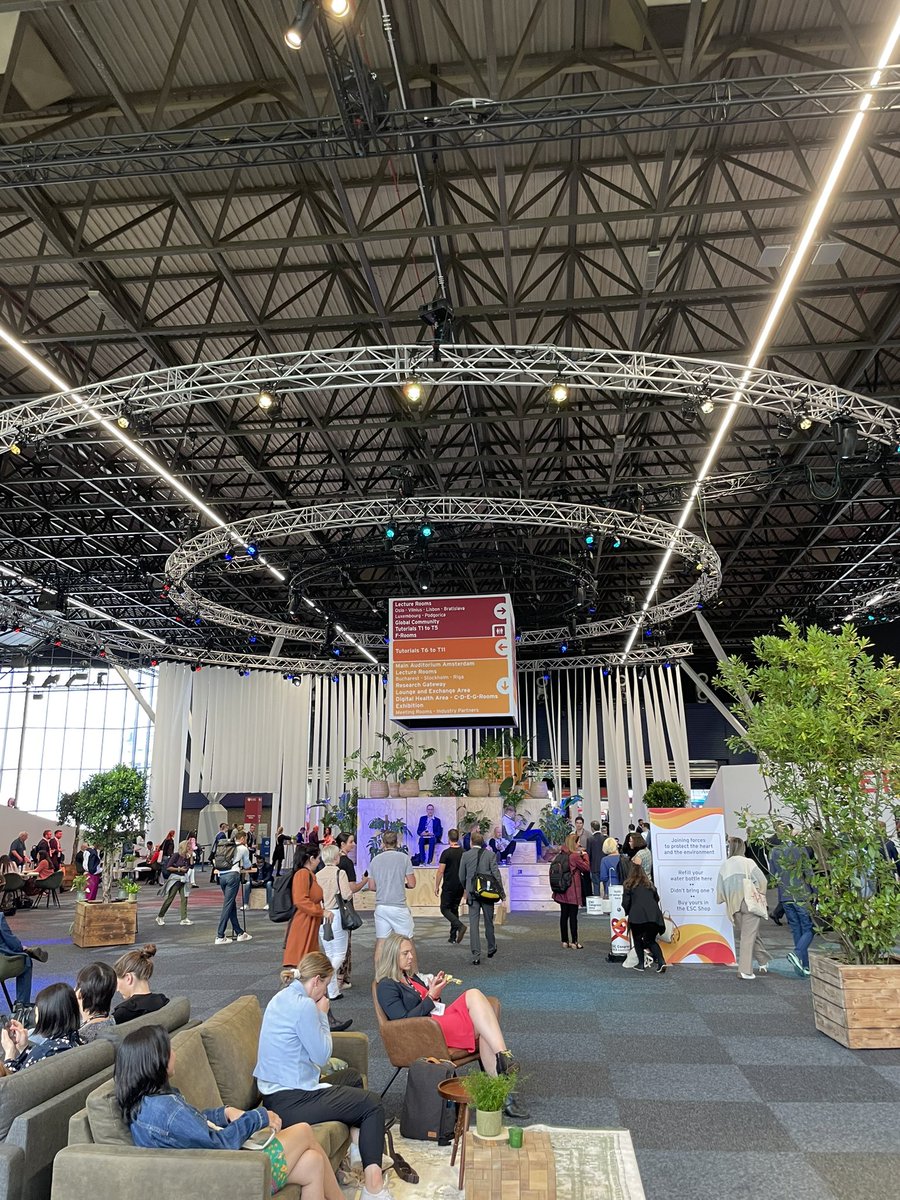
Representing @SilviaPriori1’s lab at #ESCCongress in London!
Great sessions, stimulating science and a wonderful opportunity to connect with colleagues around the world.
@ATrancuccio@G_Pils
1/ The importance of serial #EKG in acute myocardial infarction.
An interesting case with a series of three EKGs with #echofirst and #angiogram as well. #CardioTwitter
A 52-year-old woman, smoker with chest pain for one hour.
EKG #1 was performed in triage 🧵👇
That's pretty striking
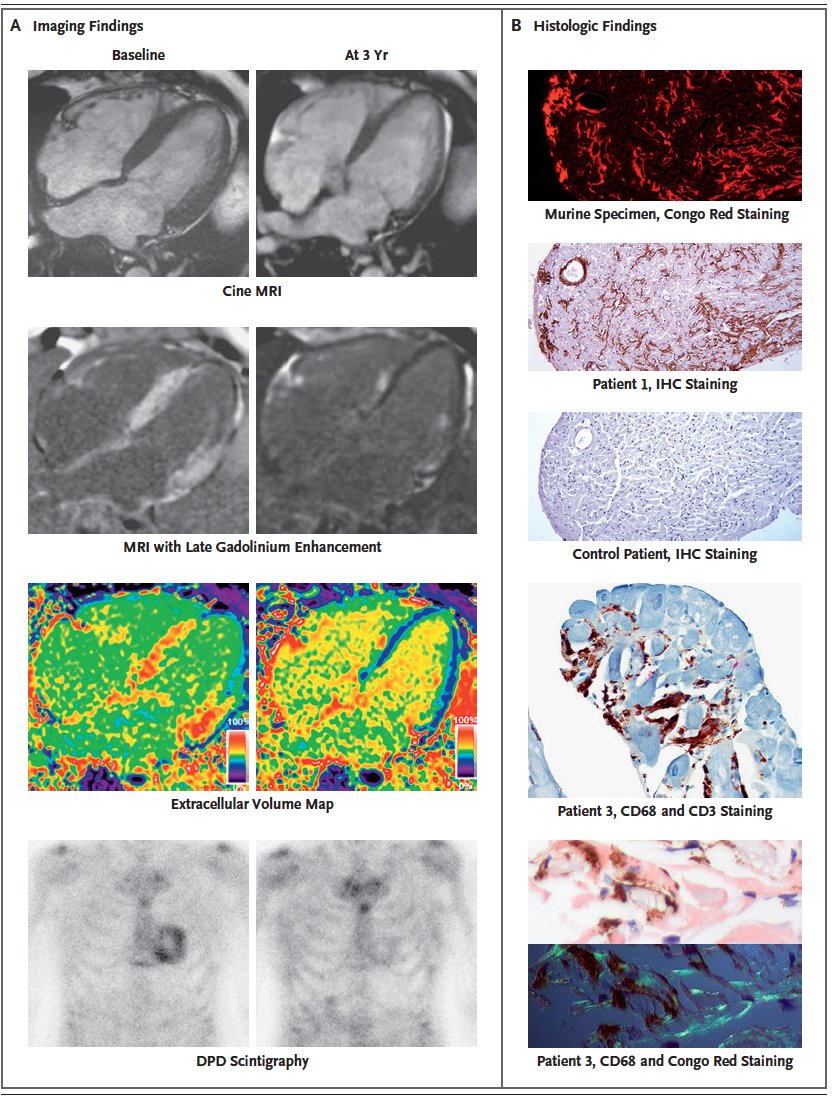
Reversal of amyloidosis cardiomyopathy in 3 individuals who had developed anti-ATTR amyloid antibodies
https://t.co/jtOucqp18T @NEJM@MariannaFonta11
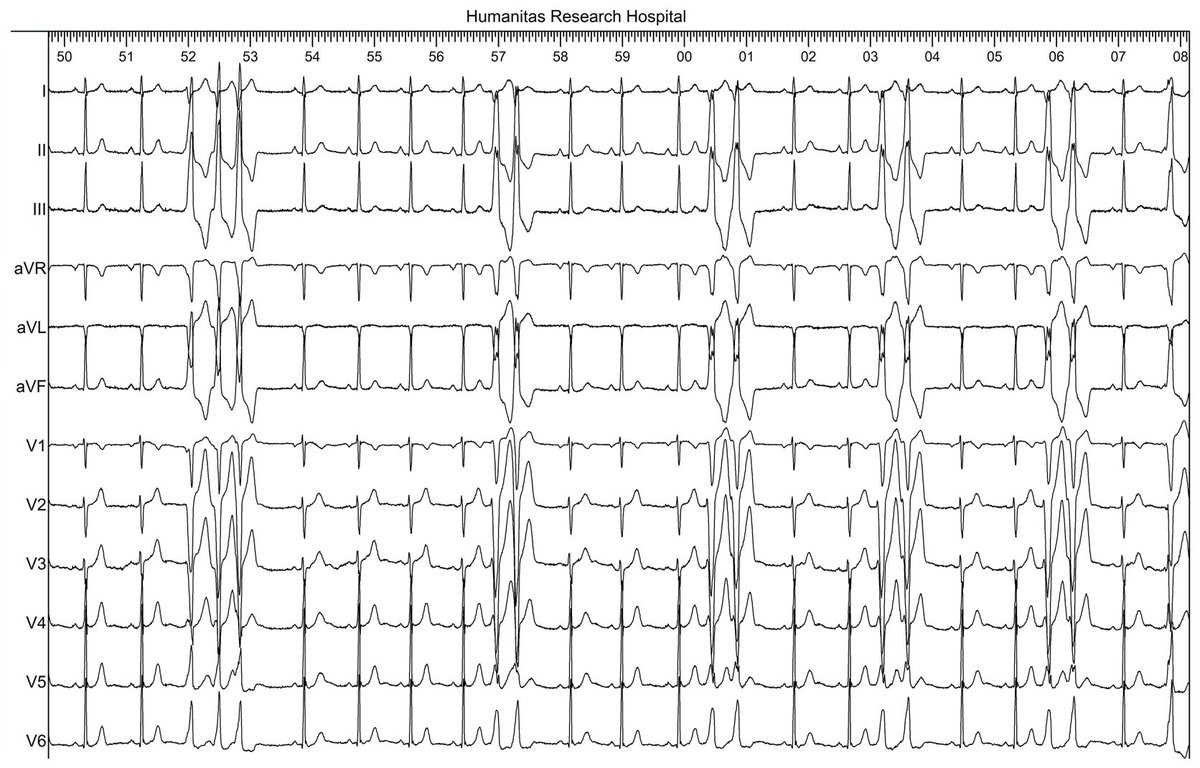
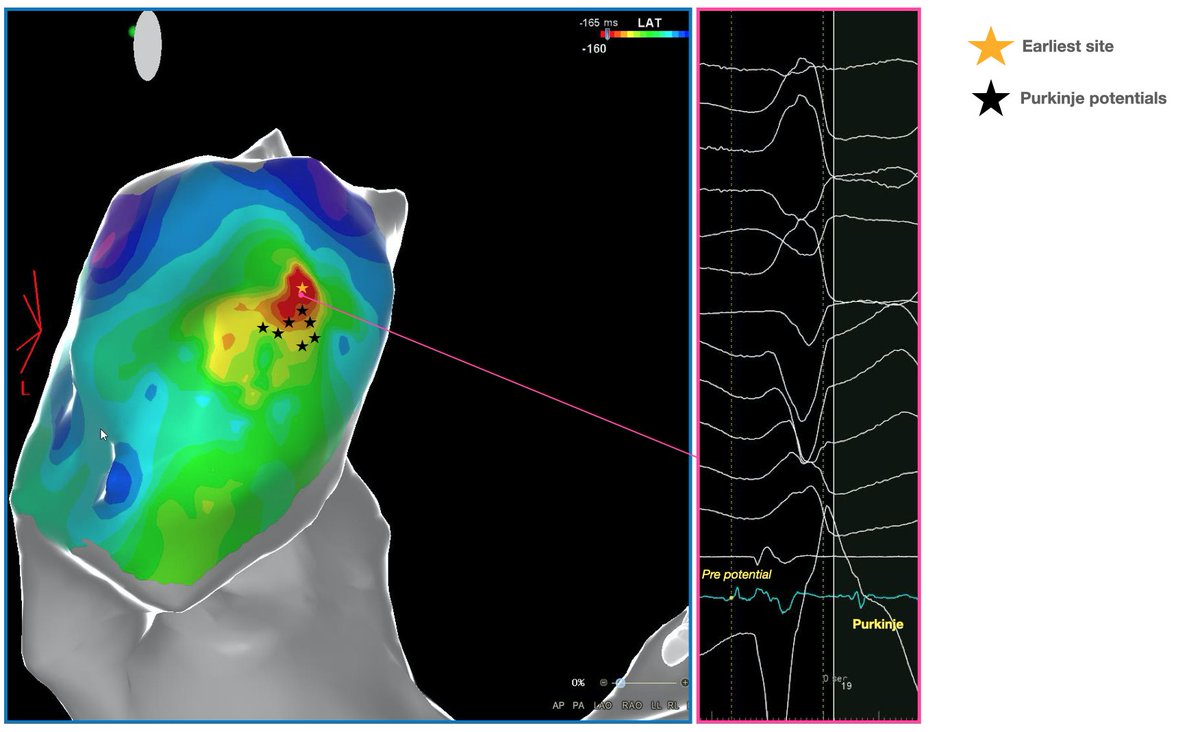
27yo girl. High burden PVCs with NSVT at the last holter 24h ECG. In these cases, purkinje potentials must be searched at the RVOT site. Precise timing of Purkinje potentials were crucial for triggering doublets or triplets. #Porn in #Electrophysiology.
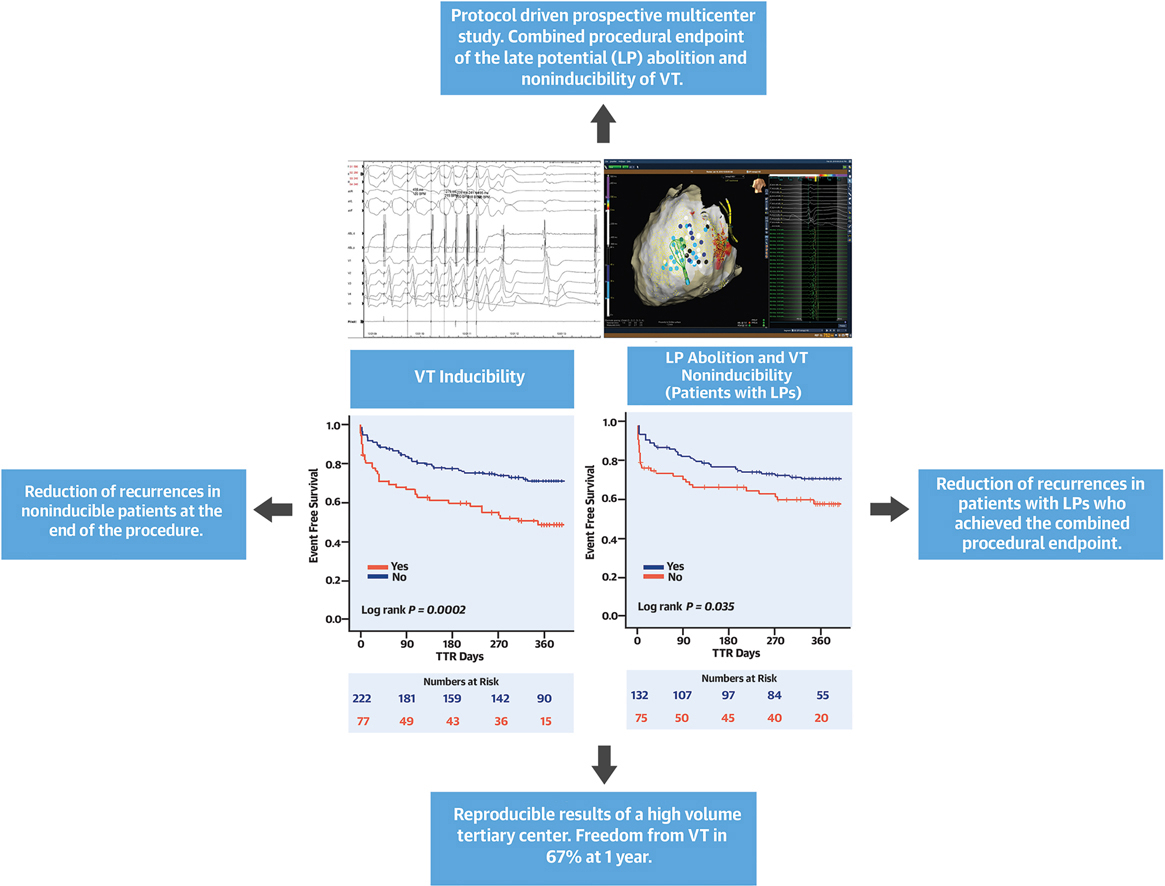
Results from the multicenter VT Ablation Registry: standardized VT mapping and ablation technique, based on LP abolition and noninducibility, were effective in reducing VT recurrences in 4 causes of cardiac diseases. https://t.co/WaBFPRgFtJ @JACCJournals@andrearadinovic