Team Atlanta won DARPA's AI Cyber Challenge in 2025. Their work didn't stop there.
Former members are applying AI cybersecurity lessons at Microsoft, while Georgia Tech researchers continue developing tools to find software vulnerabilities.
Protecting the future starts with supporting our community. 💛
SCP faculty and staff raised more than $3,600 for Klemis Kitchen, Georgia Tech’s campus food pantry, helping students facing food insecurity.
Read more: https://t.co/QVMCzjleb5
#ProtectingTheNext250
New @GaTechCyber research shows that deleting an AI conversation on a phone doesn't necessarily mean it removes every trace. The research could give digital investigators a new way to recover information from phones, but it raises privacy concerns for people who use AI assistants on their devices. https://t.co/GB8jpor1f9
Deleted an AI chat? Traces of the conversation may remain.
Georgia Tech researchers developed ORISA, a tool that can recover deleted conversation data from local AI assistants on Android phones.
What does this mean for privacy?
Read more: https://t.co/QBqybxo4Zv
AI is advancing quickly. How do we make sure it's secure and trustworthy?
Georgia Tech's Vijay Madisetti is developing tools to strengthen AI agent security and protect sensitive data.
Building safer AI is part of #ProtectingTheNext250.
Read more: https://t.co/SozqVpuZbp
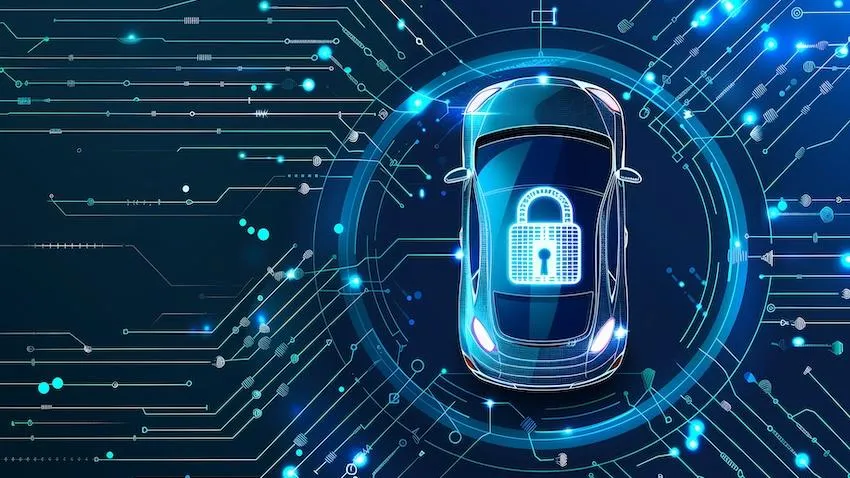
.@GaTechCyber researchers identified 7 previously unknown security flaws in next-generation communication standards that connect in-vehicle computers. These flaws create vulnerabilities that could allow attackers to take control of key driver-assistance functions in personal vehicles. https://t.co/ckHjgZuSqI
Where did Georgia Tech’s School of Cybersecurity and Privacy come from?
This #CybersecurityAwarenessMonth, explore more than two decades of cybersecurity research, education, and innovation, from the 1998 Nunn Forum to SCP’s launch.
https://t.co/uhgqlkeqt4
Georgia Tech Ph.D. student Anna Raymaker spent her summer at MIT Lincoln Laboratory studying maritime cybersecurity.
She built test beds to investigate vulnerabilities and is now looking to further her work to GPS spoofing and more!
Read the full story: https://t.co/8tSPuM4qe9
AI could transform how the power grid operates, but it also creates new cybersecurity risks.
Georgia Tech’s Saman Zonouz is helping shape the national conversation on safely integrating AI into the electricity system through a National Academies workshop!
https://t.co/1H2xLRYD1D
The study also found that CAN XL retains known security weaknesses from older CAN versions.
With the technology not yet widely deployed, researchers say there is still time to address these issues.
Georgia Tech researchers identified seven previously unknown security vulnerabilities in CAN XL, a next-generation vehicle communication standard.
Read more: https://t.co/tBiD24A3Oz
We are #2!
The U.S. News & World Report released it's rankings of undergraduate programs and placed Georgia Tech's cybersecurity undergraduate program second in the world!
This ranking wouldn't be possible without the dedicated hard word of our faculty, students, and staff!
Meet Nancy Baker, the School of Cybersecurity and Privacy’s go-to resource for students!
From registration and orientation to connecting students with campus resources, Nancy helps students navigate life at Georgia Tech.
Read more: https://t.co/DL8Z4w4T4p
What can AI do to protect software from cyberattacks?
SCP researchers spent two years exploring that question through DARPA’s AI Cyber Challenge. Their new paper reveals a key lesson: AI can strengthen cybersecurity, but reliability and human oversight remain essential. 1/2
Students also made headlines as Team Blue Water, featuring nine Georgia Tech participants, won DEF CON’s prestigious CTF competition.
Take a look back at everything that happened this month: https://t.co/9444Ql8UHW
Sign up for the SCP Newsletter here: https://t.co/T8naJvweJX
August was a busy month at SCP!
From research protecting water systems, hospitals, and highways to new faculty exploring cryptography and the human impact of AI, our community continued to tackle some of cybersecurity’s most pressing challenges.
AI is becoming part of our workplaces and relationships. But what happens when it creates new risks for privacy and safety?
Georgia Tech Assistant Professor Veronica Rivera is exploring those questions and more!
Read more: https://t.co/Zg5JTAb7ev