Here is my most recent project: https://t.co/oSMutzh6yp
Unlike Sci-Hub and Sci-Net, where I have written all the code manually be hand, this one is pure AI generated - I decided to do this as a kind of experiment. LOVE the result! AI is 50x speedup in code writing, however creating the project is still a lot of work (human input is still needed for architectural decisions, debugging complex functionality and precise instructions)
Sci-Bot is connected to Sci-Hub database so it can read research articles and generate answers grounded in science. To pay for generated tokens, Sci-Bot supports two funding models: the first one is standard pay-as-your-go and the second one is legacy from Sci-Hub: it is donation based.
Anyone can donate: from these donations, the project will automatically calculate budget for upcoming month, and derive how much AI-generated answers it can serve to users for free.
Philosophical Transactions A
World models, artificial general intelligence and the hard problems of life–mind continuity: toward a unified understanding of natural and artificial intelligence
This paper discusses whether world models are necessary for achieving artificial general intelligence (AGI).
A world model is an internal model that predicts how the environment works, including causal relationships and future changes. The authors argue that pattern prediction alone, such as in large language models, is not enough for true AGI. Instead, intelligent systems need world models to understand environments, predict outcomes of actions, and adapt flexibly to new situations.
https://t.co/K60HKwXjbD
Salió el 4º episodio del Sofá de Darwin: ¿Por qué Charles Darwin?
Serie de divulgación del Proyecto FONDECYT 1231757 "The abductive structure of Darwin's theory". 17 minutos
https://t.co/xjRMeKZ5Jc
Dr. Mariano Barbacid and his team have reported a major preclinical advance in pancreatic cancer research, demonstrating that a triple-combination therapy can completely eliminate pancreatic tumors and prevent their return in experimental models. The findings, published in a peer-reviewed journal, show strong and durable responses with a favourable safety and tolerability profile. While these results are highly encouraging, and based on their success we hope for the best in further research, clinical (human) trials.
In a recent paper, physicists have come up with a quantum physics paradox that seems to show that we can change the past with quantum physics. https://t.co/T5kUUiJRDL
How does an embryo reliably "compute" its form - "cell by cell" - using only local interactions and mechanics, yet produce a precise global body plan? I’m excited to share our Nature Methods paper "MultiCell: geometric learning in multicellular development", presenting #AIxBiology research led by @HaiqianYang and the result of a great collaboration with Ming Guo, George Roy, Tomer Stern, Anh Nguyen and Dapeng Bi.
A long-standing challenge in developmental biology is to predict how thousands of cells collectively self-organize as tissues fold, divide, and rearrange. In MultiCell, we represent a developing embryo as a dual graph that unifies two complementary views of tissue mechanics with single-cell resolution: cells as moving points (granular) and cells as a connected foam (junction network). This lets the model learn dynamics from both geometry and cell–cell connectivity.
On whole-embryo 4D light-sheet movies of Drosophila gastrulation (~5,000 cells), our model predicts key cell behaviors and the timing of events, including junction loss, rearrangements, and divisions with high accuracy, at single-cell resolution. Beyond prediction, the same representation supports robust time alignment across embryos and offers interpretable activation maps that highlight the morphogenetic "drivers" of development. The broader goal is a foundation for cell-by-cell forecasting in more complex tissues, and eventually for detecting subtle dynamical signatures of disease.
Kudos to the team for this inspiring collaboration with brilliant researchers to push the boundary of AI for biology!
Citation: Yang, H., Roy, G., Nguyen, A.Q., Buehler, M.J., et al. MultiCell: geometric learning in multicellular development. Nature Methods (2025), DOI: 10.1038/s41592-025-02983-x
Code/data links are in the manuscript.
This is MINDBLOWING!
Stimulating the olfactory bulb with focused ultrasound to induce smell.
It's surprisingly simple, yet no one has apparently done this before!
My article on AI for science, in which I characterize a deviant notion of scientific objectivity rooted in the impossible ideal of theory-free inference, is available now open-access in Erkenntnis https://t.co/zRfOyOdFZy
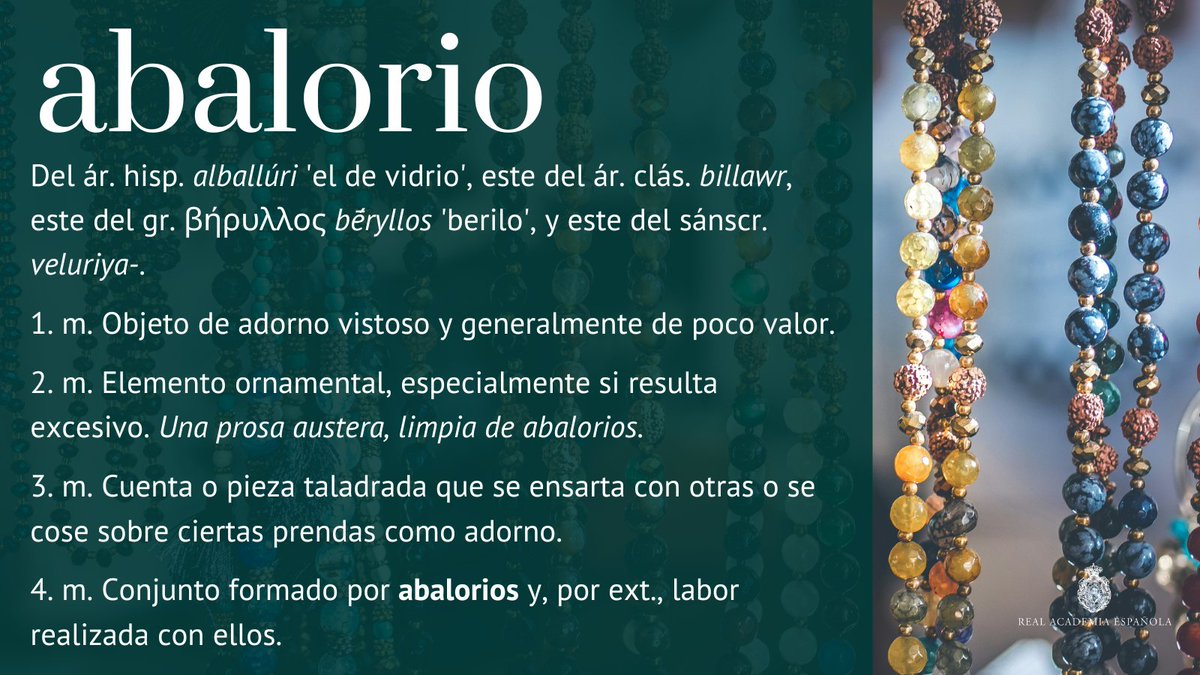
#PalabraDelDía | abalorio
Esta palabra tiene en su origen la forma griega «bḗryllos» ‘berilo’. No se debe confundir «berilo» ‘mineral cuyas principales variedades son la esmeralda y la aguamarina’ con «berilio» ‘metal de número atómico 4’, que designa uno de sus componentes.
Mitochondria and Aging: Time to Rethink
Symposium by the @NIH National Institute on Aging (NIA) Intramural Research Program
Part 1: https://t.co/JAHag9bt2G
Brain energy metabolism, neurodegeneration
Part 2: https://t.co/10dPt7Q50m
Mitochondria, systems biology, energetic cost of aging, Brain-body Energy Conservation (BEC) + extended discussion
🧬La-Proteina🧬
The first generative model demonstrating accurate co-design of fully atomistic protein structures (sequence + side-chains + backbone) at scale, up to 800 residues, with state-of-the-art atomistic motif scaffolding performance - has just made its code open-source!
Learn more 🧵