The deeper I get into this war, the more convinced I am it was never really about Iran.
It started with China, and according to Anas Alhajji, it ended with China too
His read is that the MOU isn't a concession to Iran at all.
It's the US and China quietly dividing up the spoils.
Notice the timing.
The moment Trump left China, everything changed, the rhetoric cooled, the ships started moving, the deal accelerated
And China outplayed Trump at every turn.
He thought he had leverage with LNG and oil exports, until China simply replaced US supply with Russia.
They cut imports, filled their reserves, leaned on floating storage, and stayed two to three weeks ahead of EVERY American move, from Venezuela to Maduro to Iran.
Either they have direct lines in, or they're listening.
Here's the catch Anas kept coming back to: the US can choke Hormuz, but starving China would take eight or nine months, long enough to collapse the world economy first
The wildest part?
Anas believes those US strikes near Hormuz mid-negotiation were a favor to Tehran, wiping out IRGC holdouts who refused the deal and were building toll infrastructure of their own.
@anasalhajji
Arabic has 14 words for love. Each one describes a different stage. And here's what got me. Each one comes from a root that has nothing to do with love. Until you see the connection. And then you can't unsee it.
All 14. Let me walk you through them.
Telling the Iranian people “your regime is evil so on top of living under it, ALL 92 million of you will be punished and have to live in HELL for decades under the most brutal sanctions until you get rid of that brutal regime by sacrificing tens of thousands of your sons and daughters and replace it with a monarchy that you previously rejected TWICE in less than 30 years -only this time even shittier” is a great strategy
to help the regime survive.
Why have so many waves of protests in Iran failed to result in decisive political change? One factor is that the Iranian state maintains tremendous means to repress protests, including through the use of violence. Another factor is that there is no organized political movement in Iran that can sustain the protest mobilizations and convert the political energy into real pressure on the state.
These factors have been written about extensively. But there is another overlooked factor that explains why the febrile political environment in Iran is not necessarily a revolutionary one.
We need to consider how the Iranian people perceive their predicament. They are less free than they should because they live under an ideological political system that fails to protect civil liberties. They are less prosperous than they should be because they depend on an economy that is increasingly gripped by rent-seeking while also being throttled by sanctions.
Many Iranians believe that getting rid of the "Islamic Republic" would solve both these problems. It would allow for a new political system to be built, with a new fundamental law, and it would lead to the lifting of international sanctions. This is an obviously appealing goal. So why has a new revolution been so elusive?
Beyond the issue of the power balance between the authorities and the protestors, there is also the fact that Iranians draw an important distinction between political structures and institutional structures when passing judgement on their state.
There is widespread dissatisfaction and anger with the political class. This anger has been deepening for years. But in parallel, Iranians remain protective of the many state institutions which are largely apolitical and whose day-to-day operations reflect the prerogatives of bureaucrats and technocrats.
One of the most striking things about the 1979 Islamic Revolution is that it was, despite its totalizing ideology, notably circumscribed when it came to the question of state institutions. The political ideology of Iran changed dramatically after the revolution, but there were significant continuities in the country's political economy and public administration. As Kevan Harris has noted, the Islamic Republic inherited the Pahlavi period's corporatist social welfare structure and maintained most of the related bureaucracy, part of which had Qajar-era roots. The top civil servants in most ministries left after the revolution, but the rank and file remained. They were accountable to the new religious legal order, but the modalities of public administration were not radically altered. As a result, the underlying functionalism and technocratic culture of the Iranian state has not changed for around a century.
This functionalism is precious. Iran has fallen behind in recent years, but in relation to both its neighbors and other middle-income countries, it remains a state in which institutions continue to deliver a certain standard of living. Iranians enjoy better social protection than Mexicans, greater personal safety than Brazilians, more political choice than Saudis, more private sector opportunities than Egyptians, and better public goods than Pakistanis.
Is this good enough? Absolutely not. Iran should be on a far more positive trajectory, and the Iranian people deserve levels of freedom and prosperity commensurate with their tremendous industry and creativity. Their aspirations are being denied.
But when we watch protests unfold and conclude that Iranians have "nothing left to lose," we need to understand that while this may be true for many citizens, who have experienced abject poverty or the brutality of the state, most Iranians who have yet to directly enter the political maelstrom are weighing the possibility for political change against the probability of institutional destruction. People can be eager to cast aside a political class but also very wary of weakening the institutional structures of the state, like the education sector, healthcare sector, or even the judiciary.
Iranians are not Venezuelans under Maduro or Syrians under Assad or Afghans under the Taliban. They remain connected to functional state institutions as users of services, recipients of welfare, stakeholders or policies, or as state employees—these connections have a practical and material value. In fact, numerous waves of national representative surveys (eg. Gallup, World Values Survey) show that Iranians retain positive views of key state institutions, even the local police and judiciary. The likely explanation is because in most instances these institutions are delivering services apolitically. Of course, the leaders of the Islamic Republic have been poor stewards of these institutions, especially in the last decade, but the institutions persist because they have their own political cultures that go way back to the foundation of the modern Iranian state. Can the country undergo a revolution without jeopardizing the survival of these institutions?
Arguably, the level of continuity we observe after 1979 is evidence that you can. But it remains a major gamble given two tendencies. First, revolutions tend to go awry, especially in the Middle East, where each moment of political instability is an opportunity for egregious foreign intervention, or the birth of a new, and often worse, authoritarianism. The Islamic Revolution was the invitation for an invasion by Iraq, thrusting the Iran into the longest conventional war of the 20th century. What prevents Israel or the United States from acting opportunistically? What prevents separatism and terrorism from gripping the country? What happens if the Revolutionary Guard takes it upon itself to secure the country against such threats by asserting even greater political control?
Second, even when revolutions do lead to new and stable political arrangements, the post-revolutionary process of institutional renewal and reform can also go awry. How does Iran do subsidy reform in a post-revolution context? Or pension reform? Or healthcare reform? Or education reform? These reforms have proven incredibility difficult to undertake given all the challenges posed by the way that wealth and power are distributed in Iran today. Perhaps these reforms will be easier after a political revolution. But perhaps not.
I am optimistic about Iran. The point of this analysis is not to suggest that the Iranian people cannot aspire to fundamental political change because it is “too risky.” Their aspirations are valid and deserve fulfillment. But we need to be clear-eyed about what is at stake in Iran.
The caution that most Iranians continue to exhibit about entering into a true revolutionary period is not just a reflection of the power imbalance between state and society, it also reflects a genuine concern for the preservation of the hard-won functionality of the Iranian state and a public administration. The civil servants are struggling to addresses the country's many challenges with one hand-tied behind their backs, but they remain in precious and privileged position to enact policies.
Iranians do not appear ready to risk the destruction of the institutions on which they depend to get rid of a sclerotic political class that they despise. The manner of political contestation we see in Iran—repeated protests that do not rise to the level of a revolution—is a reflection of this fact. Avoiding an outright revolution may be a strategy and it does not negate the value or significance of the protests if they do not culminate in some new world historical event.
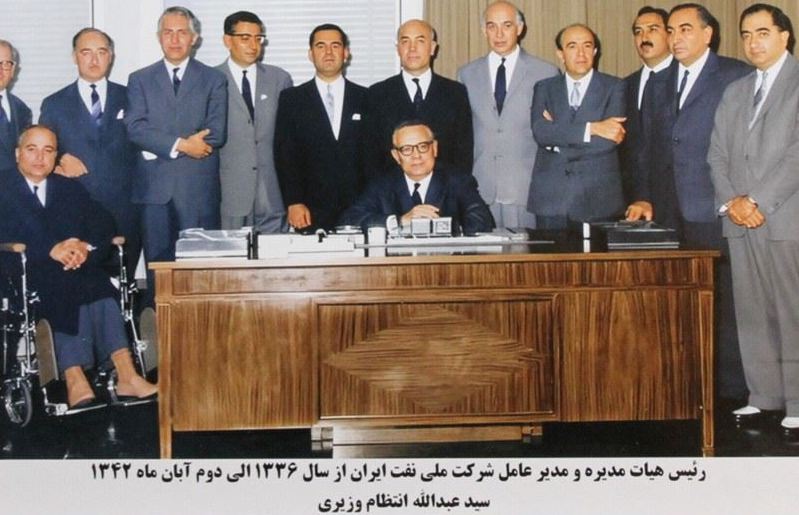
(The photo is from the pre-revolution management of the National Iranian Oil Company)
🇸🇦🇦🇪🇹🇷🇮🇱🇮🇶🇯🇴🇴🇲
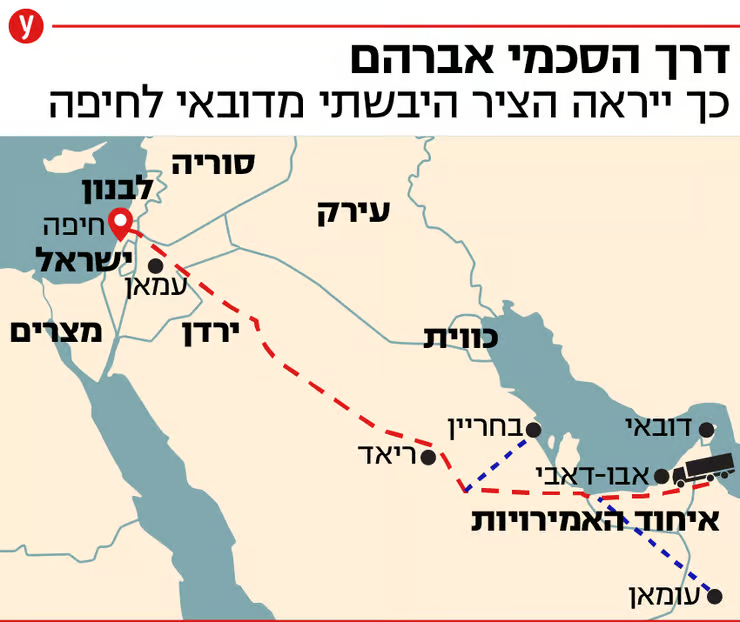
Moyen-Orient: Deux blocs s’opposent pour façonner les nouvelles routes transorientales entre l’Asie, l’Europe et l’Afrique du Nord: d’un côté l’axe Turquie–Qatar, de l’autre l’axe Israël–EAU.
Chacun cherche à rallier l’Arabie saoudite afin de promouvoir son propre corridor commercial à travers le Moyen-Orient.
➡️La Turquie et le Qatar avancent deux options:
- Route du Développement: Golfe → Irak → Turquie
- Route du Levant: Golfe → Levant → Turquie (ou doit passer un gazoduc pour l'Europe.)
➡️Israël et les EAU mettent en avant une seule alternative :
- Corridor économique Inde–Moyen-Orient–Europe (IMEC) : Golfe → Israël
---
Le refus de l’Arabie saoudite de normaliser ses relations avec Israël fragilise le projet IMEC porté par Israël et les EAU.
Dans le même temps, Oman signe un accord pour le transport de marchandises via la Turquie.
L’Irak poursuit ses grands travaux d'infrastructures, tandis que la Syrie rejoint le projet turco-qatarien. On comprend les enjeux autour de la stabilisation ou la déstabilisation de la Syrie.
🧵to lay down first draft of my top-5 short-to-medium term (three to 12 months) scenarios about the future of the Islamic Republic and conflict in the context of the #Iran-#Israel war.
The list is in order of likelihood today.
Expert or well considered feedback welcomed. 1/
So the Israeli strikes did not actually target Iran’s main enrichment facility…
Netanyahu is goading Iran into weaponizing its nuclear program. He wants to turn Iran into a pariah state.
In other words, Israel’s attack was about preventing the future of a non-nuclear Iran.
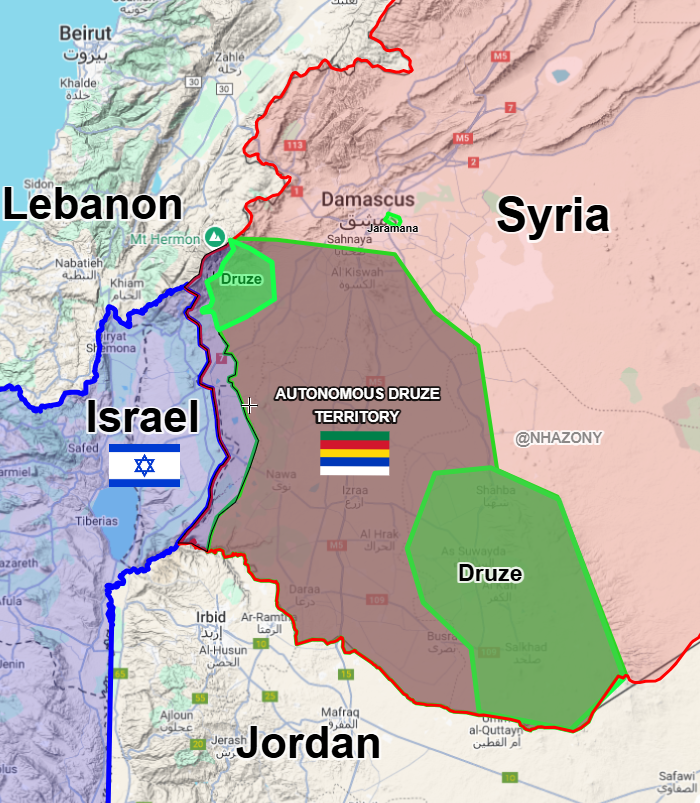
Israel is using the Druze and the Kurds as a pretext to tear Syria apart. This is consistent with longstanding Israeli doctrine.
In the 1950s, the doctrine of the periphery was put in place by Ben Gurion. Israel's security was to be ensured by creating alliances with the non-Arab and non-Muslim minorities in Israel's periphery in order to balance the Arab states in Israel's vicinity. The most important non-Arab potential allies of Israel were Ethiopia, Turkey, and Iran. But Israel also tried to strike alliances with non-Arab/Muslim minorities throughout the region: Kurds in Iraq and Syria, Maronites in Lebanon, and of course the Druze.
A disintegrated Syria, with a client-Druze state on Israel's border and a Kurdish state further north would suit Israel quite well. Slicing up existing Arab states into smaller states would make it easier for Israel to establish and sustain military hegemony over the region.
A similar plan has long been in existence for Iran as well. After defeating it military, the country would be sliced up into smaller states, with minority dominated regions in the border areas declaring independence. This is not solely an Israeli plan. Tariq Aziz, the former foreign minister of Saddam Hussein, publicly stated that "six small Irans" would be better than one big Iran.
This is why the close collaboration of some Iranian exile opposition groups with Israel is so dangerous to Iran's future territorial integrity and independence.
It is also important to understand what this means for the region: Beyond the instability caused by slicing states apart, an Israeli strategy of regional dominance requires a certain level of constant instability in order to ensure that no state or coalition of states with the capacity to challenge Israel's hegemony ever emerges.
Thus, just as American hegemony entailed constant and intensifying instability in the Middle East, Israeli hegemony (or effort to establish hegemony) will probably provide an even greater level of violence and discord. //
If the #Egyptian and #Jordanian leadership participate in #Trump plan for #Gaza they will be overthrown and replaced with an anti-American alternative. If they refuse and Trump wrecks their economies in revenge the same thing will happen. If #Netanyahu unleashes all-out war on #Gaza again a full regional and pan-Islamic response is inevitable. President @realDonaldTrump stop this crazy talk. Stay home and fix the #USA. Put America First. There's an idea!
What's happening Syria is probably the most incoherent geopolitical event I've come across, and the more you look into it, the more confusing it gets.
I mean, just look at this list:
- First of all, the speed of Assad's collapse still makes very little sense: after successfully holding out against multiple enemies for 13 years with Russian and Iranian backing in a brutal civil war, his regime suddenly crumbled in just 11 days with almost no bloodshed.
- The "liberators" of Syria being celebrated by the West are Islamist groups on their own official terrorist lists. The country's new leader, Al-Julani, still has a $10 million bounty on his head as a "Specially Designated Global Terrorist" for founding the Syrian branch of Al Qaeda.
- Biden called this "a historic opportunity for the long-suffering people of Syria to build a better future" while his administration continues to occupy a third of Syria, control its oil fields, maintain crippling sanctions, and bomb its territory... thereby obviously very much compromising this better future.
- Assad's Prime Minister immediately agreed to work with the rebels and they accepted him - despite being mortal enemies in a brutal 13-year civil war.
- Al-Julani, after years of orchestrating suicide bombings and sectarian massacres against civilians, is now suddenly positioning himself as "diversity friendly".
- Russia, despite being in an alliance with Syria dating back to the Soviet era, billions invested in protecting Assad, and their only Mediterranean naval base in Tartus, essentially shrugged it all and let their ally fall.
- Syria's new leaders remain bizarrely silent about Israel invading their territory and the U.S. bombing and occupying their country. They've said nothing about their strategic assets - including the entire navy and air force - being destroyed in U.S. and Israeli air raids.
- The U.S. maintains its occupation of a third of Syria (including most oil fields), claiming it's necessary to "ensure the enduring defeat of ISIS" - despite Trump declaring in 2019 (and the U.S. repeatedly confirming since) that "we have defeated ISIS in Syria". Western media largely ignore this ongoing occupation while celebrating Syria's "liberation".
- Hamas, while in the middle of a war with Israel, took time to congratulate the Syrian rebels - even though Assad was their (and Iran's) longtime ally and Syria's fall significantly weakens their own strategic position.
- The U.S. celebrates the liberation of Syrian prisoners while operating its own concentration camps in the country (https://t.co/VoSHG8bi3B) holding tens of thousands indefinitely without trial - half of them children - but that apparently doesn't count as oppression.
- Türkiye is fighting against the Kurdish-led Syrian Democratic Forces (SDF) with apparent U.S. approval, while the SDF was fighting Assad (which the U.S. wanted) - meaning U.S.-backed forces are effectively fighting other U.S.-backed forces.
- Iran, normally eager to defend its regional interests, suddenly abandoned billions in investments and a crucial strategic ally in their "Axis of Resistance", evacuating their personnel and citizens within hours.
Truly one of the strangest chapters in modern geopolitical history. Every possible explanation contains its own contradictions, and most players are acting against their own stated principles and interests.
At this stage it looks like the simplest explanation might go something like this: the U.S. welcomes the fall of a longtime opponent; neighboring powers like Israel and Türkiye see an opportunity for territorial gain; rebel leaders seem willing to accept loss of sovereignty and territory in exchange for domestic control over a diminished Syria; Russia and Iran chose to cut their losses given other regional priorities; and smaller players like Hamas are scrambling to adapt. Still, the unprecedented speed and coordination of these events suggests we're missing some crucial pieces of this very strange puzzle.
For those who don’t remember just how chaotic the Syrian Civil War was.
13 years of war in 2 minutes
🟥 Assad
🟩 Syrian rebels
🟨 Kurdish-led SDF
⬛️ ISIS
ISIS really controlled a huge areas back in 2015-2016
Je vais vous dire ce qui va se passer dans les prochains jours au Moyen-Orient.
1/ Israël va poursuivre son génocide à Gaza, continuer ses frappes au Liban et en Syrie, protégé par son impunité et le soutien sans faille de Washington et des autres capitales occidentales.
1. Coming events may prove me wrong, but I continue to believe that Iran seeks to avoid a war with Israel.
Israel may now have the pretext to take the fight to Iran, but if Iran considered a war inevitable, tonight's attack would have looked very different.
A democracy can only last 200 years.
At least, that’s according to 18th-century historian Alexander Tytler.
He claimed democracies always follow a predictable pattern which ends in servitude…🧵
Today, Spain celebrates the region of Galicia.
One of the most soulful & enchanting pockets of the world.
It’s hard to do a place like this justice, but here’s my best shot:
(a 🧵)
If you live in (Jewish) West Jerusalem, your water runs 24hrs/day, 7 days a week.
If you live in (Palestinian) East Jerusalem, your water runs 1-2 days/week or 4-9hrs/week in some cases.
Not so complicated after all. It’s called apartheid https://t.co/gqap13PfaP