Footage of Karen Chen Xiuling’s arrest at Singapore’s Changi Airport on November 5.
Karen Chen, a Singaporean national, was a director of several companies linked to Prince Group founder Chen Zhi.
$1.07 Billion in Crypto Flowed Into Sihanoukville Casinos Despite the Crackdown
While Cambodia was raiding scam compounds, 34 Sihanoukville casinos received a staggering $1.07 billion in cryptocurrency in just over eight months. According to TRM Labs, $687 million went to casinos linked to US-sanctioned networks.
Even after US sanctions in April, entities linked to Xihu Resort Hotel’s casino received $184 million, while Huan Hai Bo Lai-linked entities received another $129 million.
Nearly all the crypto, 99.9%, was USDT on TRON. TRM also found casinos continuing to exchange USDT for chips and dollars with little apparent customer due diligence, while crypto-to-cash services remain active across Sihanoukville.
https://t.co/VPX2nnUqKj
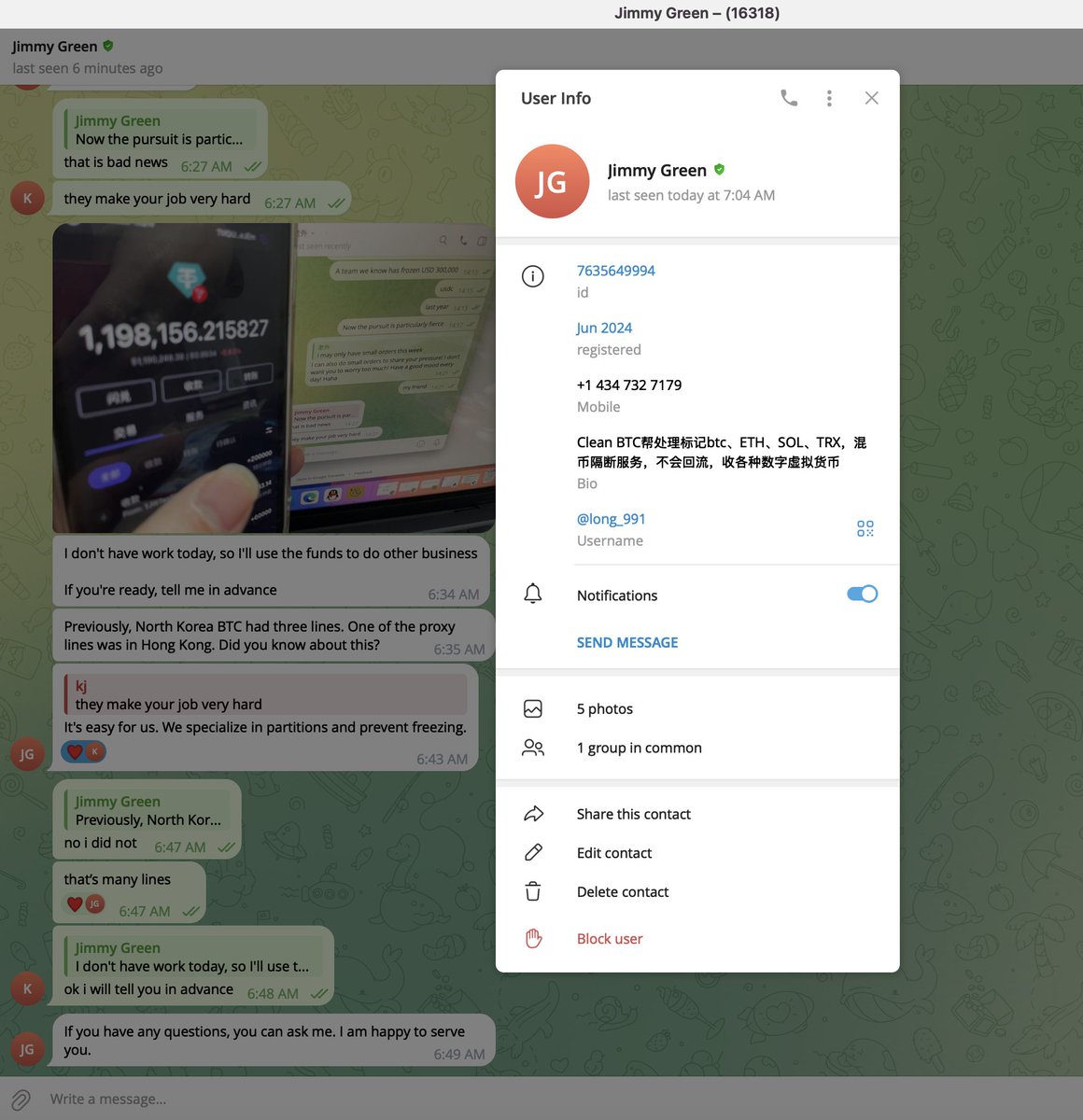
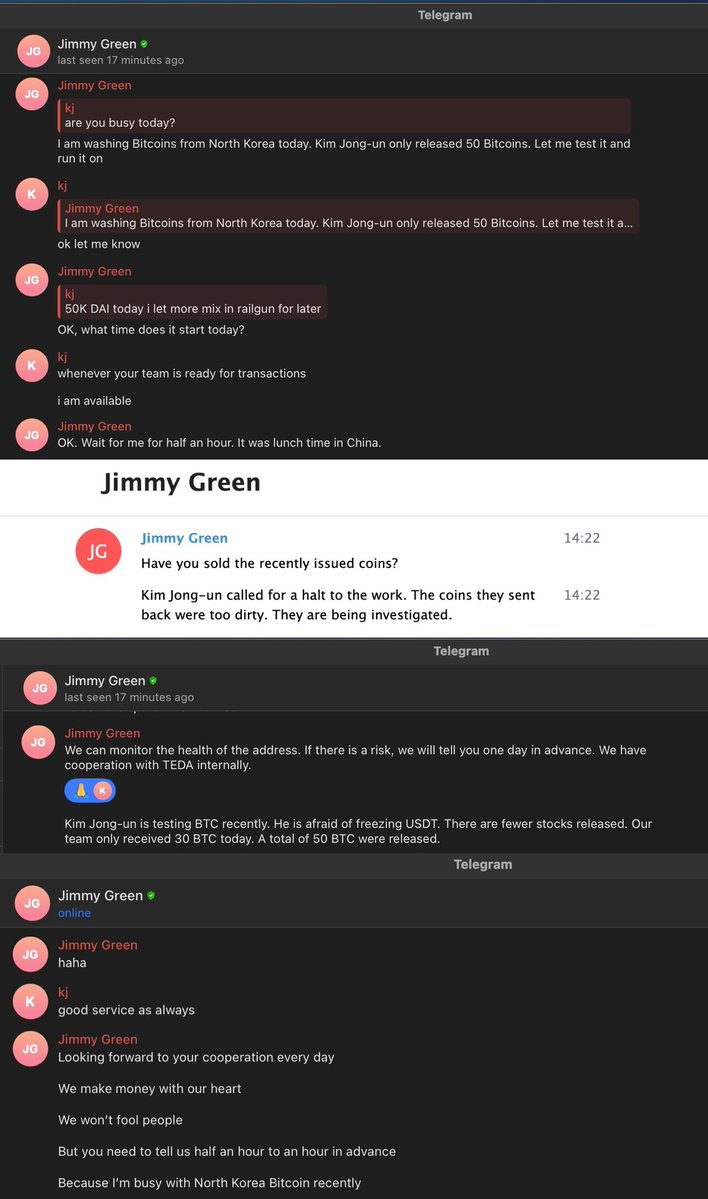
1/ How I infiltrated a Chinese organized crime syndicate that has laundered $1B+ across multiple exploits for Lazarus Group.
Posing as a client, I gathered intel that helped action freezes for the Feb 2025 Bybit exploit and attribute illicit activity onchain.
17 Iranians charged with conducting massive cyber theft campaign on behalf of the IRGC and other Iranian entities: the Mabna Institute hackers attacked systems belonging to hundreds of universities, companies, and other victims to steal research, academic and proprietary data, and intellectual property. @DOJNatSec@NewYorkFBI
https://t.co/aZU8fk1dYP
🚨We are seeing increased targeting of PLCs in the Water and Wastewater Systems Sector. Owners, operators, & integrators should disconnect PLCs & internet-exposed OT assets ASAP to reduce risk of disruptions, configuration changes, & physical damage. 🔗 https://t.co/VDTt2cZyJz
🚨 Fake IRS letters are targeting crypto holders with a QR code leading to a convincing fake "Digital Asset Compliance Portal."
It's not real. The IRS has no such program.
❌ Don't scan the QR code
❌ Don't enter any info
❌ Don't call any numbers listed
Stay safe → https://t.co/uwvr413dTQ
The government’s crackdown since January appeared to have disrupted much of the visible scam compound infrastructure in Cambodia, but there was still a lack of accountability for compound owners and other key, elite-level interlocutors.
“The scam compounds are only the visible front end of the much more insidious architecture of elite impunity which gave rise to the industry in the first place,” Jacob Sims said. https://t.co/7xE7IkkeWR
Four Days to Make Each Victim Fall in Love, Powered by ChatGPT and Starlink
A trafficked worker in a Myanmar scam compound told AP he had four days to make each target fall in love. He impersonated a 28-year-old Singaporean woman, ran more than 100 chats at once while supervisors walked the desks with electric batons, and put his reach at 50,000 people from 17 countries in a single month. The tool that let him work across dozens of languages was a platform called KT, built on ChatGPT and Gemini for auto-replies, roleplay characters and translation in over 100 languages.
A new AP and FRONTLINE investigation traces American infrastructure all along the chain. One in five device connections at four sanctioned compounds ran through US-registered companies, among them Cogent, Oracle, AT&T and DigitalOcean. Starlink is the top provider in Myanmar with close to a 20% share. It has shown it can cut compounds off when it wants to, dropping 2,500 units last October and losing more than half its share, before use surged back by December.
The crackdown doesn't stick. When the military demolished KK Park and broadcast footage of dozens of seized Starlink terminals, at least seven of those same devices were online at a compound 30km away by January, according to International Justice Mission. IJM counts at least 25 sites built or grown since last fall's sweep. Washington has been asking the tech companies to cooperate, on a voluntary basis.
https://t.co/qoBZsuOyxP
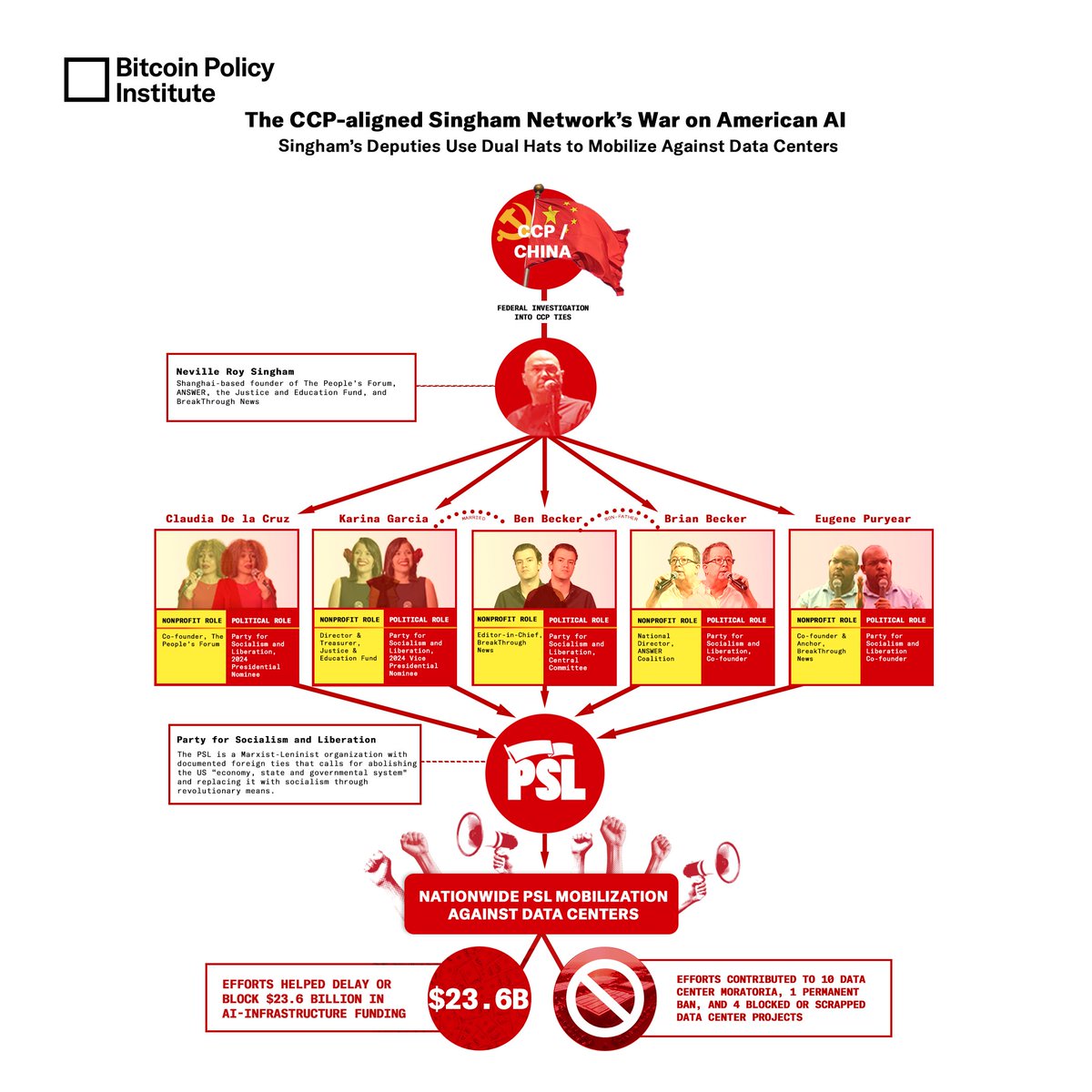
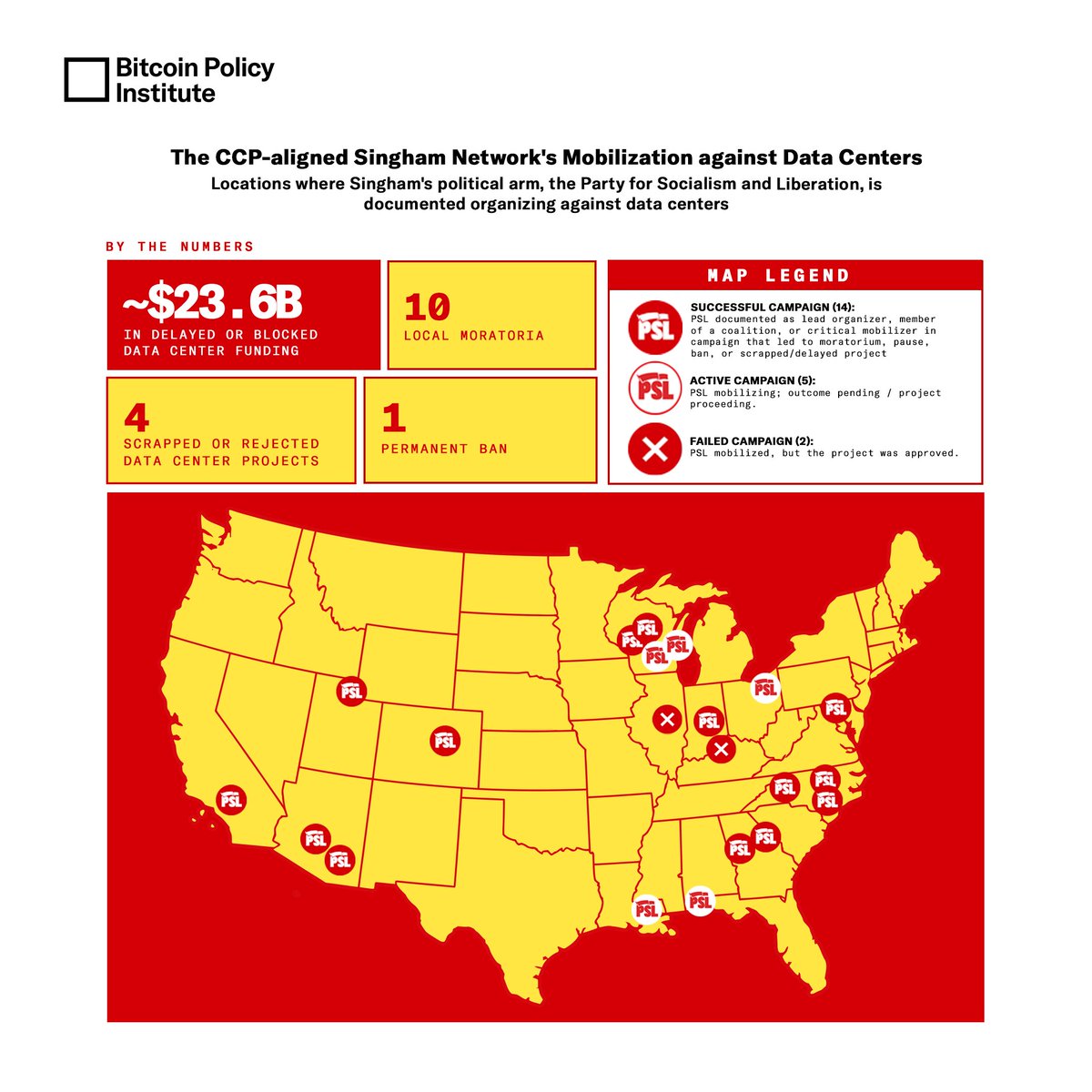
NEW: BPI research reveals that a Marxist-Leninist group with documented ties to China has been a critical mobilizer in efforts that have blocked or delayed $23.6 billion in AI investment in the US.
Its scalps include 10 data center moratoria, 1 permanent data center ban, and 4 rejected or scrapped AI projects.
In Part II of our foreign influence investigation, BPI exposes the Party for Socialism and Liberation (or PSL) as the political arm of Shanghai-based Neville Singham, and lays bare a national campaign launched by the party to stop America’s data center buildout.
Singham is the subject of multiple federal investigations into his reported ties to the CCP. Our research uncovers the anti-data-center organizing of his activist vehicle, the PSL, across 21 campaigns in 14 states, in roles ranging from lead organizer to one member of a broader coalition.
This report adds to the mounting evidence that China and its surrogates are committed to stopping America’s data center buildout so that Beijing can gain the advantage in the AI race.
How are a group of internet scammers in Nigeria profiting off of the loneliness crisis in the West? I spoke to @CarlosBarraganT, author of the new book “The Yahoo Boys.”
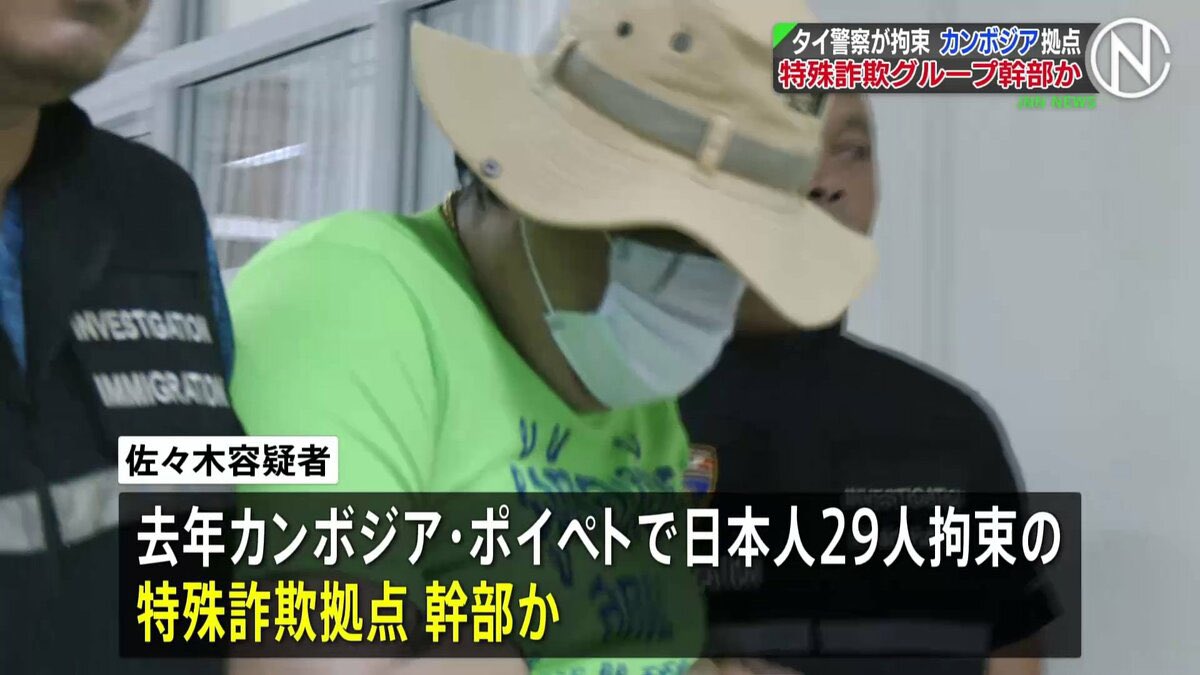
A Japanese Scam Boss Ran a Poipet Compound Without Ever Setting Foot in Cambodia
Thai immigration officers arrested a 39-year-old Japanese man in Bangkok's Watthana district over the weekend, wanted in Japan as a leadership figure in a Cambodia-based fraud network. Police identified him only as Sasaki. He's accused of directing a call center operation out of Poipet that impersonated Japanese police officers to swindle victims back home, the kind of tokushu sagi ring where the caller poses as someone in authority, with losses estimated in the billions of yen.
There's no record of Sasaki ever setting foot in Cambodia. He lived in a luxury apartment in Bangkok and ran the operation remotely, making frequent trips to China, Malaysia, and Vietnam to keep it moving. Japanese investigators say he worked alongside Chinese managers at the Poipet compound, and that together they targeted heavily indebted Japanese nationals and trafficked them to the base to work the phones.
Nagoya District Court issued the warrant on April 1, on fraud charges. He's expected to be extradited to Japan. Thai police framed the arrest around their anti-trafficking center and the usual line about not letting the country serve as a transit point for international criminals.
@USTreasury You should sanction all of the sketchy Iranian OTC brokers in Canada being abused by illicit actors.
Two were used in recent violent home invasion robbery / extortion cases to launder crypto.
-Nia Nations Exchange (NNCE)
-Million Exchange (MillionEx)
- For those who continue to frame the #SanDiego mosque shooting as something other than neo-Nazi and white supremacist ideology, the extensive symbolism found on the suspects, their weapons, and vehicle leaves little room for doubt.
- Sonnenrad (Black Sun), swastikas, Odal runes, and the Atomwaffen Division’s trefoil clearly point to a deep ideological commitment.
- To anyone who monitors and researches violent extremist movements, this is as clear as daylight.
- I won’t go into the details of the circulating manifesto at this time, but the ideological motivation and intent are unmistakable.
- This attack appears to be rooted in accelerationism (see also the writings on the handgun)
- The Atomwaffen Division (AWD) trefoil patch visible on the arm is the symbol of a violent neo-Nazi and white supremacist terrorist group. It specifically represents “accelerationism,” the belief that modern democratic society is beyond saving and must be violently destroyed.
- The goal is to trigger a societal breakdown—often envisioned as a race war or "boogaloo"—so that a white ethnostate can be built from the ruins.
- Acts like this are not impulsive or accidental. They require deep ideological commitment, extensive preparation, and a conscious decision to cross into violence.
- The sheer volume, consistency, and specificity of the neo-Nazi symbols and references make it clear that the suspects had fully embraced accelerationist ideology and had almost certainly been planning this attack for some time.
- While there has been a documented rise in online radicalization among teenagers and young adults across various violent ideologies far-right, Islamist, nihilistic/mass shooter subcultures, etc.), what makes this case particularly rare is that 2 perpetrators aged 17 and 18 successfully conspired to carry out a lethal neo-Nazi-inspired firearm attack.
🚨 201 arrests in first-of-its-kind cybercrime operation in MENA region
Operation Ramz brought together law enforcement agencies across the Middle East and North Africa to disrupt phishing, malware and cyber scam networks responsible for significant financial harm.
Results of the operation included:
🔵 201 arrests
🔵 382 suspects identified
🔵 3,867 victims identified
🔵 53 servers seized
The operation also enabled the sharing of nearly 8,000 pieces of intelligence to support ongoing investigations and strengthen regional cooperation against cyber threats.
Read more ➡️🔗 https://t.co/oV0EhMrEgW
Sri Lanka has arrested more than 1,000 foreigners for cybercrime since January, up from 430 in all of 2024. Most are Chinese, Vietnamese, and Indian nationals. Networks pushed out of Cambodia and Myanmar are exploiting the 30-day tourist visa regime and setting up in rented villas and office complexes, with one raid this week pulling in 192 Indians and 29 Nepalis across Galle and Matara.
https://t.co/hFBgVGotXQ
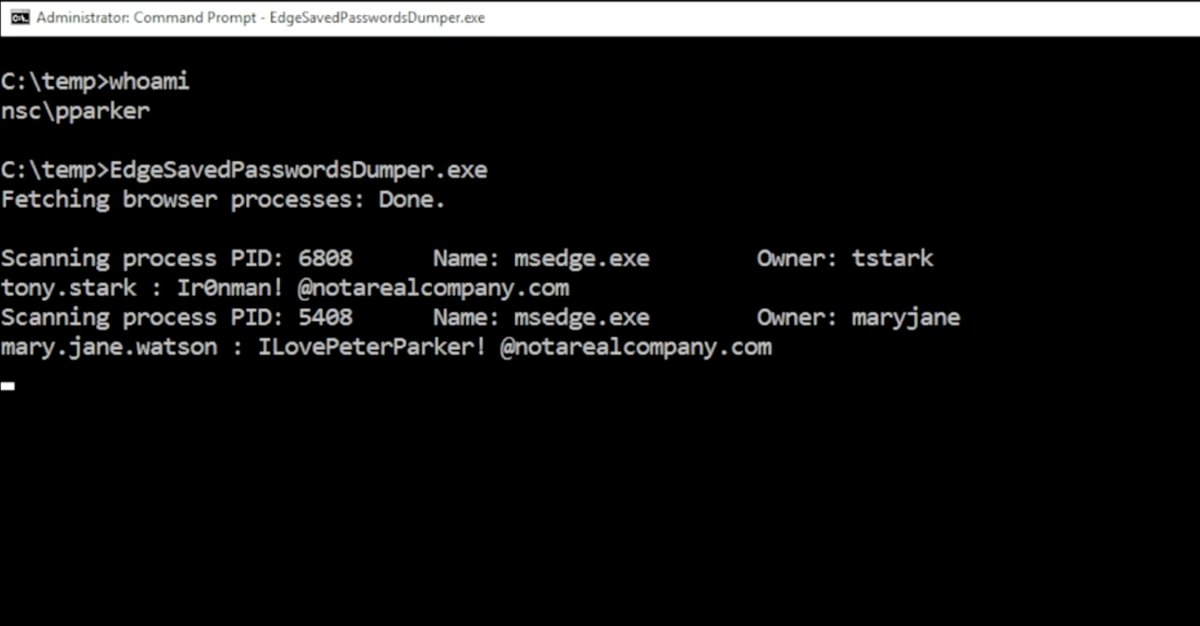
❗️🚨 Microsoft Edge keeps every saved password in process memory as cleartext from the moment it launches. Microsoft's responsed when reported: "by design."
All of them. Including credentials for sites you won't open this session.
Researcher @L1v1ng0ffTh3L4N tested every major Chromium browser. Edge is the only one that behaves this way.
Chrome decrypts credentials on demand, and App-Bound Encryption locks the keys to an authenticated Chrome process so other processes can't reuse them.
In Chrome, plaintext surfaces only during autofill or when a password is viewed, making memory scraping far less useful.
What makes this extra weird is that Edge still demands re-authentication before revealing those passwords in its Password Manager UI, while the same browser process already holds every one of them in plaintext.
In shared environments, this turns into a credential harvest. On a terminal server, an attacker with admin rights can read the memory of every logged-on user process. In the published PoC video, a compromised admin account lifts stored credentials from two other logged-on (and even disconnected) users with Edge running.
Microsoft's official response when notified: "by design."
The finding was disclosed April 29 at BigBiteOfTech by PaloAltoNtwks Norway, alongside a small educational tool that lets anyone verify the cleartext storage for themselves.
U.S. businesses and individuals were targeted and hacked by Nigerian-linked fraud organizations in an email scheme that spanned 47 states and 19 countries.
In Ohio, victims were in Norwalk, Kent, Akron, Hudson, Maple Heights, Westfield Center, New Riegel, and Greenwich.
Outstanding work by our USAO federal prosecutors and FBI investigators!
CONVICTION DETAILS HERE:
https://t.co/WXZZvwJHvy
@FBICleveland