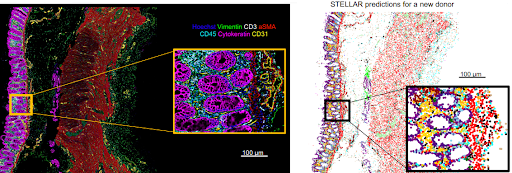
Introducing STELLAR: a geometric deep learning method for cell type discovery and identification in spatially resolved single-cell datasets. @jure@GarryPNolan@SnyderShot https://t.co/Lj2TO3NCQt
Out today and freely available, a tool many in the image analysis community have been waiting for!
PyImageJ: A library for integrating ImageJ and Python
@EliceiriK@UWMadisonLOCI@ctrueden@CiminiLab@DrAnneCarpenter
https://t.co/2sjWSfJJ8n
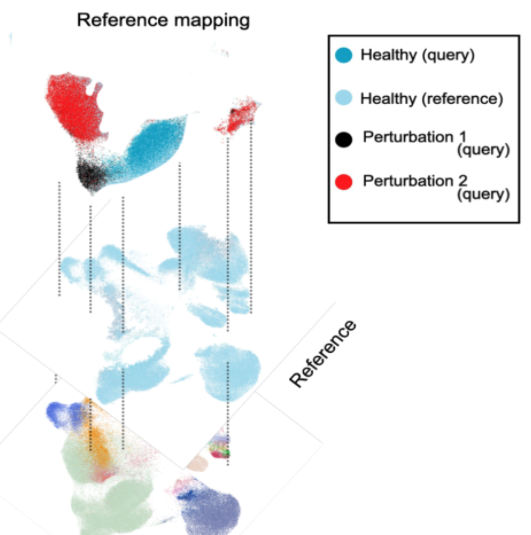
(1/n) This thread will describe recent advances in life-long learning (LL) as an essential player in the current single-cell atlases. LL in this context means building a map, and iteratively updating it with new data.blob,
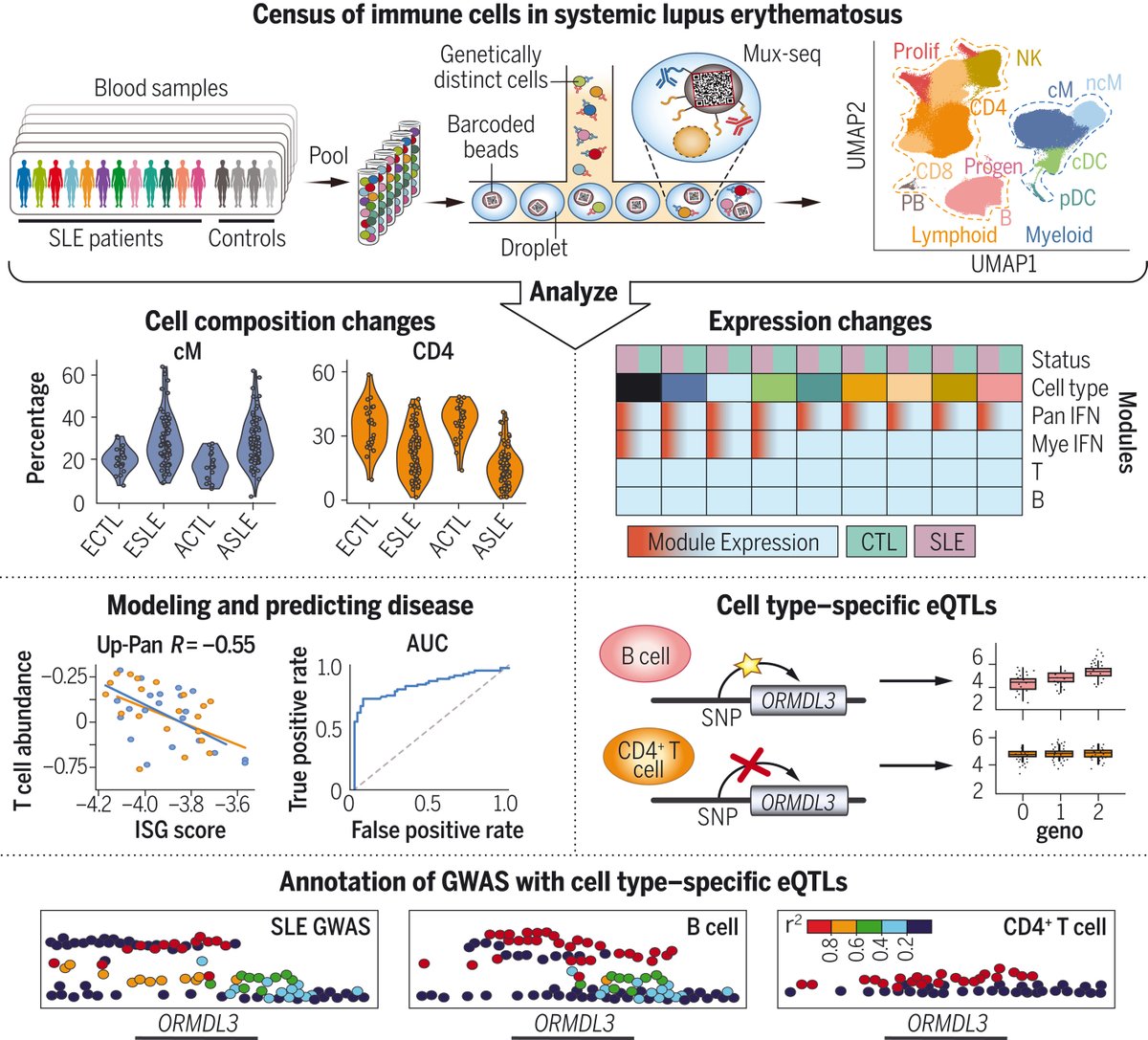
In 2018, we developed mux-seq and demuxlet to enable population-scale single-cell sequencing. Today, excited to share our paper in @ScienceMagazine where we deployed mux-seq to profile 1.2M immune cells from 162 lupus patients and 99 healthy controls: https://t.co/ITKGnuEsBl. 1/n
If Darwin went on his voyage of the Beagle today his research would've ended with a t-SNE of the bird specimens that he collected instead of a theory of evolution
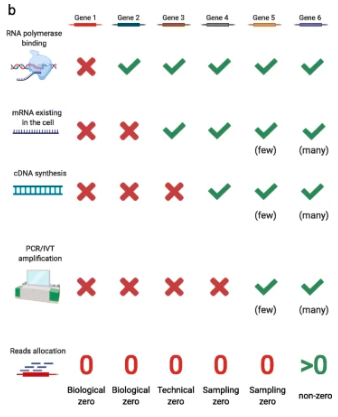
Review on zero-inflation of single-cell RNA-seq data, from @Ruochen_Jiang, @jsb_ucla & co. They discuss the sources of biological and non-biological zeroes, methods to address them, and how they influence analysis. https://t.co/JgJw5Js47X
Our fingerprint patterns—whether they are circular, wavy, or winding —are influenced by genes controlling limb development and not skin patterning, finds a comprehensive analysis. Learn more in @CellCellPress: https://t.co/fBLuiXxMjh