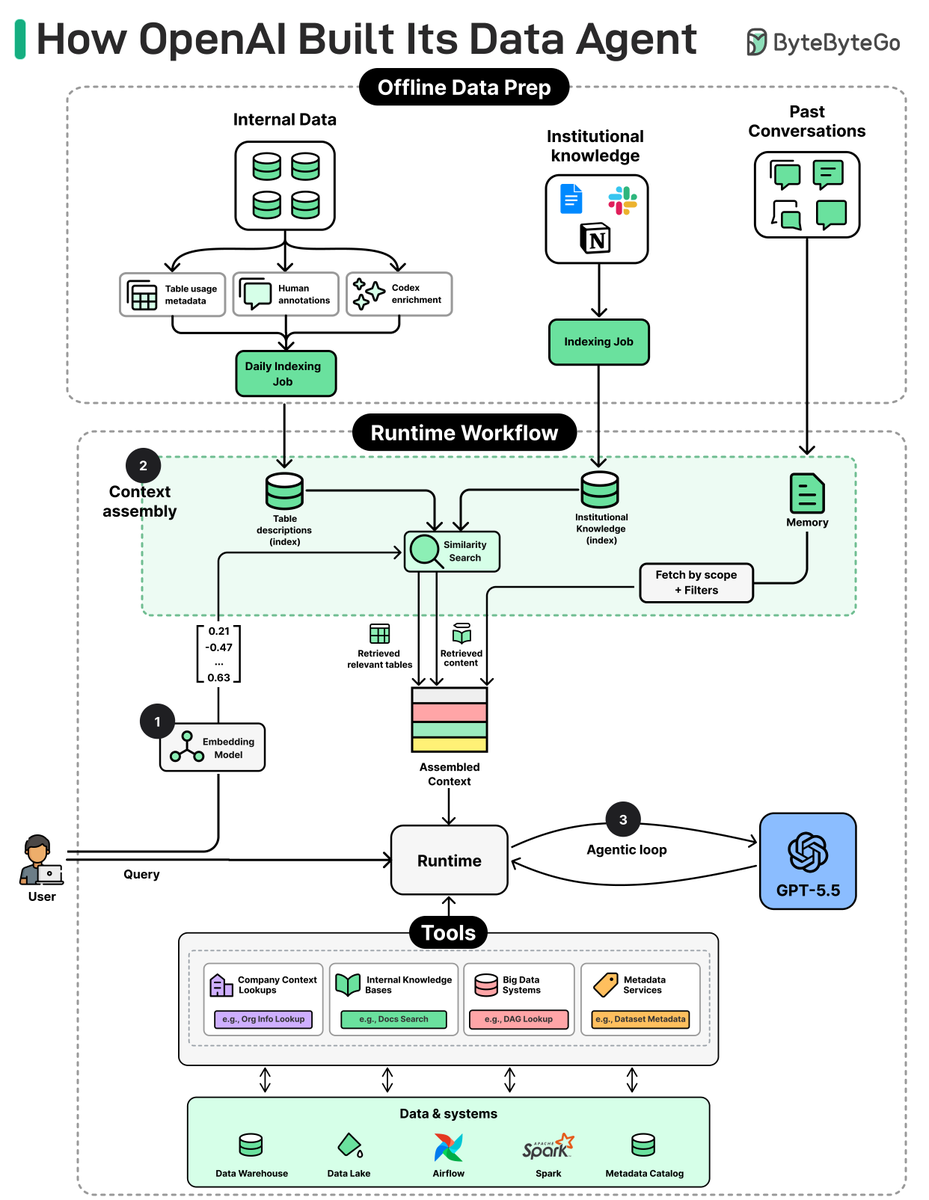
How OpenAI Built Its Data Agent
Most teams building data agents stack routers, fine-tunes, and complex retrieval pipelines on top of multiple LLMs. OpenAI didn't.
Their data agent runs on a single model and only 13 tools, across 1.5 exabytes and 90,000 tables. It's "pretty vanilla" by design.
We spoke with Emma Tang, Head of Data Platform Engineering at OpenAI, to better understand the architecture and the engineering decisions behind it.
The article covers:
- The architecture behind the data agent
- The six layers of context that make a single LLM reliable across 90,000 tables
- How OpenAI Uses Codex Internally: 3 Use Cases
- Five practical lessons for any team building a domain agent
- Where OpenAI's data platform is headed next
For the past few weeks, me and @iamadityaanjana have been working on a Collaborative Multi-Agent Memory System, and we've recently submitted our paper to a conference.
As agentic systems become more common, memory is no longer just about helping a single model remember information. Multiple agents need to collaborate, share knowledge, resolve contradictions, and track evolving state over time.
To tackle this, we built a memory framework with:
• Shared and private memory scopes
• Trust-aware retrieval
• Lineage tracking for evolving knowledge
• Contradiction resolution for stale memories
• Benchmark-driven evaluation with ablations and baseline comparisons
The goal wasn't to build another memory wrapper around an LLM. We wanted to explore how groups of agents can maintain reliable long-term memory while working together on the same task.
Excited to share more once the review process is complete 🚀
In 1996, Microsoft made a chatroom that turned your conversations into comic strips.
It was called Microsoft Comic Chat.
Instead of a normal text box, your messages appeared as speech bubbles over weird little black-and-white characters. The program would automatically pick poses, facial expressions, panels, and layouts.
So you could be arguing with strangers online, but it looked like a newspaper comic drawn by someone having a breakdown.
For a few years, the future of online chat looked like this.
@crmdesign8@argvee a more intelligently designed modular codebases, basically every tool call an agent makes should have some intelligent proxy doing the job smarter with a whole sustem of their own, and improving the memory systems still in their infancy
@skytaleSythe@erasmolbj Like every awful Microsoft product for 3 decades and counting, you WILL eat the enterprise slop, because your company has some $1 billion dollar boondoggle contract that and something something Active Directory, or whatever 🤷
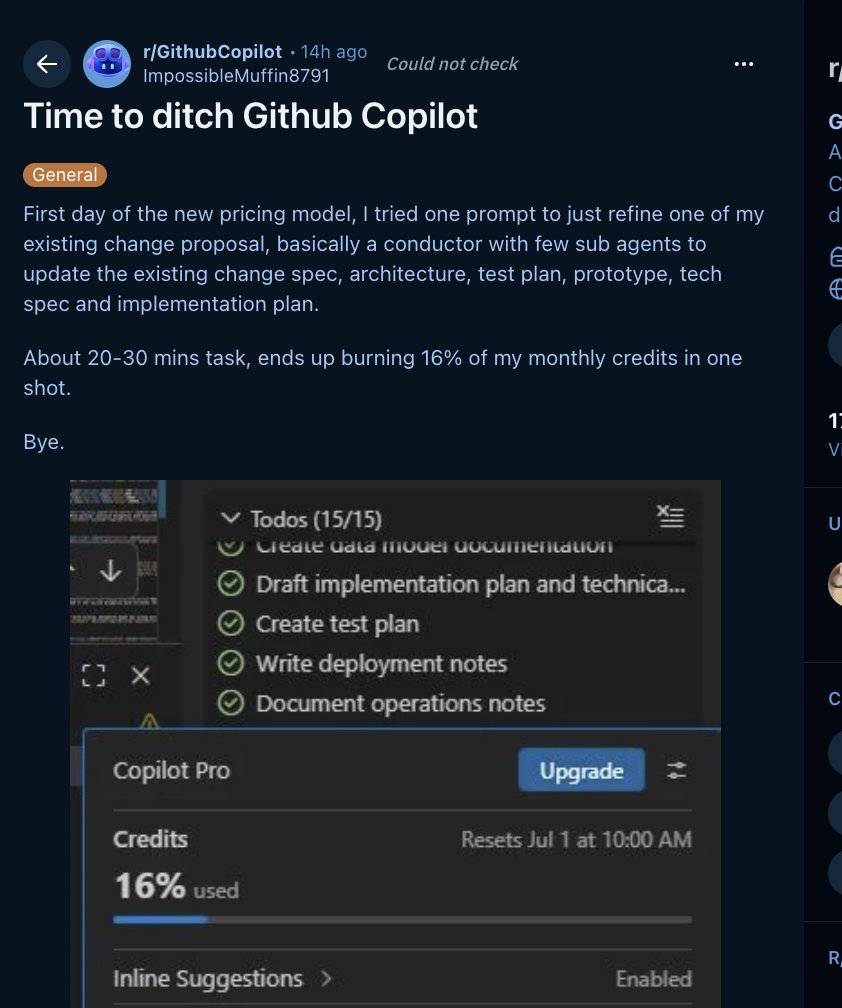
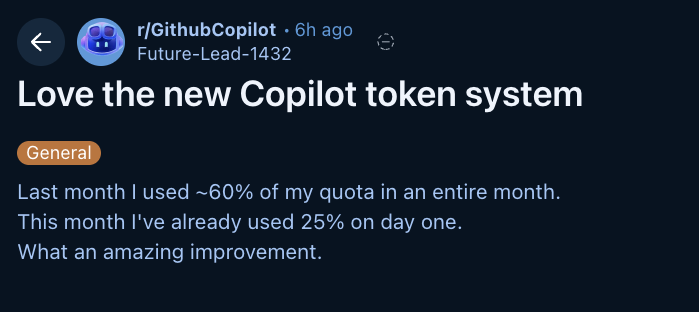
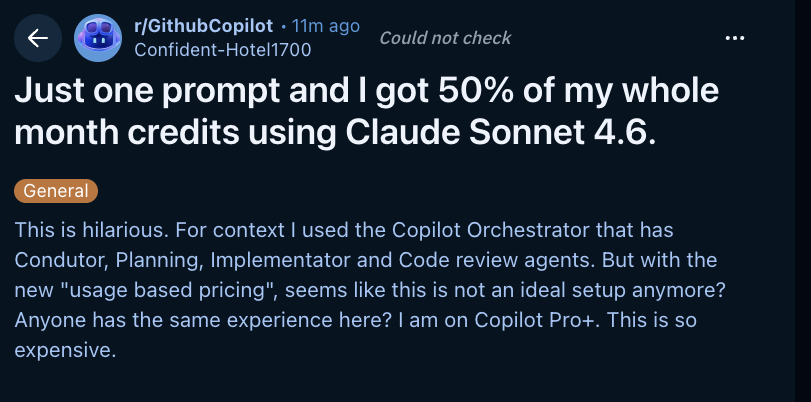
Yeah almost like every ai company obfuscated and subsidized the costs for years and suddenly decided for enterprises that they needed to pay the token rates.
my code generations framework costs exactly zero tokens to run. feels great. and it feels even better knowing i built it burning tens upon tens of thousands $ of dollars worth of subsidized tokens to do it for a pittance. lol.
Reminder: every Hugging Face Space is an API your agents can call :)
I asked mine to build a website about the flowers of France 🌸 and it used VAST AI's TripoSplat Space to turn photos it found into real 3D Gaussian splats, live on the page!
All on my HF Pro daily ZeroGPU credits (40 min/day renewed daily for only $9/month)
my VC told me anthropic keep killing his startups so i asked how many of his startups are relying on claude and he said he just goes to YC and gets a new startup afterwards so I said it sounds like he's just feeding startups to anthropic and paul started crying