A beautiful study by Josh Gendron and colleagues. Congratulations @GendronLab! -- A circadian clock output functions independently of phyB to sustain daytime PIF3 degradation. https://t.co/EuSB0kTAKV
New paper! Circadian clocks in the field. Wonderful collaboration with Hiroshi Kudoh at Kyoto University, studying #circadian signalling in a natural plant population. Congrats to first authors Haruki Nishio and @Dodka_ 1/2 @JohnInnesCentre#chronobiology https://t.co/QunBYdkQqU
PhD opportunity in my lab @JohnInnesCentre
Ticking clocks, thriving crops: developing climate-resilient crops through circadian biology ⏰
Fully funded for UK students, by @NRPBIODTP. 9 May deadline. Link to apply⬇️ #chronobiology#plantsci
https://t.co/COj0DAuhYk
MCDB Major Moreen Ng Awarded the Tom & Joan Steitz RNA Fellowship.
To learn more about Moreen's winning essay, visit: https://t.co/agYiFZu7RE
Congratulations Moreen!
Thank you to @CellChemBiol for the opportunity to write this! It was fun to put to paper and maybe it'll resonate with some folks. Shoutouts to @StanfordBiochem@RohatgiLab and @UChiChemistry, and also my dad who can now cite a paper in which I say 'My father was right' 😆
Thanks @PlantTeaching for the fantastic write up of the paper!
Seasonal flowering and seasonal growth measure light duration differently https://t.co/JmwMRsT8Id
Thrilled to share that I received an @NIDCD K99/R00 Pathway to Independence Award! A huge thank you to my mentor and colleagues @CarlsonLab_Yale for their support.
The bacterial OLE #noncoding RNA is needed for cells to grow on most carbon/energy sources (except glucose or citrate) and to secrete proteins. This find suggests OLE (#ribozyme?) is part of a major regulatory apparatus of many Gram+ species. @PNASNexus https://t.co/nEvzoBL25V
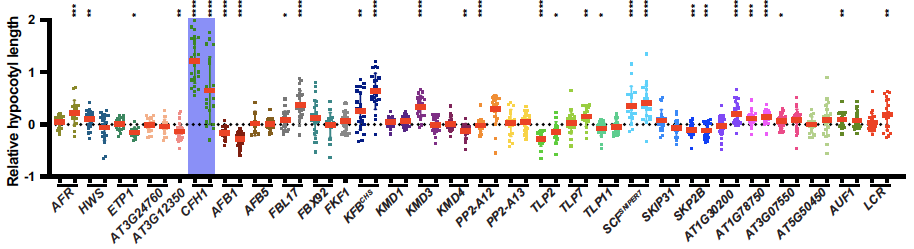
How plant flowering is controlled by daylength is well understood. However, less understood is how daylength controls plant growth. Using some classic photoperiod experiments, @GendronLab reveal the daylength-sensitive metabolic cues that control growth:
https://t.co/B14cdmIFxX
Researchers found that plants use their circadian clocks to respond to changes in external water and salt levels throughout the day. Controlled by a protein known as ABF, this clock helps plants adapt to extreme conditions such as drought. https://t.co/gwQlJPOXxN
Plants distinguish different photoperiods to independently control seasonal flowering and growth @ScienceMagazine from @GendronLab
https://t.co/uhpzvQzZiy
Congrats to Qingqing and the rest of the team! Check out our new paper showing plants can sense two seasons simultaneously to control growth and flowering. https://t.co/EYym6SuTpx