Empty capsids are the tax on AAV manufacturing. So we made the capsid and its payload find each other: a TALE domain fused to VP2, its target sequence in the payload. Capsid filling up to ~3x, titres held. New in Molecular Therapy Advances: https://t.co/KnQkYaWYUI
I ate cultivated chicken last night. Before dinner, we toured the @UPSIDEFoods facility — what critics call the "lab" where "lab meat" is made.
What struck me most was how clean it was. Every chicken and pig factory I’ve entered has been filthy, with the pungent smell of manure the animals live on top of.
The Upside facility was spotless. The plant manager told me that in two years of operating they haven’t had a single case of Salmonella or Campylobacter.
By contrast, the most recent USDA testing found Salmonella in 35% of ground chicken and Campylobacter in 25% of whole chicken carcasses from factory farms.
This won’t be for everyone. If you only want "natural" meat, eat pasture-raised meat instead.
But for the majority already eating factory chicken daily, this could be a major upgrade: the same product, minus the pathogens and the cruelty.
Human organ (liver) kept alive for 7 weeks, connected to all the tubing you see. (perfusing blood, food, etc)
Appears to be a record. Long-term ex vivo organs might be useful for testing:
--reprogramming
--gene therapy
--organ engineering
story in reply 👇👇👇
1/4 One DNA sequence, many chromatin states.
Excited to share SMFNet, a diffusion model predicting single-molecule chromatin accessibility. Explainer video below!
With co-first author Till (his thread: https://t.co/yBvtNKK4Nl), Yuliya, Roze, @anshulkundaje & Arnaud Krebs.
>be comp biologist in 2005
>chimp genome just dropped
>everyone comparing genes, looking for protein differences
>nah, i have a better idea
>find DNA that mouse, rat, and chimp all agree on
>stuff that hasn't changed in 300 million years
>*ultraconserved*
>then check if it suddenly breaks in humans anyway
>run the scan
>49 regions light up
>only 2 of them code for proteins
>mfw the most human parts of the genome aren't even protein genes
>top hit: 118 bases
>chicken vs chimp: 2 changes in 310 million years
>chimp vs human: 18 changes in ~6 million
>name it HAR1
>human accelerated region 1
>cyberpunk name af
>"what does it do?"
>"we'll find out later"
>be wet lab biologist down the hall
>handed a 118-base mystery
>colleague in Brussels is staining embryonic brain tissue
>mail him a probe, "try this"
>months pass
>email arrives
>it lights up in Cajal-Retzius neurons
>7 to 9 weeks gestation, right when the cortex is building its layers
>it's an RNA gene, folds into a new shape in humans
>10 of the 18 changes keep the fold intact
>evolution was being careful
>still can't say what it actually does
>be enhancer lab in 2008
>run your own human accelerated scan
>top hit: HACNS1, another HAR
>stick human version into a mouse embryo with a blue dye reporter
>blue in the paw
>specifically where the thumb and wrist will form
>chimp version barely does it
>swap 13 human mutations into the chimp version
>now it does it
>we may have found part of the genetic story of the human hand
>still not sure of the general human accelerated function though
>be population geneticist
>see everyone celebrating "positive selection"
>notice the mutations are suspiciously biased toward G and C
>gc_biased_gene_conversion.jpg
>recombination can fake a selection signal for free
>build a model to separate them
>somehow the HARs survive the cut
>about a fifth of them are probably just gene conversion
>be the guy who brings this up at every conference
>nobody likes this guy
>but this guy is right
>be autism geneticist in 2016
>if these regions made the human brain
>breaking them should break something human
>check families where parents are related
>find HAR mutations disrupting both copies
>up to 5% of autism cases in those families
>some reviewers: "most of those CNVs hit genes too"
>shrug
>be machine learning guy, 2023
>train a model to read enhancers
>score every human-chimp difference in ~2,600 HARs
>expect all mutations to push the same direction
>43% of HARs have mutations fighting each other
>one turns the enhancer up, the next turns it down
>evolution overshot and corrected
>let's keep pushing
>huh, human DNA folds differently in the nucleus than chimp DNA
>structural rearrangements over a million years ago
>suddenly old enhancers are next to new genes
>"enhancer hijacking"
>post it, feels good, finally solved
>be yale lab, 2025
>map what 1,590 HARs actually touch, human and chimp side by side
>nearly 3,000 targets
>almost all shared between species
>no hijacking, just retuning old genes
>say the other guys were wrong
>post it, this is *not*solved
>be 2025
>we have CRISPR, organoids, and humanized mice
>put human HARs in chimp neurons
>they grow more branches
>put human HARE5 in mice
>more neurons, bigger cortex
>delete HAR123
>mice get worse at unlearning things
>finally testing them one at a time
>~3,000 to go
>be present day, present time
>telomere-to-telomere genomes for every great ape
>find whole new rapidly evolved regions that weren't even in the old reference
>call them HAQERs
>mfw more HARs
>the list keeps growing
>these things keep popping in every genome scan
>mfw the only thing accelerating here is our confusion
>mfw we still don't fully know what HAR1 does
We reviewed the “Risks from automated R&D” section of Anthropic’s August 2026 Risk Report, with access to the nonpublic version.
We focus on the report’s claims about catastrophic risks from automated AI R&D and about whether Anthropic had crossed relevant capability thresholds.
>be CNRS scientist in montpellier
>dig through institut curie's chemical library looking for an HIV cure
>find a quinoline that blocks rev from exporting viral RNA
>somehow involved in splicing
>start a company called splicos based on this
>4 years later, company gets merged into abivax
>molecule is now ABX464
>run two phase 2a HIV trials
>it shrinks the viral reservoir a bit
>mfw "a bit" does not cure HIV
>but the bloodwork is weird
>random microRNA miR-124 is cranked tf up
>mfw miR-124 is a major chill pill for inflammation
>turns out the drug grabs the cap-binding complex and splices exactly one random lncRNA
>that lncRNA becomes miR-124
>why that one? lol idk
>HIV attacks GI tract, so maybe give it to colitic mice?
>guts heal lmao
>let's yolo this for ulcerative colitis
>2018 phase 2a works
>let's try with rheumatoid arthritis while we're at this
>2020 covid hits
>"what if it stops cytokine storms"
>yeah let's cure ARDS too lol
>french gov makes it a national research priority
>500 patients in
>2021 trial stopped, does nothing
>stock eats dirt
>ceo: "covid was hyper-acute, chronic inflammation is different, trust me"
>quietly drop rheumatoid arthritis
>go all in on UC
>phase 2b works
>2025 phase 3 induction hits
>stock goes vertical
>2026 maintenance trial: half get remission on drug vs 10 % on placebo
>placebo rate is the lowest ever seen in a trial like this
>NDA to FDA planned late 2026
>mfw a failed HIV drug, a failed covid drug, and a lucky lncRNA might become a blockbuster UC pill
>mfw it took 18 years
>be cell biology postdoc at UCLA, 1986
>job: purify vesicles from rat liver
>ez
>purify the vesicles
>something else in the tube
>weird little barrels, way bigger than a ribosome
>fkisdis
>purify the barrels instead
>mostly protein, tiny bit of RNA
>not related to vesicles at all
>new organelle just dropped?
>lab holds a naming contest
>"vaults" "sure, "great name" "
>write it up, publish
>conclusion section: "function: unknown"
>surely we'll figure it out in a couple years
>reviewers: "are you sure this isn't just a virus"
>prove it isn't a virus
>apply for grants to study it
>first question on every call: "what does it do"
>"we're working on it"
>be early 90s
>vaults hang around the nucleus
>"they must plug the nuclear pores"
>they do not
>be different scientist, Netherlands, 1995
>chasing LRP, mystery protein that shows up in chemo-resistant tumors
>clone it
>~88% identical to rat vault protein
>it was vaults the whole time
>whole cancer field piles on
>a decade of papers on vaults and drug resistance
>nobody ever proves vaults cause it
>back at UCLA
>one of the vault proteins binds telomerase
>"guys what if this is the fountain of youth"
>knock it out in mice
>telomeres fine, aging fine, mice fine
>2002
>knock out the main vault protein
>mice: perfectly healthy
>knock out all three vault proteins
>completely vaultless mice
>mice: basically fine, some subtle immune stuff
>mfw something in every cell since the dawn of eukaryotes does nothing obvious
>"just test it in yeast"
>yeast don't have vaults
>"worms then"
>no vaults
>"fruit flies"
>no vaults
>mfw every easy model organism dropped them
>try making recombinant vaults in insect cells
>expecting to get some loose protein at best
>get fully assembled vaults
>can't find a single free copy of the protein anywhere
>turns out ribosomes 3D-print the barrel straight off the mRNA
>lolwut
>still no function
>be structural biologists
>spend years modeling it as 96 proteins with 8-fold symmetry
>2009 X-ray structure
>it's 78 proteins, 39-fold
>caps still blurry
>2025: caps are closed, 13-fold, tiny hole in the middle
>still no function
>NIH funds vault research for 15 years
>NIH: "so what does it do"
>"...we're working on it"
>NIH stops returning calls
>if we can't figure out what it does, we'll make it do something
>stuff a cancer-fighting chemokine inside the barrel
>inject into mouse lung tumors
>immune cells swarm in, tumors shrink
>2011: "human trials within three years"
>2024: "human trials next year"
>2025 database: preclinical
>start a YouTube channel explaining vaults to anyone who'll listen
>be different scientist, Broad Institute
>want to record what genes a cell turned on over time
>try tethering mRNA to a bacterial protein
>doesn't work
>stumble onto a YouTube channel about some obscure barrel organelle
>engineer vaults to grab mRNA
>RNA half-life goes from ~17 hours to ~132 hours
>publish in Science, 2026
>use it to catch drug-resistance genes in lung cancer cells before the drug even hits
>the vault guy is thrilled
>still nobody knows what vaults are for
>be epigeneticists
>screen the whole genome for methylation set at random in the early embryo
>separately study kids conceived in different seasons in rural Gambia
>both screens independently point at the same gene
>it's the goddam vault RNA gene
>its methylation depends on conditions around conception, locked in for life
>linked to cancer outcomes, blood sugar, cleft palate
>mfw the mystery barrel has a mystery RNA that remembers when you were conceived
>40 years later
>one of the most abundant structures in your cells
>still not in a single textbook cell diagram
>we use it anyway because yolo
>function: unknown
Presenting our October 2026 Hatchery incubator programme cohort!
We have welcomed a dynamic group to the Hatchery representing ventures in technology, health, governance, heritage, fashion, logistics and more.
Learn more about the Hatchery: https://t.co/pd1avFf3Tu
Ok let me explain how cool this is from my perspective , please RT! I developed one of the first methods to probe RNA structure in high throughput inside living cells, and it takes tons of time and $$ to apply on thousands of viruses - it’s practically impossible. This ML approach is just as good and works in seconds for nearly free ! Not only that, it highlights the MOST IMPORTANT structures that track with function. It’s the future of RNA strucute prediction and discovery across all families 🔥 https://t.co/aAJOXI7xrN
MICROSCOPY.
Making the invisible visible since 1590.
(Yes, those little white balls are actually immune cells flowing through the tinniest blood vessels! Imaged painlessly, non-invasively through the skin)
Join us for the Sequences of Tomorrow launch: Thu 29 Oct, 4.30–6.30pm, Newcastle City Library. Free entry, but registration is required. Reserve your place: https://t.co/HLUJDSuYpH
The Gates Foundation just funded DaltonTx to hunt TB drugs with AI.
The plan: screen hundreds of essential M. tuberculosis genes computationally and find new chemical starting points.
Proteome-scale screening, aimed at a disease the market ignores. 🔬
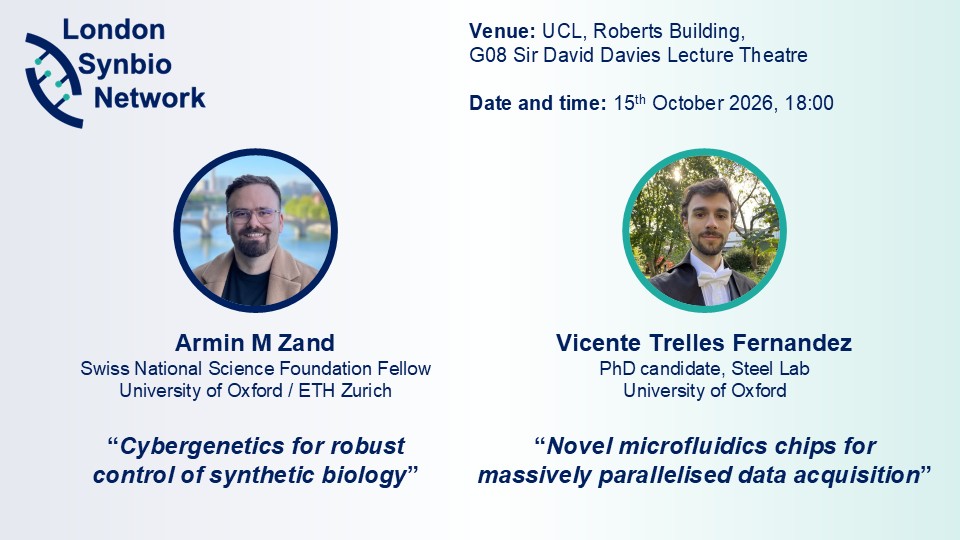
If you're a Londoner working in Engineering Biology, there's only one place to be on 15 Oct, because the new season of @london_synbio events starts at UCL!
Come for everything that's great about SynBio: theory, hardware, wet lab experiments, and of course networking w/ free food