Major cheat code for life: The ability to recognize things that don’t matter. The world will pressure you to care about every single thing. To chase every problem. To take every slight personally. To have opinions on everything. Reject that trend. Focus on a few, ignore the rest.
The obvious way to buy back your time is to pay someone to do something for you. Pay the mechanic to change your oil or a dry cleaner to press your suit.
The less obvious way to buy back your time is to say no. Passing on a promotion might "buy" you more time with family. Declining the dinner invite might "pay" for the time you need to exercise. We buy back our time not only with the money we spend, but also with the opportunities we decline.
The more clearly you know how you want to spend your days, the easier it becomes to say no to the requests that steal your hours.
Netflix is quietly hoping you never type a 4-digit code into your browser.
I did.
There are 2,200+ hidden categories the homepage will never show you noir thrillers, cult sci-fi, tearjerkers, gentle British reality TV, witchcraft documentaries, deep sea horror, gritty courtroom dramas.
Netflix uses over 2,000 "taste clusters" to decide what you see. The algorithm shows you what IT wants. The codes show you everything.
You've been scrolling for 20 minutes saying "there's nothing to watch" while sitting on a library of 8,000+ titles organized into categories you were never meant to find.
Here's how to unlock them and the codes most worth bookmarking 🧵
Let me explain one business lesson in 30 seconds.
99% of people would buy the ₹5,000 printer.
A ₹25,000 printer can actually be cheaper than a ₹5,000 printer.
> Inkjet: ₹3/page × 500 pages = ₹1,500/month
> Laser: ₹0.50/page × 500 pages = ₹250/month
> Monthly savings = ₹1,250
> Extra upfront cost = ₹20,000
> Payback Period = 16 months.
Over 5 years?
The ₹25,000 printer saves ₹55,000.
The cheapest product isn't always the cheapest decision.
Google founder Larry Page on how he learned to run a business
When asked how he learned to run a business, Google cofounder Larry Page responds:
“I read a lot of books.”
He joked:
“[When renaming Google to Alphabet] I read like three books on naming—which is more than anyone else had read. So I decided I was the expert . . . and actually that was useful. I recommend reading things.”
It’s an important mindset that is often overlooked. One of the richest ways to learn something is reading things written by people who deeply understand their subject matter.
Even Elon Musk was able to teach himself about the fundamentals of rocket design and astrodynamics by reading books. He is often quoted on this topic:
“I read books and talked to people. I mean that's kind of how one learns anything. There's lots of great books out there and lots of smart people.”
Building a startup is an infinite set of problems that are being thrown at you.
Next time you’re facing one of those problems, I’d recommend finding the best book or blog post you can on the topic and reading it.
You don’t need an MBA from a fancy school to be an expert in business or startups.
You just need to sit down and read.
Source: @FortuneMagazine (Nov 2015)
At current prices, I genuinely think rooftop solar is one of the best investments you can make for your family.
I’ve spent way too much time researching, comparing quotations, and talking to installers while getting solar installed at both my factory and home. So I thought I’d share everything I learnt because why not 🧵🔽
The first gift is life. The second gift is good health.
The third gift is to love and be loved. The fourth gift is peace of mind.
The fifth gift is having the wisdom to know what to appreciate most.
There are no other gifts that matter as much.
IF YOU:
- Do 4 hours of deep work per day
- Walk 10,000 steps per day
- Exercise 3 times per week
- Save 20% per paycheck
- Sleep 8 hours per night
- Read 10 pages per day
- Plan your day the night before
- Limit social media to 30 minutes daily
- Practice gratitude every morning
- Reflect weekly on your progress
- Drink enough water daily
YOU'RE ALREAD AHEAD OF 99.99% OF THE POPULATION.
KEEP GOING.
Unspoken Rules You Should Never Ignore
1. The Exit Rule
If your host starts yawning or mentioning they have an early morning, it's time to leave.
2. The Respect Rule
If someone trusts you with a secret, take it to the grave. No exceptions.
3. The Silent Strength Rule
When someone is being humiliated in public, help them out discreetly instead of laughing along.
4. The Social Courtesy Rule
If you're in a group and notice someone being left out, bring them into the conversation.
5. The Reputation Rule
Protect someone's name when they're not around—your silence defines your character.
To improve your writing, read more.
To improve your thinking, write more.
To improve your understanding, build more.
To improve your storytelling, teach more.
To improve your energy, rest more.
To improve your network, give more.
To improve your happiness, appreciate more.
In 1998, Warren Buffett and Charlie Munger spent 4 hours explaining why the smartest people in finance keep going broke.
It might be the most valuable finance lecture ever recorded:
1. The smartest people in finance went completely broke. Long-term Capital Management had 16 people with possibly the highest average IQ of any firm in the country, 350 to 400 combined years of experience, and most of their own net worth in the fund. They still went bankrupt. Buffett said if he ever wrote a book it would be called why smart people do dumb things.
2. Life and markets have no relation to sigmas. Buffett keeps a 1901 newspaper on his office wall. Northern Pacific went from $170 to $1,000 a share in a single day when two buyers accidentally cornered the stock. A brewer who had shorted it, facing a margin call, dove into a vat of hot beer. That man probably understood sigmas and knew such a move was impossible. Buffett has never wanted to end up in the vat.
3. Beta and sigmas tell you nothing about the risk of going broke. the LTCM team relied on mathematics and believed a six- or seven-sigma event could not touch them. they were wrong. history does not tell you the probabilities of future financial events. the real risk is a permanent blind spot in something crucial, often caused by knowing a great deal about something else.
4. To a man with a hammer, every problem looks like a nail. Munger's explanation for why brilliant people do dumb things. They learn a set of mathematical techniques and then twist every problem to fit the solution they already know. Combine that with a poor grasp of history, and you get people with advanced degrees blowing themselves up.
5. To make money they did not need, they risked money they did need. That is just plain foolish, Buffett says, no matter your IQ. Hand him a gun with a million chambers and one bullet, offer any sum to put it to his temple and pull once, and he will not do it. there is nothing on the upside that justifies the downside. people do this financially all the time without thinking.
6. The major banks all had risk models and had no idea what they owned. they met weekly at risk committees, printed all the statistics in neat columns, and did not have the faintest idea what risk they were carrying. The rare and essential quality is someone who can contemplate perils that have not popped up yet, the ones no past model contains.
7. A chief risk officer often just makes you feel good while you do dumb things. munger compares him to the Delphic oracle who convinced the Persian king to attack. he has a PhD and does advanced math, but he tortures reality to defend a model that does not hold under extreme conditions. all that computation makes you feel like you clobbered the risk when you have only clobbered your own head.
8. The whole quant risk system just changed the shape of the curve and kept going. Munger notes the business schools "improved" by throwing away the Gaussian curve and drawing a different one. They talk about fat tails now, but they still have no idea how fat to make them. he and Buffett always knew the tails were there, and used to roll their eyes at the risk-control people at Salomon.
9. Never risk what you have and need for what you do not have and do not need. Buffett will not explain to his family, who hold most of their net worth in Berkshire, that they went broke on a 100-to-1 gamble. Their returns get penalized 99 years out of 100 by being too conservative, and in the hundredth year they survive when others do not.
10. Build the business so that if the world stops working tomorrow, you have no problem. Berkshire double-layers its protection. First, they behave so no rational person questions their credit, then they hold so much liquidity that if the world suddenly hated their credit, they would not notice for months. It gives up higher returns 99% of the time and survives the one time others do not.
11. The real danger is a risk that has never happened before. Buffett wants someone who can imagine perils that have not yet appeared, the ones no model contains. The major institutions all had models, and that inability to envision the unprecedented is exactly what proved fatal. He and Munger spend a lot of time thinking about things that could hit them out of the blue that others leave out entirely.
12. Investing is simple, but not easy. The framework is not complicated. you did not need a high IQ to buy junk bonds in 2002 or stocks at low multiples in 1974. you just needed the courage of your convictions and the willingness to act when everyone else was paralyzed. Following logic rather than emotion is obvious, and yet some people find it almost impossible.
13. You cannot get rich with a weathervane. Buffett and Munger pay no attention to predictions about the economy or the market. People love predictions, entire industries are built on them, but it is like the king hiring a forecaster to read sheep guts. They have never made or avoided a single business purchase because of a macro view.
14. Name one super-wealthy economist. Munger's challenge. All these economists with 160 IQs spend their lives studying markets, and you cannot find one who got rich buying securities. Even Keynes tried to predict the credit cycle, broke a couple of times, and only did well once he switched to buying good businesses cheap and concentrating.
15. Focus only on what is important and knowable. Some things are important but unknowable, like whether someone drops a nuclear weapon tomorrow. Some things are knowable but unimportant. You narrow your attention to the small set of things that are both important and knowable, and you ignore everything else.
16. The market is there to serve you, not to instruct you. This is Graham's chapter eight, and Buffett calls it enormously important. When people talk about momentum or charts, they are saying the market instructs you. It does not. It just quotes prices. When it does something silly, you get a chance to act. Otherwise you go play bridge and check again tomorrow.
17. You can make a decision in five minutes or not at all. Buffett and Munger act fast because they rule out enormous territory in advance. Munger blots out startups entirely, and half a dozen other filters, so what remains is small enough to judge instantly. If they cannot decide in five minutes, they will not learn enough in five months to make up for going in deficient.
18. You can make a lot of money on a Sunday. Buffett said the calls you get on a Sunday, when things are truly screwed up, are the ones you make money on. All you have to do is be the collie and not the caller. You never get in a position where the other party can call your tune, so you can always play out your hand.
19. You are not right because others agree with you. Ben Graham said you are neither right nor wrong because the crowd disagrees. You are right because your facts and reasoning are right. Being contrarian has no special virtue over being a trend follower. All that matters is whether the facts are correct and the logic is sound.
20. Know where the edge of your circle of competence is. Buffett says the size of your circle does not matter. Knowing its perimeter does. You do not have to understand 90% of businesses. You just have to know something real about the few you actually put money into, and honestly recognize the ones you do not understand and walk away.
21. Intrinsic value is just the cash a business will produce, discounted back. Buffett thinks of every business as a bond with coupons that are not printed on it. Your job as an investor is to estimate those future coupons. If you cannot estimate them, like in a high-tech company, you pass. Investing is putting out money to get more back from what the asset produces, not from selling it to someone else.
22. The best businesses earn a royalty and need little capital. Coca-Cola sells a formula and takes a cut of every drink. Magazines like People operate on negative capital because subscribers pay in advance. The great businesses are the ones that can grow very large while needing almost no capital, which is why consumer businesses with pricing power are so valuable.
23. You only have to find one good idea, not twenty. Munger said you cannot find twenty deeply mispriced things, and Buffett agreed you do not need to. You do not have to have tons of good ideas in this business. You just need one good idea that is worth a ton, occasionally. For small sums, Buffett said he would have been 100% in Korea a few years earlier, where great companies traded at three times earnings.
24. The trick is measuring everything against your best opportunity. Munger calls this opportunity cost, the doctrine from the first page of the economics textbook that modern portfolio theory somehow ignored. Once you have found the best thing you understand, you measure every other option against it. The higher your default option, the more you can reject.
25. Modern portfolio theory is, in Munger's words, asinine. Most people will not find thousands of equally good things. They will find a few where one or two are far better than anything else they know. The right way to invest is to concentrate on your best opportunity cost, not to diversify into mediocrity because a model told you to.
26. Big opportunities must be seized, and seized big. Buffett says imagine you got a punch card with only twenty punches for your whole life, one per financial decision. You would think hard about each one, make fewer and better bets, and probably never use all twenty. The discipline of scarcity would make you rich. Dabbling in a bull market because it is easy is how people lose.
27. America has always been full of reasons to sell, and wrong every time. Coca-Cola went public in 1919 at $40, dropped to $19 within a year, and then faced the great depression, World War, and atomic bombs. One share reinvested is worth millions now. The country's opportunities have always won out over its problems. It is investors, not the economy, who tend to be their own worst enemy.
10 BOOKS BILLIONAIRES KEEP RECOMMENDING
They don't read to relax. They read to steal ideas. Here's the exact shelf the richest people alive keep pointing everyone back to.
Bookmark all 10.
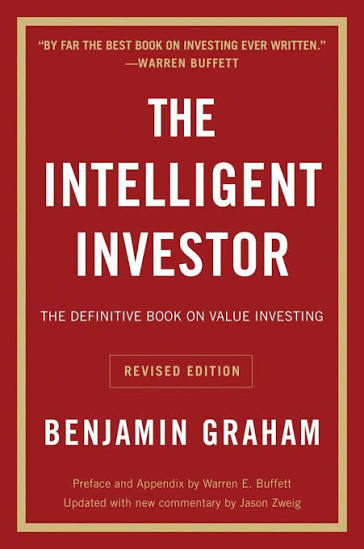
1. The Intelligent Investor - Ben Graham
Warren Buffett calls this the best book about investing ever written, and he means it. He read it at 19 and said it changed his whole life.
Graham was his professor, and the one idea that stuck, buy a dollar for fifty cents and ignore the crowd, made Buffett a hundred billion dollars.
2. The Remains of the Day - Kazuo Ishiguro
Jeff Bezos calls this his favorite novel of all time. A butler looks back on a life of perfect service and realizes how much he threw away by never questioning anything.
Bezos said reading it felt like living ten hours of an alternate life, and the regret in it shaped the exact logic he used to quit his safe job and start Amazon.
3. Foundation - Isaac Asimov
Elon Musk says this series shaped how he thinks about the future. It's about a man who predicts the fall of a galactic empire and builds a plan to shorten the coming dark age from 30,000 years to 1,000.
Musk has said it's part of why he's so obsessed with making humanity a backup on Mars.
4. Business Adventures - John Brooks
When Bill Gates asked Warren Buffett for his favorite business book, this is the one Buffett mailed him.
Gates has called it the best business book he's ever read, and it's from 1969. Twelve old stories about companies winning and blowing it, and every lesson still lands today.
5. The Lord of the Rings - J.R.R. Tolkien
Elon Musk read it as a lonely, bullied kid and said the heroes taught him you have a duty to save the world if you can.
He's pointed to it as one of the books that built his whole drive. A small person carrying an impossible weight because someone has to.
6. Sapiens - Yuval Noah Harari
Bill Gates, Mark Zuckerberg, and Barack Obama all recommend this one. It's the story of how a weak, average ape took over the entire planet, and the answer is that we can invent shared stories, money, nations, gods, and make millions of strangers believe them. It rewires how you see everything humans built.
7. Zero to One - Peter Thiel
The book every founder in Silicon Valley quotes. Thiel built PayPal and backed Facebook first, and his core idea is brutal.
Real fortunes come from building something so new there's no competition, not from copying what already works. Going from zero to one, not one to two.
8. Poor Charlie's Almanack - Charlie Munger
Buffett's late partner spent his life collecting mental models from every field, physics, biology, psychology, and stacking them to make better decisions.
Warren Buffett and half of Silicon Valley treat this as a bible. The whole point: don't be an expert in one thing, borrow the best ideas from everywhere.
9. The Hard Thing About Hard Things - Ben Horowitz
The book billionaire founders hand new CEOs.
Horowitz writes about the parts nobody warns you about, firing friends, near-bankruptcy, the nights you can't sleep.
No clean advice, just the honest truth about running something when everything is on fire. Zuckerberg and countless founders swear by it.
10. Meditations - Marcus Aurelius
The private journal of a Roman emperor, and somehow the favorite of half the billionaire class today. Short notes he wrote to keep himself calm and sane while running the most powerful position on Earth.
The one lesson everyone quotes: you can't control what happens, only how you meet it.
They read differently. Here's the shelf they keep pointing to.