Yesterday, I ran into a problem: how to design a system that primarily uses conda for installation but is compatible with pip installations (such as Forge3D), while ensuring zero global pollution.
We’ve fully resolved this and conducted preliminary testing. Today, we successfully created a secure, private sandbox environment using GeoMatrix and generated a topographic map of Hong Kong 🇭🇰 with Forge3D. @milos_gis
After dozens of rounds of fine-tuning, we finally settled on this shading scheme based on Hong Kong’s geographical characteristics.
Want the full-resolution, uncompressed renderings? Reach out to me! 📩"
#gischat #geospatial #GIS #BuildInPublic #Cartography #map
Today, while browsing TikTok in my spare time, I came across a video stating that since the end of the Cold War, the number of international sanctions (excluding financial sanctions) imposed worldwide has reached 1,508.
I was very curious to know which countries (and organizations) imposed the sanctions and which were the targets. Inspired by this, I created a visual map of global sanctions since the end of the Cold War. As you can see, most of the sanctions originated in the United States, and the paths of these sanctions even stretch across the entire European continent and the Atlantic Ocean!
I used the latest version of Forge3D, available at @milos_gis , as well as the Grok 4.7 model @grok . For local environment management, I used the latest version of GeoMatrix Studio, which I developed independently.
#GIS #gischat #Geospatial #global #GIS #Forge3D
Hello everyone, GeoMatrix Studio has released its first-ever stability update, V0.4.1!
Although we aren’t introducing any new features this week, we’re rolling out a stability update. We believe that stability is just as important as new features. Here are the details of this update:
😆Fixed an issue that caused the PyTorch installation to fail on macOS.
Give it a try!👇
#gischat #GIS #gis #Geospatial #Conda #Anaconda #BuildInPublic #OpenSource
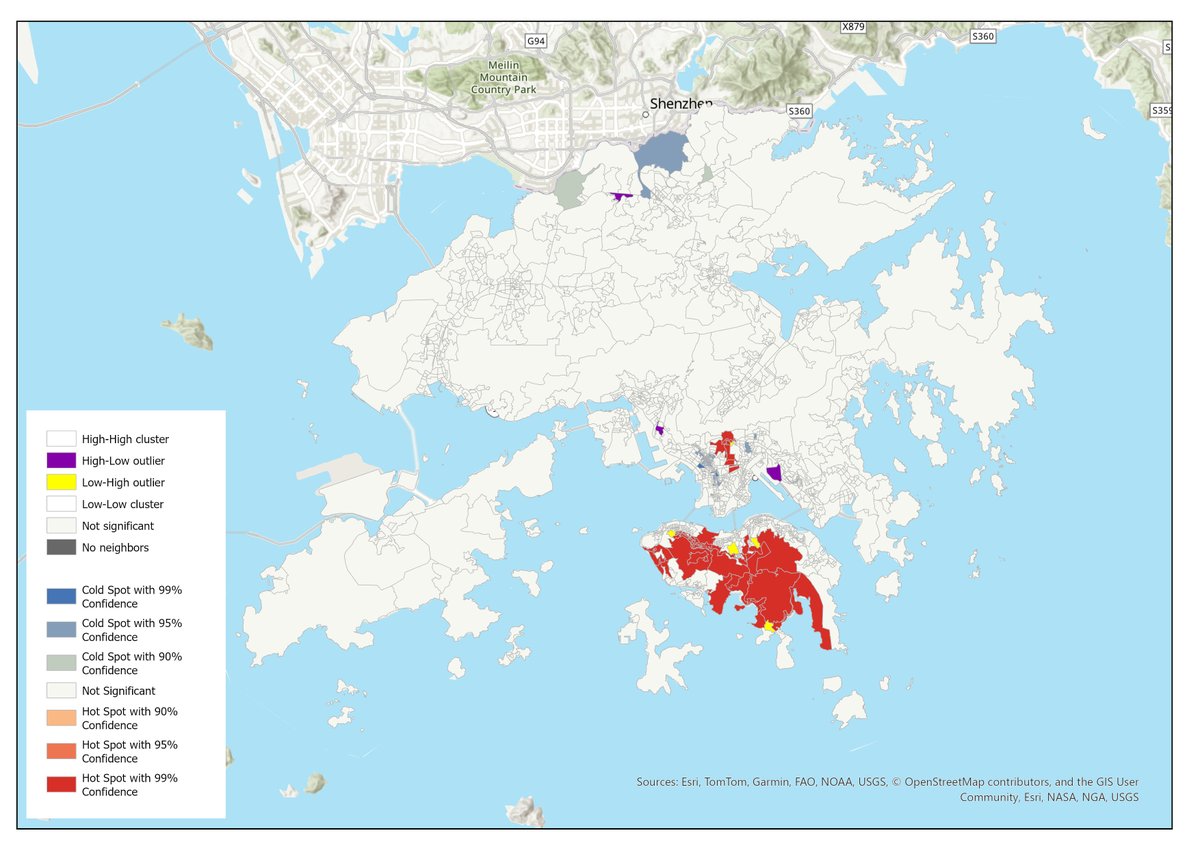
Hello everyone, it’s been a while. I’ve been busy with midterm exams and research on the urban heat island effect lately. Recently, I created an interesting map that I’d like to share with you all.
If you’re looking to sell supercars in Hong Kong, take a look at the red areas on the map below, as these represent the highest-income groups in Hong Kong—people who can actually afford supercars(most of Hong Kong Island, Ho Man Tin, and Kowloon Tong).
You might be wondering: what do the purple and yellow areas mean? Purple indicates areas where residents have high incomes but those around them have low incomes, while yellow indicates areas where residents have low incomes but those around them have high incomes.
I think this contributes to Hong Kong’s very pronounced class divide—just a wall apart, yet there’s a huge disparity in living standards. I imagine this isn’t usually as obvious in other places. What’s the situation like in Australia and China? I’d love to hear your thoughts @simongerman600
#gischat #GIS #geospatial #socialscience #buildinpublic #RS
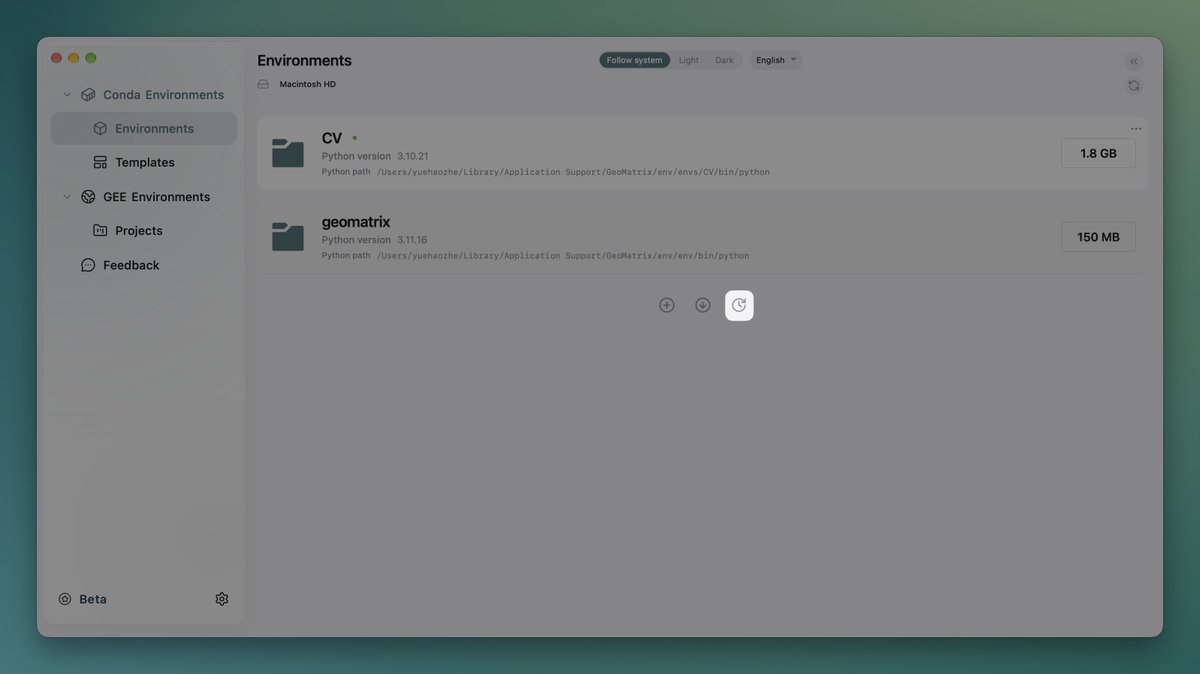
After a week of hard work, GeoMatrix Studio has released version V0.4.0-beta.1
The inspiration for this update came from a classmate in my research group, who noticed while using GeoMatrix Studio that he had to manually click “Scan” every time he opened the software—which was very inconvenient—so I made the necessary changes. Additionally, Apple released the macOS 27 update this week, and GeoMatrix Studio has been updated to support it. The specific updates are as follows:
💡Added your machine’s Conda environments to the local SQLite database for persistent storage.
🛠️Optimized the scanning logic upon launching the software; now you can see all Conda environments immediately upon opening the software without having to manually scan.
🍎Adapted for macOS27.
Come give it a try! 👇
If you have any questions, feel free to contact me via email or on X—your ideas will be directly incorporated into the next release!
#gischat #anaconda #geomatrix #GIS #gis #BuildinPublic #geospatial #DataAnalytics
Perhaps this isn’t a contradiction. From a recruiter’s perspective, they need to find someone who can hit the ground running and start developing as soon as they join the company. If a person can only code using AI, they may lack the ability to code without it—which means they lack the fundamental structured thinking, coding mindset, logical thinking, and problem-solving skills required for programming. Even with AI assistance, they won’t truly be able to perform the job.
Conversely, if a person possesses the ability to code without AI, then AI can serve as a valuable addition and boost efficiency. This is a necessary but insufficient condition.
If I were hiring for a technical role, I would want that hire to code with AI.
But I also would not hire them if they could not code by hand.
Which is an odd tension, I know.
Yes, you’re right. Looking at it from another perspective, aside from the fact that we need to prepare for Microsoft interviews without the help of AI, intensively practicing Leetcode and improving our coding skills also helps us develop our logical thinking, problem-solving abilities, and structured thinking.
Once you’ve developed a developer’s mindset, AI can become your trusted partner and help handle tedious tasks—that way, you’ll never run into absurd questions like “Who is Jason (JSON)?” again.
Here’s an example: I’m currently developing GeoMatrix Studio—a Conda and GEE visualization software for geoscientists—on my own. In this project, I’m using AI to assist me in writing a highly robust depth-first search algorithm. This is because I already understand the algorithm’s principles and the edge cases that need to be handled in software engineering. I can simultaneously provide the AI with my requirements and these edge cases, so I don’t have to waste time implementing a micro-level algorithm. I believe that even if I were to practice Leetcode intensively, it would be difficult for me to write a highly robust algorithm that’s more elegant than the AI’s in a short period of time.
In summary, humans are responsible for high-level architectural design (provided they possess coding and structured thinking skills), while AI handles the low-level implementation—much like the relationship between an architect and a builder.
By the way, if you’re interested in my GeoMatrix Studio, feel free to check out my homepage. I look forward to your feedback!
Here are the download links for the latest version. You can click them directly to download and try it out:
Windows: https://t.co/MnPo4phLAF
macOS (Intel): https://t.co/TcnswUpaC9
macOS (M Silicon): https://t.co/DrW3mRaB34
Today, GeoMatrix Studio released an update to version V0.3.2-beta.3. In this update, we focused on performance improvements for the Windows platform, as statistics from previous surveys indicate that most of our customers use Windows. The detailed update information is as follows:
⚡️On the Windows platform, the speed of scanning Conda environments has been optimized from tens of seconds to around ten seconds—making the process faster and more comprehensive.
✍️We’ve also fixed several other issues and refined the UI/UX design to help you work more efficiently.
Give it a try! The post below covers the previous update—stay tuned for more!👇
#gischat #Geospatial #RS #Conda #BuildInPublic #GIS #gis #Geospatial
Hello everyone, it’s been a while!
I’ve been so busy lately that I haven’t had time to interact with you all on X—I’d like to apologize for that!🫡
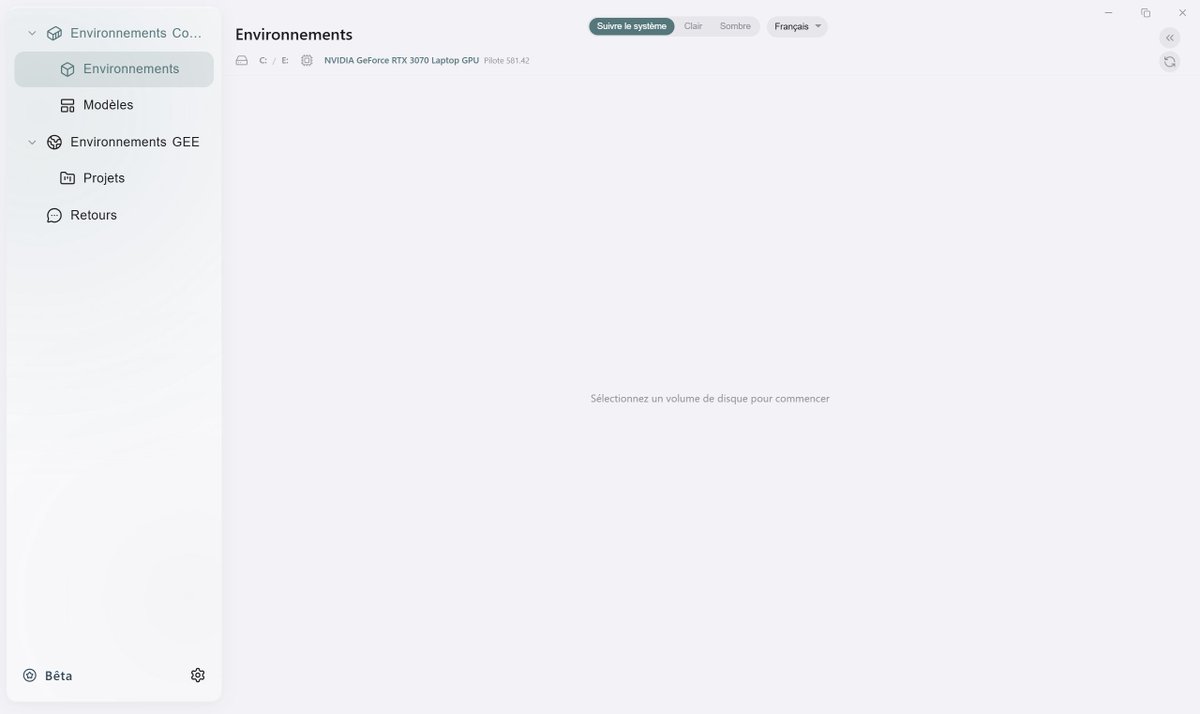
Today, I’m excited to announce that the GeoMatrix Studio Beta has received its first update. Users who have already installed the software will see an update notification within the app, while new users can click the link in the comments section to download it directly. Here are the details of this update:
This week, we’ve improved the French localization of GeoMatrix Studio. Users in French-speaking regions can now use the software directly in their native language! This will make your research even more efficient!
At the same time, we’ve fixed an issue where, under certain extreme conditions, the software was unable to detect Conda environments!
Feel free to download and try it out—it’s completely free!
You’re also welcome to contact me at any time with feedback, including but not limited to software bugs or feature requests!
Tips: For a detailed changelog, please refer to the GitHub repository link in the comments section.
#gischat #Geospatial #GIS #Conda #Anaconda #DataScience #Rust #BuildInPublic
Today, GeoMatrix Studio released an update to version V0.3.2-beta.3. In this update, we focused on performance improvements for the Windows platform, as statistics from previous surveys indicate that most of our customers use Windows. The detailed update information is as follows:
⚡️On the Windows platform, the speed of scanning Conda environments has been optimized from tens of seconds to around ten seconds—making the process faster and more comprehensive.
✍️We’ve also fixed several other issues and refined the UI/UX design to help you work more efficiently.
Give it a try! The post below covers the previous update—stay tuned for more!👇
#gischat #Geospatial #RS #Conda #BuildInPublic #GIS #gis #Geospatial
Hello everyone, it’s been a while!
I’ve been so busy lately that I haven’t had time to interact with you all on X—I’d like to apologize for that!🫡
Today, I’m excited to announce that the GeoMatrix Studio Beta has received its first update. Users who have already installed the software will see an update notification within the app, while new users can click the link in the comments section to download it directly. Here are the details of this update:
This week, we’ve improved the French localization of GeoMatrix Studio. Users in French-speaking regions can now use the software directly in their native language! This will make your research even more efficient!
At the same time, we’ve fixed an issue where, under certain extreme conditions, the software was unable to detect Conda environments!
Feel free to download and try it out—it’s completely free!
You’re also welcome to contact me at any time with feedback, including but not limited to software bugs or feature requests!
Tips: For a detailed changelog, please refer to the GitHub repository link in the comments section.
#gischat #Geospatial #GIS #Conda #Anaconda #DataScience #Rust #BuildInPublic
Yes, the role of AI is to make the strong even stronger. AI may set a minimum threshold for the final output, but the upper limit is often determined by the individual’s own abilities (with the assistance of AI).
But in the real world, who would want to settle for the bare minimum? So, as you said, the end result is that the strong get even stronger.
Yes, Hong Kong, where I am now, is a prime example. It’s true that land reclamation has a certain impact on the environment, but in Hong Kong, land is in such short supply that we have no choice—buildings have already been constructed halfway up the hillside. However, we also need to consider whether this has anything to do with the Hong Kong government’s deliberate control of land.
GeoMatrix Studio is now fully available for download as part of the beta program. We invite everyone to give it a try!
Important: It’s completely free!
macOS (Intel): https://t.co/ojFsqx7JRG (M Silicon): https://t.co/VroQpBt449: https://t.co/Iljx8gVvJn GitHub Repository (Release Notes): https://t.co/UbgNyY1QcN
🚀 GeoMatrix Private Beta Sign-ups Are Now Open, and Our Brand-New Official Website Is Live!
First of all, thank you to all our fans for your continued support and enthusiasm—your encouragement is my greatest motivation to keep improving the product!😊
As promised, sign-ups for the GeoMatrix Private Beta officially begin today, and our brand-new official website has also gone live.
Key Information:
🔢Number of Spots: 100 users will be selected for the beta test.
😯Exclusive Perk: The first 10 users to submit the form will receive “lifetime free access + permanent updates” upon the official release!
📅Release Date: We will send the first batch of software (Beta) downloads to users who have filled out the form on September 15, 2026 (Hong Kong Time).
Click the link below or visit the GeoMatrix official website to fill out the form and secure your Beta spot:
Form Link: https://t.co/NzoVu2WI6K
Official Website: https://t.co/txdF1pd1bA
Hello everyone, it’s been a while!
I’ve been so busy lately that I haven’t had time to interact with you all on X—I’d like to apologize for that!🫡
Today, I’m excited to announce that the GeoMatrix Studio Beta has received its first update. Users who have already installed the software will see an update notification within the app, while new users can click the link in the comments section to download it directly. Here are the details of this update:
This week, we’ve improved the French localization of GeoMatrix Studio. Users in French-speaking regions can now use the software directly in their native language! This will make your research even more efficient!
At the same time, we’ve fixed an issue where, under certain extreme conditions, the software was unable to detect Conda environments!
Feel free to download and try it out—it’s completely free!
You’re also welcome to contact me at any time with feedback, including but not limited to software bugs or feature requests!
Tips: For a detailed changelog, please refer to the GitHub repository link in the comments section.
#gischat #Geospatial #GIS #Conda #Anaconda #DataScience #Rust #BuildInPublic