@blocktrainer@blocktrainer
Bevor ein Gesetz final verabschiedet wird, lässt sich politischer Druck aufbauen:
->Petitionen<-
Nutze deine Reichweite, viele stehen dahinter. Eröffne eine Petition und teile es auf allen Kanälen, wir werden mitziehen.
Zusammen sind wir stark 💪
🚨 TESLA'S 48V BACKBONE: THE END OF THE SPAGHETTI HARNESS ⚡️
🪦 RIP wiring harnesses (1954–2024) 👋
For 70 years, automotive wiring has been a chaotic mess of low-voltage "spaghetti."
Traditionally, distinct wiring harnesses have connected every single electrical component back to a central power source. This results in miles of flexible cables snaking through the car body. Because these bundles consist of multiple round conductors that lack rigidity, they are floppy and unpredictable.
This makes them impossible for robotic arms to manipulate. Consequently, installation has remained a slow, expensive manual task where human hands must painstakingly thread wires through tight spaces.
It creates a major bottleneck in general assembly—one that has plagued the industry for decades.
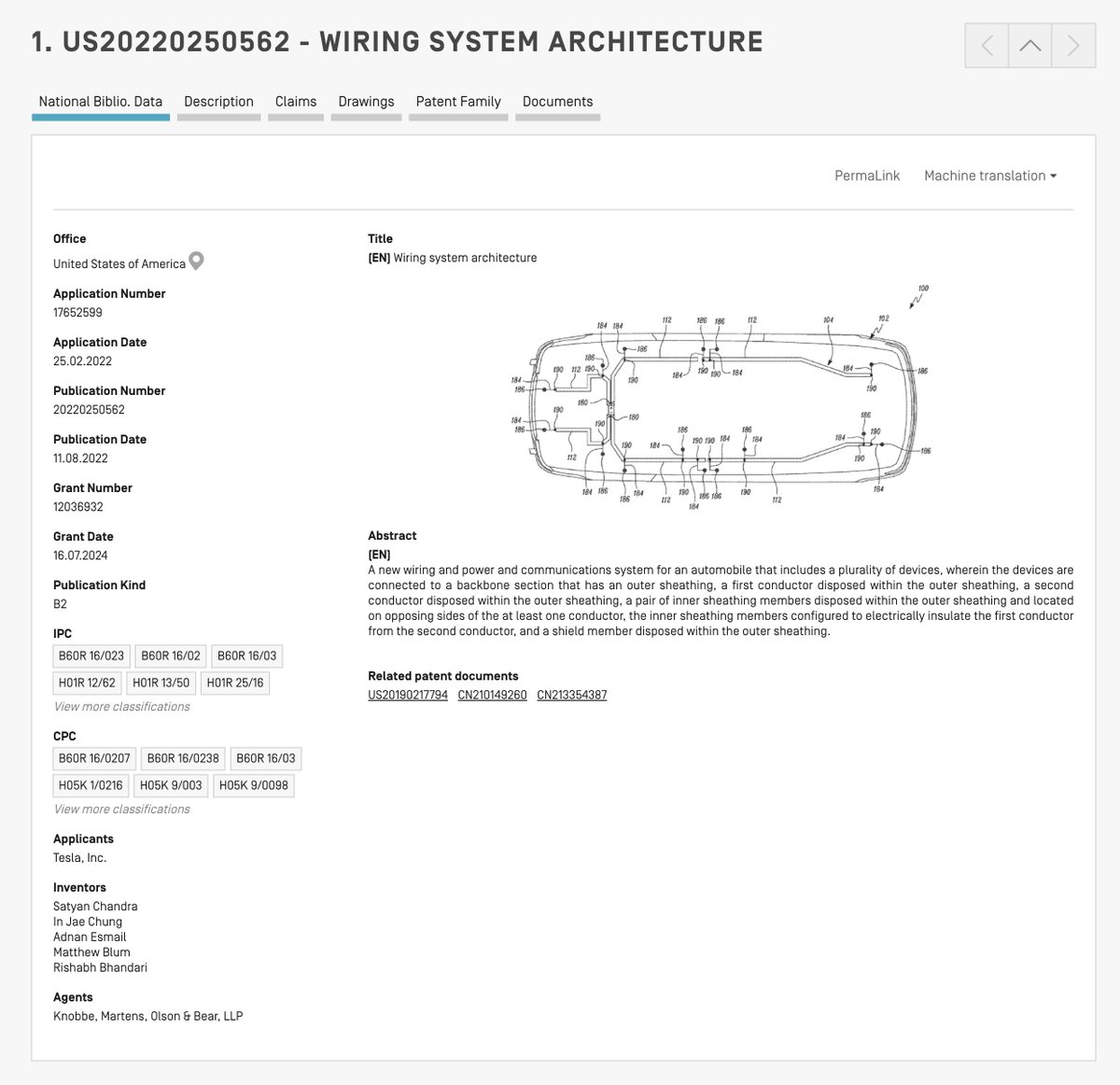
🚪 The exit strategy: Patent 12,036,932 📜
On July 16, 2024, Tesla finally showed us the solution.
Patent US 12,036,932 is not just a document; it is the blueprint for a rigid, structural backbone that fuses high-power 48V distribution with sensitive data streams.
This is the breakthrough that lets robots take the wheel in assembly, slashing copper weight and forcing the entire industry to abandon the legacy 12V standard for good.
Tesla’s solution proposes replacing that traditional flexible harness with a rigid "backbone" system. This isn't just a bundle of wires, but a structured component carrying both power and data signals.
Instead of running individual wires from every light, sensor, and motor back to a central computer, this architecture utilizes a primary backbone running through the car that connects to localized subassemblies.
For instance, a door assembly would contain a single local controller managing all devices in that door—locks, mirrors, speakers. This door then connects to the main backbone via a single connection point, drastically simplifying the complexity of the vehicle's nervous system.
🦴 Anatomy of the backbone 📐
The physical structure of this innovation marks a radical departure from the norm.
The patent details a shift from round wire bundles to a specific flat, stacked geometry where a central bus bar for power and parallel conductors for data are all encased within an outer sheath.
Crucially, the patent describes adhesive layers on the exterior. This allows the rigid backbone to be stuck directly onto vehicle body panels. It transforms the wiring from a loose assembly requiring thousands of clips and zip-ties into a structural element that is robotically applied to the frame, much like applying a sound-dampening patch.
But running high-power transmission lines next to sensitive data communication lines presents a major technical challenge: electromagnetic interference (EMI).
To solve this, Tesla introduces a sophisticated shielding architecture where conductive members made of copper or aluminum wrap around communication lines. These block electromagnetic fields emitted by the power bus bar.
Beyond shielding, the patent outlines a redundant loop architecture for safety-critical systems. Specific conductor lanes are dedicated to bidirectional feedback—one lane transmits a control signal (e.g., "deploy airbag"), while a parallel, isolated lane returns a status signal. This ensures that even within a simplified backbone, safety systems maintain the high reliability of traditional discrete wiring.
🪟 Intelligent "Windows" and modular assembly 🧩
To connect to this continuous backbone, Tesla invented a novel method called "windowing."
The manufacturing process involves stripping away specific insulation layers to expose the conductor underneath, creating a "window" for connection. However, the connection mechanism is more than a simple plug.
The patent details a backbone connector housing an internal PCBA (Printed Circuit Board Assembly) equipped with spring fingers or pogo pins to contact the exposed traces.
This allows the connector itself to host active electronics—such as microcontrollers or MOSFETs—meaning intelligence is distributed not just to the sub-assemblies, but potentially to the connection nodes themselves.
This design enables a truly modular assembly process using specialized interconnect systems. Rigid pins and receptacles—which can be cylindrical or polygonal—create secure physical and electrical bonds between segments.
This means parts like the front and rear Gigacastings can be pre-wired with their own backbone sections. When the chassis is finally joined, these sections plug into one another, instantly unifying the vehicle's network.
To handle the harsh environment of an automotive chassis, the architecture uses specific insulating materials like polyethylene (PE) and polypropylene (PP) to withstand the heat generated by the bus bars. Furthermore, connectors are sealed with ingress protectors and gaskets to meet IP67 standards, preventing dust and moisture entry for the vehicle's lifespan.
👾 Unlocking the "Alien Dreadnought" 🤖
This patent serves as the technological foundation for Tesla’s "Alien Dreadnought" manufacturing vision and its transition to a 48V architecture.
Currently deployed in the Cybertruck as a proof-of-concept, the system has demonstrated that a vehicle can shed up to 75% of its copper weight. However, the upcoming Cybercab is where this innovation becomes truly revolutionary.
This rigid backbone is the physical key that unlocks Tesla's "Unboxed" manufacturing process, allowing sub-assemblies to be built and tested independently before simply snapping together.
By eliminating the need for human workers to snake flexible wires through a finished chassis, the technology drives the extreme automation necessary to make the Cybercab viable at a sub-$30k price point.
⚡ The 48V revolution 🌍
Despite these gains, adoption across the wider industry remains a long-term battle.
The automotive world has run on 12V for over 70 years, creating a supply chain vacuum where off-the-shelf 48V components simply do not exist at scale. Tesla had to design and build many parts in-house for the Cybertruck, a costly process difficult to scale to high-volume models like the Model Y.
To break this deadlock, Tesla famously sent a "How to Build a 48V Car" manual to executives at Ford, Toyota, and GM. While Ford CEO Jim Farley publicly acknowledged the move, confirming their next-generation platform is on a similar path, widespread adoption has not yet materialized.
Tesla's strategy is to force a market shift by openly sharing the blueprint. They hope to encourage competitors to start buying 48V parts, eventually creating a global supply chain robust enough to lower costs for everyone.
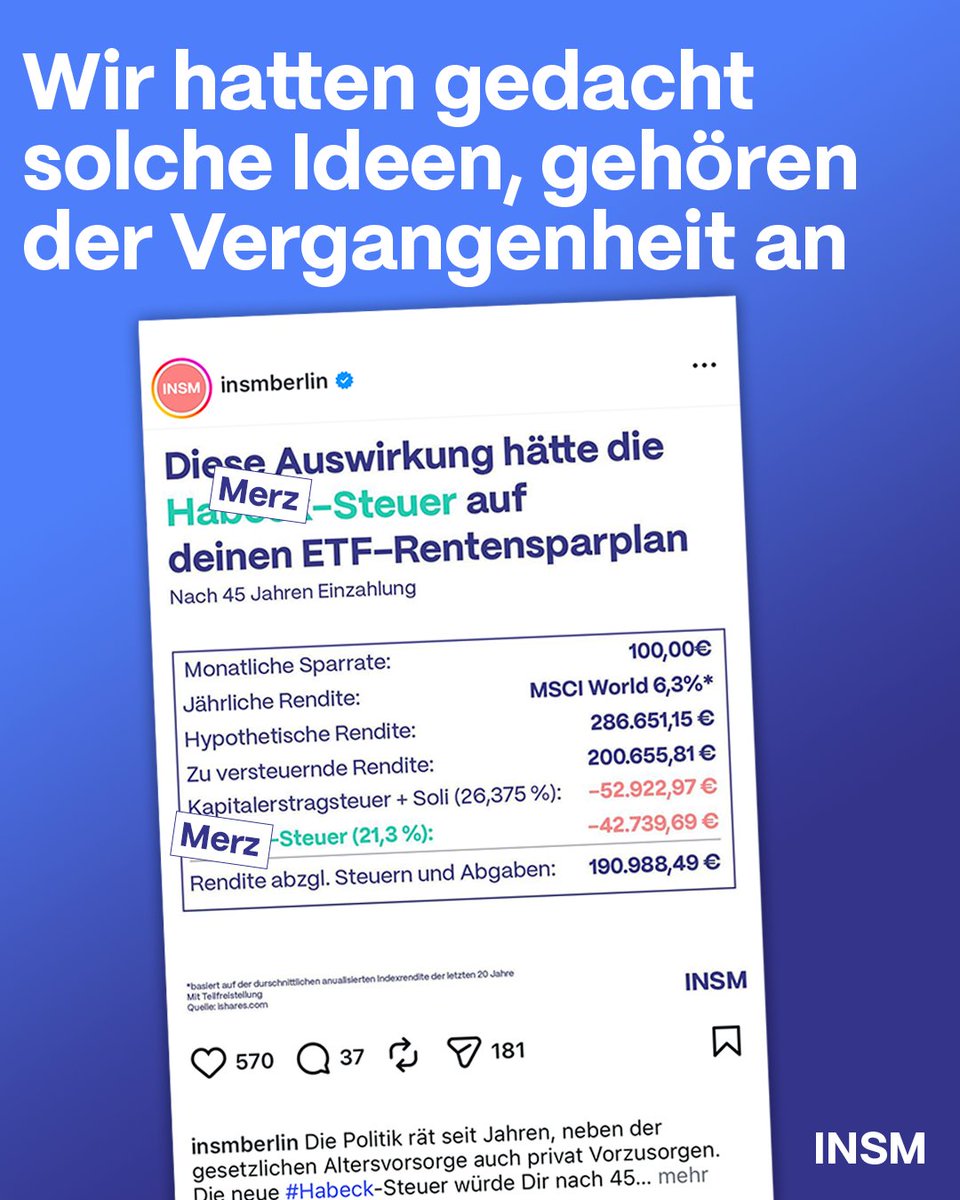
Repost, wenn Du gegen Enteignung, Steuererhöhung und Altersarmut bist. Schicke diesen Beitrag einem Aktionär. Der Steuer- und Abgabenvizeweltmeister schlägt wieder zu 🇩🇪📉💶. Die CDU ist eine Avocado: Außen schwarz, innen grün 🥑.
BREAKING: Judge jails Enoch Burke for Christmas with effective life sentence
This is a dark and shameful day in Ireland. Enoch Burke is an exemplary teacher and a man of integrity. His only “crime” is that he refuses to endorse transgenderism and bow to a satanic ideology.
Judge Brian Cregan announced in court this morning that if any of Enoch Burke’s family members spoke he would eject all family members from the courtroom. The Supreme Court has ruled that such an action would be illegal.
While sitting on the bench today Judge Cregan lied, obfuscated and quizzed Enoch Burke on reports from an Irish Independent newspaper article written by journalist Shane Phelan - while trampling on Enoch Burke’s God-given and constitutional right to profess and practise his religious belief.
Our courts are now a shambles and citizens of this country are suffering as a result - most of all Enoch Burke who will spend this Christmas in a jail cell in Mountjoy.
This is a stunning admission from ECB President Christine Lagarde, and a perfect window into the globalist mindset.
She laments that "democratic process" is a "drag" and that "speed is of the essence." She is frustrated that her grand vision—a Digital Euro—is being slowed down by the tedious necessity of parliamentary debate and public scrutiny.
Let's be clear about what she is saying:
➡️ Democracy is an obstacle. The very systems of checks and balances that protect our sovereignty are seen as inconvenient roadblocks to their centralized control.
➡️ They fear being "left in the dust." This isn't about serving European citizens. It's a technocratic race against other global powers (and their own citizens' awakening) to cement a new financial system before people can resist.
➡️ "We have to accelerate." This is the mantra of the unelected. When you hear this, know that due process, transparency, and individual rights are about to be trampled in the name of "progress."
The Digital Euro, the Capital Markets Union, the Banking Union—these are not tools for your freedom. They are the architecture for a system of total financial surveillance and control. They will decide what you can buy, where you can spend, and will have the power to freeze you out with the click of a button.
Lagarde is right about one thing: time is running out. But not for their project. It's running out for us to wake up, organize, and defend our national sovereignty and economic liberty from these unaccountable elites.
The greatest threat to our freedom is not being "left in the dust," but being locked in a digital cage we never agreed to.
This is absolutely insane:
The US just revised the June jobs report lower for a SECOND time for a total of -160,000 jobs.
Now, the US has officially LOST -13,000 jobs in June, the first negative month since July 2021.
What just happened? Let us explain.
(a thread)
BREAKING $GRAB & Thai Govt Deepening Partnership
Thai food tops the list, while GrabBike sees a 30% jump in popularity
The Thai government is deeply committed to reviving its tourism sector and has been implementing a range of strategies and initiatives to achieve this goal. Working with $GRAB is just the start.
Grab Thailand is turning its attention to Thailand’s growing expat population — and it’s rolling out smart features and generous perks to win them over.
With more than 5.3 million non-Thai residents now living in Thailand—an 8% jump since 2019—the company has seen delivery orders from expats skyrocket by over 50% in the past 12 months, signalling a major shift in consumer behaviour.
“Thailand is no longer just a tourist hotspot,” said Senior Director of Deliveries at Grab Thailand, Chirakit Kwangsukstith. “It’s a thriving home for remote workers, retirees, and long-term residents.”
To cater to this fast-growing segment, Grab has introduced two major updates. First is the One Click Translation tool — an AI-powered feature that translates dish descriptions and merchant details into nine languages, including English, Chinese, Japanese, and Korean, with a single tap. The second is the Grab Expat Pass, a special subscription offering up to 2,000 baht in discounts across food, grocery, ride-hailing, and parcel delivery services.
The company’s data backs its strategy. The top five expat user groups are Americans, Britons, Chinese, Koreans, and Japanese, primarily located in Bangkok, Phuket, Chiang Mai, Pattaya, and Hua Hin. These users spend an average of 300 to 500 baht per order, showing strong purchasing power.
And their taste? Classic Thai. Fried rice topped the food list with over 627,000 orders annually, followed by chicken rice. In the drinks category, Thai tea led the way with over 127,000 cups sold each year, according to Grab Thailand and Brickinfo.
While car-based options like JustGrab and GrabCar remain the preferred transport mode for most foreign users, GrabBike is catching up quickly, logging a 30% year-on-year growth. It’s a favourite among those navigating congested city traffic or looking for fast, short-distance travel.
$TSLA
Insider is reporting Robotaxi could be expanding to San Fransisco by this weekend 😳
Even if that doesn’t happen, this company simply has too many people that believe in its AI future.
Elon has done everything you can imagine that would make the stock untouchable due to his public spats with Trump. Market doesn’t care.
Earnings are NEGATIVE growth on EPS/Revenue and Elon literally said to expect the same for the next year until Q3 2026. Market doesn’t care.
I don’t even think it’s just retail — I think everyone knows that AI is the next frontier and Tesla WILL play a massive role, so they are willing to overlook the short term hit on earnings because when the S-curves to begin, they will be fantastic.
$TSLA +4% up from $300.41 lows yesterday
I have formally referred Jerome Powell to the DOJ for criminal investigation.
Chairman Powell knowingly misled both Congress and executive branch officials about the true nature of a taxpayer-funded project. Lying under oath is a serious offense— especially from someone tasked with overseeing our monetary system and public trust.
I’ve been in systems architecture since 1995.
The entire point of web3 is to have a single database. That’s what blockchains are. Distributed systems sharing a single logical database for instant settlement and finalization of sensitive data and providing the users and app builders a single view of the world. The point of this is to avoid data redundancy and duplication which introduces security risks, data fragility, opaqueness and corruption and all the hundreds of issues with web2 and data systems that existed before blockchain.
Now understand:
- L2s introduce a second database.
- Bridges introduce a second database.
- Centralized exchanges introduce a second database.
- Wrapped assets introduce a second database.
All of these things violate the core reason for web3 and show a total technological ignorance by those that architected them out of:
- haste
- necessity
- lack of technical understanding
- taking shortcuts
- flawed designs
The results will be tragic for these technologies that introduce a second database.
Remember this post.
Monolithic, permission-less single state blockchains or nothing. Anything else missed the entire point of blockchain and will pay the price.
Furthermore, any large investment in these first principle violating technologies shows ignorance and immaturity of understanding.
That goes for institutions that build and fund the building of these violating technologies.
That’s the post. Eat it up.
You asked. We answered.
In our first-ever Ask Me Anything, Galaxy Founder & CEO @novogratz and CFO Tony Paquette sit down to answer your questions—from our Nasdaq listing to Helios, tokenization, and the future of digital finance.
Major Breakthroughs in the US–Saudi Alliance.
President Trump just reignited America’s relationship with Saudi Arabia, starting with a billion-dollar handshake in Riyadh.
But it’s what he told Iran that shocked the room.
You won’t believe what you’re about to hear.
A Thread🧵
This is a Global Economic Reset.
Trump and Bessent are orchestrating a grand economic reordering on US terms.
And investors are scrambling to adapt.
This is not the time to be a deer in headlights.
The investors who adapt quickly to the changing reality will be the biggest winners.
Those who cling to the ideas that worked during globalization will watch their gains disappear.
No one alive today has invested through:
- A bursting global sovereign debt bubble
- The rise of AI and Robotics
- Rapid deglobalization
All of it points to currency devaluations and major headwinds for businesses that need to rapidly adjust supply chains and cope with more expensive inputs.
I still see a lot of people in denial.
They think this whole thing is just a negotiation tactic rather than a true economic reordering.
But the Trump admin is telling you in clear terms that the status quo is over.
And denial will not change that. It's time to adapt.
The market is already showing you where things are headed.
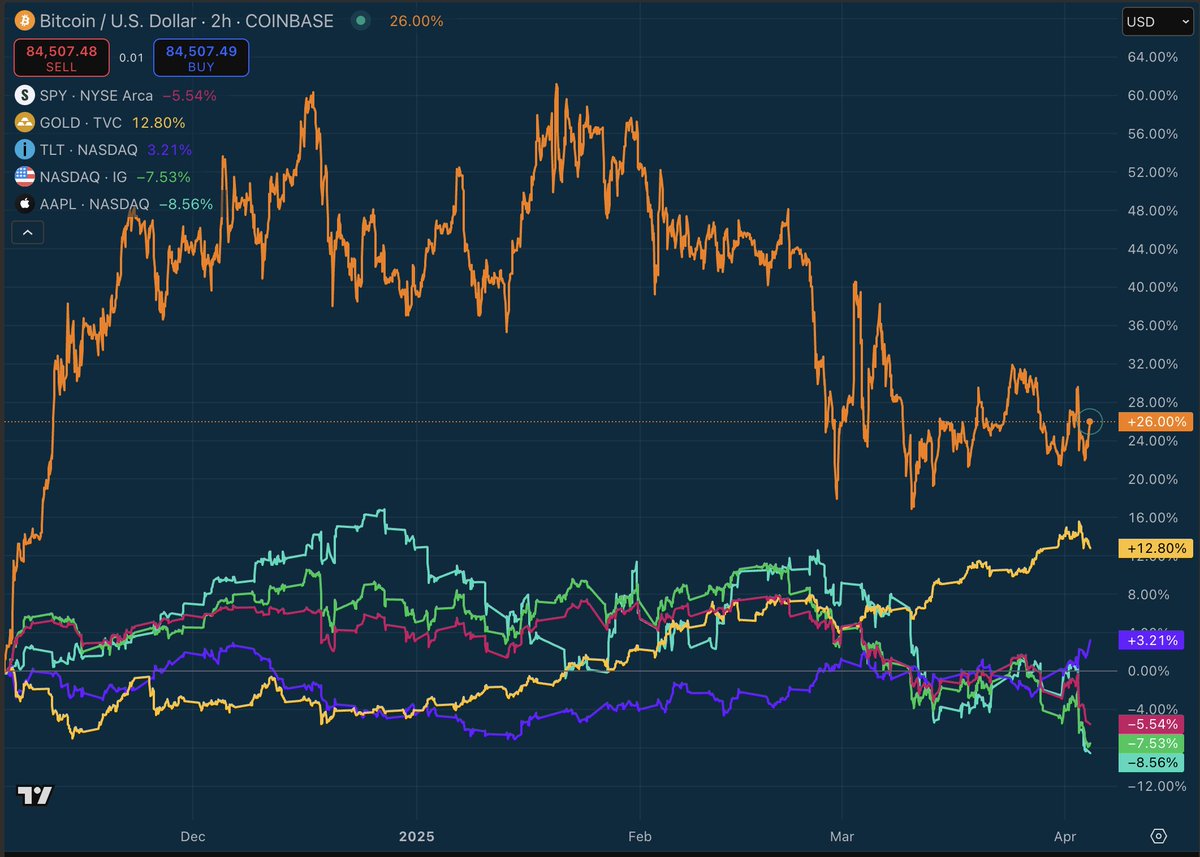
Returns since Trump's election:
Bitcoin: +26%
Gold: +13%
Long-term Treasuries: +3%
S&P500: -5.6%
Nasdaq: -7.7%
Why are Bitcoin and Gold outperforming?
It's imperative that you know the answer to this question.
Scarce, neutral assets like Bitcoin and Gold make the most sense in a world of currency devaluations and major frictions for equities.
The equities that make up the majority of the average portfolio were priced for an efficient and globalized world.
Blindly buying equity indexes is no longer the smartest play.
And if you've been paying attention, you will have heard Trump, Bessent, Lutnick, Larry Fink, and many other make positive statements about Bitcoin.
They've hinted at Bitcoin heading towards $1 million per coin and potentially replacing the dollar globally.
What do they know?
Well, if the US is done buying from foreign countries, that means fewer dollars flowing abroad, which means countries will no longer be saving their surpluses in US treasuries.
Instead they'll save in neutral assets like Bitcoin and gold.
And this is already happening.
As hard as it will be for some to believe, there's a better chance than ever that Bitcoin plays a central role in this grand economic reordering going forward.
If your portfolio is full of equities and zero Bitcoin, it's time to think very hard about your asset allocation.
Because Bitcoin isn't here to take part.
It's here to take over.