🚨 THIS IS BEYOND ANYTHING CRYPTO HAS SEEN BEFORE.
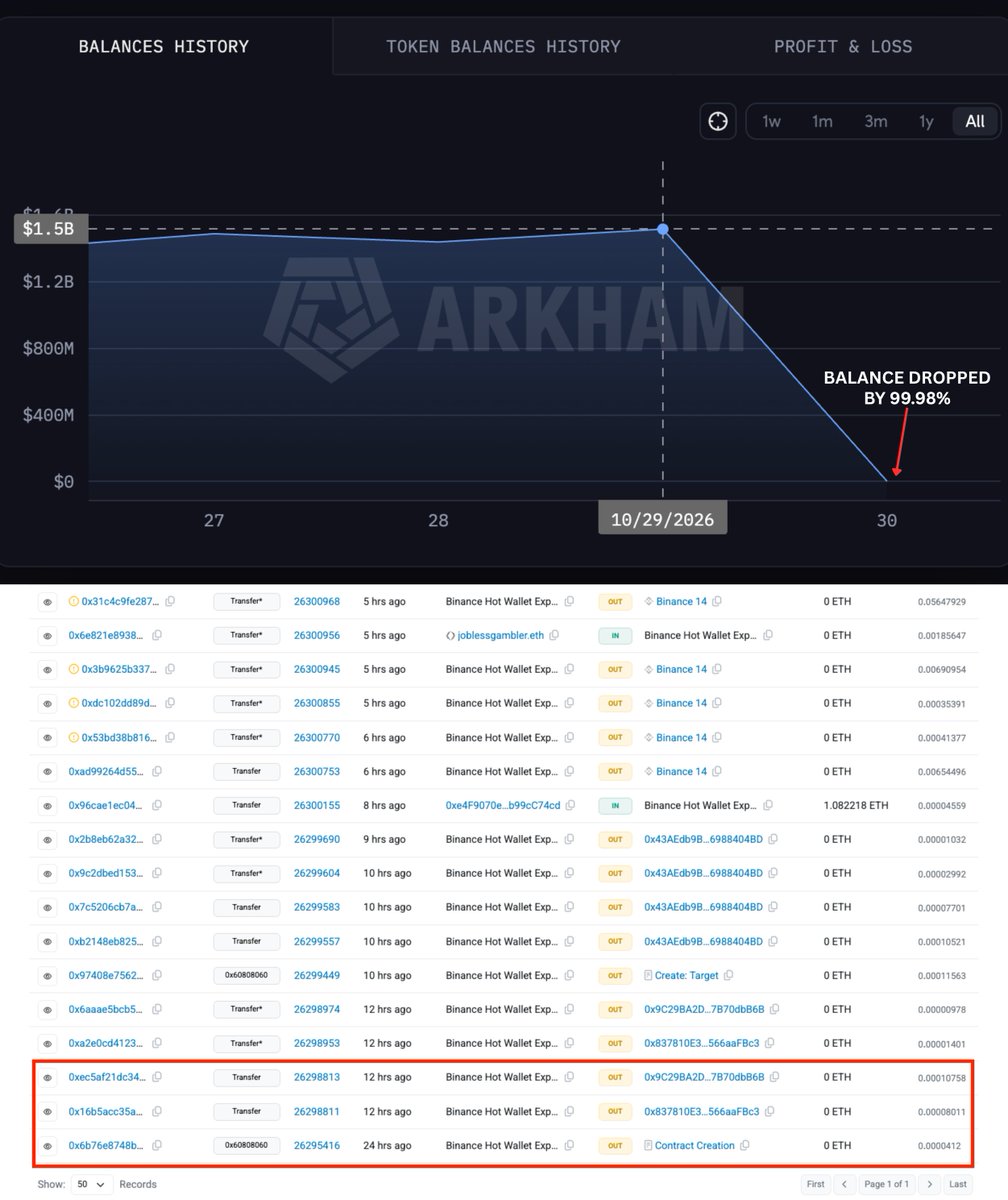
Binance has been hacked, with estimated stolen assets reaching as high as $6.3 BILLION, making this the largest crypto hack in history.
And now the entire crypto market is crashing.
Bitcoin has crashed below $77,000, dropping more than 6% as panic spreads across the market.
Here's how massive the damage is:
• $6.3 BILLION: Latest reported estimate of assets stolen from Binance across multiple blockchains.
• $170 BILLION: Wiped out from the total crypto market capitalization following the news.
• $1.39 BILLION: Worth of leveraged crypto positions liquidated in just 12 hours.
For perspective, look at the biggest crypto hacks ever recorded:
• Binance (2026): Up to $6.3 BILLION.
• Bybit (2025): $1.5 BILLION.
• Ronin Network (2022): $625 MILLION.
• Poly Network (2021): $611 MILLION.
• BNB Bridge (2022): $570 MILLION.
• Coincheck (2018): $534 MILLION.
• Mt. Gox (2014): Approximately $450 MILLION at the time.
At the highest estimate, Binance's hack is more than FOUR TIMES bigger than Bybit and TEN TIMES bigger than Ronin.
It's also bigger than all SIX of the other major hacks listed above COMBINED.
And this happened at one of the world's largest crypto exchanges.
1. BILLIONS DRAINED FROM MULTIPLE BINANCE WALLETS
On October 29, hackers gained control of several Binance hot wallets and transferred billions of dollars.
• Around $3.3–$3.5 BILLION was drained from Ethereum wallets alone.
• Binance 14 lost approximately $2.5 BILLION in a single transaction.
• That included 167,464 ETH, 1.615 BILLION USDT and dozens of other tokens.
• Binance 16 lost another 28,006 ETH alongside other assets.
• Hot Wallet 34 was also compromised, with approximately $823 MILLION in USDC affected.
• Additional funds were moved from wallets on Arbitrum, Avalanche, Optimism, Bitcoin, Tron and other networks.
The hackers didn't stop after the first transfers.
They continued draining compromised wallets when new deposits arrived.
2. THE HACKERS HAD PREPARED THE ATTACK
The attack began with preparations on October 28–29.
• The hackers funded their operational wallet through Tornado Cash.
• They deployed a malicious contract designed to drain assets.
• They tested the attack on separate wallets before targeting Binance.
• Around 20:20 UTC on October 29, the hackers began transferring billions from Binance wallets.
After the theft, they split the stolen funds across different addresses, swapped stablecoins into ETH and moved assets between blockchains.
3. BINANCE'S WALLET SECURITY WAS COMPROMISED
The hackers gained access to the private keys or signing authority of multiple Binance hot wallets.
They used Ethereum's EIP-7702 feature to give a malicious contract control over Binance 14.
The hackers submitted 50 signed authorizations covering consecutive wallet nonces.
Once the delegation succeeded, they could repeatedly drain assets from that wallet.
Other Binance wallets were drained through normal transactions signed using compromised keys.
This wasn't some network hack.
The hackers gained access to the systems controlling Binance's own wallets.
The exact method used to obtain that access has not been confirmed.
4. AROUND $3 BILLION IN STOLEN ASSETS FROZEN
• Tether froze more than $1.56 BILLION in USDT linked to the hack.
• Circle froze approximately $823 MILLION in USDC.
• Ripple reportedly froze another $200 MILLION.
• Arbitrum's Security Council secured approximately $30.5 MILLION.
• Other projects also froze assets connected to the hackers.
Total frozen funds were estimated at roughly $2.5–$3 BILLION.
However, a large amount of ETH, BTC and other assets remained outside those freezes.
Binance temporarily suspended deposits and withdrawals following the hack.
The exchange confirmed it was investigating the security breach and said all customer funds were safe.
The estimated $6.3 billion theft is equivalent to nearly 4.4% of Binance's $144 billion in assets under custody.
Even the lower estimate of $3.3 billion would make this more than TWICE the size of the Bybit hack.
The final losses are still being calculated because billions of dollars have been frozen.
But the consequences are already extending far beyond Binance.
This is one of the most devastating security failures in crypto history.
Ver ensayar a Sylvester Stallone y Carl Weathers para la primera entrega de Rocky (1976) demuestra que el boxeo en el cine es pura danza milimétrica. No había margen de improvisación: ensayaron durante semanas cada gancho, cada caída contra las cuerdas y cada golpe para que la cámara de John G. Avildsen captara la brutalidad del combate final contra Apollo Creed.
Pero el verdadero quebradero de cabeza vino a la hora de filmarlo. Como el presupuesto era ridículo (apenas un millón de dólares), el equipo tuvo que recurrir a la picaresca: el combate de 15 asaltos se rodó en orden cronológico inverso.
Empezaron filmando el asalto 15 y terminaron con el primero. ¿El motivo? Cuestión de tiempo y maquillaje. Era infinitamente más rápido y barato maquillar a Stallone y a Weathers con las prótesis de cortes, hinchazones extremas y sangre del final y luego ir limpiando y retirando capas entre toma y toma, que estar aplicando capas progresivas de látex fresco cada pocas horas. Además, si hubieran empezado limpios, el sudor y los golpes habrían arruinado el maquillaje a mitad de jornada.
Stallone y Weathers acabaron exhaustos, con moratones reales y costillas doloridas de tantas repeticiones, pero consiguieron un clímax histórico que se llevó el Óscar a Mejor Película.
Hace un tiempo le dedicamos un monográfico especial en nuestro podcast a analizar escena por escena el milagro que supuso sacar adelante esta primera entrega de Rocky. Puedes escucharlo directamente en este enlace: https://t.co/eegue1Ax4u🎙️🥊
¿Conocías el truco de rodar el combate al revés? ¿Cuál es tu pelea favorita de toda la saga del Potro Italiano? Te leo en comentarios 👇🎬
#Rocky #RockyBalboa #SylvesterStallone #CarlWeathers #ApolloCreed #CineClasico #CuriosidadesDeCine #DetrasDeLasCamaras #PodcastDeCine