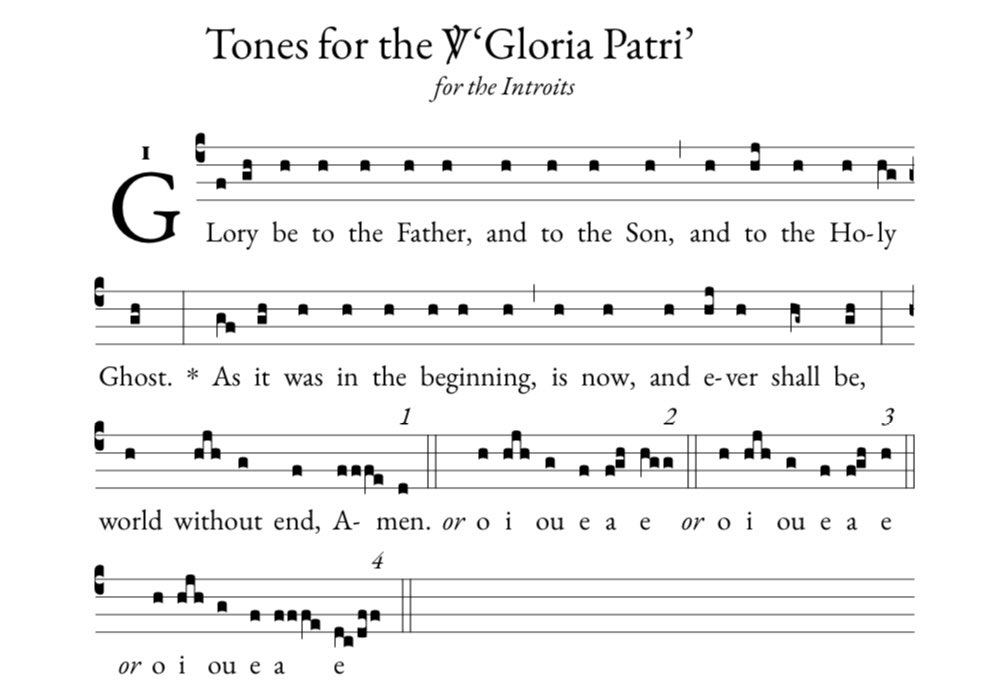
Draft version of the Canticles for Morning and Evening Prayer (Plus Venite, Easter Anthems, and Athanasian Creed), in various plainchant tones. Uses the 1662IE. If anyone would like to take a look and offer feedback, it would be greatly appreciated! https://t.co/3zatwDBElP
This fall the children in our after school program are learning to say (a form of!) Evening Prayer together during our Wednesday chapel, including learning to chant the Magnificat according to this simple tone.
Working through G. H. Palmer’s English adaptations of the Sarum Introits. Any recommended reading regarding the connection of the Introit texts to their corresponding epistle/gospel readings from the traditional 1-year lectionary?
@Fr_Isaac_R@anglican_net Not sure if this illustrates my point well. This is an example from the evening office hymn during Trinity season. All of the modern notes look close to the same, and when you move to the later verses, it’s hard to remember which syllables have one note, and which have 2+.
@Fr_Isaac_R@anglican_net For example, the REC hymnal has some great plainsong hymns in it, but the modern notation makes them very difficult to sight sing. Also, they are generally in a range that is ok for female/mixed choirs, but on the high side for males (especially basses like me!)
@Fr_Isaac_R@anglican_net Sorry for the rant. I should check out the St. Bernard psalter. If it gets more people singing the psalms, I think that’s great!