𝗪𝗵𝗮𝘁 𝗱𝗼 𝘆𝗼𝘂 𝗱𝗼 𝗚𝗶𝗴𝗶?
"𝗜'𝗺 𝗮 𝗕𝗿𝗮𝗻𝗱 𝗦𝘁𝗿𝗮𝘁𝗲𝗴𝗶𝘀𝘁" 𝗼𝗳𝘁𝗲𝗻 𝗹𝗲𝗮𝘃𝗲𝘀 𝗽𝗲𝗼𝗽𝗹𝗲 𝗰𝗼𝗻𝗳𝘂𝘀𝗲𝗱.
Brand Strategy is an often misunderstood concept so here is my model that incorporates the valuable patterns of the 50+ founders I’ve worked with in the last 5 years:
1. Create your brand communication framework
(9/10 𝘴𝘵𝘢𝘳𝘵𝘶𝘱𝘴 𝘭𝘢𝘤𝘬 𝘢 𝘣𝘢𝘴𝘪𝘤 𝘱𝘰𝘴𝘪𝘵𝘪𝘰𝘯𝘪𝘯𝘨 𝘴𝘵𝘢𝘵𝘦𝘮𝘦𝘯𝘵. 𝘞𝘪𝘵𝘩𝘰𝘶𝘵 𝘰𝘯𝘦, 𝘵𝘦𝘢𝘮 𝘮𝘦𝘮𝘣𝘦𝘳𝘴 𝘨𝘪𝘷𝘦 𝘥𝘪𝘧𝘧𝘦𝘳𝘦𝘯𝘵 𝘢𝘯𝘴𝘸𝘦𝘳𝘴 𝘢𝘣𝘰𝘶𝘵 𝘵𝘩𝘦 𝘤𝘰𝘮𝘱𝘢𝘯𝘺, 𝘮𝘢𝘬𝘪𝘯𝘨 𝘪𝘵 𝘪𝘮𝘱𝘰𝘴𝘴𝘪𝘣𝘭𝘦 𝘵𝘰 𝘢𝘵𝘵𝘳𝘢𝘤𝘵 𝘵𝘩𝘦 𝘳𝘪𝘨𝘩𝘵 𝘤𝘭𝘪𝘦𝘯𝘵𝘴 𝘥𝘶𝘦 𝘵𝘰 𝘱𝘰𝘰𝘳 𝘪𝘯𝘵𝘦𝘳𝘯𝘢𝘭 𝘢𝘭𝘪𝘨𝘯𝘮𝘦𝘯𝘵)
2. Create your market positioning: define your ‘right to win’ by a thorough market research & product deep dive
3. Develop your AI-first strategy cross-departmental.
4. Bring the team together: utilize the collective intelligence for a real deep dive to understand GTM. Brainstorm together the company's GTM strategy (this is not just the content calendar!)
5. Audit (and create) marketing materials - ensuring consistency & optimization for audience/channel
6. Align product and brand strategy to ensure we're responding to market needs rather than just adding random features
7. Build sales enablement materials to support GTM (only B2B)
Additionally:
8. Recruit the right talent: - I often end up doing this for clients (X is best for this, period)
9. AI-first B2B Sales Blueprint: Something new I've been building that combines web3 and web2 strategies (the two are converging).
The lack of brand strategy is often why so many startups lack a successful business model or don't consider distribution when building. This is highly problematic. Random vibe coding without a business model. NGMI!
At UnknownVentures we guide founders of early-stage startups to bootstrap their brand - either from stealth, or repositioning or for growth to take off. DM to organise virtual ☕
Shout out to Robert Kaminski 🎯 from Fletch - you've been really putting it into words so well, of what a brand strategist actually does. Adding one of my favorite infographics from Fletch in the first comment. And also my dear @vickykrapivina who told me a while ago to make a post about what I actually do, I needed the nudge!
Finally, if this image makes you cringe, good. I'd rather evoke an emotion than nothing at all.
Feel incredibly charged by the crowd @SolarisPower@hectofinance and @proofoftalk brought together yesterday.
Sometimes I forget how much of an extravert I am, especially in the right environment when conversations have substance.
Incredible conversations on macro uncertainty, venture, infrastructure constraints (energy, compute, data centers), TradFi’s arrival in crypto, new marketing tooling, philosophy, wellness, and more.
It felt like home.
Ready for the main conference, despite a rainy Paris morning ☔💧
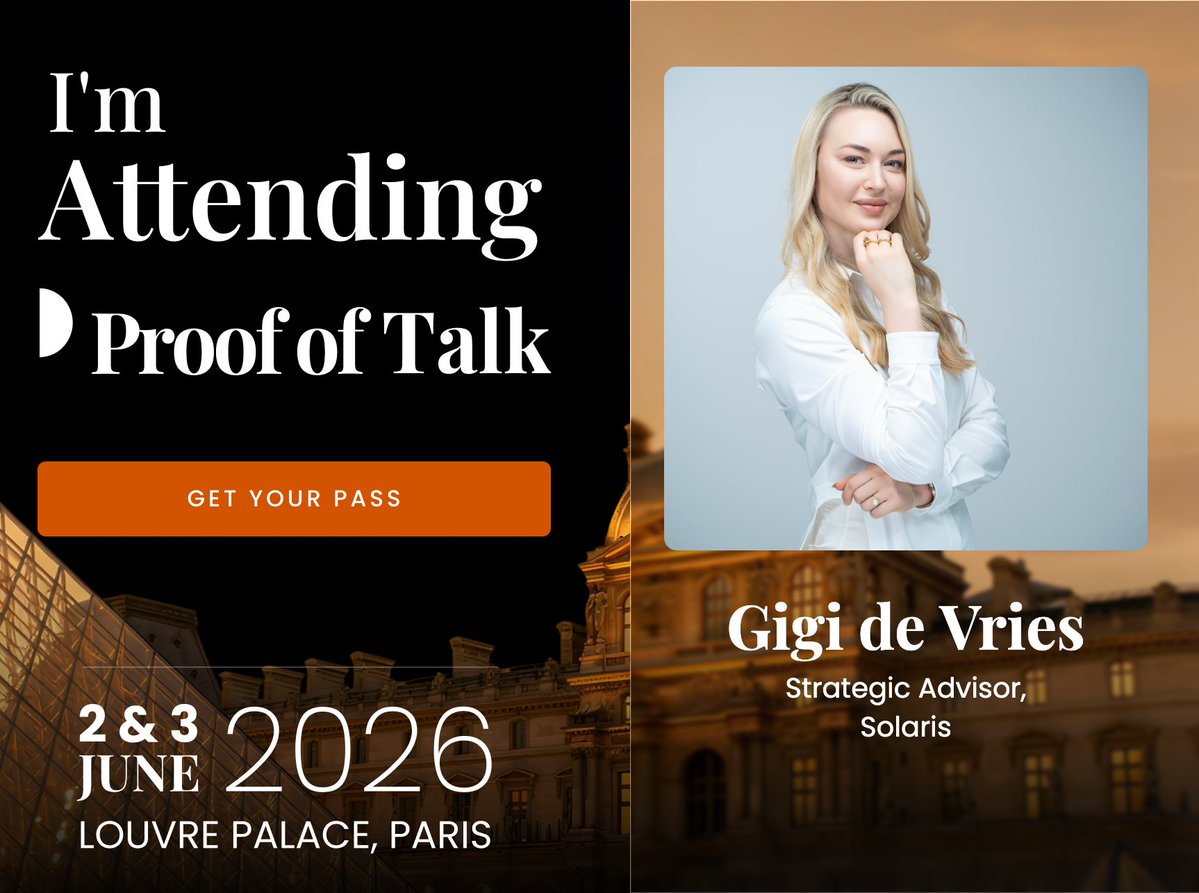
This is my cringe "I'm attending" post 🤓
Nevertheless I am really glad to share I'm heading to @proofoftalk
Small, selective, and from day one it's been putting DeFi, TradFi and regulators in the same room. If you've followed me for a while, you know that's my thing.
it doesn't sound like freedom though. financial freedom maybe. but no freedom from desire to belong. letting go of that desire can only come through knowing your creator, trusting that this is a meaningful moment of solitutde, lack of belonging spearheading you to the next lessons of your life.
@AriDavidPaul Can relate for the neurodivergence being undiagnosed, but I think it’s an absolute blessing. The only fact is you’re per default more sensitive as well when it comes to physical and mental health. Have many hacks to share tbh
Major areas where the financial system still needs an update:
1. Tokenization of real-world assets - Real estate, stocks, bonds, funds, etc. onchain for instant settlement, fractional ownership & massive distribution.
2. 24/7 Global trading - Pooled global liquidity, every asset, every person, with great leverage and capital efficiency.
3. Next-gen payments - Near-instant, low-cost global transfers using stablecoins, including for Agentic payments.
4. AI-powered risk, credit, compliance, and advice - Better decisions, less fraud, and broader access to capital. Everyone gets access to a great financial advisor.
5. Innovation friendly regulation - Move from one-size-fits-all to risk-based rules that encourage innovation and competition instead of stifling it.
6. Expanded access - Open protocols that reduce middlemen and self-custodial wallets to expand access to everyone with a smartphone.
7. Capital formation - Low cost and turnkey for anyone to raise money for a good idea, increasing the number of startups.
8. Sound money - A refuge from inflation, when discipline is lost in fiat money.
Jobs not done until we get these working for all.
Will require lots of tech innovation and policy work to get there.
I think what we need to help accelerate is more clarity on the current tech stack and gaps for every aforementioned item. In simple terms and visually presented.
For example the compliance stack.
The compliance stack needs its own layer map. The industry is used to mapping/building for the engineer target persona. We built L0–L3 for blockchain because the first users were (semi)engineers they spoke that language. The regulatory/DeFi/TradFi convergence space has a completely different buyer: founders, allocators, compliance officers, GTM leads. They need to know what job it does for them and where the handoff breaks. Currently I think it's too ambiguous slowing down what's being built and accepted by the market.
I've been mapping the current layers out over the weekend (humbly trying because I lack deep technical depth) from the "jobs to be done" perspective + defining new category names. EVERY founder in this industry struggles to define their category, it's a lovely mess from a brand strategist perspective, but it needs work.
Still looking for a technical victim to work on this with me because this is a typical case of Claude can bring us so far, but we need deep domain experts for real excellence. I have that on the GTM side not on the tech stack. @makhavannik potentially 🤓
@HamptonAc_ this is actually so right. low tolerance for slow people, I still am finding my way through what is tolerance we should or should not have though.
The day before the Louvre opens its doors, @SolarisPower & Proof of Talk take over the Racing Club de France La Boulie, nestled in the woodlands just 30 minutes west of Paris, and one of France's most prestigious private clubs.
Solaris joins Proof of Talk 2026 as a Gold Partner and co-host of the Proof of Talk Prelude on June 1.
Limited to 70 guests, curated across funds, protocols, and institutions. Open to Proof of Talk VIP Black pass holders only.
Solaris is a renewable energy coordination and infrastructure platform connecting projects, capital, and output markets into a single execution-led system.
At the centre of Solaris is a curated pipeline of verified renewable projects, with transparent real-world data across development status, capacity, and grid integration. The platform brings the structured visibility institutional capital needs before it allocates to renewable infrastructure at scale.
Join Solaris in Paris.
https://t.co/q3BI14qsUI
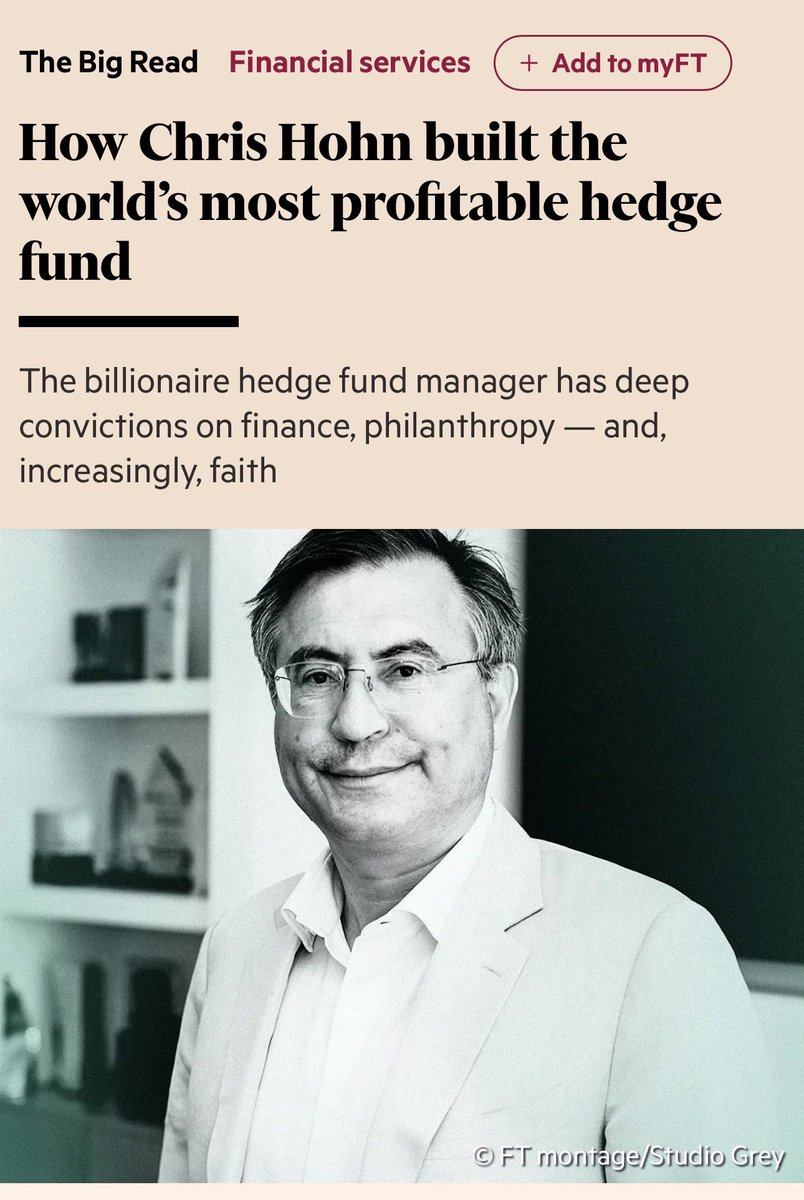
Chris Hohn did a 90-minute sit-down with Nicolai Tangen and then dropped an investor letter the FT got hold of last week.
You’d think the guy who printed a record $18.9B last year would be doing victory laps. Instead he’s quietly rewiring his whole portfolio.
My favorite takes from both:
1.The most important thing in investing isn’t growth. It’s barriers to entry. Growth without a moat is the airline industry: 5% volume growth for 100 years and basically zero cumulative profit.
2.There are only about 200 companies on earth he considers high-quality and investable. His fund holds 15.
3.Average holding period: 8 years. Some positions 13. “You have to hold the company forever, because the stock market may be at very bad prices when you want to sell.”
4.His real test for a moat: can the company price above inflation? A 20% margin business that prices 1% above inflation grows profits 5% faster than revenue. Forever. Almost no companies can do this.
5. Industries he won’t touch: banks, autos, retail, insurance, tobacco, asset managers, fossil fuel utilities, airlines, wireless telecom, media, advertising. On banks: “sooner or later someone without a lot of intelligence comes to run them, and then it can be toxic.”
6.On AI generally: call centers go bankrupt. Indian outsourcing coders are next. But for everyone else, AI lowers costs and raises productivity. Companies with real moats become MORE valuable.
7. Here’s the punchline. The FT got hold of his investor letter. He cut his Microsoft stake from 10% of the fund to 1%. Roughly $8B sold. He’d held it since 2017 through a 400% rally. His reason: AI could disrupt Office and Azure faster than the market thinks.
8.He moved that capital into Alphabet. Doubled it from 3% to 5%. Now his largest tech position. The world’s best quality investor sold Microsoft and bought Google because he thinks Google’s moat is more durable in an AI world. Not the consensus trade.
9.The underlying thesis: “AI eats software.” If AI agents do the work humans used to pay per-seat SaaS licenses for, the whole SaaS model gets re-rated. Oracle, Adobe, Salesforce all ~40% off highs. Microsoft 25% off. Market is starting to agree.
10.When to sell? Not when something gets expensive. When conviction drops. Valuation is one variable, conviction is the other. What kills you isn’t being wrong, it’s permanent loss of capital.
11.He admits hardcore activism doesn’t work anymore. Too much of the shareholder base is passive index funds. And even when activism wins, you usually win in a bad business. “The business always wins.”
12.Counterintuitive take: there are more good companies in public markets than in private equity. The best businesses are too big for PE to buy. And when public companies sell something to PE, they’re selling the assets they want to get rid of.
13.On intuition: “thinking without thinking.” Pattern recognition from 20 years of reps. It’s how he sniffed out Wirecard while the German establishment was defending it. “Most investors trust authority too much.”
14.He basically stopped shorting. “You’re going to be eventually right but not be able to fund the losses.” The first guy to short Wirecard had to cover 19 years before it hit zero. Buffett told him he and Charlie studied shorting and concluded it was too hard.
15.He gives almost everything away. ~$500M a year. $10 prevents an unwanted pregnancy in Africa. $40 saves a child from severe malnutrition. $50 prevents permanent blindness.
16.Tangen asks: advice to young people? Hohn, who runs the world’s most profitable hedge fund: “Go on a spiritual path.” The guy who made $18.9B last year ends the interview saying only purpose and meaning matter.
The headline: the world’s best quality investor just sold his biggest tech compounder because he thinks AI is breaking the moat. Quietly, with conviction, on an 8-year horizon, while everyone else is still buying the AI winners of 2023.
@AlexOnchain what helped me is chat with claude why I wasn't writing as much, it became a good psych to work through AND yes writing is amazing it helps to clarify our own thoughts so so much and if anything is valuable now its pattern recognition / system thinking. so yes do it!