One funny thing about the "AI will become smarter than humans and then take over" narrative is that the smartest humans are not and probably never have been running the show.
"Tech CEOs are calling for AI regulation, therefore I'm against it" is not a useful—or even usable—heuristic. Mark Zuckerberg is against regulation. You actually have to evaluate the ideas on the merits.
@MattBruenig@Tyler_A_Harper@MattZeitlin In fact, the antitrust people very much wanted new legislation, both on antitrust generally and on Big Tech specifically. Years of effort on that front ultimately failed. That's what makes the current posture odd to me. The idea that we don't need new laws is actually a new one.
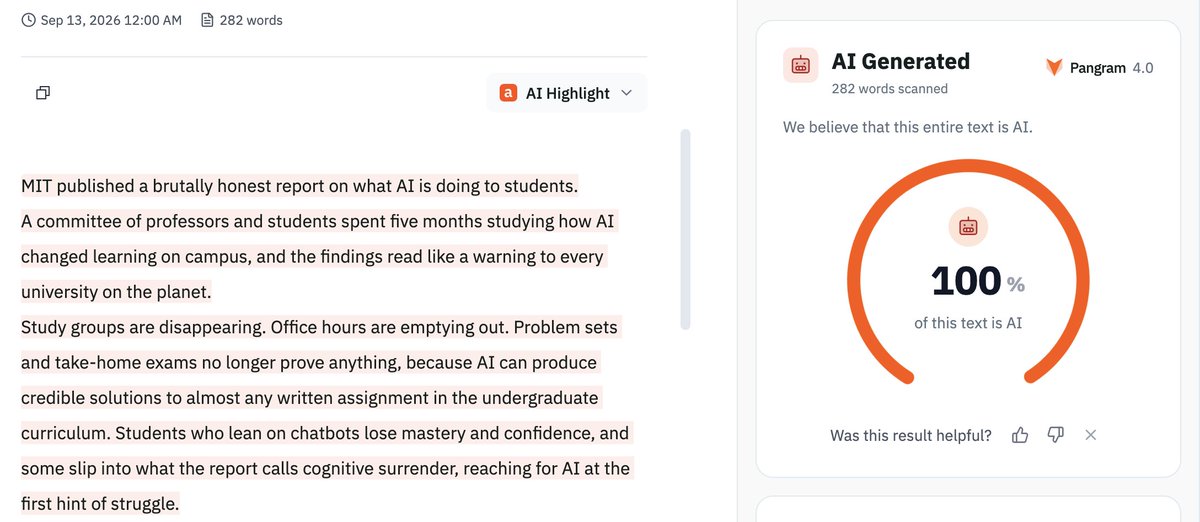
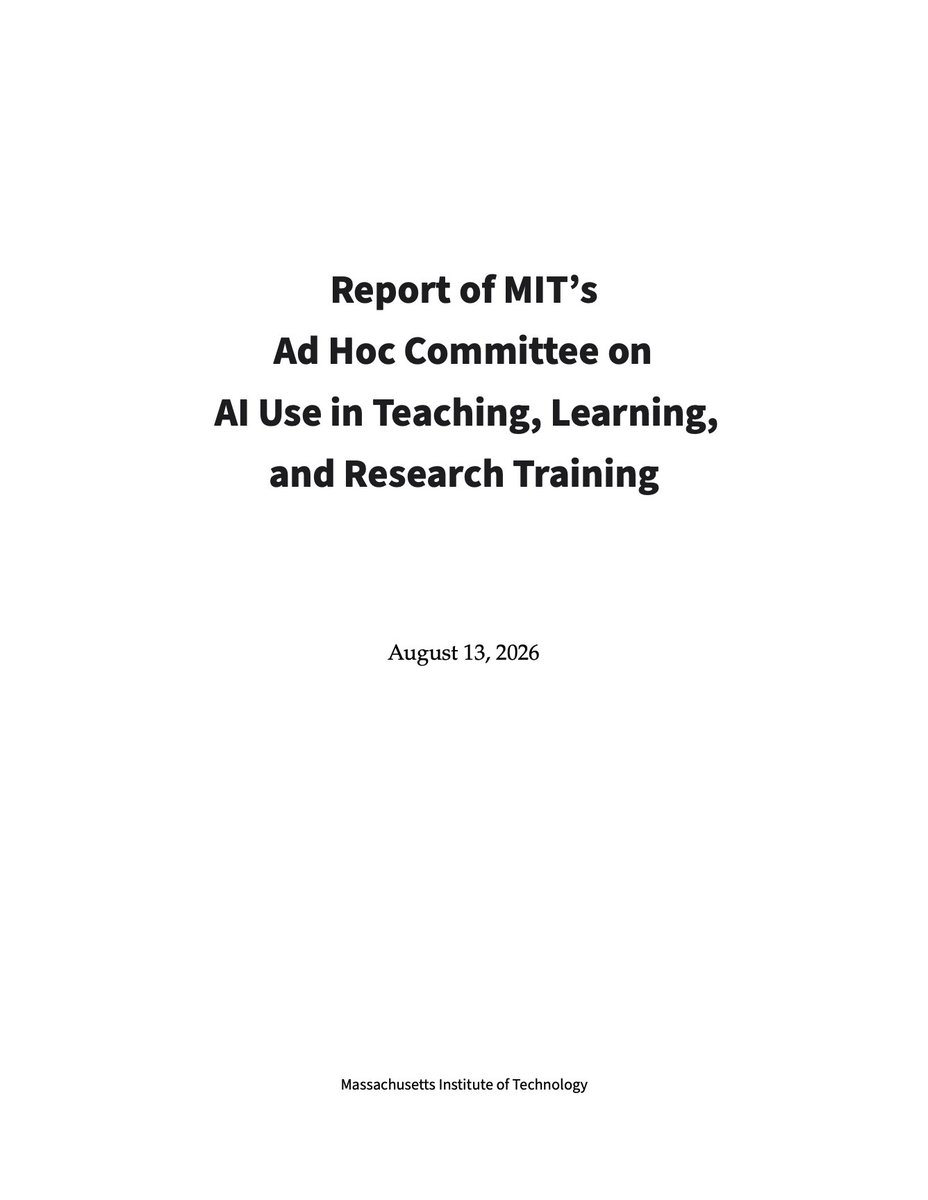
MIT published a brutally honest report on what AI is doing to students.
A committee of professors and students spent five months studying how AI changed learning on campus, and the findings read like a warning to every university on the planet.
Study groups are disappearing. Office hours are emptying out. Problem sets and take-home exams no longer prove anything, because AI can produce credible solutions to almost any written assignment in the undergraduate curriculum. Students who lean on chatbots lose mastery and confidence, and some slip into what the report calls cognitive surrender, reaching for AI at the first hint of struggle.
The numbers are rough. 46 percent of surveyed MIT undergrads use LLMs daily. 90 percent worry about their own overreliance. Undergrads who feel AI makes them replaceable now outnumber those who feel it makes them capable.
The committee's answer surprised me. They refused to fight AI with surveillance. The report calls AI detectors unreliable, says lockdown browsers feel like spying, and warns that policing students builds a classroom atmosphere of mutual distrust.
Instead, MIT wants to rebuild education around the things AI can't replace. That means oral exams, semester portfolios, in-person project work, and a required social component in every subject. The report even floats the idea of rethinking grades entirely, since without a GPA to optimize, much of the incentive to cheat with AI evaporates.
The committee warns professors against replacing undergrad research assistants with AI agents just because they're cheaper, because a university exists to grow people, not output.
The most famous tech school on earth admitted the machines broke its way of teaching. Its answer is more humans, not more software.
@mattyglesias Great piece. My quibble is with saying people "really, really enjoy" watching videos on their phones. The whole issue (as you make clear!) is that we actually enjoy it *less* than many alternatives, but it's easier, cheaper, and compulsive.
The Nobel Prize-winning economist Claudia Goldin argues that the way to raise fertility is for men to shoulder more household work.
The theory sounds good. There's just one problem, @MarcNovicoff argues: the data don't support it at all. https://t.co/H7LI1XuAKU
This is an op-ed about the futility of medical price-setting that does not even mention the fact that Maryland sets prices and revenue caps for its hospitals, and it works! https://t.co/zpyA3CeIRO