BAD SOURCES OF DOPAMINE:
Porn
Alcohol
Junk food
Gambling
Excessive screen time
GOOD SOURCES DOPAMINE:
Music
Sunlight
Meditation
Working out
Cold showers
Learn the difference.
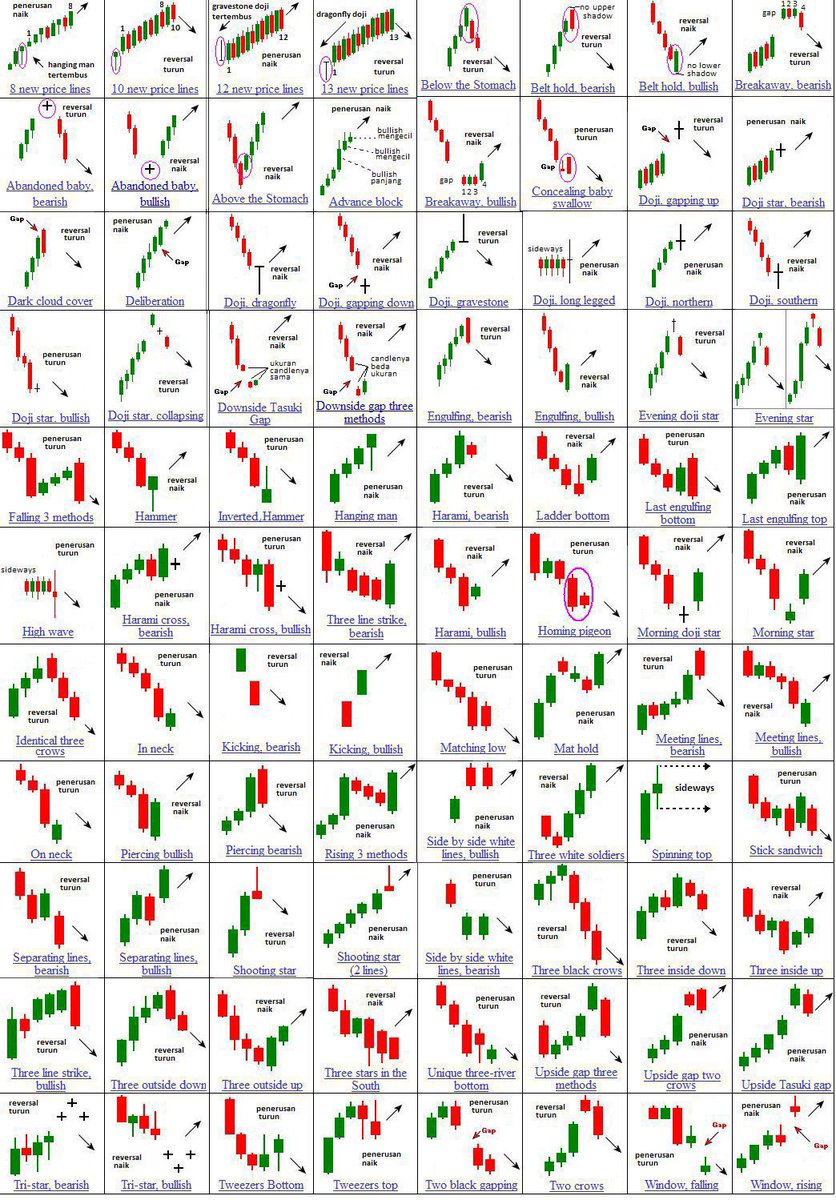
FREE: Here is a link to a great Candlesticks eCourse that is free today courtesy of @MarketsDecoding :
(Great value for $0)👇
https://t.co/SE5BNkussY
#NTUpartner
The $2,000,000 Nicolas Darvas System Summary:
An easy-to-remember acronym for the Darvas System:
D – Direction of the Market A – Accelerated Earnings and Sales R – Relative Price Strength (and Return on Equity) V – Volume Increasing A – Aggressive Growth Group S – Sound Base Pattern
To further explain:
D – Direction of the Market
Is the market, as a whole, in an uptrend? It is highly unlikely that a stock will have huge gains when the overall market is in a downtrend, so make sure the direction of the market is moving upward.
A – Accelerated Earnings and Sales
Is the company seeing increases in earnings and sales this quarter compared to the same quarter last year?
Normally, you want to see stocks with at least 40% increases in earning AND sales in the most recent quarter compared to the same quarter last year. And remember, the higher the increase in earnings and sales, the better. If you have a choice between a stock with a 50% increase and one with a 90% increase, definitely go with the 90% increase stock.
R – Relative Price Strength (and Return on Equity)
Is the stock outperforming most other stocks in terms of its price increase?
Darvas wanted to see stocks that had at least doubled over the past year before he’d consider buying. If a stock has already increased a great deal over the past year, most investors are fearful of a steep decline, but many studies have shown that Darvas was right in his assessment; if a stock had already made a powerful move, it proved that it had the ability to move in such a fashion and therefore, was likely to do it again.
Another important characteristic of ideal Darvas stocks is a high Return on Equity. Fund managers love to see a high ROE. Some put a higher value on ROE than they do earnings and sales.
William O’Neil conducted a 50-year study on top performing stocks. This study’s findings were published in his classic book How to Make Money in Stocks. O’Neil found that almost all of what he labeled “the greatest growth stocks of the past years” began their runs with a Return on Equity of 17% or higher. And just like when it comes to earnings and sales, the higher the ROE is, the better outlook for the stock.
Therefore, with the exception of rare cases when earnings or other conditions are extremely attractive, we should primarily buy stocks with a ROE of 17% of higher.
V – Volume Increasing
Is volume increasing on up days, particularly on the day when the stock breaks into new highs?
Volume can tell you so much about a stock. Ideally, you want to see much higher-than-normal volume when a stock breaks into new highs and lower volume when the stock declines.
A – Aggressive Growth Group
Is the stock a member of an industry group that has been increasing in price more rapidly than most other groups?
At any given time in the market, there are certain groups and sectors that are very hot. It’s always been this way and always will be this way. Make sure your stocks are members of these hot groups.
S – Sound Base Pattern
A long term price range is established on a chart for weeks. The breakout of this range is the signal to go long to capture a potential uptrend. Use trailing stops to optimize gains and minimize give backs of profits.
40 Steps In The Traders Journey:
1. We accumulate information. We learn by buying books, asking questions, going to seminars and researching what really works in trading.
2.We begin to trade with our new-found knowledge.
3. We make profits only to give it back very quickly, realizing that we may need more knowledge or information.
4.We accumulate more information.
5.We switch the stocks we are currently following and trading.
6.We go back into the market and trade with our better system; this time it will work.
7. We lose even more money and begin to lose of confidence that we can be traders. The reality of losing money sets in.
8. We start to listen to other traders and what works for them.
9. We go back into the market and continue to lose more money.
10.We completely switch our style and method.
11.We search for more information.
12.We go back into the market and start to see a little progress.
13.We get over-confident in a single trade, and take on a big position thinking it is a sure thing.
14.We start to understand that trading successfully is going to take more time and more knowledge than we ever anticipated. Most people give up at this point.
15.We get serious and start concentrating on learning a real methodology.
16.We trade our methodology with some success, but realize that something is missing.
17.We begin to understand the need for having rules to apply our methodology.
18.We take a sabbatical from trading to develop and research our trading rules.
19.We start trading again with our rules, and although we find some success, we still hesitate when we execute.
20. We add, subtract, and modify rules to become more proficient in our trading.
21. We feel we are close to crossing the threshold of successful trading.
22.We start to take responsibility for our trading results, as we understand that our success is in us, not the methodology.
23.We continue to trade and become more proficient with our methodology and our rules.
24. As we trade, we have a tendency to violate our rules and our results are still erratic.
25. We know we are close.
26.We go back and research our rules.
27.We build the confidence in our rules, and go back into the market to trade.
28.Our trading results are getting better, but we are still hesitating in executing our rules.
29. We now see the importance of following our rules as we see the results when we don’t do so.
30. We begin to see that our lack of success is within us, and we begin to work on knowing ourselves better.
31.We continue to trade, and the market teaches us more and more about ourselves.
32.We master our methodology and our trading rules.
33.We begin to consistently make money.
34. We get a little over-confident and the market humbles us.
35.We continue to learn from our mistakes.
36.We learn smaller positions and dial down our emotions so we can trade smaller and be more disciplined.
37.We learn that risk management is one of the biggest keys to winning as a trader.
38.We stop thinking and allow our rules to trade for us, and our trading account continues to grow as we increase our position size as our account grows.
39.We are making more money than we ever dreamed possible.
40.We go on with our lives and accomplish many of the goals we had always dreamed of.
I have a college degree
But I’ve learned more about investing from reading twitter threads than I did in school
Here are 10 twitter threads that will make you a better investor:
I booked overseas flights with @Qantas a month ago which included connections with other airlines. In that time they have managed to not ticket the flight, tell me they have to send the money back to me and we have to re-book. 1/