From the first International Consensus Conference on Lung Ultrasound in 2012 to the updated document: 13 years of scientific growth, new evidence, and multidisciplinary collaboration.
#LungUltrasound#PoCUS#CriticalCare#EmergencyMedicine
https://t.co/aWZFJZvQaj
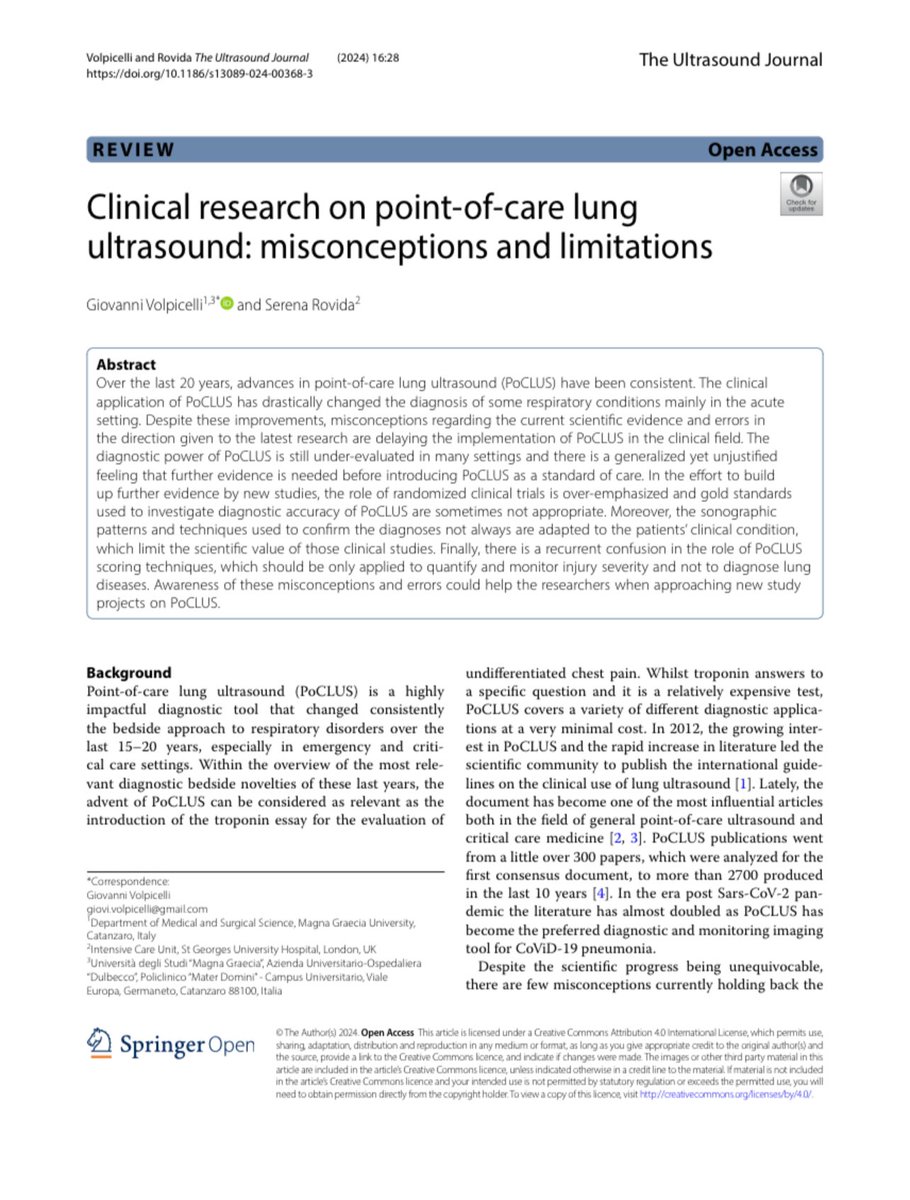
Clinical lung ultrasound is evolving—but is complexity limiting its impact?
New reflections in a short editorial for Chest.
#PoCUS#LungUltrasound#CriticalCare
https://t.co/PzOxm4gFra
The new ranking released by Stanford University on the top 2% most influential scientists across all disciplines~a snapshot of nearly 223,000 scientists representing the top 2% of >9 million of the globe.
Multi organ ultrasound in the diagnostic workup of pulmonary embolism: where do we stand and where are we heading? What can multi organ PoCUs offer us?
https://t.co/rrZaTPeQt5
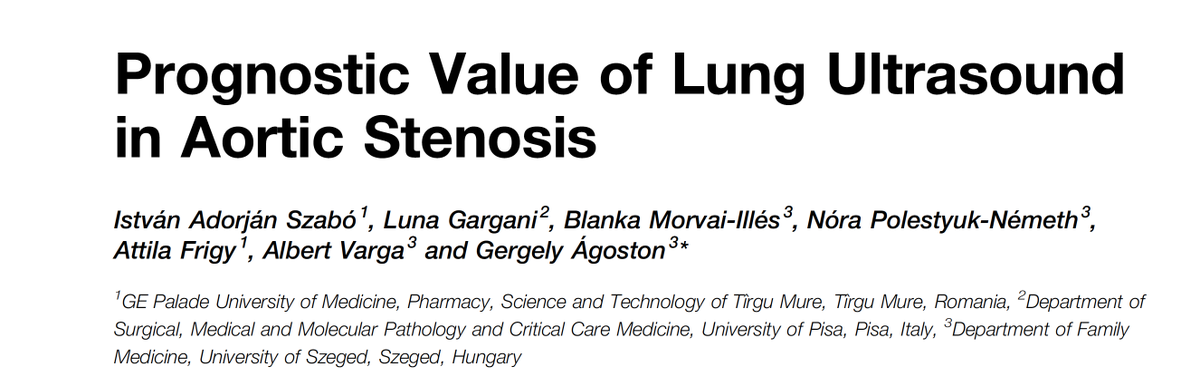
Very interesting data showing that LUS B-lines are an independent predictor of events in severe aortic stenosis.
This excellent paper reinforces and expands the concept we had proposed in 2022 on the role of B-lines in aortic stenosis.
#VHD is a new frontier of the use of #LUS.
@lungultrasound in the new definition of ARDS
https://t.co/OIUkTC53xc
I appreciate the novelty. However, “bilateral opacities” is a radiologic language of unknown meaning for LUS. Moreover, a “well trained operator” is more needed for CXR than for LUS.
So pleased to finally see our work out led by @RespiratoryPT on the impact of thoracic ultrasound on clinical decision making by physiotherapists in ICU https://t.co/NohjXvKenj
And the answer is a resounding yes 👍🏾 it has great impact
https://t.co/xae5Aie1z6
Lung ultrasound is one of the most influential topics (54th in the ranking) in the history of critical care medicine. The advent of @lungultrasound and @PoCUS changed medicine.