Good news: there's idle compute in every laptop on earth.
Bad news: you'd need >50 of them to hold one frontier model.
Worse news: split the model and the network joins the critical path.
I tried anyway. Started with one, because that's how many I own: https://t.co/YJDc2gGY15
Want to make your NN more explainable?
We present Gradient Rollback (GR) which tracks how training examples influence the model & use this to explain predictions. We apply GR to knowledge base completion. #ExplainableAI#KnowledgeGraph#ML
https://t.co/ToOmJX7LDJ
Overview below:
At #CVPR2020, Facebook AI is pushing the state of the art forward in many important areas of CV, including core segmentation tasks, architecture search, transfer learning, multi-modal learning, 3D reconstruction, & more. Learn more here: https://t.co/h62Xm9kXEO
Today we describe a #MachineLearning approach combining #NaturalLanguageProcessing with #ComputerVision to automatically extract data from structured documents—invoices, receipts, etc.—with the potential to streamline many business workflows. Learn more at https://t.co/ed87XgCTbn
Happy to announce we partenered with @onnxai@onnxruntime@microsoft to make state-of-the-art inference up to 5x faster 🚀. NLP for every people and organizations! #msbuild https://t.co/VKSts08Cvp
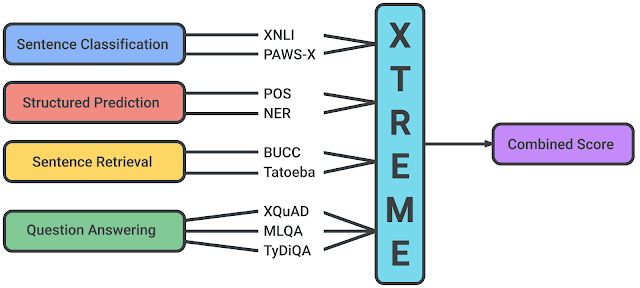
I'm excited to announce XTREME, a new benchmark that covers 9 tasks and 40 typologically diverse languages.
Paper: https://t.co/ZjBIYK6QcX
Blog post: https://t.co/L0SiDRRHMX
Code: https://t.co/QEmw5ZGHoN
We're happy to release the Taskmaster-2 natural language dialog dataset, an extension to TaskMaster-1 (https://t.co/LFwD4g4sPP) that doubles the size and increases the level of dialog complexity needed to model human-level understanding. Grab the data at ↓https://t.co/neotHwbQGC
Introducing the TensorFlow Constrained Optimization library, a new tool to configure and train #MachineLearning models based on combinations of metrics, making it easy to formulate and solve problems of interest to the ML fairness community. Learn more at https://t.co/vVdqfHgWnL
With 4.5B parallel sentences in 576 language pairs, CCMatrix is the largest data set of high-quality, web-based bitexts for training translation models. Now Facebook AI is sharing tools for other researchers to use this corpus for their work. https://t.co/uvBbfjPTk5
Today we announce a novel, open-source method for text generation tasks (e.g., summarization or sentence fusion), which uses edit operations instead of generating text from scratch, leading to less errors and faster model execution. Read about it below. https://t.co/Qsu2YO22jX
Check out Meena, a new state-of-the-art open-domain conversational agent, released along with a new evaluation metric, the Sensibleness and Specificity Average, which captures basic, but important attributes for normal conversation. Learn more below! https://t.co/QxMVstg3qQ
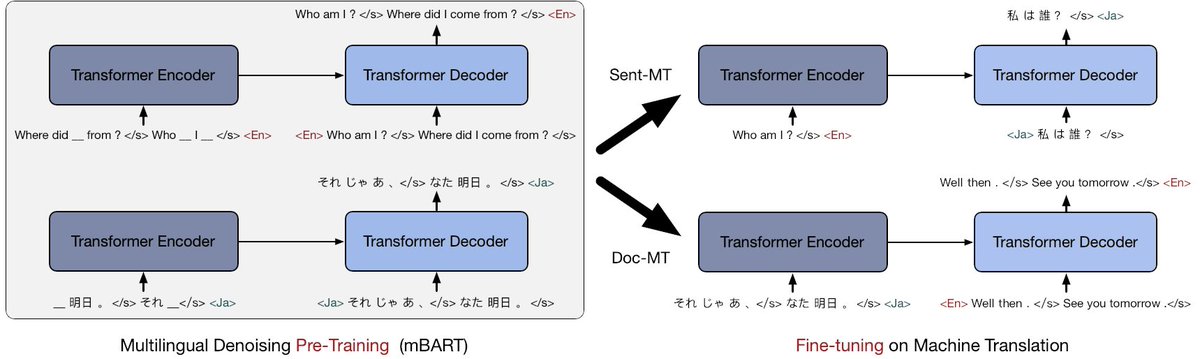
We're releasing mBART, a new seq2seq multilingual pretraining system for machine translation across 25 languages. It gives significant improvements for document-level translation and low-resource languages. Read our paper to learn more: https://t.co/SjAunFuujZ
We have open-sourced wav2letter@anywhere, an inference framework for online speech recognition that delivers state-of-the-art performance. https://t.co/1W7PsVu8tO
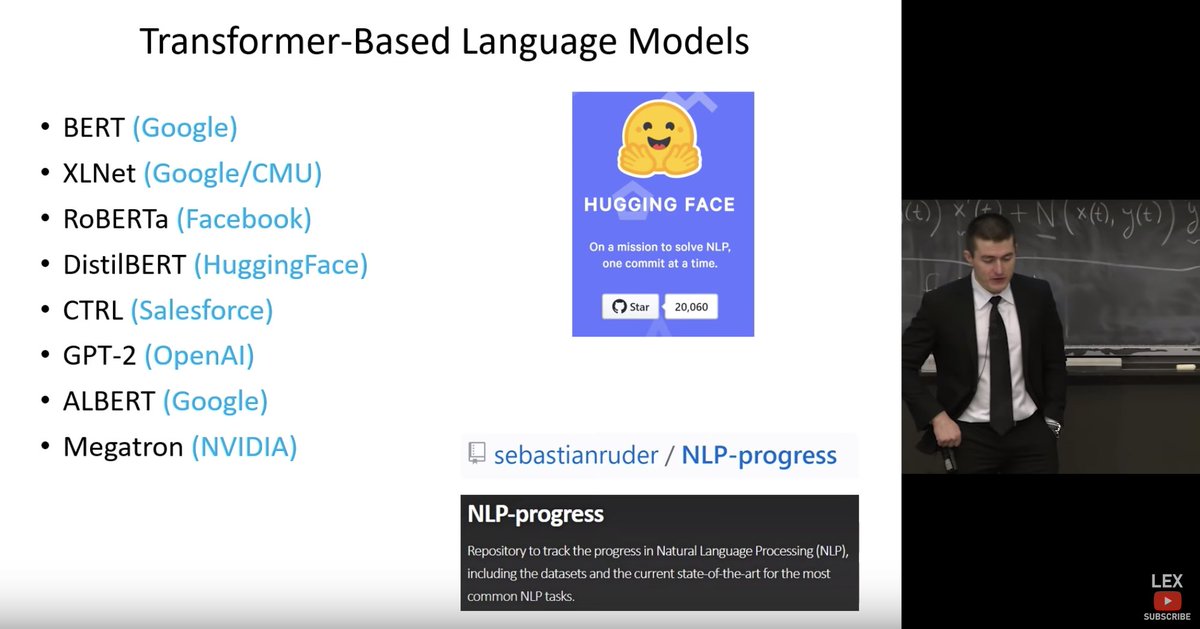
Great intro to the modern landscape of Deep Learning & #nlproc by @lexfridman@MIT. Including sweet mentions of the models inside @huggingface transformers, write with transformers & @seb_ruder's NLP progress repo!
https://t.co/lnu7JHVMbz https://t.co/k2wQ6lOzlf
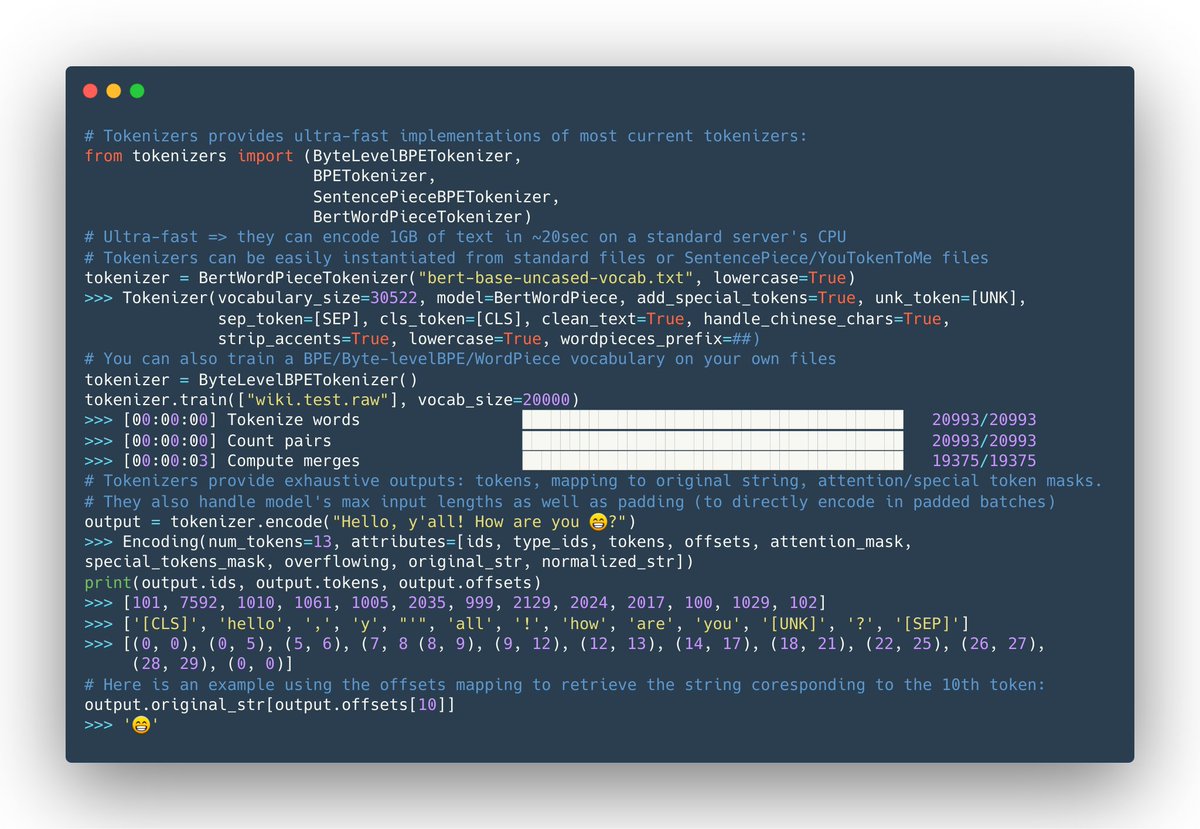
Now that neural nets have fast implementations, a bottleneck in pipelines is tokenization: strings➡️model inputs.
Welcome 🤗Tokenizers: ultra-fast & versatile tokenization led by @moi_anthony:
-encode 1GB in 20sec
-BPE/byte-level-BPE/WordPiece/SentencePiece...
-python/js/rust...
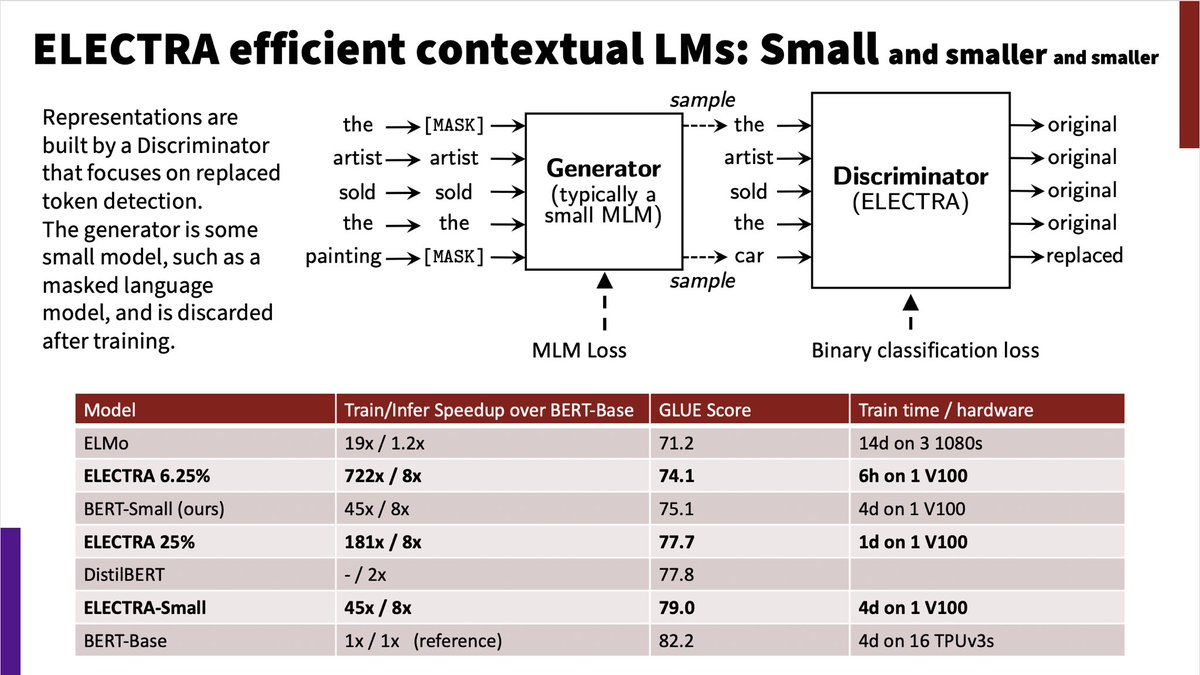
.@stanfordnlp people’s #ICLR2020 papers #2—ELECTRA: @clark_kev and colleagues (incl. at @GoogleAI) show how to build a much more compute/energy efficient discriminative pre-trainer for text encoding than BERT etc. using instead replaced token detection
https://t.co/KEiM8sk1wu
If you are willing to learn more about Quality-Diversity algorithms, we have created a website that gathers papers, tutorials, and implementations of QD algorithms.
The progressive increase of papers published on this topic every year is impressive!
https://t.co/JT9zuvgwYA
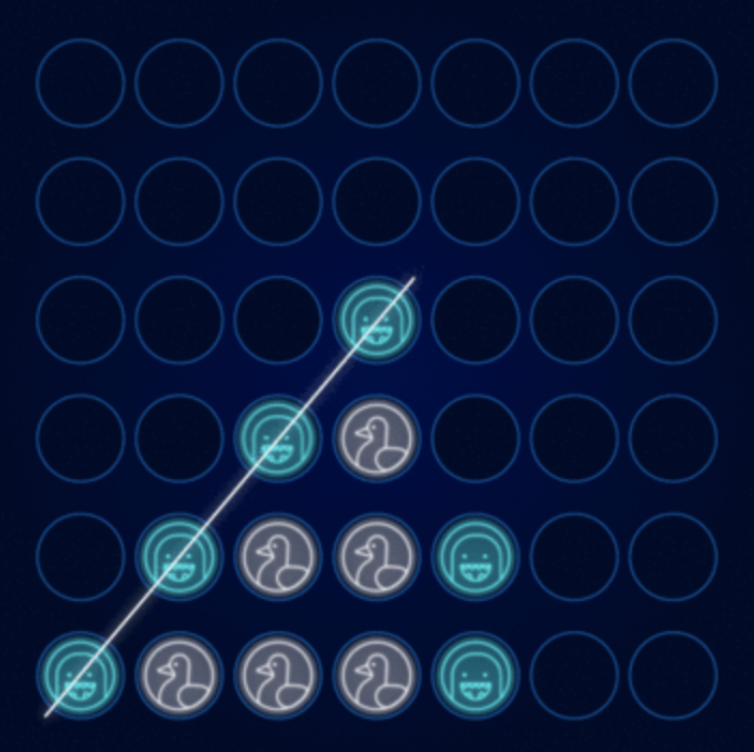
We’re excited to announce a beta-version of a brand-new type of ML competition called Simulations!
Compete against a set of rules, rather than against an evaluation metric. 👀 Give it a try today 👉 https://t.co/bRY0PFla5M