@jclinicalinvest 9/10 #9:
So many open questions and much more to come...
Shall we pay more attention to CD4 T-cell checkpoints to boost MAPK inhibitor treatment responses?
Could these strategies be leveraged to improve outcomes in ATC patients?
@jclinicalinvest 8/10 Alright, but how does the loss of an MHC-II dependent mechanism can lead to MAPK resistance?
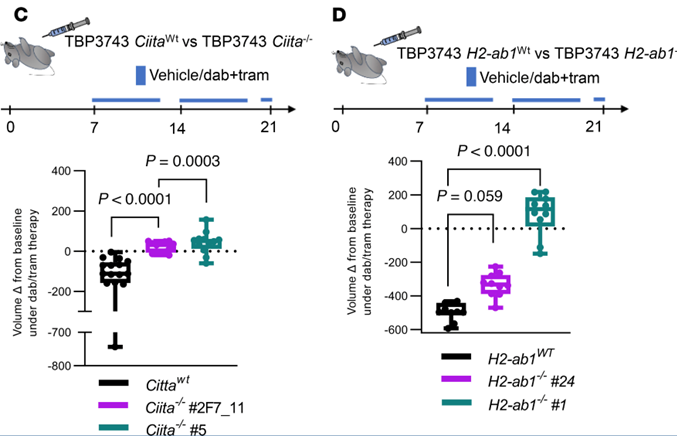
Depletion of CD4 T-cells, but not CD8 T-cells is controlling the response to MAPK inhibitors!
@jclinicalinvest 7/10 And.. It is reversible with EZH2 inhibitors.
But does this matter?
It turns out yes. If you ko Ciita or H2-ab1 (MHC II allele) in MAPK-inhibitor sensitive tumors, they become treatment resistant.
@jclinicalinvest 6/10 But how are tumor cells doing this?
Well, it turns out that ATC’s epigenetic plasticity seems to be behind this. They are silencing the Ciita locus, the master regulator of MHC II!
@jclinicalinvest 2/10 Using murine models of BRAF/p53-/--mutant ATC, we noted upon treatment with BRAF and MEK inhibitors, significant upregulation of the antigen presentation pathway in tumor cells.
Little progress has been made in the treatment of anaplastic thyroid cancer
@VeraTiedje@Gnana_Krish et al. @MSKCancerCenter now find mice with aggressive ATC respond to the inhibitor combination dabrafenib/trametinib by affecting cancer cell MHCII expression & increasing T-cell infiltration.
https://t.co/XXvBBrtaL7
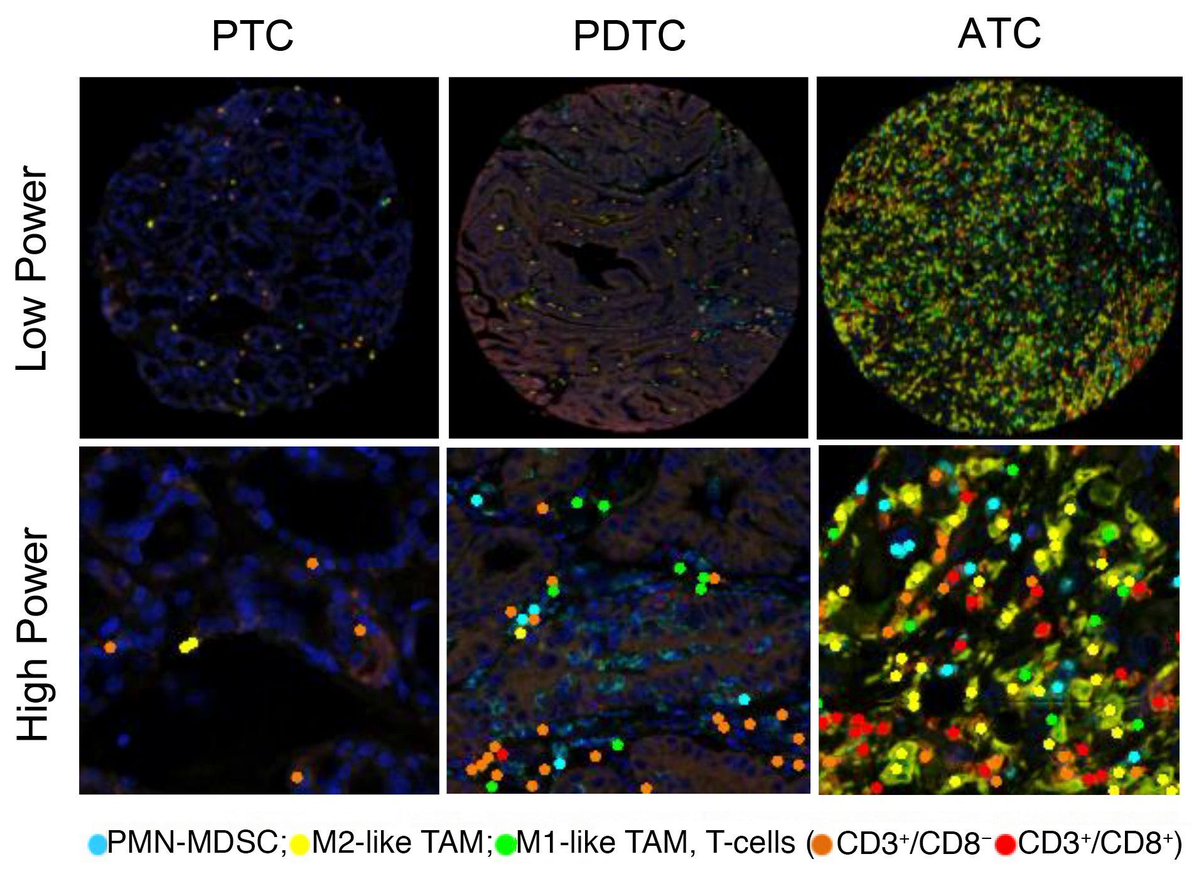
The image shows multiplex immunofluorescence for immune cell populations in the tumor microenvironment of thyroid cancers.
Insights: Coughlin and @LedongW@stonybrooku discuss new work by @Gnana_Krish et al. (https://t.co/dTJfpYdvxe) which identifies the loss of the splicing factor RBM10 as a driver of #metastasis in #ThyroidCancer through the regulation of RNA splicing https://t.co/PamiS3oxqV