🧾 What food labels don't reveal is as important as what they do. GFIdeas India's newsletter explores hidden variables in animal protein production—bioaccumulation, antibiotic use, & quality control—and how smart proteins can offer greater transparency. https://t.co/OezrNFSVD7
🔗 Download the full report with key recommendations for food and agricultural scientists, industry and government scientific agencies, and funding bodies here: https://t.co/oLgefMXD8o
India has a significant opportunity to strengthen domestic plant-based protein supply chains by better leveraging climate-resilient indigenous crops, notes Vaishnavi Kumari in the @EconomicTimes' recent feature on GFI India’s crop optimisation whitepaper: https://t.co/IgsjxVhXnO
Many of these underutilised crops are described as ‘orphan’ crops. But as Padma Ishwarya S. notes, “Scientists & policymakers increasingly see these crops not as ‘minor’ crops, but as strategic resources for future food & nutrition security, especially under climate variability.”
#Business | Synthetic biology startup StrainX raises $13 million in funding from Prime Venture Partners, Leo Capital
The startup, which operates in the synthetic biology and precision fermentation space, will use the fresh capital to scale manufacturing, expand R&D and accelerate commercialisation globally.
@AryamanGupta_ with details 👇
https://t.co/XO8By3V2Xm
High-protein products are dominating urban consumer trends, but India’s nutritional context is a lot more nuanced.
🌱Our latest GFIdeas India newsletter explores how plant-based smart proteins can help address India's ‘triple burden' of malnutrition. https://t.co/Qqz1VRSG9s
@down2earthindia's latest feature takes a deeper dive into cellular agriculture through the lens of cost, infrastructure, and adoption.
💡GFI India's team shared their insights into the sector's progress so far, from challenges to technical breakthroughs: https://t.co/SzyAgVGyl9
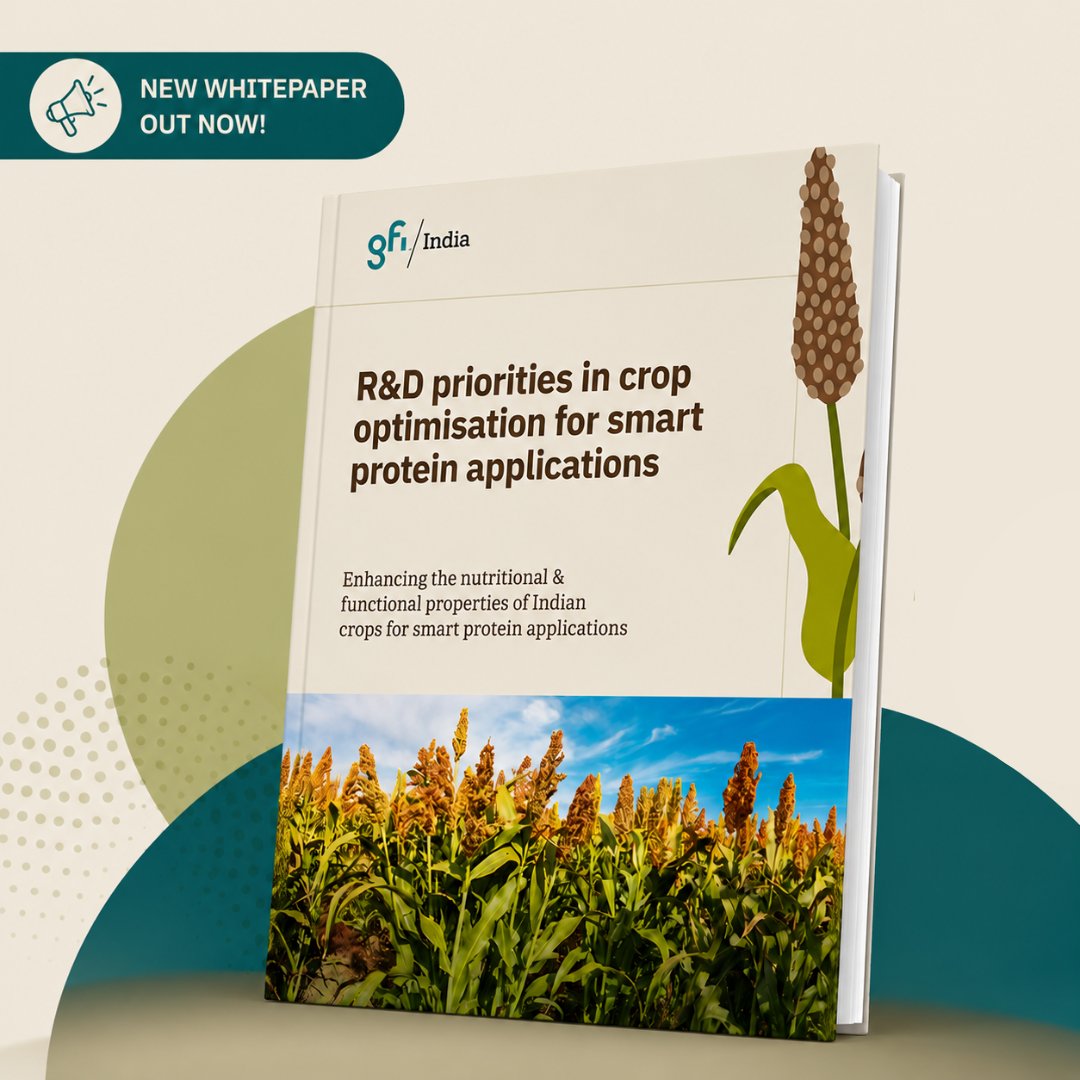
This whitepaper outlines 10 priority R&D areas & serves as a strategic roadmap for researchers, policymakers, startups, industry leaders, and funding agencies in the smart protein ecosystem.
Read more: https://t.co/pWblCVIy2s
India is one of the world’s greatest reservoirs of agricultural biodiversity. Yet, many of our most promising indigenous crops remain under-researched, underutilised, and largely absent from mainstream ingredient supply chains.
💥 Our new whitepaper, authored by Dr. Padma Ishwarya, explores how India can leverage the potential of crops such as horse gram, winged bean, grass pea, lupin, bambara groundnut, and indigenous millets and legumes for smart protein innovation:
https://t.co/oLgefMXD8o
🚨 Funding call: Applications for @CCollectiveNet’s Climate Pitch 2026 are open to early-stage climate tech startups: https://t.co/5fW0pIxY0o
This year’s theme is Adaptation & Resilience, with alternative proteins as a key sector. Apply by May 27: https://t.co/Kfch8VAusN
The paper explores one of the most critical bottlenecks in cultivated meat commercialisation today: the development of scalable, cost-effective, and sustainable serum-free media.
Reach out to us for more details.
We are excited to share that a review article co-authored by GFI India’s cultivated meat SPARK fellows, their research mentor, collaborators at A*STAR Singapore, and Chandana Tekkatte has been published in Food Research International: https://t.co/L4J59lEwiY
Join Dr. @IshwaryaPadma, Senior Scientist (Plant-based) at GFI India, for a virtual expert session on Plant-Based Protein for Future Food Security hosted by Dr. Rajendra Prasad Central Agricultural University, Pusa, Bihar.
👉 Register here: https://t.co/iMIBsznpCv
@Rpcau_pusa
As the smart protein sector continues to grow, access to diverse forms of funding is critical for startups & researchers. Our new funding opportunities database helps you identify funding pathways that can support innovation and scale in the sector.
🔗 https://t.co/3emhalzX41
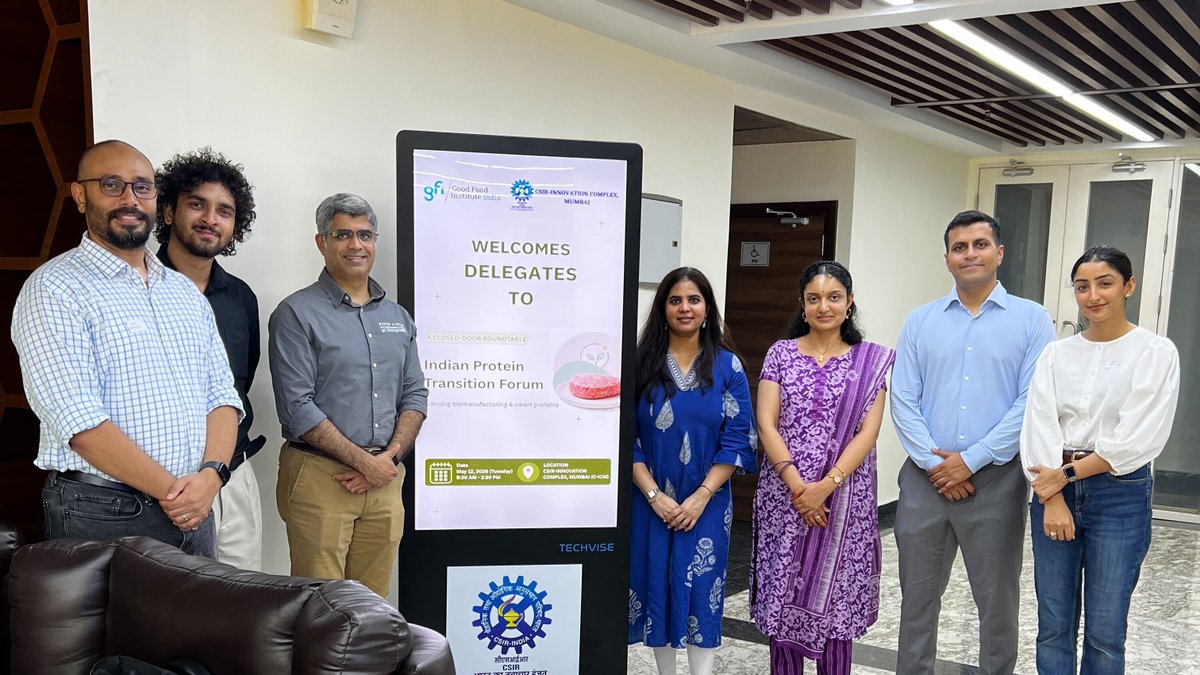
The closed-door discussions focused on two critical priorities for the sector: identifying technical bottlenecks that must be solved for scale in India and globally, and exploring collaboration models that can help India build a more resilient cultivated meat ecosystem.
GFI India and @CSIR_IND convened a closed-door roundtable in Mumbai, bringing together scientists, academic researchers, and industry stakeholders across India’s emerging cultivated meat ecosystem. 💥
💡 The forum featured insights from Prof. @rashirwaiker, Director of the @BezosCentre for Sustainable Protein at North Carolina State University, on global approaches to biomanufacturing training, translational research, and ecosystem development.
“What will the Indian plate look like in 10 years?” 🍽️
Our managing director Sneha Singh sat down with @AshwinBhadri of @Equinox_Labs for a wide-ranging conversation on food systems change and her journey to leading GFI India.
🎧 Tune in to the episode: https://t.co/77RiU1hAsL
📢 Sustainable Food Proteins is inviting submissions for a special issue on the functional structuring of plant-based and fermentation-derived proteins for meat and dairy alternatives. GFI India’s @IshwaryaPadma will serve as a guest editor. https://t.co/zPXnUfFRo6