How are prices determined? While I slept, Claude made me "History of economic thought since Aristotle." I asked it to use my favourite textbook (Blaug, Economic Theory in retrospect). The result will astonish of you. Even top economists here will learn something, I promise.
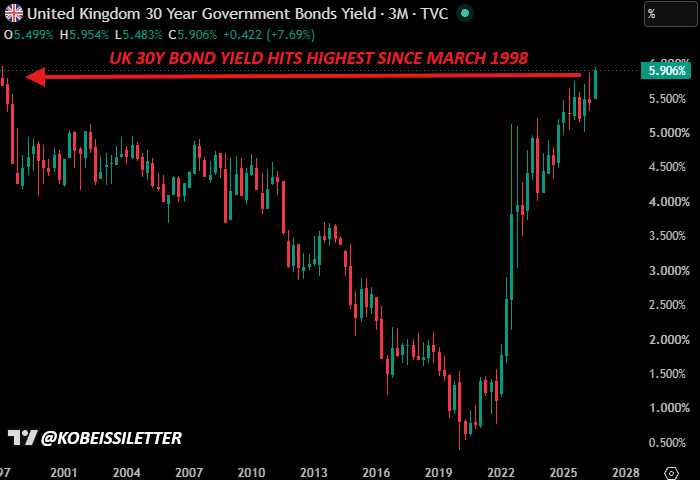
The UK's bond market is collapsing.
Today, the yield on a 30Y Bond in the UK hit 5.95%, its highest level since March 1998.
Yields in the UK are now 15 TIMES above 2020 levels, with the highest borrowing costs among G7 countries.
What is happening? Let us explain.
(a thread)
You do not need a $100,000 investing course, CFA or Bloomberg.
Back in 1998, Warren Buffett explained in one hour how to avoid losing money.
That thinking later shaped a company valued at nearly $1 trillion.
Save this while it is still here.
I'm obsessed with cognitive biases.
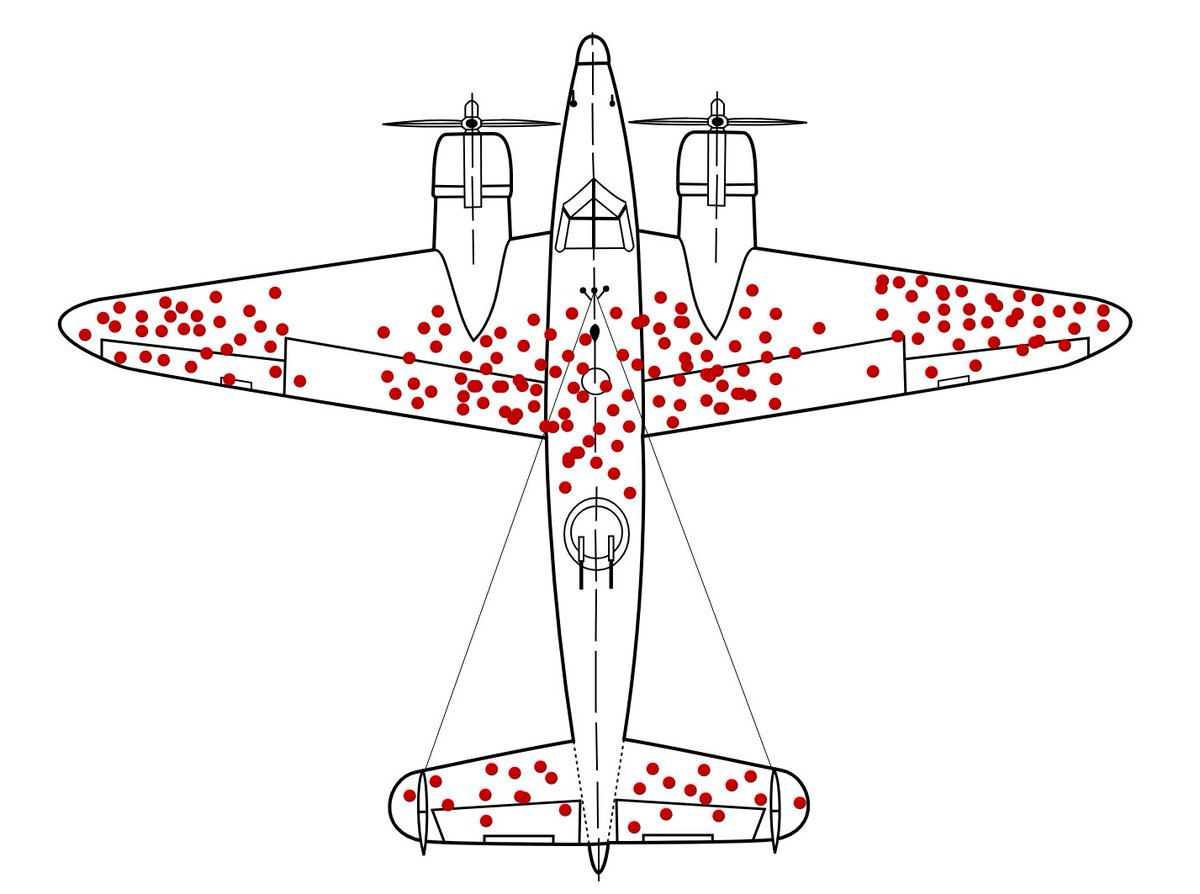
A "cognitive bias" is a systematic error in thinking that destroys decision-making.
11 most powerful (and dangerous) cognitive biases I've found: 🧵
1. Survivorship Bias:
7 Robotics Company Leaders for the Next Decade
1. $GOOG - Alphabet
Alphabet’s robotics initiatives (led by Intrinsic, DeepMind, and RT-X) aim to develop general-purpose robotic intelligence capable of learning, reasoning, and adapting to new environments.
By training robots with large multimodal AI models, Google is building the software mind that allows machines to learn thousands of tasks from human demonstrations rather than rigid programming.
Google’s strength lies in AI scalability, connecting data, vision, and motion learning across its vast ecosystem. If successful, it could become the operating system for physical intelligence, much like Android became the backbone of the smartphone era.
Robotics is increasingly integrated with Google Cloud and AI platforms, targeting applications in smart homes, manufacturing, and logistics. Future developments are expected to include humanoid and collaborative robots capable of learning complex physical tasks through neural networks.
Waymo (Alphabet’s autonomous driving unit) is already operating commercial robotaxi services across multiple U.S. cities. By 2040, Waymo could account for 10% or more of Alphabet’s total revenue.
With unmatched AI research talent, real-time robot data processing via Google Cloud, and one of the world’s strongest machine learning patent portfolios, Alphabet is uniquely positioned at the intersection of robotics and artificial intelligence.
In essence, Google is building the brain and software infrastructure for autonomous robots (not the bodies). Its AI robotics stack is designed to train robots to perform hundreds of tasks by combining LLMs, simulation environments, and real-world motion data, a foundation that could redefine how machines learn and interact with the physical world.
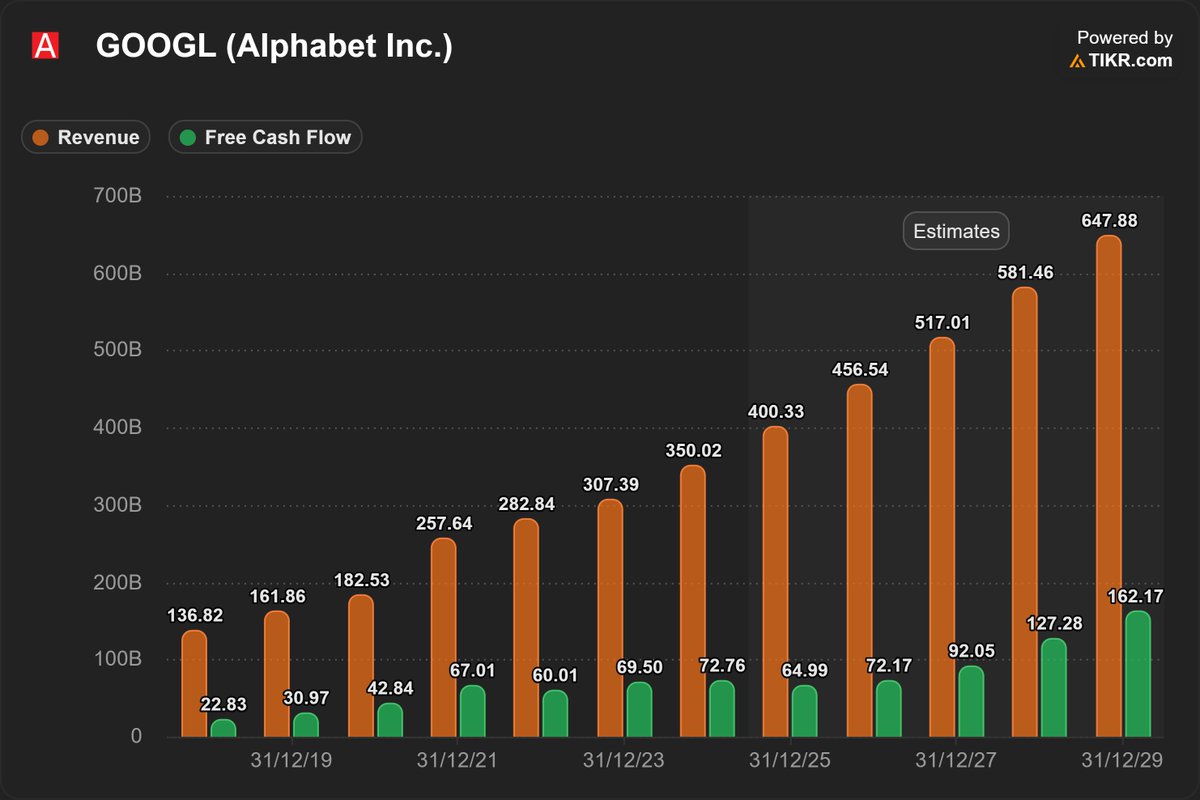
Despite Alphabet’s significant R&D investment, the company is expected to increase its revenue by 1.5 times and double its free cash flow by 2029.
Ray Dalio turned a startup in his apartment into a $150 Billion empire.
Most people spend a lifetime trying to understand the market.
Dalio just condensed 75 years of investing wisdom into 39 minutes.
Save this video.
BREAKING: Google Gemini launched a new feature called Guided Learning.
You can now use it to learn literally anything, step by step, like a personal tutor.
Here’s how to access it 👇
“The capability ceiling hasn't just been raised; it has been shattered. Gemini 3 Pro hit a record 19% on the FrontierMath Tier 4 benchmark, a score that confirms math has been effectively solved by AI, subject only to further scaling of compute.”
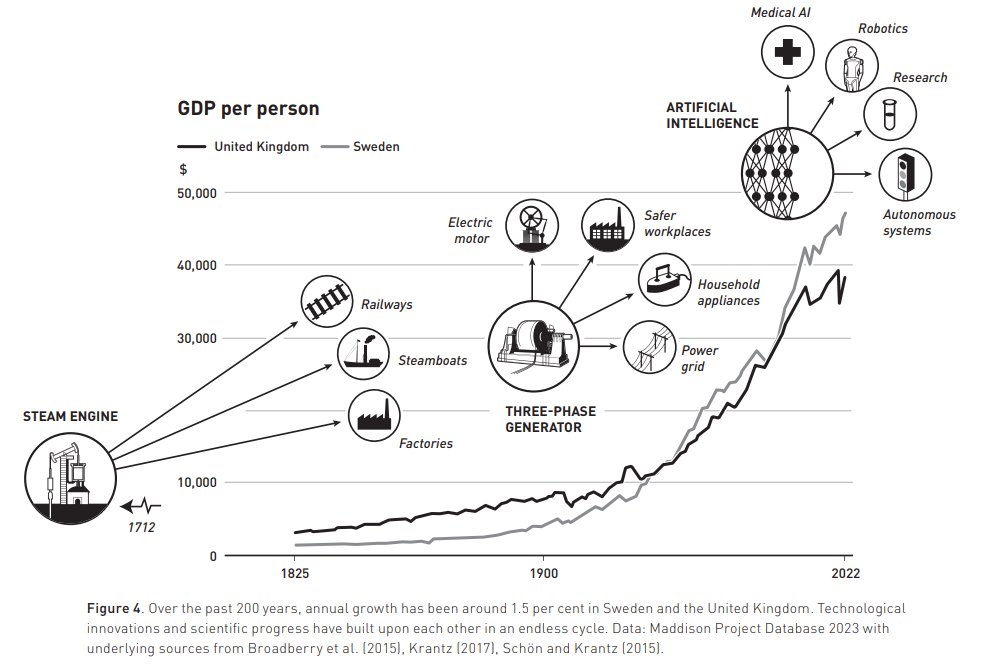
This year’s Nobel Prize in Economic Sciences goes to Joel Mokyr, Philippe Aghion, and Peter Howitt. Why?
Because they explained something we often take for granted:
Why the modern world keeps getting richer.
The answer?
Innovation.
Let’s break it down 👇
For most of human history, economic growth was flat.📜 Better tools came and went.
📉 Gains in income vanished in the next famine, war, or plague.
⏳ Progress existed, but it didn’t compound.
Then came something different.
Over the last 200 years, growth didn’t just happen - it sustained.
Year after year.
Decade after decade.
Enough to lift billions out of poverty.
The question is:
Why now?
Why us?
Why did growth suddenly stick?
That’s where this year’s laureates come in.
🧠 Joel Mokyr (historian of ideas).
📈 Philippe Aghion & Peter Howitt (economic theorists).
Each uncovered a different piece of the puzzle:
How innovation became self-reinforcing.
How new ideas sparked lasting prosperity.
📚 Mokyr’s insight:
Progress doesn’t just need invention.
It needs explanation.
In the past, people stumbled onto new techniques - but didn’t know why they worked.
Without a scientific foundation, progress fizzled out.
But once societies embraced science, openness, and curiosity?
Innovation became exponential.
⚙️ Aghion & Howitt’s insight:
They built the modern theory of creative destruction.
When a better product enters the market, old ones fail.
That’s creative - it builds new industries.
That’s destructive - it kills outdated ones.
It’s uncomfortable.
It creates winners and losers.
But it’s also the engine of growth.
Together, their work explains the cycle of innovation:
🧪 New ideas are born
⚔️ Old tech is disrupted
📈 Productivity improves
🔁 And the cycle begins again…
If - and this is key - society allows it.
Because innovation doesn’t just happen.
It can be:
– Blocked by incumbents.
– Crushed by rigid systems.
– Slowed by fear of change.
That’s why the laureates warn:
Growth isn’t guaranteed.
Stagnation is always one bad decision away.
Their message for 2025 is loud and clear:
If we want a better future, we must protect:
✅ Scientific inquiry
✅ Open societies
✅ Competitive markets
✅ Risk-taking and reinvention
That’s how we keep building forward.
This Nobel Prize isn’t about the past.
It’s about the future we still have to build.
🚀 Growth isn’t magic.
🧠 It’s powered by ideas.
🧱 Sustained by science.
⚖️ Protected by good policy.
And without it, we go nowhere.
Air travel is a modern marvel we completely take for granted
‣ 45,000 daily flights in the US
‣ with only ~1% cancelled and ~0 accidents
‣ taking you about anywhere on the planet in <1 day
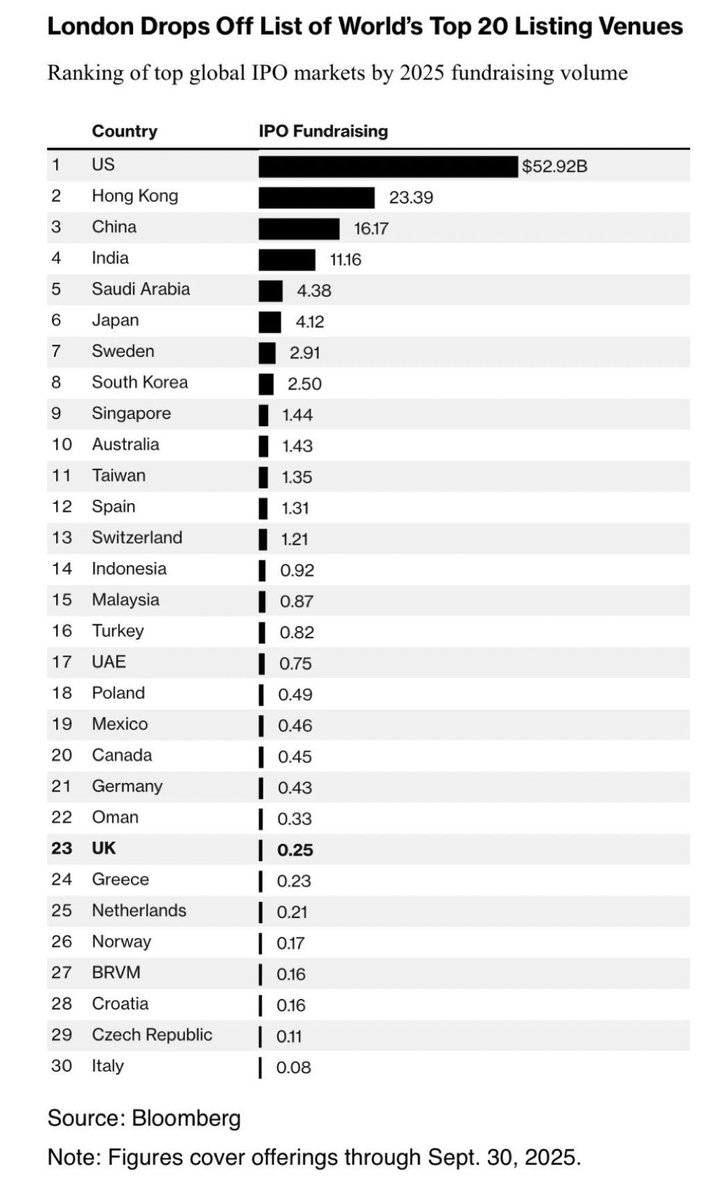
Remember the good old times when London used to be an important global financial hub?
Overregulation destroys even most successful business models. But hey, why don’t you introduce a wealth tax, and watch the remaining UK entrepreneurs emigrate and take the jobs with them?
With rare exception, ideas really are trivial compared to execution.
For example, the idea of going to the Moon is simple, but ACTUALLY going to the Moon is staggeringly difficult.