@1Jirivesely1@TrendSpider this is probably it, and the time to maturity isn't even crazy far away. This isn't some wild trade people think it is, and that's coming from a humongous OKLO fan.
What Photonics companies should I buy?!
$LITE $COHR $AAOI $POET $LWLG
I get asked this question often.
I can't tell anyone what to buy.
So instead, let me lay out all the companies I track.
The reality is is that if it has decent optics exposure, I'm probably tracking it
So here is a list of all the companies I closely track and have written reports/theses for.
Some I invest in, some I don't
I'll share all those specifics soon
More on that later...
But for now, here's a simple breakdown:
$AEHR
Aehr makes the machines that stress test chips before they are shipped. Its systems heat chips up, run power through them, and help customers find weak ones early, which matters a lot when AI chips and optical parts are expensive. The growth here comes from AI processors, silicon photonics, and optical I/O moving toward more burn-in and reliability screening before deployment.
$AIXA
AIXTRON makes the tools used to grow the ultra-thin material layers that become laser chips. You can think of it as selling the chip-growing equipment that laser makers need before they can build optical components. Its current growth driver is strong demand for AI-related laser and photonics production, especially through its G10-AsP platform.
$ALMU
Aeluma is building optical semiconductor materials on large silicon wafers, which could make advanced photonic devices easier to manufacture in higher volume. The simple idea is better optics made in a more scalable factory format. The business is still early, and today’s growth is coming from R&D contracts while the company works toward commercial products, primarily in data center interconnect and defense.
$AAOI
AAOI is vertically integrated from epitaxy but the focus is on optical transceivers, which are the pluggable modules that turn electrical data into light and send it through fiber. These are the actual network links that connect AI servers and switches at very high speeds. Its growth is being driven by hyperscaler demand for 800G and now 1.6T modules, including a newly announced 1.6T order worth more than $200 million.
$AXTI
AXT makes the specialty wafers that laser chips and detectors are built on, especially indium phosphide. A simple way to picture it is that before you build the optical chip, you need the right material base, and AXT supplies that base. Growth is coming from rising AI optics demand and their plan to double indium phosphide capacity during 2026.
$AVGO
Broadcom makes many of the chips that set the speed and shape of AI networks, including switch chips, optical DSPs, and co-packaged optics platforms. Broadcom helps decide how data moves inside the cluster and how much optical bandwidth the rest of the supply chain needs to deliver. Its growth is being powered by AI networking and custom AI silicon, with AI semiconductor revenue reaching $8.4 billion in fiscal Q1 2026.
$CIEN
Ciena builds the optical systems that connect data centers, campuses, and long-distance networks. These are the big transport systems that let AI traffic move across buildings and regions, not just inside one rack. Growth is coming from AI-driven cloud networking and stronger demand for its latest WaveLogic coherent transport platforms.
$COHR
Coherent makes a wide range of optical parts, from the underlying laser materials all the way to finished transceiver modules. It is one of the most complete photonics suppliers in the market, which gives it exposure to several parts of the AI optics buildout at once. Growth is being driven by AI data-center demand and by its move to larger 6-inch indium phosphide wafers, which can raise output and improve manufacturing efficiency.
$GLW
Corning makes the glass fiber, cable, and connectivity hardware that light travels through. If chips and modules are the engines of the optical network, Corning makes the roads they run on. Growth is coming from AI data-center builds that need much more fiber and from large long-term customer agreements like Meta’s deal worth up to $6 billion.
$CRDO
Credo makes high-speed connectivity chips and active electrical cables that move data over short distances inside AI systems. These products are especially useful where copper can carry data efficiently across a rack or between nearby components. Growth is coming from hyperscaler AI deployments, where Credo’s AECs and related connectivity products are ramping very quickly.
$FN
Fabrinet is a precision manufacturer that builds and assembles optical products for many of the big names in the industry. A simple way to think about it is that Fabrinet is one of the factories behind the optical boom. Growth is coming from higher volumes in telecom, cloud, and AI optics, with fiscal Q2 2026 revenue reaching a record $1.13 billion.
$LWLG
Lightwave Logic develops special polymer materials used in modulators, the components that switch light on and off inside a photonic chip. Faster, lower-power modulators can improve future optical links. The current growth story is early commercial progress, especially its new work with Tower to bring modulator designs into a silicon photonics process kit for 2026 tapeouts.
$LITE
Lumentum makes laser chips, optical components, and photonic products used inside transceivers, optical circuit switches, and newer optical architectures. It supplies several of the high-value light-generating parts that AI networks need. Growth is coming from strong cloud demand, 200G-per-lane components, a large optical switching backlog, and continued expansion into co-packaged optics.
$MTSI
MACOM makes high-speed analog and optical semiconductor parts, including photodiodes, laser-related components, and other chips that help optical links work properly. These are the supporting electronics and optical building blocks inside many modules and systems. Growth is coming from 800G and 1.6T deployments and from stronger data-center demand.
$MRVL
Marvell makes the DSP chips and other silicon that translate data between the electrical and optical worlds. These chips sit inside high-speed optical links and help them run at the speeds AI clusters require. Growth is coming from AI data-center infrastructure today and from its longer-term push into optical fabrics after the Celestial AI acquisition in the future.
$NOK
Nokia builds optical transport systems and networking platforms that connect data centers and telecom networks. After the Infinera acquisition, it has even more depth in optical chips and transport equipment for large-scale networks. Growth is coming from AI and cloud demand inside Optical Networks.
$POET
POET builds optical engines and packaging platforms that bring several optical functions together in one compact assembly. Packaging and alignment are major cost and complexity points in photonics manufacturing. Growth is tied to 800G optical engine shipments expected in the second half of 2026.
$SANM
Sanmina is a large electronics manufacturer that helps build servers, networking gear, and some optical hardware. The easiest way to place it in the stack is as an important manufacturing platform for AI infrastructure. Growth is coming from the broader AI hardware buildout, including the added scale from the ZT Systems manufacturing assets.
$SMTC
Semtech makes signal and interface chips that help optical modules send and receive data cleanly at very high speeds. These parts are important in 800G, 1.6T, and future 3.2T links because signal quality matters more as speeds rise. Growth is coming from data-center demand and from a broader optical product lineup.
$SIVE
Sivers develops photonics and wireless semiconductor products, including indium-phosphide-based optical devices. It sits closer to the chip layer of the stack, where specialized optical parts are created for communications and sensing. Growth is coming from a larger opportunity pipeline and improving product mix.
$TSEM
Tower is a foundry, which means other companies use its factories to make silicon photonics chips. Those chips are the brains on silicon inside many modern optical modules. Growth is coming from a surge in silicon photonics demand, with 2025 SiPho revenue reaching $228 million and large capacity expansions already being reserved years ahead.
$VIAV
Viavi makes the testing tools used to check fiber links, optical modules, and AI networks. It helps customers prove that the hardware works before and after deployment. Growth is coming from heavier testing needs as speeds move toward 1.6T and as AI data-center networks become larger and more complex.
On my SS I will be posting deep dive reports, theses, levels I find attractive for building/initiation a position, on-going news/earnings coverage etc. on all of these companies. If you own them or are interested in owning them, this platform will keep you up to date and will build (or stress test) your conviction
Also, yes there are lot's of Asian companies that are extremely relevant and important in this sector. I just don't track them. Sorry!
This is wild.
Someone just open-sourced a 1-person Wall Street AI agent that comes with:
- Research Desk
- Quant team
- Trading floor
- Risk Management
100% open source:
Plutonium recycling facility starting back up to produce MOX
Potentially involves:
• $FLR $AMTM for facility operations
• $OKLO for fuel utilization
• $BWXT and @standardnuclear for fabrication
$OKLO and $LEU are planning a joint venture to partner on a deconversion facility in Ohio next to the existing Centrus enrichment plant
Mining
Milling
Conversion
Enrichment
Deconversion <- This stage
Fabrication
🔗 below
Perplexity just became the the first Al company to truly go head-to-head with the Bloomberg Terminal...
Using Perplexity Computer (with no local setup or single LLM limitation), it was able to build me a terminal with real-time data to analyze $NVDA using Perplexity Finance:
Flight attendant comes over intercom: “your flight is oversold, I need two volunteers to take a flight this afternoon for a $300 voucher.”
I spring into action. I was born for these moments. This is why I studied game theory. Literal tingles. I pull out my megaphone and address our boarding gate: “guys, they absolutely must off board at least two passengers or this bird isn’t taking off. Every 3 minutes they will increase their bid by $200. If we all hold out for 45 more minutes, 2 of us can make nearly 5 grand each. Textbook prisoners dilemma, this is (3,3) in its most visceral representation. I’m not even going to give up my ticket but I know value when I see value. Let’s make Nash proud ladies and gentlemen. Do not acquiesce. Do not defect.”
Anyhow 2 people immediately accepted $500 and I called them retards on my megaphone and was placed in a detention room by airport police. This is why we study game theory.
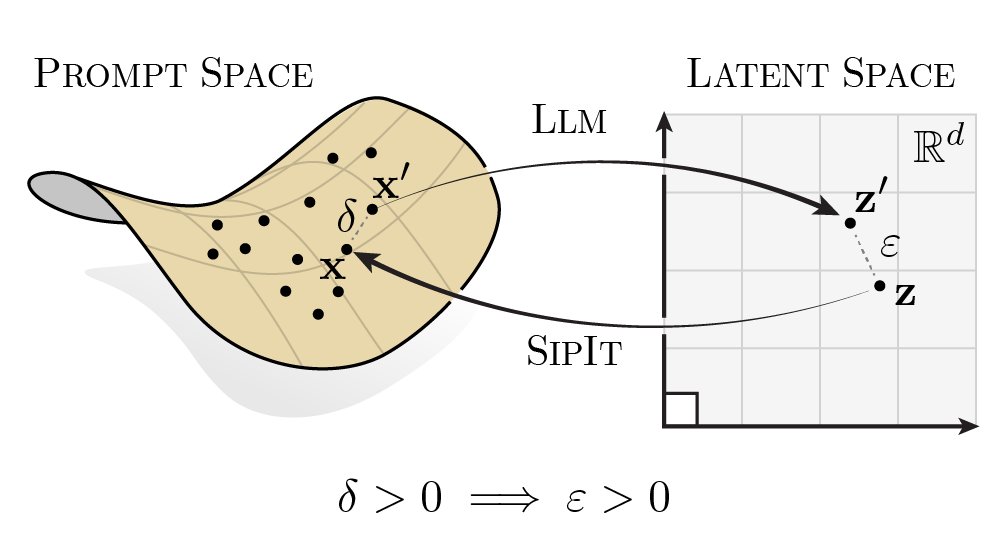
LLMs are injective and invertible.
In our new paper, we show that different prompts always map to different embeddings, and this property can be used to recover input tokens from individual embeddings in latent space.
(1/6)
@probnstat True because Var(aX + bY) = aVar(X) + bVar(Y) and so this is just where a = b = 1, and I know one way to show this is by showing the covariance between them is 0, but I thought there was a more analytical way other than this and I am forgetting it.
@SteveWps Bro the S&P500 is up over 40% from April lows.
Hard to imagine not being up over 20% YTD.
Today, the S&P is up about 15% so if you have money in big tech companies and not meme stocks, idk how you couldn't be at similar numbers.