Como médico de UCI, recuerdo una guardia en la que nos trajeron a las 16h a un señor trasladado de otro hospital con un aneurisma de aorta parcialmente roto y contenido. Llegó despierto al Box Vital, y mientras el cirujano veía el TC y decidía cuál era la mejor opción...
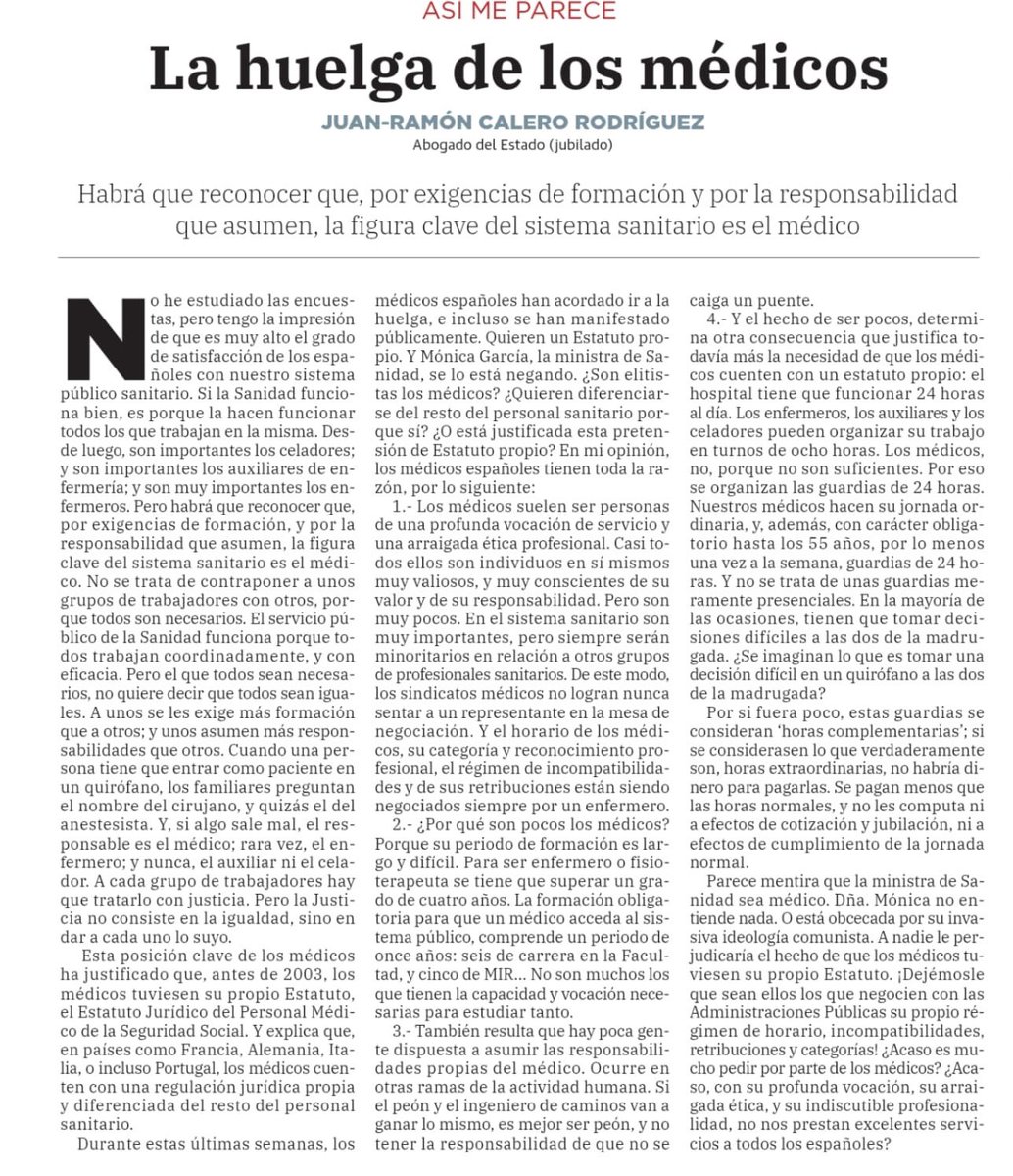
‼️ A raíz de las sucesivas huelgas contra el borrador de Estatuto Marco que perpetua las guardias médicas, en redes sociales se repiten varias falsedades y mantras.
La mayoría desde el anonimato pero también desde perfiles de “izquierda” o de otros sanitarios.
Este es el TOP 3:
A fantastic comprehensive review article w/ everything you need to know about Idiopathic Normal-Pressure Hydrocephalus just dropped in the NEJM. Hydrocephalus refers to a condition where cerebrospinal fluid accumulates excessively in the brain’s ventricles, resulting in enlarged chambers that contribute to disrupting walking, cognition and bladder control. Johnson and Williams describe in their new New England Journal of Medicine paper that idiopathic normal-pressure hydrocephalus is a common, frequently missed and potentially reversible neurologic condition in older adults.
Key Points:
-Idiopathic normal-pressure hydrocephalus presents w/ a triad of gait and balance changes, urinary urgency and cognitive slowing, however each feature has an extensive differential diagnosis on its own.
- Prognostic testing w/ cerebrospinal fluid drainage or infusion methods improves selection of candidates who are likely to benefit from shunt surgery.
- Programmable cerebrospinal fluid shunt systems remain the most effective treatment and can improve gait quality of life and survival when used in appropriately selected folks.
My take: Nailing the diagnosis is so important in iNPH, and it is frequently a tricky endeavor for even an experienced clinician. One thing I would add to this article is that a fair number of folks with 'big ventricles' actually have Parkinson's disease, so don't forget considering the possibility of a levodopa trial in select persons who present for shunting. Here are 5 points that resonated w/ me: 1- Recognizing the gait pattern is essential because a wide-based slow shuffling walk frequently precedes memory or bladder issues and can be the earliest clue. 2- Imaging matters ,however it is not enough since enlarged ventricles alone do not confirm the diagnosis and this finding needs to be paired w/ symptoms and w/ testing. 3- A large-volume lumbar puncture can help by temporarily improving walking, which usually signals a higher likelihood of responding to a shunt. 4- Shunt surgery can meaningfully improve daily function, especially the gait and fall risk. Importantly, it should be performed at experienced centers using adjustable valves. 5- Delays in diagnosis can worsen outcomes because waiting too long may reduce the chance of symptom improvement and increase long-term disability.
https://t.co/ns7T6p5WUC @NEJM@movedisorder@FixelInstitute@UF@SfNtweets@ParkinsonDotOrg@PdAvengers@DBSThinkTank
This #NeurologyEd Teaching Neurovisual by Sutherland and Gummerson details the Head-Impulse-Nystagmus-Test-of-Skew exam, which uses special maneuvers to identify central etiologies of acute vestibular syndrome with greater sensitivity than hyperacute MRI: https://t.co/3RMvuWVoZw
1. Las guardias se idearon para estar en expectativa de trabajo, es decir, por si hace falta.
2. El punto 1 hace tiempo que se desvirtuó y se han convertido en trabajo a destajo y para todo.
3. Los médicos sí trabajan 24 horas seguidas a destajo, lo creas o no.
Non compressive myelopathy in the lower end of spinal cord (due to venous edema) ; A spinal dural AVF is confirmed on contrast study extending along the dorsal and lumbar spine.
1/
Welcome to #SpinTweetorialWednesday!
Today we spotlight BPAN – Beta-propeller Protein-Associated Neurodegeneration, a rare but distinctive NBIA disorder.