"Temo que los que nos han de suceder han de tener mucha falta de montes y árboles".
Esta frase no la ha dicho un activista de hoy en día. La escribió Felipe II en 1582... y actuó en consecuencia.
Un dato poco conocido de Felipe II es su obsesión por la ecología, la reforestación y la conservación de la naturaleza, en una época donde casi nadie pensaba en ello.
A pesar de ser recordado principalmente por la burocracia, la Contrarreforma y la Invencible, Felipe II dictó una de las primeras legislaciones de protección ambiental de la historia de España.🇪🇸
Preocupado por la tala indiscriminada de árboles para la construcción de barcos y para calentar las casas, promulgó en 1582 leyes estrictas para obligar a los concejos a plantar árboles.
No le bastaba con proteger los bosques existentes; le apasionaba la reforestación activa con un sentido estético e hidrogeológico.
Mandó plantar miles de árboles (especialmente olmos, fresnos, sauces y chopos) en los alrededores del Tajo y del Manzanares.
Hizo elaborar inventarios precisos del estado de salud de los pinares en las sierras de Guadarrama y Gredos para vigilar las plagas y la tala furtiva.
Creó grandes alamedas arboladas para frenar la erosión de los ríos y suavizar las temperaturas estivales de Madrid.
En la Casa de Campo y en El Escorial promovió la construcción de complejos sistemas de diques, presas y estanques para criar peces, conservar el agua y dar refugio a aves migratorias.
En el Monasterio de El Escorial creó un jardín botánico y un zoológico particular con especies traídas de la recién explorada América y de Asia. Entre 1570 y 1577, Felipe II financió y organizó la Expedición Botánica a la Nueva España, liderada por el protomédico Francisco Hernández de Toledo. Esta empresa no buscaba minerales ni conquistas militares, sino el estudio empírico, la ilustración y la catalogación taxonómica de miles de plantas medicinales y especies biológicas desconocidas en Europa.
Para evitar la extinción local de ciertas aves y peces en las tierras de la Corona, fijó vedas de caza muy estrictas y prohibió ciertas artes de pesca destructivas en los ríos.
Felipe II convirtió España en el primer laboratorio botánico de aclimatación de especies americanas y asiáticas.
En las huertas de Aranjuez y en los jardines de El Escorial ordenó habilitar parcelas específicas para sembrar semillas traídas de México, Perú y Filipinas.
Para asegurar que sus decretos de conservación no quedaran en papel mojado, reforzó y reglamentó el cuerpo de guardas forestales reales.
Tenían la potestad de multar o encarcelar a cualquiera que cortara madera fuera de temporada, quemara monte para pastos o utilizara redes prohibidas en los ríos.
Su interés por la botánica no era solo decorativo ni cinegético, sino también médico y científico. Creó un jardín botánico de plantas medicinales en El Escorial, donde trabajaban boticarios cultivando hierbas aromáticas y sanadoras.
Anexo al jardín, hizo instalar la Casa de las Aguas, un laboratorio lleno de alambiques de cobre dedicados a la destilación de aceites esenciales, esencias de plantas y remedios naturales.
A pesar de su imagen severa vistiendo siempre de negro, sentía debilidad por las flores.
Fue uno de los introductores de flores exóticas en España: importó lilas, tulipanes, jazmines y peonías de Centroeuropa y del Imperio Otomano.
Mantenía correspondencia personal con los botánicos más reputados de la época (como Carolus Clusius) e intercambiaba semillas, tubérculos y bulbos como si fueran joyas diplomáticas.
Las medidas ambientales de Felipe II no respondían a una sensibilidad ecologista moderna, sino a una visión racional de la administración del territorio y al impulso renacentista por el conocimiento científico de la naturaleza.
Comprender este aspecto permite matizar la figura del Rey Prudente e integrar la historia ambiental en el análisis de la Monarquía Hispánica.
Fuentes recomendadas para profundizar:
Las 'Relaciones Topográficas de Felipe II' y los estudios sobre la "Historia de la Ciencia en la España del Renacimiento".
#HistoriadeEspaña
Indeed. This gets to the heart of Girard's argument...
“If you could talk with Greek or Roman functionaries and you tried to suggest to them that victims have rights, it wouldn't even make them laugh. They wouldn't understand. It was unthinkable in any world but our own. Whereas today, this language isn't challenged by anyone.”
“As far as I know, the texts [of the Psalms] are the first in human history to allow those who would simply become silent victims in the world of myth to voice their complaint as hysterical crowds besiege them. Human packs pursue them, insult them rudely, art traps for them, and encircle them in order to lynch them. ... [The Psalms] may be the oldest texts in human history to let the voice of victims, rather than that of their persecutors, be heard.”
“Before the cross, every violence was portrayed as heroic and so forth. In literature, the epics, even tragedy, justified the casting out of the victim. Only the Bible doesn't do that. Therefore we owe so much to the Bible...we cannot recognize our debt.”
“...the biblical tradition punctures a universal delusion and reveals a truth never revealed before: the innocence not only of Jesus, but of all similar victims.”
“Christian vocabulary and the Christian point of view are insinuating themselves everywhere and becoming universal: it's a sign of the changing times, a sign that [Christian Revelation] is making progress.”
“When we criticize the Bible, we can criticize it only with the Bible — not with Iliad, not with Greek philosophy. We have assimilated so much and we're not aware that the substance we have assimilated comes from the Bible, which is [ultimately] that violence is ugly and not heroic...that violence is the ugly birth of the community.”
“In general, history is written by the victors. We're the [first] society that wants history to be written by the victims, and we don't see the unprecedented nature of the reversal.”
🔴🫵🏻 Le contre-budget de LFI complètement démoli et atomisé par un éditorialiste économique en 3 minutes, bon sang que c’est jouissif 🤣
Mélenchon au pouvoir, ça serait la ruine du pays en 24h chrono. 🙄
Let me tell you what Islam did to Greece and the rest of the world:
In the 1.300 years of Muslim-Arab slave trade, approximately a million Greeks were sold as slaves just because they were Christians.
On March 30, 1822, the Chios Massacre took place. The Muslim Turks slaughtered (Greeks) 42,000 women, men & children. Additionally, 52,000 were sold as slaves in the markets of Smyrna & Constantinople. Young girls were raped publicly in the streets, and newlyweds in front of their husbands, who were then slaughtered. Others were raped in front of their parents, after which the men's genitals were cut off. Women over 40 were set on fire and left to burn alive. Pregnant women had their bellies ripped open and their fetuses pulled out, while small children were thrown forcefully against rocks. The frenzy of the Muslims was unprecedented.
On September 1, 1821, Samothrace was devastated by the Ottomans through a general massacre led by the Turkish Kara Ali. Approximately 10,000 men & boys were slaughtered. Women & children were sold in the markets of Constantinople & Smyrna (Holocaust of Samothrace).
On June 4, 1821, the Turks carried out a massacre against the Greeks of Kydonies in Asia Minor (modern-day Ayvalık). They did pogroms at shops and homes, looting them, while seizing women and children to sell as slaves. Simultaneously, they conducted a general massacre of the population, and the town was set ablaze and completely destroyed.
In Crete muslims carried chains with them to tie up Greek Christian women so they could take them away.
For 300 years the muslim Turks were stealing kids from their mothers. This was the most brutal thing humanity ever witnessed. They were waiting for women to birth, raise their kids, and then at the age of 8 were collecting the them. The devşirme known as "collection of children" or "blood tax" or in Greek as "paidomazoma".
After the Ottoman conquest of Crete (1669), local officials and governors began to oppress the Christian population in every way: killing, abducting and abusing women, demanding money, and preventing the performance of the subjects' religious duties.
We Greeks, called the Muslim Turks, "The grand masters of torture." In 1821, in Patras, they captured a father and son and, after impaling them, lit a fire and forced the other captives to roast them like lambs. Ali Pasha at that point was more inventive: When he impaled Christians, he forced their relatives to turn the spit, threatening that otherwise he would impale them too.
The Muslim Pasha of Thessaloniki, Abdul Abud, who had set as his goal the extermination of the Greeks, burned 120 villages and wiped out their inhabitants to the last one.
5.000 Greeks were massacred in Naousa, the rest were sold in slave markets, and the entire city was reduced to ashes.
The most common torture inflicted by the Muslims during the Ottoman period was whipping. The usual victims were the Christians. It was the introductory torment in every other torture, so common in the persecutions of Christians that the phrase became proverbial: "I will whip you until you change your faith."
During the Ottoman period, Muslims enjoyed performing all kinds of mutilations. Ears, noses, lips, tongues, breasts, and genitals were primarily cut off. Not just those, though. Let's recall here the newly-revealed Saint Raphael of Mytilene, who was hanged from a tree and had his lower jaw cut off, while the twelve-year-old martyr Irene was roasted in a barrel on the Tuesday of Easter in the year 1463, ten years after the fall of Constantinople.
In 1822, Muslims captured the wives of Zafeirakis and Gatsos. The wife of Zafeirakis was built into the wall up to the neck in the church of Hagia Sophia in Thessaloniki. Maria Karatasou, daughter of a priest refused to change faith, and for this Ebub Lubut enclosed her in a sack with deadly snakes, where she martyred.
The Greek Christian Woman, during the years when Greece was enslaved to the Muslim Turks, in order to avoid -as much as she could- the abhorrent dishonor from the barbaric Muslims, would destroy the youthful beauty of her face, or create a family from the age of fourteen, believing that she would not give birth to slaves.
Muslim Turks committed the Greek Genocide 1913–1923) to create their pan-Islamic pseudo nation called Turkey. They killed 750.000
Muslim Turks committed the Armenian Genocide 1914–1923). They killed 1.500.000
Muslim Turks committed the Assyrian Genocide 1914–1920). They killed 300.000
Muslim Turks committed the Hamidian massacres (1894–1896) and Adana massacre (1909): 350.000 total
Muslims commited GENOCIDES and Islamized the Anatolia.
On September 1955 in Constantinople 4,348 Greek businesses, 110 hotels, 27 pharmacies, 23 schools, and 73 churches were damaged or destroyed. The exodus of Greeks from Turkey, reduced the community of over 150.000 (who have already left from the Fall), to fewer than 2.000 today.
Muslim Arabs did the Trans-Saharan slave trade (650–1900). The longest slave trade in human history (1.300 years). Estimates of 6–10 million sub-Saharan Africans. It was them who were selling black slaves.
Muslim Arabs did the East African / Red Sea / Indian Ocean trade to the Middle East and Arabia. Slave markets with millions of slaves. 1.3–2.5 million over centuries
Muslim Arabs did the Barbary corsair slave trade (16th–early 19th centuries): Estimated 1–1.25 million Europeans slaves
Millions of massacres in Italy and Spain by the Islamic Caliphates.
60-70 millions of people died in India and the Islamic pseudo-nation of Pakistan was created.
Muslims enslaved Afhganistan you stupid uneducated Turk.
Muslims enslaved Iraq you uneducated Turk.
Muslims enslaved and slaughtered the Christians in every single country you mentioned in Middle East.
No one of the events you mentioned committed because of a religion but every single historical event I mentioned you was committed because of Islam and the Quran.
Islamic imperialism and expansionisms is the biggest and most murderous in human history. Africa and Middle east are enslaved from Islam. They were never muslim countries and the people suffer under the sharia law.
In 2015, 21 Egyptian Copts beheaded in Libya (video released by ISIS).
Islam literally genocided the Copts in Egypt and destroyed this historical nation.
al-Qaeda did the 11 September 2001 (US)
11 March 2004 (Madrid train bombings): 191 killed.
12 October 2002 (Bali bombings): 202 killed.
13 November 2015 (Paris attacks, including Bataclan): 130 killed (Islamic State)
Islam is cancer.
Ottoman Empire and the Caliphates did harmed unimaginably the world and went the sciences and human progression 1.000 years back into darkness. Constantinople went from the most advanced city (The richest and most advanced city for 1.000 years) to the most underdeveloped city under the muslim rule (after the fall in 1453). Every single country in Africa and Middle East is now a destroyed country because of you. Lebanon was the Paris of Middle East. Syria, Afghanistan, Iraq all the cities were proud and beautiful. Islam brought only death and destruction.
You provide nothing to our world therefore you deserve nothing.
- Homer Pavlos
Tens of thousands of native Christians in Iberia (Hispania) were slaughtered or deported from their ancestral lands to North Africa by the Almoravid Caliphate.
Christians under the Almoravids faced systematic persecutions and mass deportations. In 1099 the Almoravids sacked the great church of Granada. In 1101 Christians fled Valencia for the Catholic kingdoms. In 1106 Christians were deported from Malaga to Africa. After a failed Christian rebellion in Granada in 1126, the Almoravids expelled the city’s entire Christian population to Morocco. In 1138 Ibn Tashfin forcibly took many thousands of Christians with him to Africa. Another wave of expulsions followed eleven years later. By then, very few Christians remained in Andalusia. What was left of the Catholic population in Granada was exterminated after a revolt against the Almohads in 1164. The Caliph Abu Yaqub Yusuf boasted that he had left no church or synagogue standing in al-Andalus. Muslim clerics in al-Andalus regarded Christians and Jews as unclean and feared contamination through contact.
In Seville the faqih Ibn Abdun issued these regulations:
"A Muslim must not massage a Jew or a Christian nor throw away his refuse nor clean his latrines. The Jew and the Christian are better fitted for such trades, since they are the trades of those who are vile. A Muslim should not attend to the animal of a Jew or of a Christian, nor serve him as a muleteer [neither Catholics nor Jews could ride horses; only Muslims could], nor hold his stirrup. If any Muslim is known to do this, he should be denounced.… No … [unconverted] Jew or Christian must be allowed to dress in the costume of people of position, of a jurist, or of a worthy man. They must on the contrary be abhorred and shunned and should not be greeted with the formula, ‘Peace be with you,’ for the devil has gained mastery over them and has made them forget the name of God. They are the devil’s party, ‘and indeed the devil’s party are the losers’ (Qur’an 57:22). They must have a distinguishing sign by which they are recognized to their shame."
This is the historical record of what the native Christian population of Iberia endured under Almoravid and Almohad rule. The modern myth of perpetual "tolerance" and convivencia erases these primary realities. The Christians of al-Andalus were systematically reduced, expelled, or eliminated.
These are the dark pages of history the world prefers not to know.
Throughout the history of Christianity, the persecution of Christians can be traced from the first century of the to the present day. That makes Christianity the world's most persecuted religion. It doesn't matter if you are Christian or not, you can't deny these historical facts.
We must remember our history and never forget what happened to our ancestors.
If you want to support me in the effort I’m making, please consider becoming a subscriber to my X account for only $2. I write about the ancient, medieval, and modern history of Greece and what Christians went through because of Islam. Always with primary sources and historical facts.
Defend Western Civilization.
- Homer Pavlos
James Burnham – The Trotskyist Who Saw How It Would End.
He was a Trotskyist first. In the 1930s he was one of the leading Marxist intellectuals in America – building the movement, debating Trotsky himself by letter, believing in the revolution.
But he was also an American. A practical mind, trained to look at what actually happens rather than what the theory promises. So he understood what it was really about – and explained to us how it would work out.
1. In 1940 he broke with Trotsky over one question: what was the Soviet Union? Trotsky said a workers’ state, temporarily deformed. Burnham looked at it and saw something else: a new ruling class. The workers owned nothing. The capitalists were gone. Someone else was in charge – the people who ran the machine. Trotsky spent much of his last year writing against him. Burnham was right.
2. In 1941 he generalized it in The Managerial Revolution. The future would belong neither to the capitalists nor to the workers, but to the managers – the administrators, technicians and bureaucrats who control things without owning them. Capitalism would fall, he wrote – but not to the working class. To the managers. The capitalist, who risks his own fortune, would be replaced by the manager, who risks nothing, owns nothing and runs everything. That is the whole difference. The capitalist pays for his own mistakes. The manager’s mistakes are always paid by someone else – the shareholder, the taxpayer, the citizen. Burnham saw the same class rising in Soviet Russia, Nazi Germany and New Deal America. Different flags, the same new masters. And he said what it meant: the end of capitalism and of freedom – even if the façade stayed standing.
3. Orwell read it, argued with it – and borrowed from it. The three superstates of 1984 come from Burnham. So does its ruling class, which owns everything collectively and nothing personally.
4. In 1943 came The Machiavellians. Burnham studied the realists – Machiavelli and his modern heirs, like Pareto – and drew the lesson idealists never want to hear: every society is run by an elite. The only question is whether there is more than one. Freedom does not come from the absence of elites. It comes from their competition – rival powers that check each other, a free press, an opposition that can actually win. A single elite with no rival is tyranny, whatever it calls itself.
5. Now look at what the long march actually produced. Not the rule of the workers. The rule of the managers – the administrators of the ministries, the regulators in Brussels, the HR departments, the editorial boards. The façade of capitalism still stands – but who actually rules? Corporate boards spending other people’s money on other people’s ideologies. Officials in Brussels. Directors of foundations and NGOs. No voter elected them. The revolution succeeded. Only the managers won it. Gramsci designed the march. Burnham told us who would be waiting at the end of it. A class that owns nothing, answers to no voter, pays for none of its mistakes, and runs almost everything.
6. In 1964 he wrote Suicide of the West. Its verdict: liberalism – the modern progressive kind, not the classical one – is "the ideology of Western suicide." It lets a civilization accept its own retreat and feel good about it. Every loss becomes a sign of progress. Sixty years later, it reads like a description of Brussels.
7. The ex-Trotskyist ended up a founding editor of National Review, and in 1983 Ronald Reagan gave him the Presidential Medal of Freedom. From Trotsky’s comrade to Reagan’s medal. He knew the left from the inside, and he had the American instinct to ask the only question that matters: not what the theory promises, but who ends up in charge.
In 1941 his answer was the managers. It still is – unless a rival elite rises.
For the first time in decades, one has: builders, not administrators. Burnham would have recognized the moment. Not a revolution – a rotation.
1. A polyp starts at 1mm, the size of a pencil tip.
It doubles over the years into a blueberry, then a raspberry, then bigger.
For most of that time you get no symptoms at all.
People born in 1990 have twice the colon cancer risk of people born in 1950.
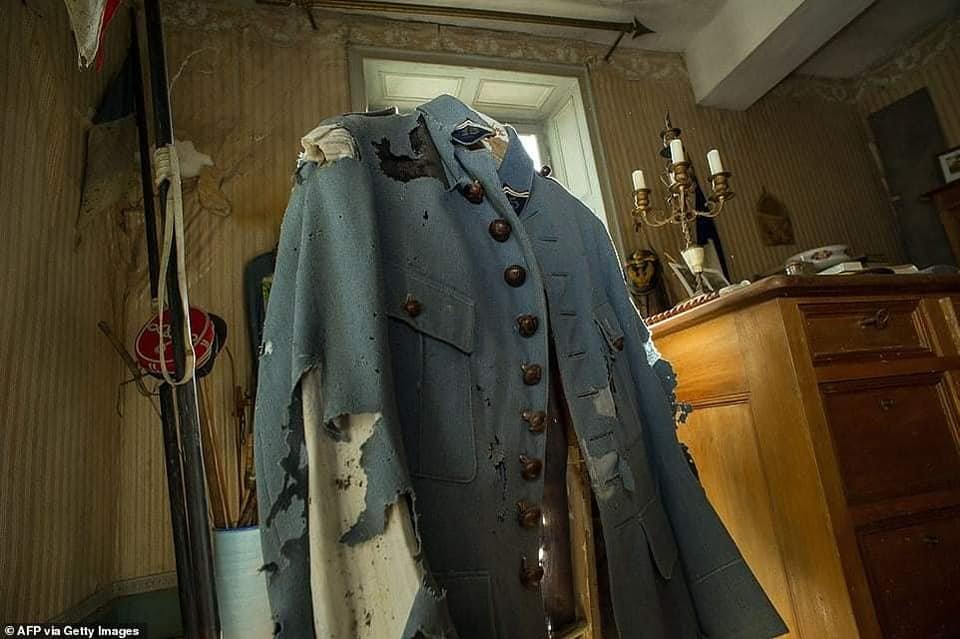
La habitación intacta del subteniente Hubert Rochereau, un poilu muerto en 1918. Esta es una historia fantástica: el subteniente Hubert Rochereau tenía 18 años cuando estalló la Primera Guerra Mundial. Llamado al servicio militar, luchará durante varios años. Pero murió a los⬇️
In 1986 a guy got kicked out of every casino in Vegas for counting cards. So he flew to Hong Kong with $180,000 and started betting on horses instead.
He walked away with almost $900 million.
It was Bill Benter.
He realized horse racing was just another counting problem same math, more moving parts.
He and a partner built a computer model that estimated the true odds of each horse. If his numbers showed an edge, he bet. If not, he skipped it.
That’s the whole trick:
Expected value.
EV = p · b − (1 − p)
Only bet when the probability of winning × the potential payout is greater than the chance of losing.
What’s even crazier is that Benter once gave a 45-minute lecture explaining the math behind his system.
That recording was never supposed to become public.
And almost nobody knows it exists.
This is the lecture that professional bettors and hedge fund analysts studied.
The answer is in this video.
1. Google Flights
→ calendario de precios y alertas reales, sin comisión.
2. La web de la aerolínea
→ si algo se cancela, hablas directo con quien tiene tu asiento, sin intermediarios.
3. ITA Matrix
→ el motor que usan las agencias: armas rutas que ningún buscador te muestra.
4. AeroLOPA
→ sabes qué asiento no reclina antes de pagar por elegirlo.
5. Flightradar24
→ te enterás si tu avión ya viene retrasado del vuelo anterior, mucho antes del aviso oficial.
¿Dónde compras tus vuelos?
¿Alguna vez te dejaron tirado en un aeropuerto?
If you wake up to pee at 3 AM, it's cortisol.
If your face is puffy, it's cortisol.
If your libido is 0, it's cortisol.
Here are the simple tips to fix all three:
1. No food 3 hours before bed
Your blood sugar is aging you faster than alcohol and cigarettes.
It wakes you up at 4 AM, reduces nitric oxide, and causes fatty liver, diabetes, and heart attacks.
Here’s the simple fix:
1. Don’t walk 10,000 steps
Mi amigo, que es oncólogo, me dijo algo que me dejó pensando:
«Hay 3 tipos de personas que tienen más probabilidades de acabar desarrollando cáncer.»
Guárdate esto.
1. Las personas que sudan de forma constante hasta el punto de que la sal termina apareciendo sobre su piel.
Es justo al revés, en gran medida fue la lucha para expulsar a los musulmanes la que construyó Europa tal y como la conocemos.
La primera vez que alguien escribe «europenses» para nombrar a un nosotros colectivo es en una crónica redactada en al-Ándalus en el 754 por cristianos bajo dominio musulmán describiendo a los francos que acababan de frenar a los musulmanes en Poitiers. Europa empieza a nombrarse a sí misma en el momento en que se define frente a esa expansión, antes no había división entre el norte de África y Europa, y de ahí en adelante casi todo lo que hoy llamamos Europa se hace en esa frontera. Castilla, Aragón, Portugal... se constituyen como reinos conquistando territorio musulmán. Portugal empieza a bajar por África en 1415 con la toma de Ceuta, que era una operación contra el moro y acabó siendo la ruta de las Indias. Los Habsburgo se hacen monarquía sosteniendo la frontera militar contra el turco, y la Europa central que conocemos sale de ahí y de Viena en 1683. Las órdenes militares, la fiscalidad papal y buena parte de la banca italiana nacen de las cruzadas o de financiarlas.
Il padre spirituale del progressismo, primo famoso intellettuale "liberal" progressista, Rousseau, aveva condannato metodicamente i suoi cinque figli a una morte quasi certa per puro comodo personale.
Il suo celebre trattato L'Émile è ancora oggi la bibbia dei pedagogisti progressisti. La realtà è quella di un egoismo spaventoso. Tra il 1746 e il 1752, Rousseau condivide la vita di una lavandaia, Thérèse Levasseur. La coppia dà alla luce cinque figli. Il grande filosofo della compassione non ne terrà nemmeno uno. Fin dalla nascita, li strappa alla madre per depositarli anonimamente all'hospice degli Enfants-Trouvés di Parigi.
All'epoca, questa istituzione non è un orfanotrofio classico, è un luogo di morte. I registri storici stabiliscono che il tasso di mortalità infantile superava allegramente il 70%. Cosa ne è stato di loro? Assolutamente nessuno lo sa. Sono semplicemente scomparsi dalla Storia. Anni dopo, la marescialla di Lussemburgo, una ricca protettrice del filosofo, tenterà di condurre l'inchiesta per ritrovarli e salvarli dalla miseria. Le sue ricerche si scontreranno con un muro sordido.
Rousseau non aveva nemmeno preso la pena di conservare le date esatte delle loro nascite o di infilare un segno distintivo nei loro pannolini, come si faceva comunemente per sperare di recuperarli un giorno. I suoi cinque figli sono stati inghiottiti nell'anonimato assoluto. Statisticamente, probabilmente sono finiti nella fossa comune dell'hospice prima dell'età di saper camminare. Se sono sopravvissuti, hanno ingrossato le fila dei vagabondi nei canali di Parigi.
Il padre dell'educazione non se ne nasconde nemmeno. Nelle sue stesse Confessioni, assume questo abbandono con una freddezza terrificante. Le sue giustificazioni ufficiali? I bambini facevano troppo rumore, il suo lavoro di pensatore richiedeva calma, e rifiutava di assumersi il carico finanziario della sua stessa discendenza.
Da un lato, il filosofo scriveva migliaia di pagine per insegnare all'intera umanità come crescere, ascoltare e cherire la gioventù. Dall'altro, cancellava metodicamente la sua stessa prole per non essere disturbato durante il suo "processo creativo" di scrivere cazzate progressiste
No. En la Edad Media la gente se lavaba a diario, con paño, agua y jabón. El jabón en Europa está presente desde la Antigüedad, hecho con sebo y ceniza, Plinio ya lo describe y atribuye su invención a los galls. Castilla desarrolló el suyo propio de aceite de oliva y barrilla, el que los boticarios llamaban 'sapo castilliensis'. Se vendía con la marca Castilla y salía para Flandes, Inglaterra y América, era un artículo de primera y conocido en medio mundo.
El baño de inmersión se tomaba en cuanto se podía, y los baños públicos estaban tan llenos que hubo que legislar la entrada y hay documentación de sobra al respecto. Fuera de las ciudades se usaban las pozas y los ríos, también con multitud de fuentes de todo tipo plasmando la práctica.
Curar una infección no lo hacía nadie en ninguna parte, como mucho tratarla para que no empeorarse y el cuerpo la superase.
Hoy se cumplen 90 años de la voladura del monumento al Sagrado Corazón de Jesús en el Cerro de los Ángeles (Getafe). Despúes de destruirlo, lo llamaron el "Cerro Rojo". Pero antes de contar la destrucción del memorial, hay que recordar la de las personas.
El 23 de julio de 1936, cinco militantes de Acción Católica llamados Pedro-Justo Dorado (31 años), Fidel Barrios (21), Elías Requejo (19), Blas Ciarreta (40) y Vicente de Pablo (19) fueron fusilados por milicianos del Frente Popular (PSOE, PCE, UGT, ,..) Habían permanecido en el Cerro tras una vigilia nocturna para proteger el monumento y a las monjas carmelitas del convento vecino. Denunciados por rezar el rosario, un grupo de milicianos los apresó, los puso de rodillas frente al monumento que habían querido defender, y los mató.
Después llegó la destrucción del monumento y no fue un hecho de un solo día. La imagen que ha quedado grabada en la memoria histórica (un pelotón apuntando sus fusiles a la estatua al grito de "¡Fuego!") es del 28 de julio, cuando un grupo de anarquistas escenificó y filmó el simulacro de fusilamiento; la fotografía se publicó primero en el Daily Mail de Londres y después en la prensa republicana española bajo el titular "Desaparición de un estorbo".
La demolición física fue aparte. El monumento, inaugurado en 1919 por Alfonso XIII, quien allí consagró España al Sagrado Corazón, resistió un primer intento con cables y tractor el 6 de agosto. Al día siguiente, 7 de agosto, lo atacaron a martillo y cincel sin derribarlo del todo, hasta que la dinamita hizo saltar el conjunto por los aires.
El Ayuntamiento de Getafe, con el respaldo del Gobierno de la República, rebautizó el lugar como "Cerro Rojo".
Terminada la guerra, el régimen de Franco encargó una réplica de mayor tamaño, obra de nuevo de Aniceto Marinas junto a Pedro Muguruza y Luis Quijada Martínez. Las obras comenzaron en 1944 y el monumento se inauguró en 1965. Sus restos originales, con las marcas de los golpes y la dinamita, se conservan hoy frente a la réplica.
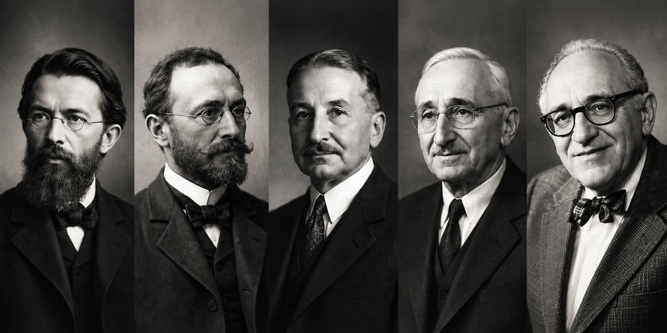
The intellectual case against Marxism was won more than a century ago. The most rigorous and devastating blows came from the Austrian School of economics – but the strange part is that hardly anyone is taught the winning arguments.
Carl Menger’s subjective theory of value, developed in the 1870s, undermined the labour theory of value on which Marx built his entire system. Eugen von Böhm-Bawerk then delivered a systematic demolition of Marx’s economics, exposing the contradictions in the theory of surplus value and the so-called transformation problem. Ludwig von Mises went further still, demonstrating that rational economic calculation is impossible under socialism because without private property and market prices there is no way to allocate resources efficiently. Friedrich Hayek later extended this into the knowledge problem: the information required to run a complex economy is dispersed and cannot be centralised. And Murray Rothbard showed how Marx misunderstood the nature of capitalism by replacing voluntary exchange and entrepreneurial creation with a false theory of exploitation based on labour value and class conflict.
These were not minor objections. They struck at the theoretical foundations of Marxism and, in the case of Mises and Hayek, correctly predicted the chronic waste, shortages, and eventual collapse of socialist economies. History confirmed their arguments on a civilisational scale.
Yet in universities, media and political debate, these critiques remain marginal. Marx is still widely taught as a serious economist and social theorist. His errors are softened, historicised, or treated as interesting starting points. The Austrian responses are rarely given equal weight. Students can pass through entire programmes in the social sciences without encountering Böhm-Bawerk’s critique or Mises’s calculation argument in any depth.
This neglect is not accidental. It reflects a deeper intellectual preference for theories that pathologise markets and legitimise expanded state power. The result is a public discourse that continues to recycle Marxist categories long after their economic foundations were shown to be unsound. The cost of that selective memory is still being paid.