We diligently collect and analyze pertinent facts and figures related to environmental rights and justice and express persuasive opinions to drive change.
The Union Minister of Environment, Forests, and Climate Change Shri Bhupender Yadav has accused the Indian National Congress of doing what he calls "negative politics" on the Great Nicobar mega infrastructure project.
Drawing the nation's attention to an imminent ecological and humanitarian disaster is NOT "negative politics." It is an expression of grave concern.
The Minister is simply unable to answer basic questions that the INC has been repeatedly raising on the project -
1. Doesn’t the Great Nicobar Mega Infra Project – which requires the diversion of lakhs of trees - violate the National Forest Policy, 1988 which states that “tropical rain/moist forests, particularly in areas …Andaman & Nicobar Islands should be totally safeguarded”?
2. Compensatory afforestation is always a poor substitute for old-growth forests – but the afforestation planned in this project is farcical. How can afforestation in distant Haryana, with a completely different ecosystem, be considered a genuine offset for the loss of old-growth rainforest unique to Great Nicobar? Why has the Government of Haryana already freed up 25% of this land for mining instead of reserving it for the afforestation?
3. Why was the National Commission on Scheduled Tribes not consulted before the Nicobar project was approved? Why are the concerns of the Tribal Council of Great Nicobar regarding this project being ignored? Why is the Shompen Policy of the Islands, which explicitly calls for the integrity of the community to be prioritized in all projects, being disregarded?
4. Why does the “Social Impact Assessment” conducted as part of the Right to Fair Compensation and Transparency in Land Acquisition, Rehabilitation and Resettlement Act, 2013 (RFCTLARR) ignore the existence of the Shompen and the Nicobarese?
5. The Forest Rights Act (2006) holds the Shompen as the sole legally empowered authority to protect, preserve, regulate, and manage the tribal reserve. Why does the Project’s approval process fail to recognize the same?
6. The island harbours endangered species including leatherback turtles, megapodes, saltwater crocodiles, and rich coral systems. Won’t this project drive these species closer to extinction?
7. Why are critical documents relating to this project – including the reports of the ground-truthing exercise conducted to reclassify the location of the planned transshipment port from CRZ1-A – not being published in the open?
8. Given the island’s history of severe subsidence during the 2004 tsunami and its location in a high-seismic zone, can the sustainability of this project be assured?
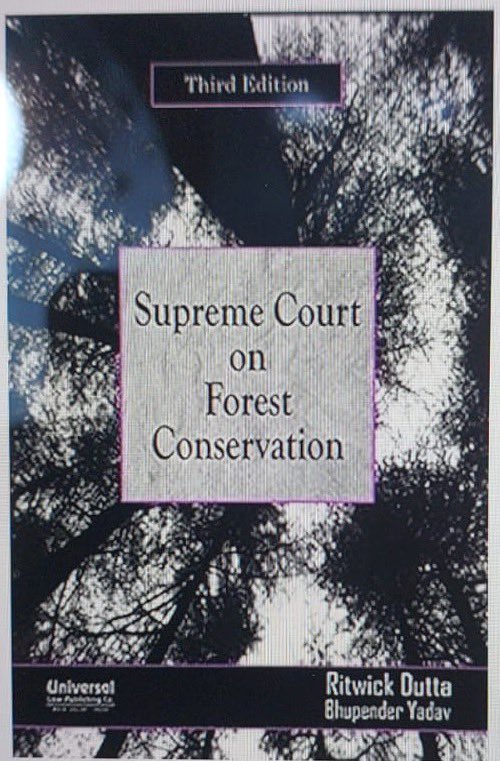
Over twenty years ago, a valuable book was published. It was called "Supreme Court on Forest Conservation" and it was authored by Ritwick Dutta and Bhupender Yadav. Sadly the first author has had investigative agencies unleashed against him for his environmental activism - but happily the second author has had a much better fate. When will that Bhupender Yadav awake?
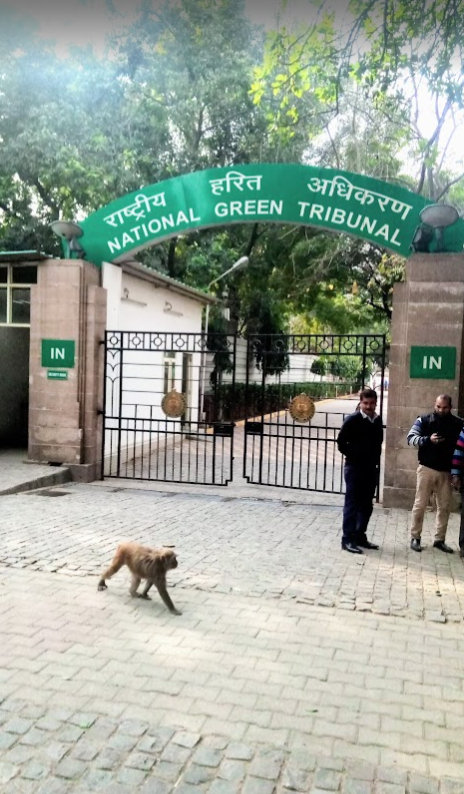
Since its inception in 2011, the NGT today is at its lowest strength: There are only 3 judicial members out of the statutorily mandated 10 as the minimum. The Bhopal Bench's judicial members term ended in 2023 but continues on extension; Kolkata bench has no judicial member.
Supreme Court quashing post-facto environmental clearances is a timely reminder that long-term development rests on foresight — not shortcuts
https://t.co/D7ZdORWbeW
3 points to note:
1. My height is irrelevant here.
2. I strongly believe,Indian dumpsites should be represented with reference to an Indian statue, or there should be no dumpsite at all.
3. We urgently need to refuse, reduce, reuse, repurpose, and recycle the waste we generate.
Revealed: Indian power producers’ decade-long lobbying battle stalled crucial pollution norms for years. Read the story by @Shreegireesh on how Modi gov’t repeatedly pushed the deadline to curb emissions. 1/2
https://t.co/DcHDfHox47
There should be a roadmap to preserve a city's iconic mode of transport, as it has become an integral part of its identity. When planning, why can't we consider these emotional and cultural aspects alongside technology and business?
https://t.co/e2VphDUhW7
"In the next decade, trillions will be handed down to heirs, much of it largely untaxed, creating a new Downton Abbey era for the 21st century. That is not good for our economy, democracy, or for our collective future."
"60% of billionaire wealth is either from crony or corrupt sources, monopoly power, or is inherited.
In 2024, for the first time, there were more billionaires minted through inheritance than entrepreneurship. Every billionaire under the age of 30 inherited their wealth."
Check out my latest piece on the @WEF Agenda Blog from our new #inequality report #TakersNotMakers.
We are living in a rigged economic system, but change is possible ➡️ https://t.co/ZQ6LEmA8tO
#WEF25@Oxfam
The @MoEFCC has patted itself on the back for #India’s modest (& false) #forest cover increase as per the 2023 @ForestSurvey report #ISFR2023, a sham which #PrakritiSrivastava @kr@krithika_1193 & myself unravel here: https://t.co/2BTYyNWG15.
There are more shockers in #ISFR2023 #India’s #GreenCoverScam. Read an analysis by #PrakritiSrivastava @krithika & myself : 1/n
🧵👇
https://t.co/fTUGUuxFg1
Unfortunately this is a terrible terrible use of science and data, coupled with near complete absence of any ethical frame in which science is bring deployed (badly) for public policy recommendations. Which therefore results in an opinion, and not anything more evidentiary, that is devoid of policy merit, scientific rigour and moral justification.
What it does, among other things, for example, is to recommend by implication that we should reduce focus on curbing toxic and other pollution from motor vehicles!
Doing so two years in a row in the same manner, even if partly masked the second time over, makes it irresponsible, if not worse.
Why I say it: Because the opinion, 2 yrs in a row, comes riddled with these absurdities:
1. Using biomass burning data from all over country (vast rural geography +dense urban) to distract away from pollution issues of urbanised dense areas such as Delhi or dirt industrial belts.
2. Confusing actual exposure of people to pollutants with ambient levels of pollution. Ex: vehicular exhaust in your face vs biomass smoke dispersed in open vs biomass burn inhouse.
3. Equating luxury emissions of rich to the suvival essential of poor.
4. Confusing action priorities for indoor pollution and health with outdoor pollution.
5. Trying to suggest a strange one country one priority list solution replacement of airshed specific, pocket specific actions based on different pollution exposures and ambient profiles of cities and other contiguous areas.
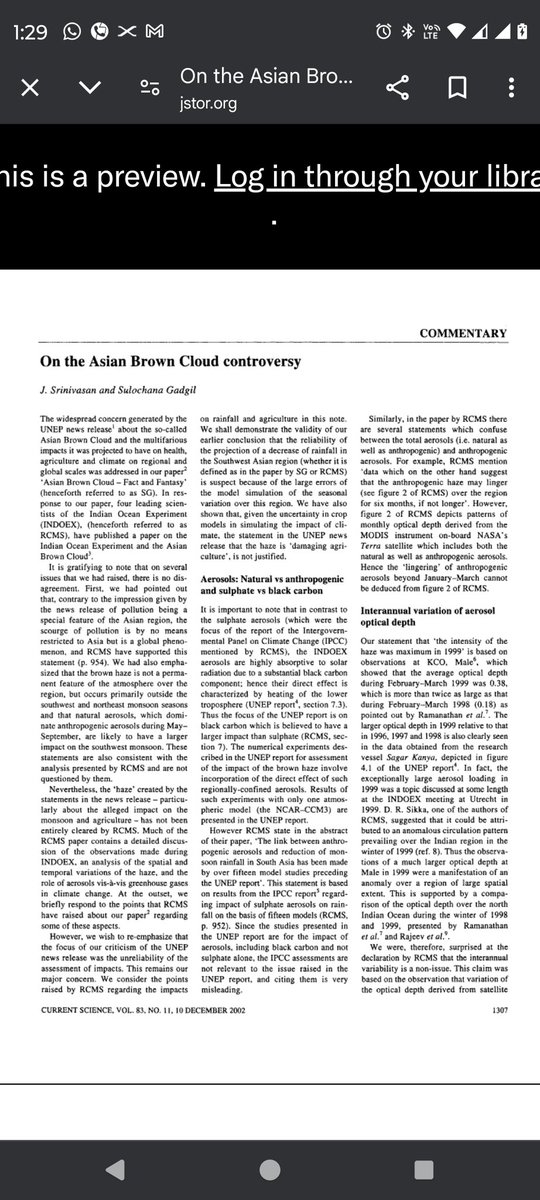
6. The absolutely wrong anecdote to start with: the racist nomenclature of 'Asian Brown Cloud' for this black carbon aerosol phenomenon, sensationalist scare mongering publicity of interpreted impact was debunked by globally recognized scientists such as J Srinivasan and S Gadgil as exaggerated unproven raising the fact that substantive bits of the cloud was likely natural phenomenon and not human activity induced. Everyone including UNEP piped down on it after. Lots more to read for anyone online.
I could go on and on... And I am only a student of environmental policy making, that the author and I studied at the same 'school': Centre for Science and Environment.
https://t.co/6ZkhESk1Fr
Dependence on dirty fuels was a problem of the West more than 200 years ago, but unfortunately, it's a problem for India today. Delhi's unbearable pollution is certainly a polluted reality.
So the question "Who's to blame?" is not relevant at all. There can be endless debates, but the solution is simple: the government needs to take action for its citizens. Action which will clear this mess is the need of the hour. We, the ordinary people, aren't responsible.
I always thought that the Delhi pollution news gets too much attention because it's the capital. Smaller towns, which are heavily industrialized or have mineral extraction areas, are polluted daily but rarely make headlines. But my recent experience in Delhi was eye-opening(1/2)
The smog was so thick, I could barely see. When the sky is obscured like that, something's seriously wrong. And those in power are the ones accountable for this mess.
Indian leopard suspected to have decreased by 24.5% over past three generations
- Other subspecies not doing well either; the leopard has completely disappeared from North #Africa, notes @IUCN
https://t.co/MHBmqsOjyc
#leopards#India
Resource Kit | This resource kit, prepared from the rich archives of Economic and Political Weekly, attempts to enumerate upon the diversity, practice, history and challenges of Tribes across the states of India.
Access for free:
https://t.co/Eh107wBInR
#GroundUpStories | Mythological stories and songs play a significant role for the Bhil community in Maharashtra’s Nandurbar district. But what becomes of these stories in the era of climate change? Read this article by Jitendra Vasava to learn more.
https://t.co/3ErFyuhuTz
Top shareholders of weapons companies profiting from war on Gaza:
BlackRock
Vanguard
State Street
Fidelity
Capital Group
Wellington
JPMorgan Chase
Morgan Stanley
Newport Trust Co
Longview Asset Mgmt
Mass Financial Services Co
Geode Capital
BoA
Full: https://t.co/9V26ps0LsF
#ClimateEmergency | In pursuit of India's net-zero goals, wastelands are being repurposed for renewable energy & afforestation projects. This threatens the ecosystems & communities dependent on them, writes Sanjana Nair & @abi_vanak-supported by @macfound https://t.co/MFt1zRINq8
On #InternationalSnowleopardDay, let's spotlight funding disparities! If total funding is 100 Rs for each population
#SnowLeopard: 4 Rs,
African Cheetah: 6 Rs,
Leopard & Tiger: 82 Rs,
Lion: 8 Rs
Four lanes, huge dams can reach the Himalayas, but the conservation fund can't.