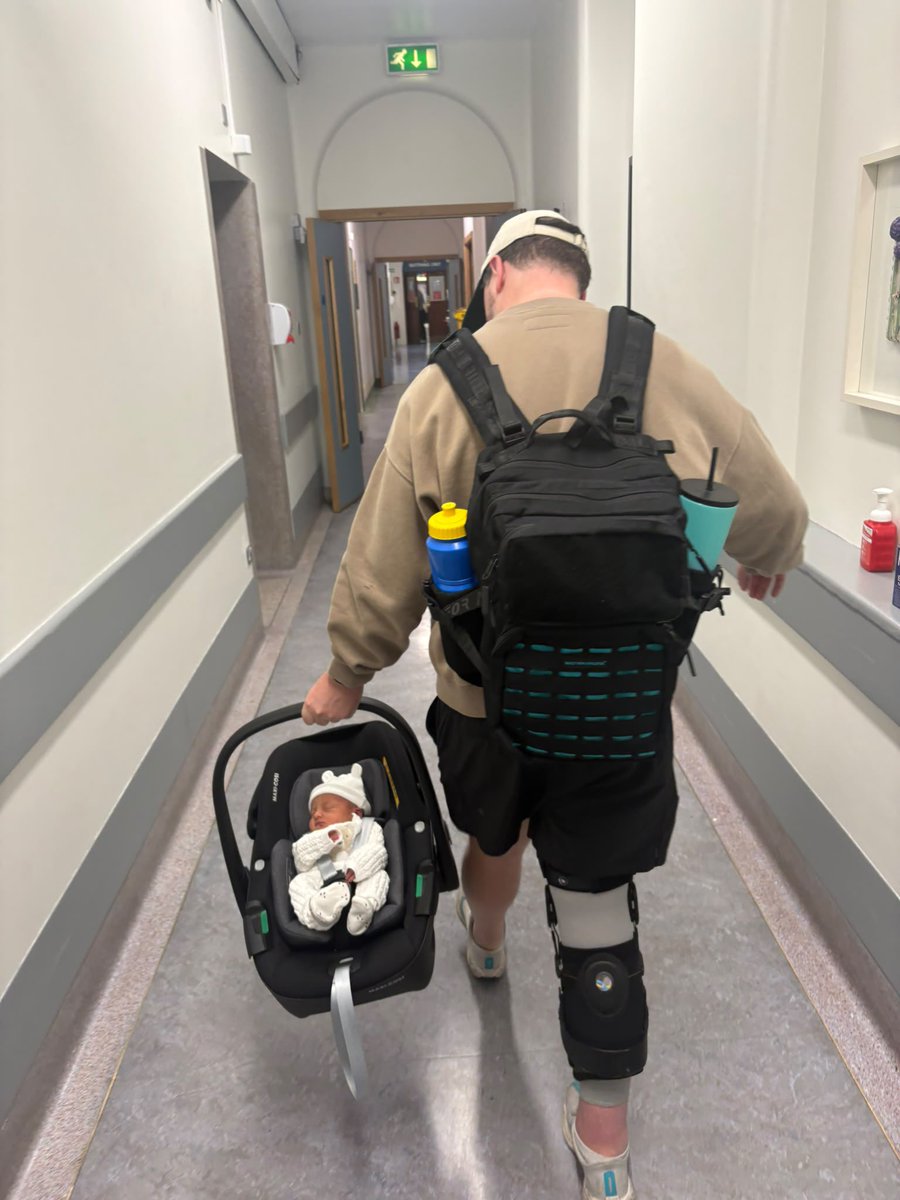
Back to coaching after a summer break.
Reminded how much I'd missed it. Not the sessions, the people.
You get a feel for a group: when to push, when to back off.
Whilst GPS, monitoring, AI etc all make us more efficient.
Human connection is still at the core of what we do
The Countermovement Jump and the Single Leg Countermovement jump represent very different strength qualities.
The SL-CMJ really isn't just a "single leg" version of the same test.
Some data to illustrate this 👇👇
The way athletes move determines how different tissues and structures support that loading.
Understanding the link between movement characteristics, tissue demand & current capacity leaves clues as to the gaps we need to fill.
Valuable long term study in rugby athletes ⤵️
Innovation is always good thing, and I’m intrigued to find out more but I’m not sure how a linear encoder can be a “virtual force plate”.
By this do you mean you offer RSI & RFD metrics? Or is there more to this? @VitruveFit
For the past few weeks, there has been a lot of speculation about what 'Force' was bringing to Vitruve. Many of you guessed we were building a Force Plate.
You were half right.
Today, we officially unveil the Vitruve Force, the world’s first 3-in-1 Performance Lab that fits in the palm of your hand.
- Elite VBT: Tracking every micro-meter of velocity with high-frequency precision.
- Virtual Force Plate: Clip it to the waist for instant RSI and RFD—no plates required.
- Smart Jump Mat: Professional-grade jump testing built into your lifting workflow.
And the best part? We’ve kept the price exactly the same.
"Lactate was at the scene of the crime but was not the criminal. It was actually trying to help"
Lactate: The Most Misunderstood Molecule in Biology👇
https://t.co/3skDRDEuqw
Unsurprisingly the new facilities at Augusta look incredible but…
Who’s going to be the first to throw a med ball through one of these prestigious walls?
In a rotationally dominant sport, it’s going to happen at some point! 😂
Augusta National's new players services facility, like everything else on the property, is beautiful.
The building has underground parking for players, a fitness center and physio room, locker rooms, and multiple dining rooms for players and their families.
What you say matters; counter movement jump cueing.
“jump as high as possible” (CMJ-H), “jump as fast as possible” (CMJ-F), and “jump to the best of your ability” (CMJ-N)
The CMJ-F condition elicits an increase in force production, whereas CMJ-H and CMJ-N elicit an elongation of time.
https://t.co/4uUHVafRcv
Definitely worth noting the level / training age of these athletes, D1 College🏈. Probably means a high level of general strength & power, making analysis like this more valuable & applicable.
FVP being more accessible is great, but likely not a decision tool for 99% of athletes
⬇️Really interesting paper into spatiotemporal & joint kinematic variables of sprint acceleration performance in team sport athletes of various sizes.
🔑Whilst Pmax is king, bigger bodies require more absolute force.
🔑Better shapes = better expression of F0 & Pmax = faster🏃♂️
In our recent paper, Pmax had largest relationship w/ 10m sprint performance & F0 appeared more important w/ ⬆️ body mass. Spatiotemporal & joint kinematic variables most associated w/ Pmax presented in images below. Pmax may serve as an appropriate KPI for initial acceleration.
🔑 Performance is multifactorial, but linear acceleration is a KPI in most. Applicability & transfer yes, but raw physical qualities👍
🔑Pmax is a relative metric, like it or not physics applies in sporting contexts. Changes in body mass & body comp impact physical performance.
https://t.co/yA2UEA3EbG
As with any injury there's a risk, it will never be known what impact the previous injury had on the outcome. It also doesn't change the decision.
The elites can do special things & you try to tell those characters they can't give it a shot...
The reality is the elites are elite due to a combination of many factors, meaning they can often find a way.
Downhill skiing 7 days post ACL rupture would be higher on the levels of disruption to normal, but for big events elite athletes can do some incredible things
📝 Really valuable paper highlighting the shifting demands of football. A trend which definitely applies to other sports.
🏃♂️Increasing physical demands
🗓️More demanding schedules
Balancing stress & response has never been a more vital part of our roles in performance sport
📊 New research in @BJSM_BMJ
🔓Open Access
https://t.co/CqLBf7XowR
10-year analysis of running load & fixture congestion in the EPL (2015–2025) shows the game is faster, more intense and more congested than ever.
Here’s what to take from it ⬇️
A thought provoking thread about the margins of elite sport & the challenges those involved go through.
Many of which others will never know of, let alone understand
Sport is a brutal, beautiful game of inches.
This weekend was a masterclass in this very concept.
In the World Series, inches on a slide kept the Toronto Blue Jays from capturing the title.
In the NYC Marathon, a slight lean, two tenths of a second, separated 1st from 2nd.
It's the magic and soul-crushing cost of being in the arena:
Getting everyone on the same page, understanding intensity is such an important part of the performance puzzle.
Multiple different models can explain why conditioning is often overlooked & misunderstood across the field.
A base level of terminology alignment ⬇️ is a good start
Physical Activity and Exercise Intensity Terminology: A Joint American College of Sports Medicine (ACSM) Expert Statement and Exercise and Sport Science Australia (ESSA) Consensus Statement
https://t.co/070jr6ZDxN
DOI: 10.1249/MSS.0000000000003795
@gerdy_mac Hard to get both to the right level in a single input top up scenario.
For me, get your mechanical loading close to where you'd want it - track the physiological loading from that. Then top up the physiological loading off feet when the schedule fits it.
Often we chase both🤷♂️