@niccruzpatane@robotaxi Nice turn. Question from the cabin side: how did the interior look when you got in, and did the car tell you how many rides it had done that day? With no driver, the cabin is reset between rides by whoever Tesla sends in Austin; the owner-operated version will not have that crew.
@EdisonTanEdtreo@NotATeslaApp Two Model Ys parked while you are with patients is exactly the case worth planning for. Each car comes back from each ride with whatever the rider left in it, and you cannot step out of an exam room to check. At 20 rides a day per car that is 40 cabins. Which city are you in?
@NotATeslaApp Before counting fares, read the Cybercab terms as Teslarati summarized them: insurance, charging, parking and general cleaning stay with the owner, and network use needs Tesla's written OK. Same question for a Model Y: who resets the cabin between rides while you work?
@SawyerMerritt The detail owners will feel first: the Model Y comes back with whatever the last rider left in it, and the owner is at work. 20 rides a day is 20 cabins nobody inspects. One spilled coffee at 10:40 can end the car's day. How many Austin owners plan to handle that themselves?
@MassStephenA@herbertong Agreed, the cabin camera can flag it. It cannot pick up the coffee cup. Flagging turns the car around; somebody still has to meet it, and the clock on that is the real cost, 12 minutes at a nearby lot versus a lost ride. Are you in the Dallas area?
The full math, in one page: what Uber and Lyft already charge riders ($20 to $150), what a trip home costs in lost fares, what the Cybercab terms cover, and what a 12-minute reset should cost.
https://t.co/OGcygZzjhK
Cybercab orders opened Friday: $29,990, $299 a month, Austin first.
Per Teslarati's read of the terms: the subscription covers camera cleaning, tires and filters. Insurance, charging, parking and general cleaning stay with the owner. Network use needs Tesla's say-so, for now.
So the first owners clean their own car. The day Tesla opens the network, that line is the one that decides your margin.
Founding list is free and your city opens first: https://t.co/D76OshCrjc
@AustinTeslaClub Useful breakdown. The other excluded line worth flagging for Austin buyers is general cleaning: cameras are covered, the cabin is not. Has anyone in the club asked Tesla whether a personal Cybercab can be put on the Robotaxi network later, and under what terms?
Sorry about your mother-in-law. The elderly-owner case is the one the terms serve worst: Teslarati's read is that general cleaning, insurance and charging stay with the owner, and a homebound owner can't do the cabin themselves. That gap is what I'm working on. Which city are you in?
@TeslaBoomerMama 2029 is also about when the question flips from 'can it drive' to 'who keeps a million cabins clean between rides.' Waymo does it today with depots and night crews at a few thousand cars. At a million, the ground side is a bigger build than the factory.
@Investanswers The chauffeur also wipes the seat between clients. At $10 a day the number that moves is downtime: each cabin incident that sends the car back to base is 30 to 60 minutes of fares plus dead miles. A 12-minute reset near where it works is what keeps $10 a day honest.
@niccruzpatane@robotaxi 8 minutes at 2 a.m. is impressive. Honest question from the ops side: how did the cabin look? The 2 a.m. bar run is the ride that leaves something behind, and the same car picks up a 6 a.m. commuter. Curious whether Tesla is resetting cars overnight or between rides.
@MorePerfectUS Worth adding what the $299 buys, per Teslarati's read of the agreement: camera cleaning, tires, filters, limited towing. Insurance, charging, parking and general cleaning stay with the owner. In a car with nobody up front, the cabin is the cost line nobody has priced yet.
A million cabs a year is a fleet, and fleets live or die on turnaround. One number from the ground side: a cabin reset between rides takes about 12 minutes; a car that drives back to a depot for it loses 30 to 60 minutes of fares. Will depot capacity in Europe be built alongside the line, or left to operators?
@robotaxi Personal use first. The next door is the one owners are waiting on: adding a Cybercab to the network. A car that runs rides 12 hours a day gets a spill at 10:40 and a new rider at 10:52. Someone has to be on the ground between those two times. Which city should that start in?
@DennisCW_ "No robotaxi side hustle unless Tesla says so" is the line that changes the math. Everyone comparing $299/mo to a Model Y assumed the car could earn. Right now it can't. The question before December deliveries is whether that clause stays, and what Tesla charges when it opens.
@SawyerMerritt The two words that matter: "personal use." At $29,990 + $299/mo, this first batch goes home at night like any car. The real date is when Tesla lets owners put one on the network. A $30K car working 12 hours a day needs someone on the ground between rides.
12 minutes. Nine points. The car never drives home.
Concept clip of a between-rides reset: car pulls in, two people, seat and screen wiped, cameras checked, back on the network.
Future Cybercab owners: the founding list is free and your city opens first. https://t.co/3DvJyGGkYB
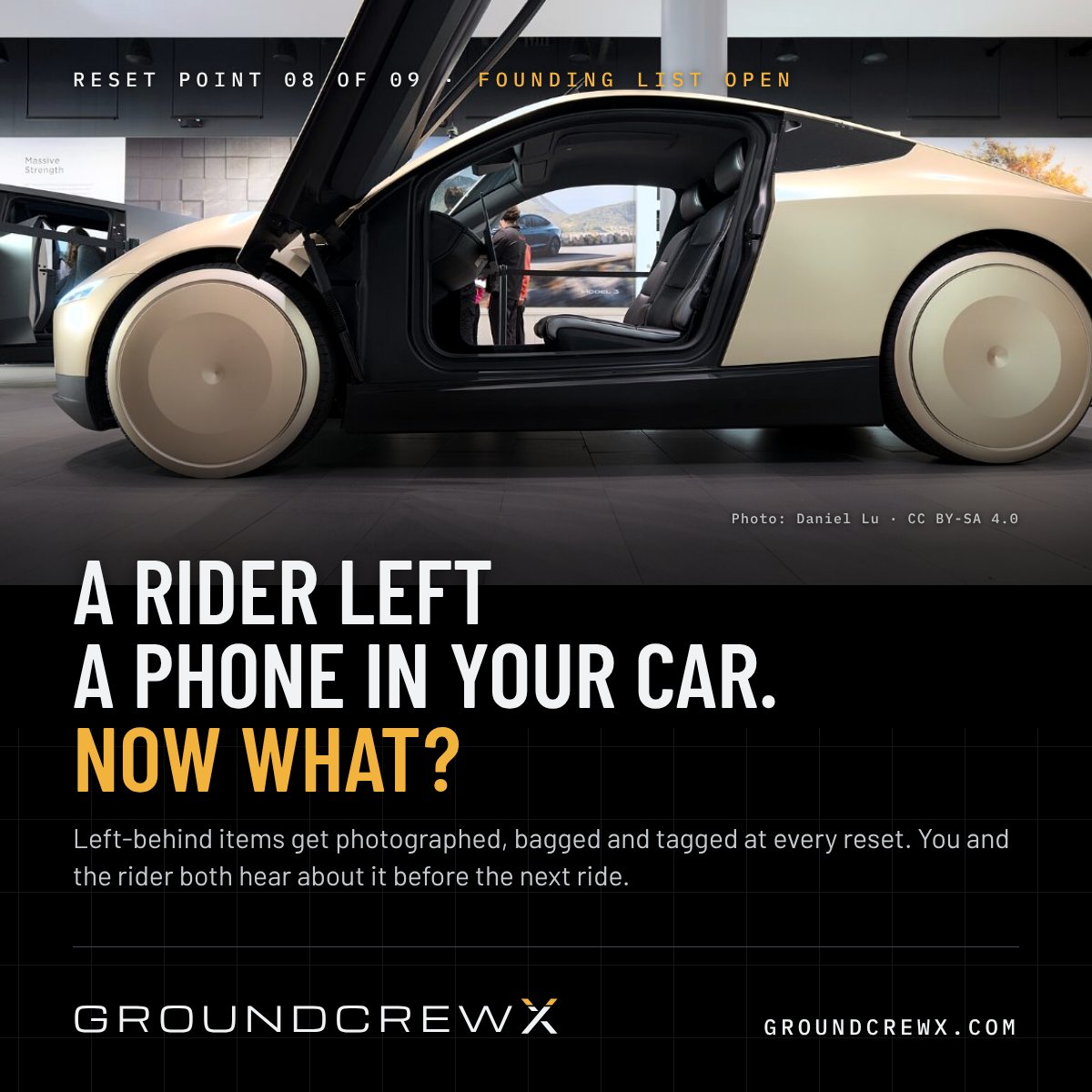
Reset point 08 of 09: left-behind items.
A rider leaves a phone on the seat at 11:50 p.m. The car has four more rides tonight. Who finds it, and how does the rider get it back?
At every reset the crew photographs, bags and tags what's left behind. Owner and rider both get the notice before the next ride.
Founding list: https://t.co/D76OshCrjc