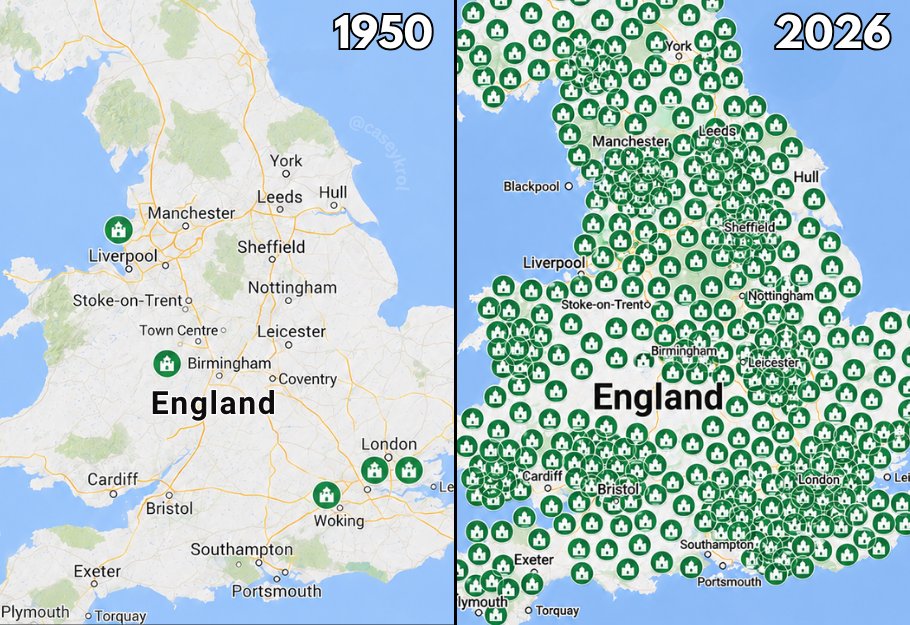
As our 2 major parties try to kill each other with #gerrymandering, this is what it's come to: Voters are willing to change the whole 2-party system.
https://t.co/U3vYni7Ld3
A simple strip of wildflowers can dramatically reduce the need for chemical pesticides. So why aren’t they standard on every farm?
Farmers are increasingly planting colorful wildflower strips within and around their fields because these habitats attract beneficial insects that naturally control crop pests.
Ladybugs are the most familiar example. Both adult ladybugs and their larvae are voracious predators of aphids, small sap-sucking insects that damage crops. A single ladybug can eat dozens of aphids a day, while its larvae can consume hundreds before reaching adulthood.
Yet ladybugs are just the beginning. Wildflower strips also draw in hoverflies, lacewings, parasitic wasps, and predatory beetles, all highly effective natural enemies of common pests such as aphids, whiteflies, thrips, and caterpillars.
This approach is known as conservation biological control. Rather than releasing predators into fields, farmers create permanent habitats that support and boost populations of beneficial insects already present in the landscape.
The flowers supply essential nectar and pollen that many of these insects need as adults. Research shows that access to such resources significantly increases their lifespan, reproductive success, and pest-hunting efficiency.
Some parasitic wasps offer an especially impressive form of control: they lay eggs inside aphids or caterpillars, and their developing larvae consume the pest from the inside out.
Multiple studies confirm that fields with wildflower strips support far higher numbers of beneficial insects and achieve stronger natural pest suppression compared to conventional fields.
Beyond pest control, these strips provide additional benefits: they support pollinators, enhance biodiversity, reduce soil erosion, and create valuable wildlife habitat within agricultural areas.
Scientists are now fine-tuning which flower species work best for different crops and climates, aiming to design the most effective and practical wildflower strips possible.
230 days in U.S. prison.
Sitting Venezuelan President Nicolás Maduro & First Lady Cilia Flores have been imprisoned by the U.S. for almost 8 months.
They must be released now.
Four human rights groups — @afsc_org, @theCCR, @hrw, and @OpenSociety — just filed a lawsuit challenging the Trump administration’s sanctions against ICC prosecutors and judges, a UN rights expert, and three Palestinian human rights groups:
Read more: https://t.co/24M7MJQb5b
The most important book of 2026 is officially published today!
"Israel’s Lobby" is neither a sequel to John Mearsheimer and Stephen Walt’s groundbreaking 2007 book, nor simply an update of it. It does something different.
@EliClifton and Lustick provide a systematic history of the moments when, in their telling, Israel and its American supporters have worked against U.S. interests. But they also add a dimension that Mearsheimer and Walt did not explore at length: money—and, specifically, the financial machinery behind efforts to put Israel’s interests ahead of America’s.
The reason this will become the most important book of 2026 lies in the collision between its findings and its timing. Never before have Americans been so willing to openly debate the once-taboo question of Israel’s influence in American politics.
The revelations are stunning.
Read the full post here: https://t.co/fJBbXX1K3s