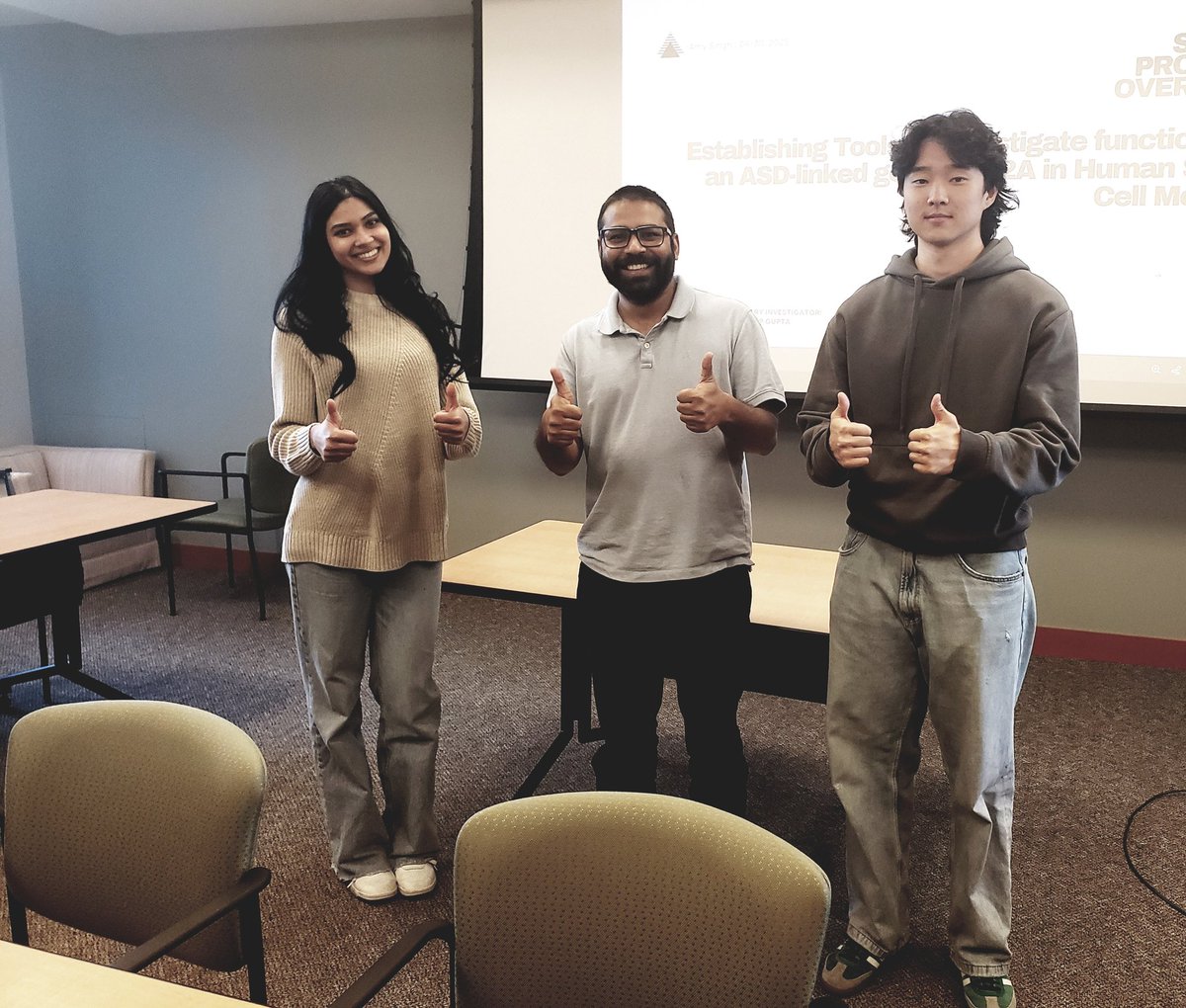
First lab meeting of the Gupta lab. very exciting start!
We are building functional stem cell models to investigate neurodevelopmental disorders like autism
This is a 3D HREM visualization of a human embryo in its fifth week.
It has a fishlike appearance because humans and fish share some DNA and a common ancestor.
[🎞️ Richard Behringer]
Today in @Nature, we report a new approach to studying human brain development and modeling disease in vivo.
Human neural #assembloids and #organoids have opened new ways to study development in vitro, but they also have important limitations. Transplantation can provide a more physiological environment, yet human cortical cells then develop within a rodent brain that matures much faster, constraining their growth and integration.
To address some of these limitations and obtain more advanced functional readouts relevant to disease biology, we generated #apallial mice, in which ~98% of the cortex and hippocampus fail to form, creating space for transplanted human cortical organoids to grow and integrate extensively.
We call these #xenocortical mice (XCX).
Nearly 7 years in the making. Congratulations to an extraordinary team and wonderful collaborators!
Link to the article below 👇
This 'important' Tools and Resources paper establishes a robust live-imaging toolkit to characterize excitatory and inhibitory synaptic dynamics during neuronal development. The methodology and quantitative data are 'convincing' and well validated.
https://t.co/24OcZ35AI2
I am excited to announce that our manuscript has been accepted in Nature Communications with the findings “Epitranscriptomic mechanisms governing axon projection and guidance during mammalian cortical neurogenesis”.
https://t.co/YeYUCL8kpf
Our article, led by the remarkable Xiangling Meng, on establishing CRISPR screens in neural #assembloids and #organoids is on the cover of Nature Protocols today
All smiles, endless motivation, a little chaos, a lot of science ✨🧪
Here’s to experiments, fun lab moments, and the amazing people behind them. Happy SB Lab Day! 💙
For the first time, UCLA scientists @LTULab have mapped how Down syndrome reshapes the human brain before birth — uncovering surprising shifts in neuron development that may explain differences in brain size and cognition.
Read more ➡️https://t.co/wTZCXfavhk #BrainDevelopment
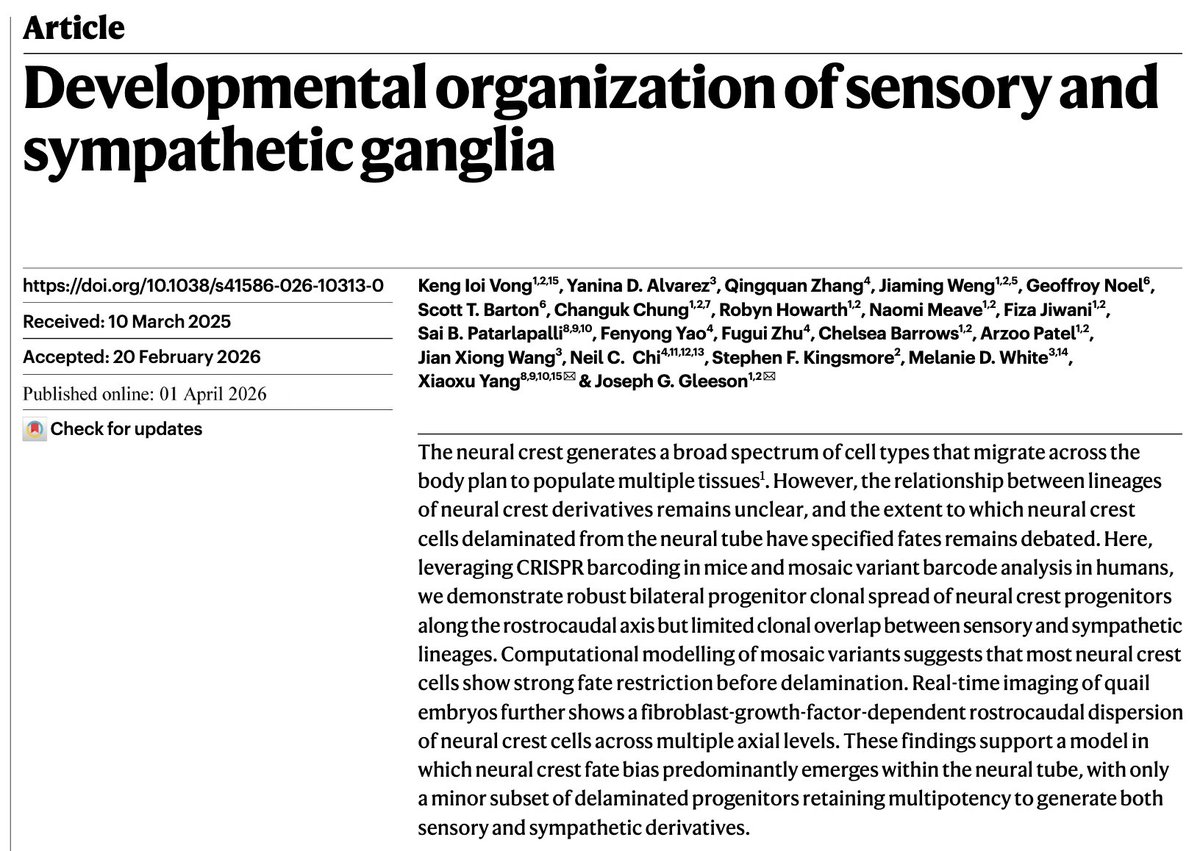
Check out our new publication at https://t.co/Cj588ZClMc on Developmental organization of sensory and sympathetic ganglia, by @HarryKiv@shishenyxx and amazing collaborators.
Science often chases buzzwords, but studying sex determination showed me how a simple question can reveal deep biology. Discovering Zelda’s role was thrilling. Grateful to Erika Bach, my colleagues, and Artyom Kopp for the beautiful primer.https://t.co/LlaVudzK1f