Ravi Gupta is Hong Kong Jockey Club Professor of Global Health, University of Cambridge. TIME100 Most Influential 2020; Clarivate Highly Cited Researcher
The first evidence of in vivo SARS-CoV-2 escape from antibodies: emergent Spike deletion H69/V70 and D796H mutation in a convalescent plasma (CP) treated patient. These mutations conferred reduced susceptibility to the CP and sera from multiple donors. https://t.co/sGQGa08FSm
He was Satyendra Nath Bose, an Indian physicist whose quiet brilliance in the 1920s forever altered our understanding of the quantum world.
In 1924, Bose, then a 30-year-old professor in British India, sent a groundbreaking manuscript directly to Albert Einstein. The paper offered a novel, more elegant derivation of Planck's law for blackbody radiation by treating light quanta (photons) as indistinguishable particles—a radical departure from classical statistical methods. Impressed by its insight, Einstein personally translated the work into German and facilitated its publication in the prestigious Zeitschrift für Physik.
This exchange sparked a brief but profound collaboration. Einstein extended Bose's statistical approach to material atoms, predicting a bizarre new state of matter at ultra-low temperatures: what we now call a Bose-Einstein condensate (BEC), where particles behave as a single quantum wave. Bose's original framework became known as Bose-Einstein statistics, and the class of particles that obey it—those with integer spin, including photons, gluons, W and Z bosons, and the Higgs boson—was later named bosons in his honor by Paul Dirac.
Unlike fermions (matter particles like electrons), which obey the Pauli exclusion principle and cannot occupy the same quantum state, bosons can pile into identical states en masse. This "social" behavior underpins extraordinary macroscopic phenomena: the coherent light of lasers, the zero-resistance flow in superconductors, and the collective quantum coherence in BECs.
Despite the monumental impact—his statistics describe half of all fundamental particles and enabled key advances in quantum field theory, condensed matter physics, and particle physics—Bose remained remarkably unassuming. He continued teaching at universities in Dhaka and Calcutta (now Kolkata), mentored students, pursued ideas in X-ray crystallography, unified field theory, and other areas, and never sought the spotlight. Nominated several times for the Nobel Prize (notably for Bose-Einstein statistics and his later work), he was never awarded it, and his name rarely appears in popular accounts of 20th-century physics.
There's a poignant humility in his story: a man whose legacy literally names one of the two fundamental families of particles in the universe, yet whose personal fame never matched the scale of his contribution. Bose reminds us that true influence often arrives without fanfare. Some breakthroughs echo through textbooks and technologies, while their creators work in the background, content to let the universe carry their ideas forward—even if history's spotlight rarely finds them.
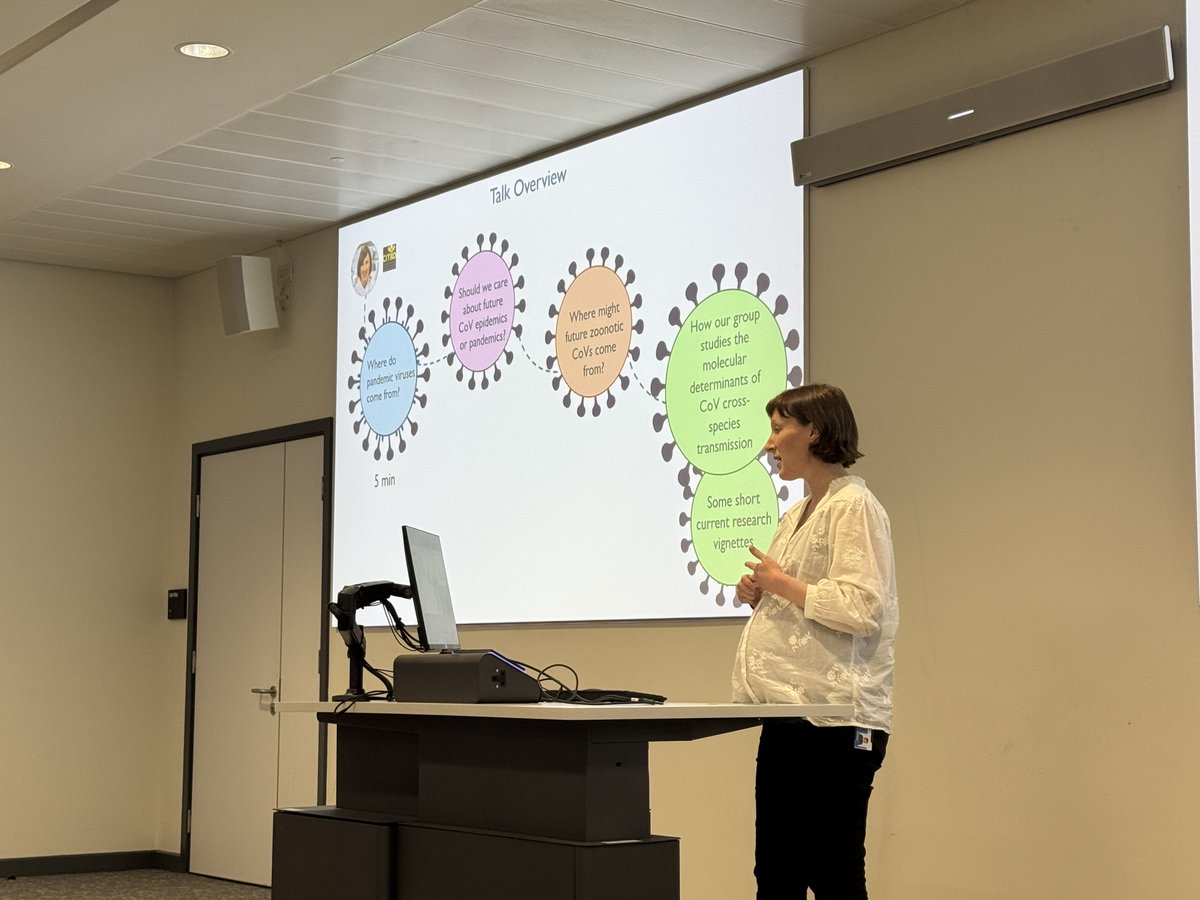
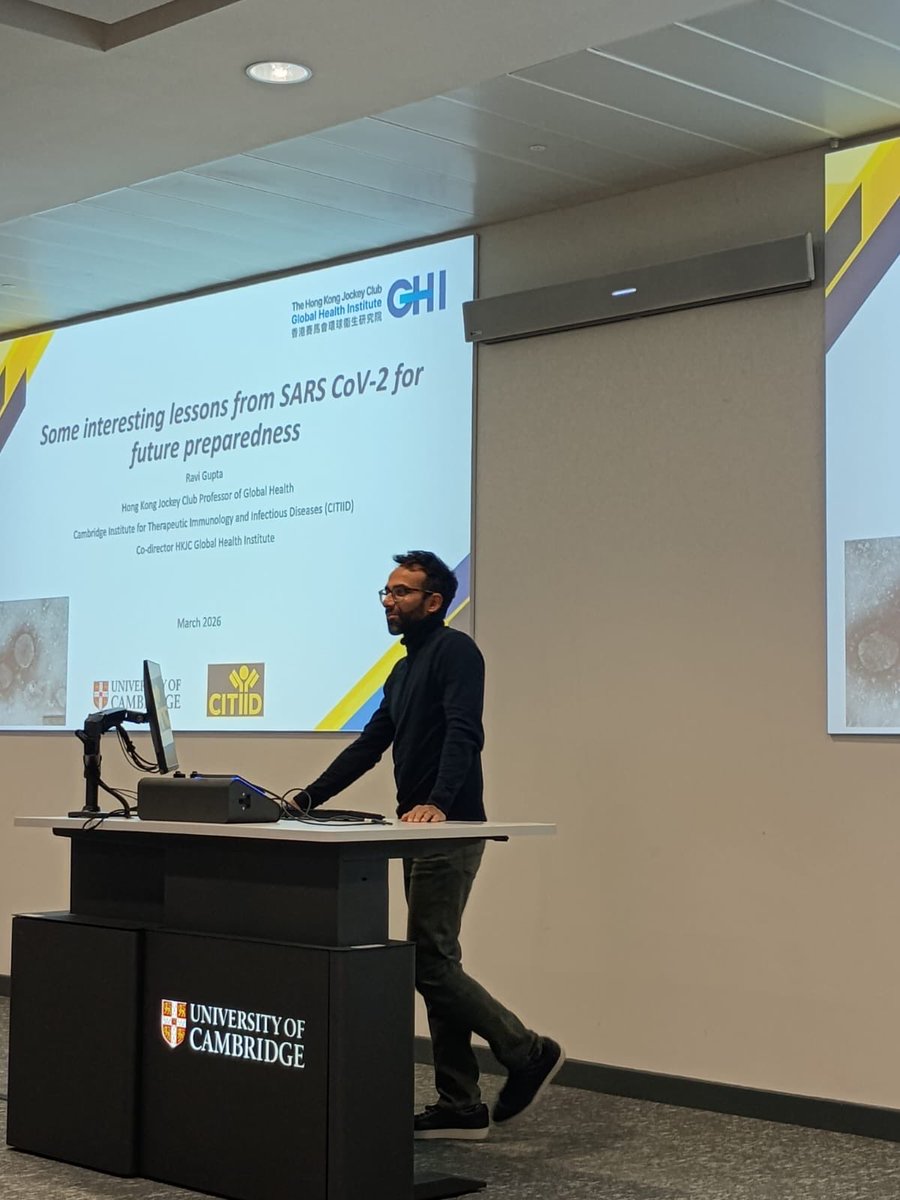
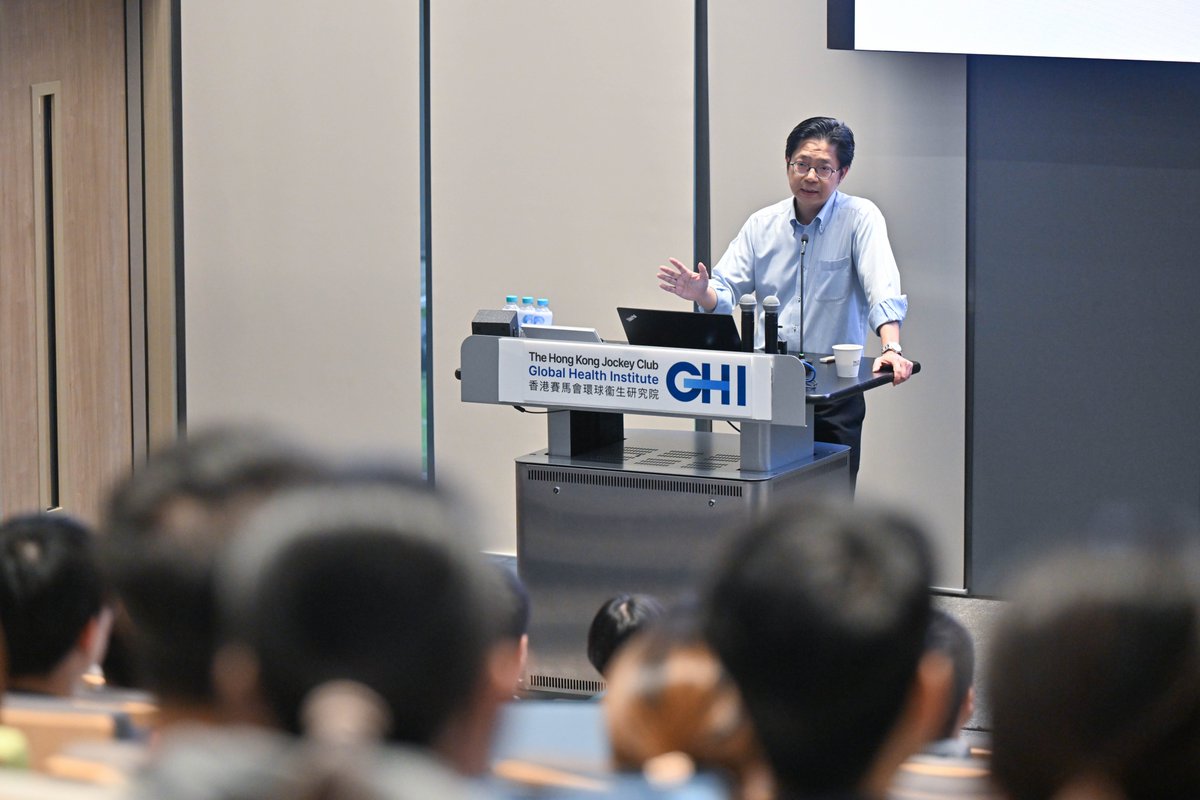
Around 120 participants joined the HKJCGHI Co‑Directors Public Lecture on 29 April 2026 to hear our three Co-Directors' insights on immunology, pandemic preparedness & vaccine research, highlighting how research can address future health threats. Details: https://t.co/dTJZczoLKb
Our Co-Director Prof Ravi Gupta @GuptaR_lab recently visited 🇩🇰 Copenhagen to strengthen international collaboration in vaccine&influenza research, engaging with Novo Nordisk Foundation Initiative for Vaccines and Immunity @novonordiskfond and attending a flu workshop at @SSI_dk.
Supervised by Prof Tommy Lam (@HKU_SPH, @HKJCGHI), Dr Alexander Williams led a team to collect lake sediments near penguin colonies to trace ancient pathogens and study how environmental change in polar regions affects microbial ecosystem. ❄️🐧
🔗 https://t.co/eOkxRAhx9p
That’s a really interesting observation — and I think this goes beyond just “more HS usage.”
If I’m reading that correctly, it’s not simply that HS is stronger or weaker as a cofactor, but that its effect actually changes sign depending on the structural state of the spike.
In other words, HS is inhibitory for variants without the N354 glycan, but becomes enhancing once that glycan is present.
That feels like a shift from a linear model (“more or less HS binding”) to something more conditional or state-dependent.
What I find fascinating is how well this fits with the conformational control described in the paper —
N354 glycosylation pushes the spike into a more closed state, and HS then acts to partially reopen it, effectively restoring entry competence.
So rather than HS simply increasing binding probability, it may be acting as a kind of state-dependent gate modifier —
selectively rescuing variants that would otherwise be too closed to function efficiently.
That could also explain why variants like BA.2.86/JN.1 can tolerate a more “hidden” RBD while still remaining competitive.
It’s a really elegant example of how small structural changes and environmental cofactors interact in a non-linear way.
It almost feels like the system is tuning not just probabilities, but the rules under which those probabilities apply.
@Angama_Market@LongDesertTrain Here is Gupta et al. paper underlying that K356T observation.
Very interesting to me that BA.3.2.1 (RD) *lacked* K356T and fizzled out, whereas BA.3.2.2 (RE) *with* K356T has been hugely more successful.
Closed RBD but heparan binding seems a good combo!
https://t.co/6MhSIcUjwY
🔬 New study led by Prof. Leo Poon (@world_epidemic) offers a timely perspective on how targeted and sustainable genomic surveillance can strengthen global pandemic preparedness. 🌍🧬 Congrats to the team! 👏
🔗 Published in Nature Communications: https://t.co/1BVM8PpeEf
🔍 Discover HKJCGHI at Asia Summit on Global Health 2026
🗓11–12 May |📍Hong Kong Convention and Exhibition Centre
Meet us at our booth & attend the plenary session where Prof. Leo Poon serving as the Panel Chair!
👉 Details and Registration: https://t.co/4PD3jryWGK
⏰ Last call! #NIDO2026 abstract submission closes 20 Apr (23:59 HKT).
Share your research at the XVII International Nidovirus Symposium.
📝 Submit: https://t.co/9uZ2utUO1B
🔗 Register: https://t.co/MSOw32v2vz
#Nidovirus#Virology#GlobalHealth#HKJCGHI#HKU
📢Join the 7th ISRV School | 12–16 Oct 2026, HKU
HKJCGHI is pleased to collaborate with ISRV organising a five‑day programme for early‑career scientists, featuring expert‑led training on influenza, RSV & coronaviruses.🌍🧬Learn more & register:
https://t.co/I1kfRd0YQW
Post work lunch on Goof Friday with Roger Paredes - scientific director @Fundació Lluita contra les Infeccions. Reflected on COVID-19 as a turning point for us as scientists and clinicians, with post infection sequelae an important area in global health @hkjcghi
new collaborations with leading researchers including old colleagues from the HIV field. Thank you to @Julia Prado (Germans Trias i Pujol Research Institute (IGTP) Scientific Director) for a great afternoon discussing T cell immunology in pandemic preparedness @hkjcghi
Privileged to see the new Caixa research foundation laboratories in Barcelona and discuss population level immunity to respiratory viruses across the African subcontinent @Gemma Moncunill also @Barcelona Institute for Global Health (ISGlobal) @hkjcghi @
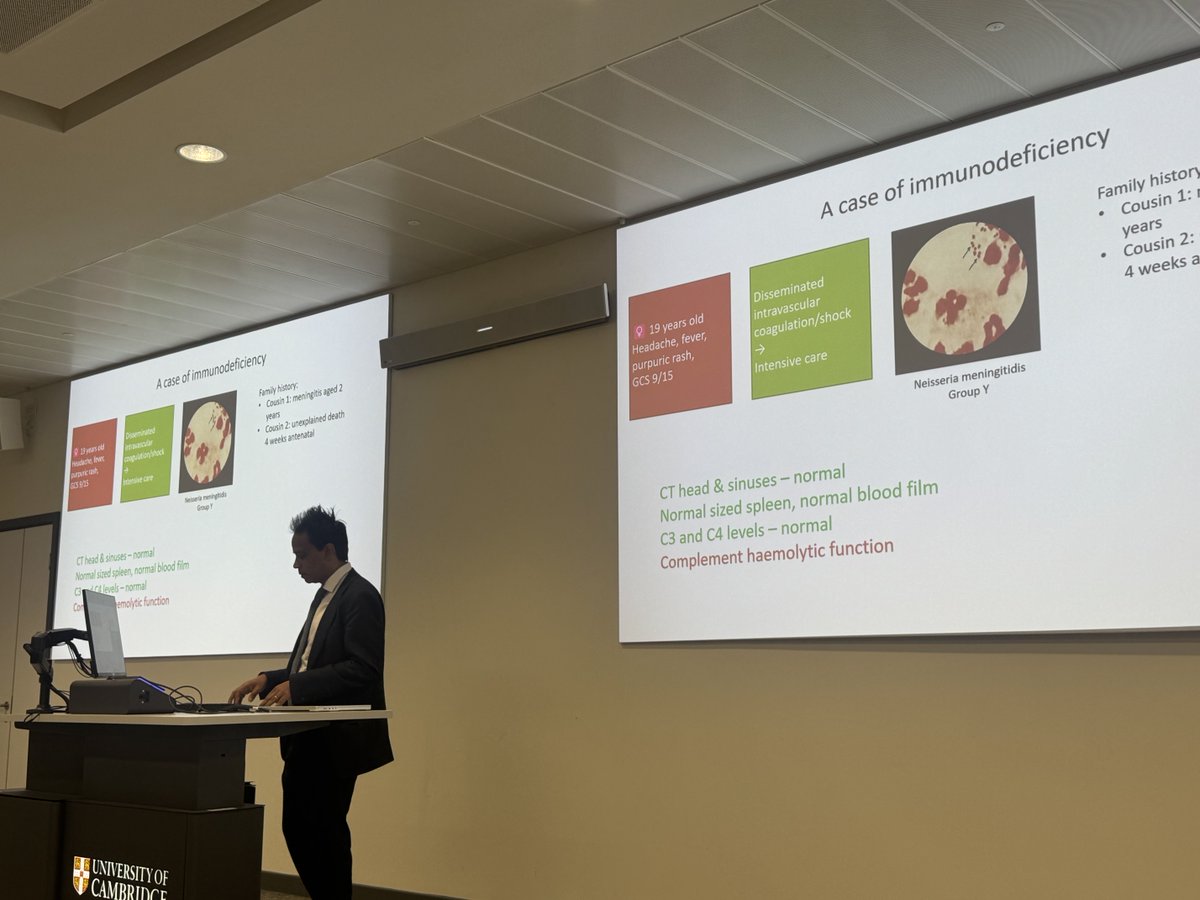
We love it when Lister community members team up 😍 Here, #ListerFellows Ravi Gupta @GuptaR_lab and James Thaventhiran @Thav_Lab look at pandemics and their prevention from different angles. Fabulous to break down disciplinary boundaries
Amazing thread from @LongDesertTrain ! We are learning more about persistence of viruses through careful work in labs around the world. COVID-19 work is critical to gain knowledge ; we have new paradigms for ‘respiratory’ virus persistence @hkjcghi@MedCambridge@AHRI_News
Tuberculosis has been with us for centuries and remains the deadliest infectious killer.
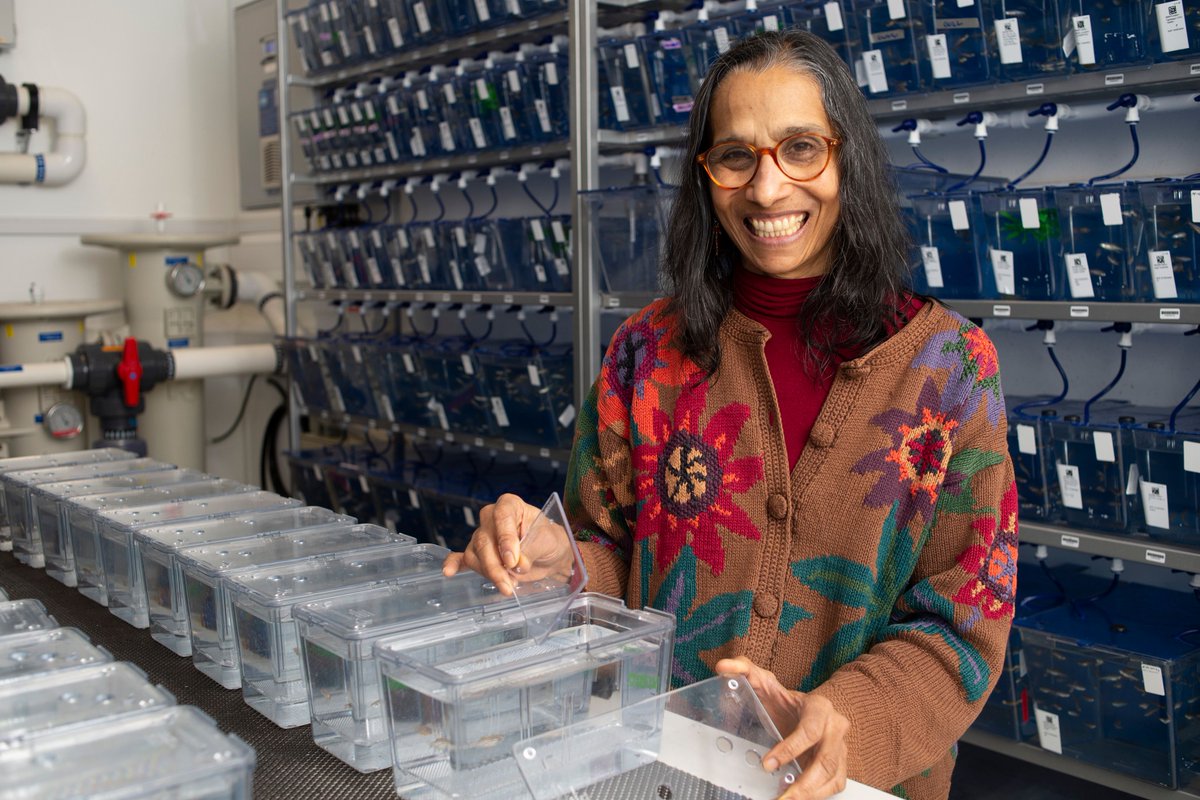
At #CITIID@The_MRC LMB, Lalita Ramakrishnan works to understand TB at its roots and tackle drug tolerance & resistance to #EndTB.
🔗https://t.co/hwWxzI7EVh
@Cambridge_Uni#WorldTBDay@who
Until now, the broad pattern of SARS-2 evolution has been:
1) Emergence of a saltation variant originating in a chronic infection
2) Rapid growth/global dominance & a variant-driven wave of infection—especially if it emerges in late fall/winter (BA.1, XBB.1.5, JN.1). 2/
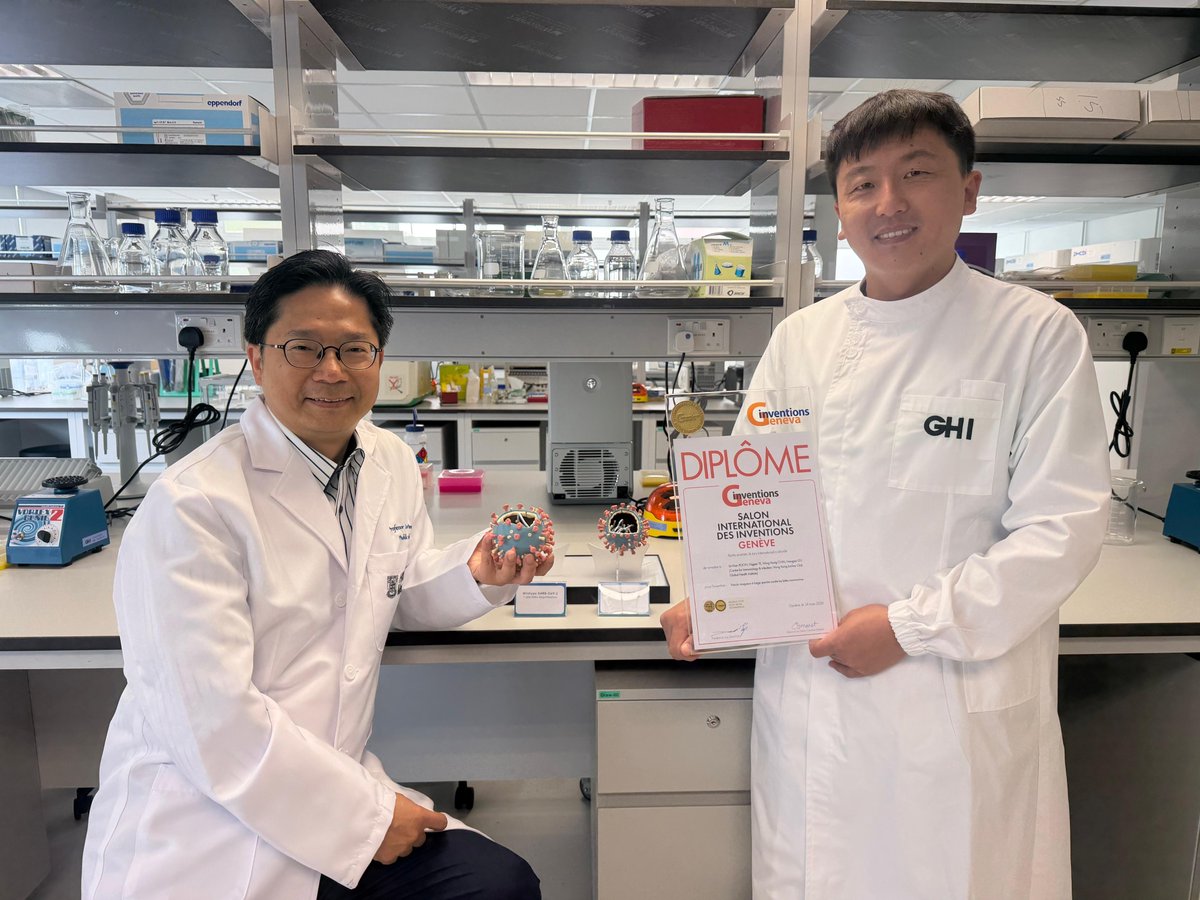
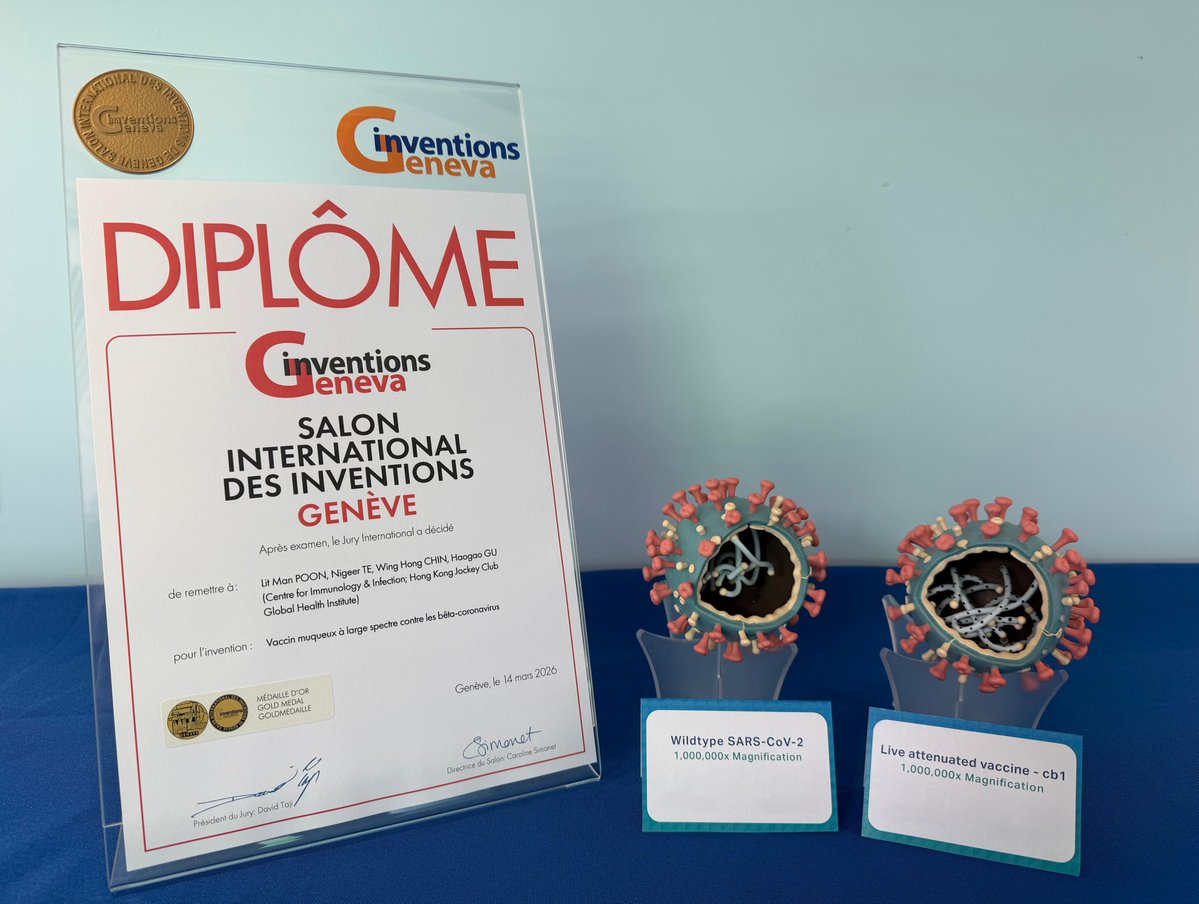
🏅Gold Medal at Geneva Inventions! Congrats to Prof Leo Poon Lit‑man @world_epidemic , Co‑Director of @hkjcghi, and his team at @hkumed for a breakthrough intranasal broad‑spectrum coronavirus vaccine that boosts mucosal immunity & blocks transmission. #GlobalHealth
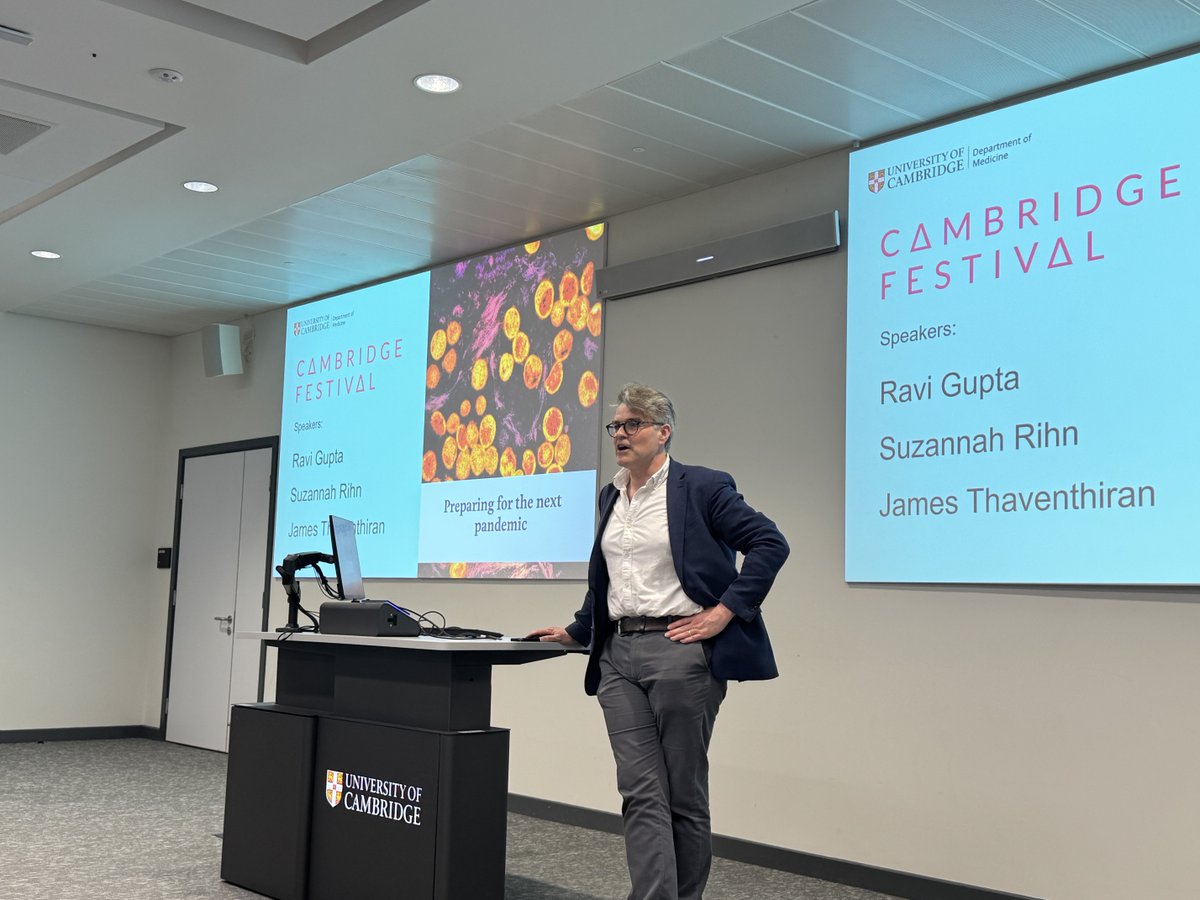
Fantastic evening at the @cambridgesciencefestival alongside @Thav_Lab and @Suzanna Rihn speaking to our community about pandemics from pathogen and immunology perspectives. very poignant given my new role as co-director of @hkjcghi @MedCambridge