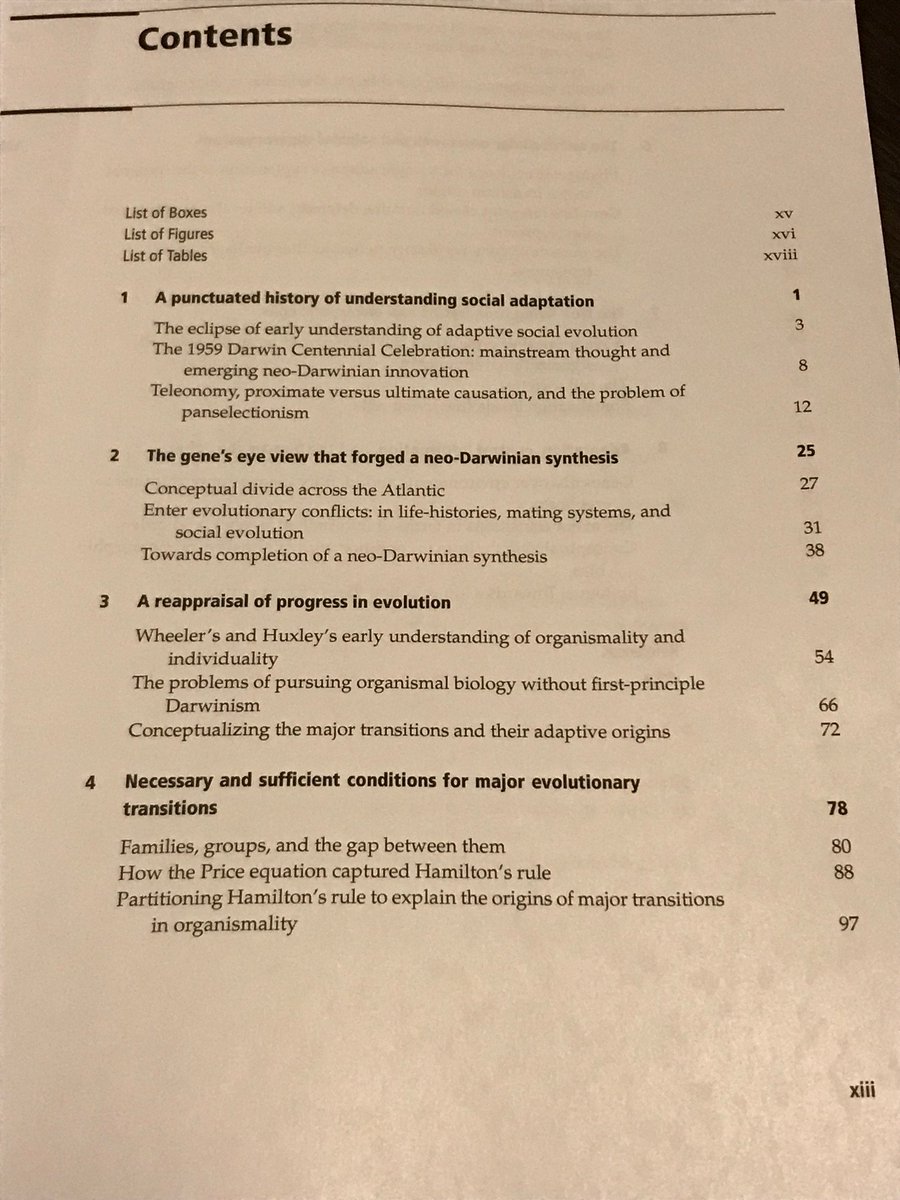
The fundamental principle of our new book is simple: The reader must come first. Getting a busy and distracted person to read your paper is an incredible achievement. https://t.co/qyD5mVuBXR @queensoxbiology @DewanPandora
5/4 I would particularly like to thank my amazing and brilliant collaborators and colleagues for making academic life and research so much fun @StuWest8@matishalin@AsherLeeks @Mig_mds @PapilioMing, Sam Levin, Tom Scott and Hadleigh Frost
Happy to announce that I will be starting a new job next week as a Senior Consultant with Deloitte, Australia. This is a big career and life move for me but I am excited to be joining a cool team of people working on the application of machine learning to supply chain risk 1/4
Question: why should hosts decrease the genetic diversity (increase relatedness) of their symbionts? Answer: To stop their symbionts fighting. With @matishalin https://t.co/2rRV0sdVqI
Very excited to share our latest work published on eLife! We have shown that social cheat strategy can be more diverse than previously thought. Our results can help explain the variations in cheating levels observed in many species!
Less than 20 years ago, the world was headed for a >4C warmer world by 2100. The amount of change that would occur under that much warming, that fast, was almost unimaginable and certainly unsurvivable for human civilization + a large percentage of the world's species. (thread)
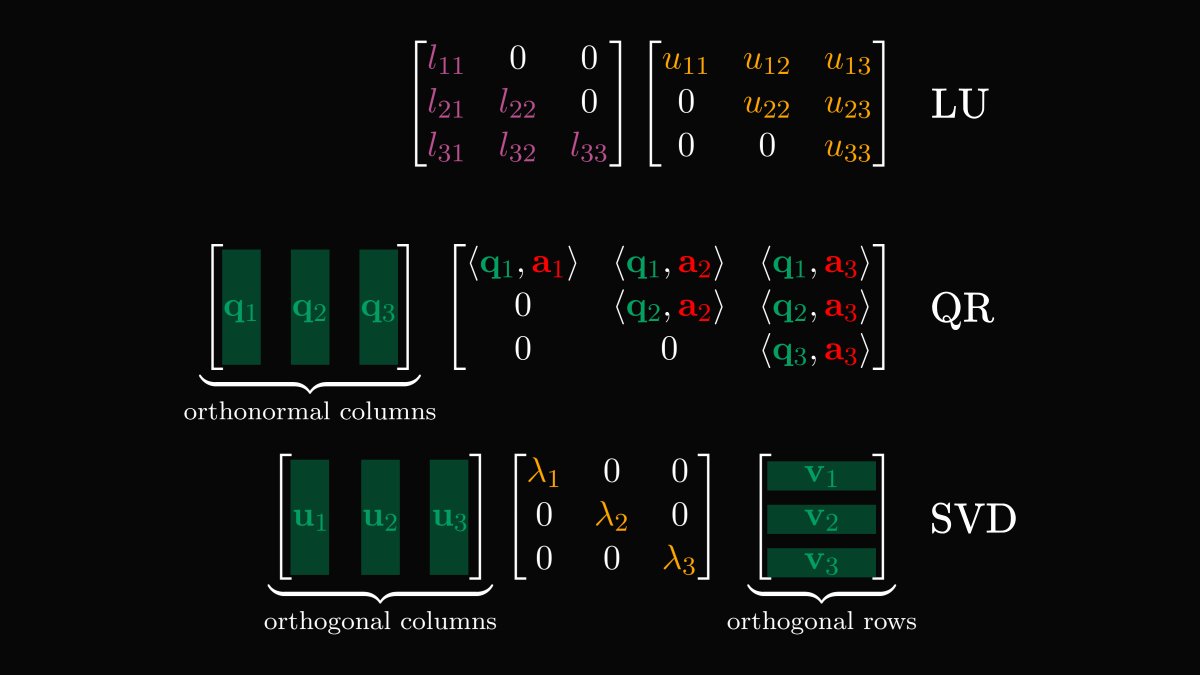
Matrix factorizations are the pinnacle results of linear algebra.
From theory to applications, they are behind many theorems, algorithms, and methods. However, it is easy to get lost in the vast jungle of decompositions.
This is how to make sense of them.
New paper solving Crozier's paradox, by showing how multiple social encounters can stabilize genetic kin recognition https://t.co/dcTh743NXQ @GrafenAlan
“Evolution through Large Models” – new paper from our team at OpenAI. Step towards evolutionary algos that continually invent and improve at inventing: Large models can suggest (+ improve at making) meaningful mutations to code. Paper: https://t.co/ObrAN6rBVE 1/4
Join us! 3 year post-doc, comparative studies of social evolution, especially in social insects @Gijsbertwerner@AshleighGriffi6 https://t.co/5IVKGJxsvS