✨📄New paper out: “Detection of trade in products derived from threatened species using machine learning and a smartphone application.” Demonstrating the potential of smartphone-based AI tools for monitoring wildlife trade. Link: https://t.co/UOr1aYALgK
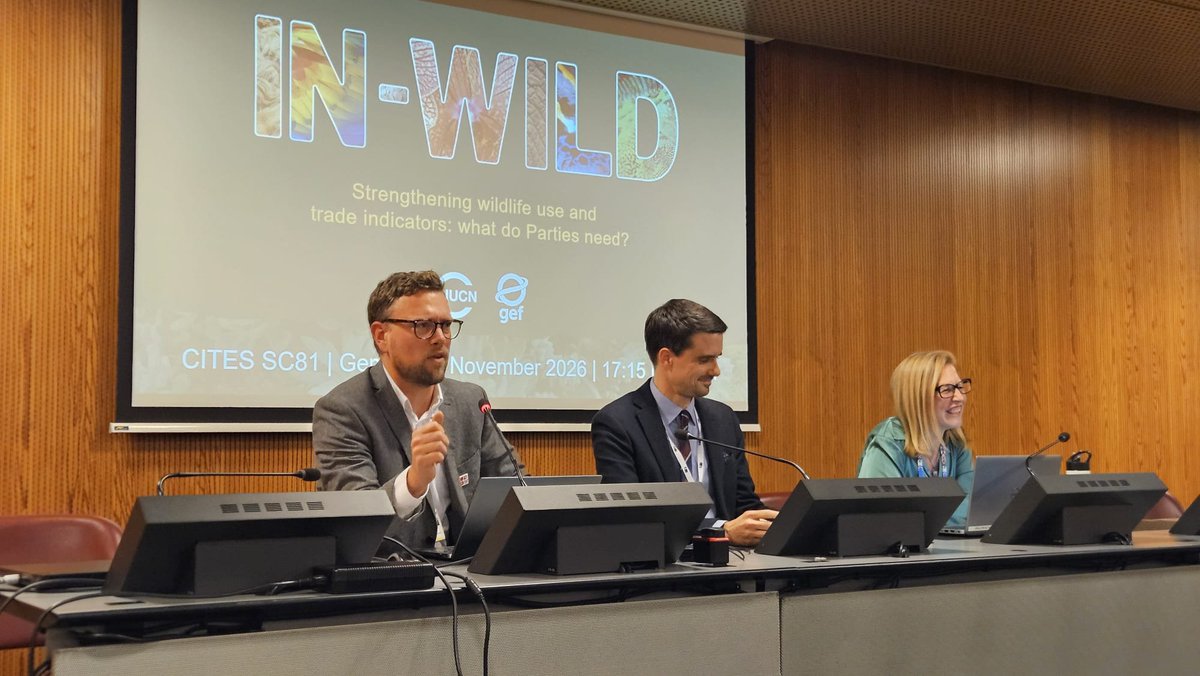
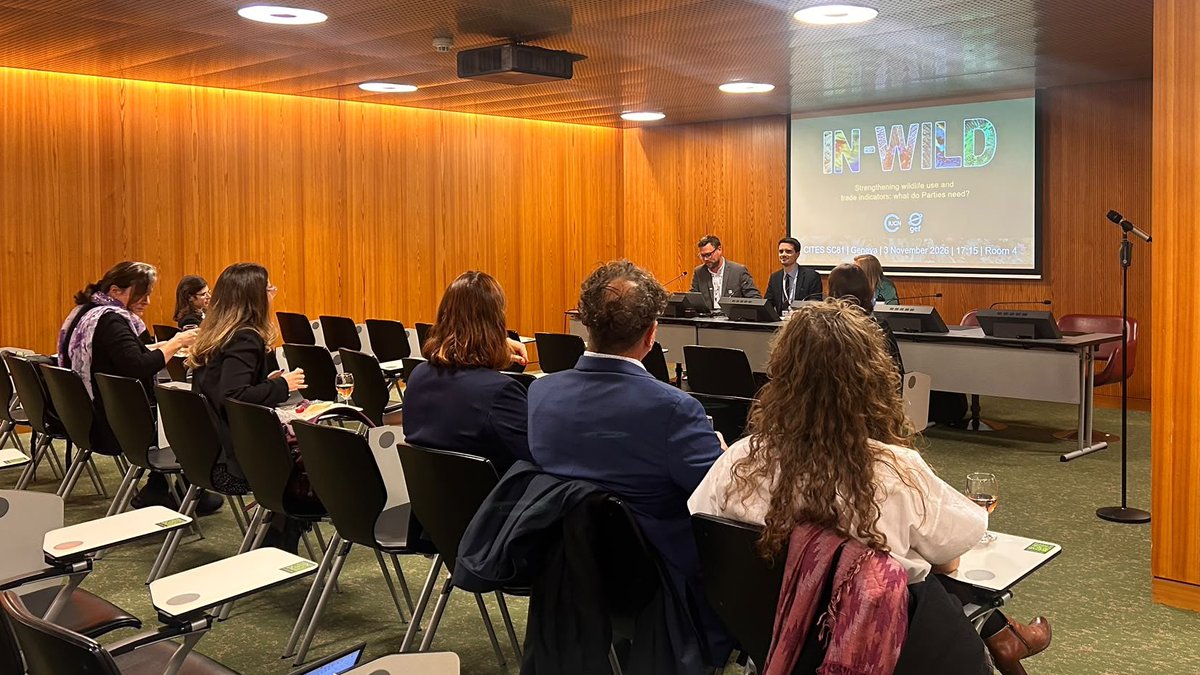
The @GENetwork is at the @CITES#SC81 side event, presenting @theGEF IN-WILD project to @CITES Parties and observers to shape outputs aimed at strengthening wildlife use and trade monitoring through indicators and data.
▶️https://t.co/kc43a9uDPT
HELICS was lucky to host Anne-Sophie Crépin from the Beijer Institute of Ecological Economics, part of the Royal Swedish Academy of Sciences, this week. She presented her research on diversity and economics in social ecological systems. Thank you for the visit Anne-Sophie!
Great to be part of #GeoScienceDay2026 in Kumpula! 🌍
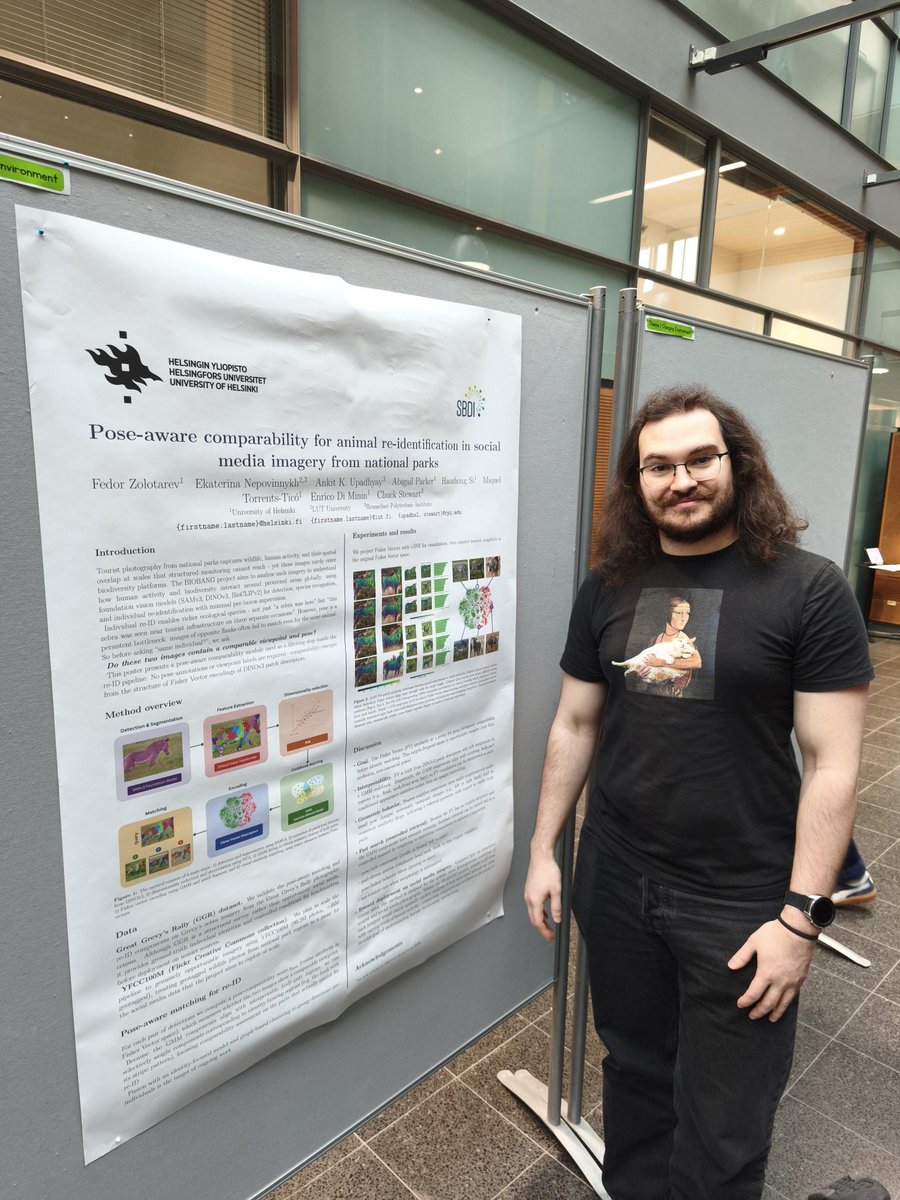
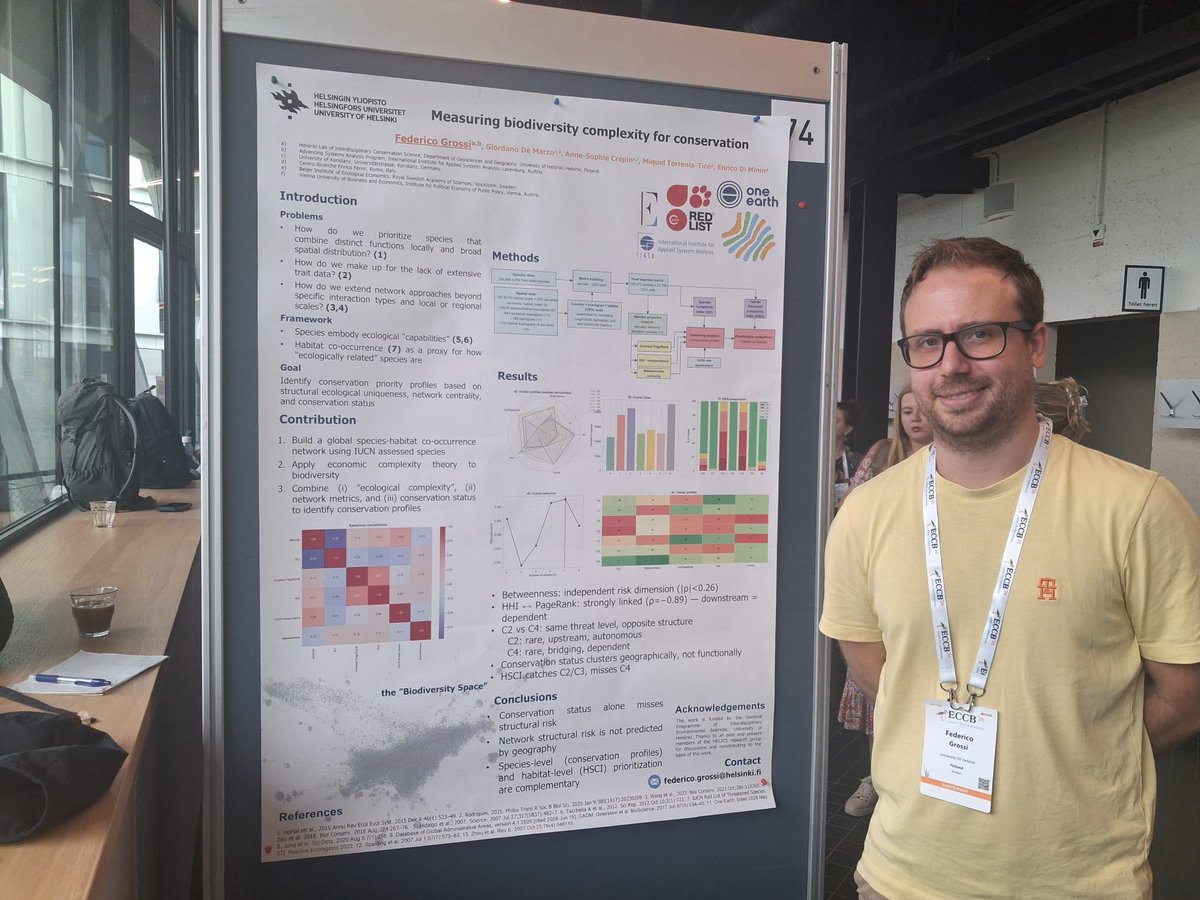
Abigail introduced our lab during the GEO Research Themes session, while Fedor, Abigail and Federico presented our recent research in posters.
Thanks to everyone who stopped by for discussions and questions!
🌟Paper out in Nature Review Biodiversity: "Global Trends and Impacts of the Online Illegal Wildlife Trade." Our paper provides a comprehensive overview of how online illegal wildlife trade threatens species, ecosystems, and public health. Link: https://t.co/x7CqvghfpV
🚨Great experience at #ECCB2026!
After an inspiring week of sharing research, exchanging ideas, and connecting with fellow conservationists, we want to thank everyone who made this event so memorable.🫶
Together, we continue to build collaborations for biodiversity conservation!
🌍 HELICS at #ECCB2026! 🌱
• @Miquel_TT: Large carnivores & online news media , 7 July, 15:10.
• Federico: Biodiversity complexity , 8 July, 10:00.
• Haozhong: Birds & conservation interest , 9 July, 11:30.
📍Want to learn more about our work? Come meet us at the conference!
🚨🚨New publication: “Community-level functional stability in East African herbivores amid major environmental change”
Interdisciplinary work with contribution from #HELICS , advancing understanding of ecosystem resilience and functional stability. 🔍
https://t.co/gZAjJOCFgY
New research! Lab founder Enrico di Minin is an author on this paper exploring the cultural differences in attitudes towards wildlife and how these can originate from varying colonial histories. https://t.co/rnW1dwSWlV
🌟Excited to share a new paper from HELICS!📄✨
Based on text & image data from the Chinese social media platform Weibo, we reveal how people emotionally respond to urban nature and how different parks contribute to diverse emotional well-being benefits.🌿
https://t.co/MN06Fc2A2X
Biodiversity is the variety of life on Earth — from plants and animals to tiny microorganisms — that keeps our ecosystems healthy and resilient.
Yet habitat loss, pollution, and climate change are pushing nature to the brink.
This #BiodiversityDay, find out how you can take action: https://t.co/4Eu0PlD5yD
A Sumatran orangutan has been filmed for the first time using a human-made canopy bridge to cross a public road on the Indonesian island of Sumatra, conservationists said Monday.
Brilliant work from our Data Science MSc students today! New dashboard tracking online interest in species worldwide 📊🦎🌿
Discovering which species people search for—and what that tells us about conservation priorities. Stay tuned!
#DataScience#BiodiversityConservation
🚨🚨New research alert: Spotted hyaena distribution in Kenya is shaped not just by prey or livestock, but by humans’ propensity to kill them.
Understanding human behavior is key to carnivore #conservation. 🌍🍪
Open access: https://t.co/qA55gJLyRZ
@helsinkiuni
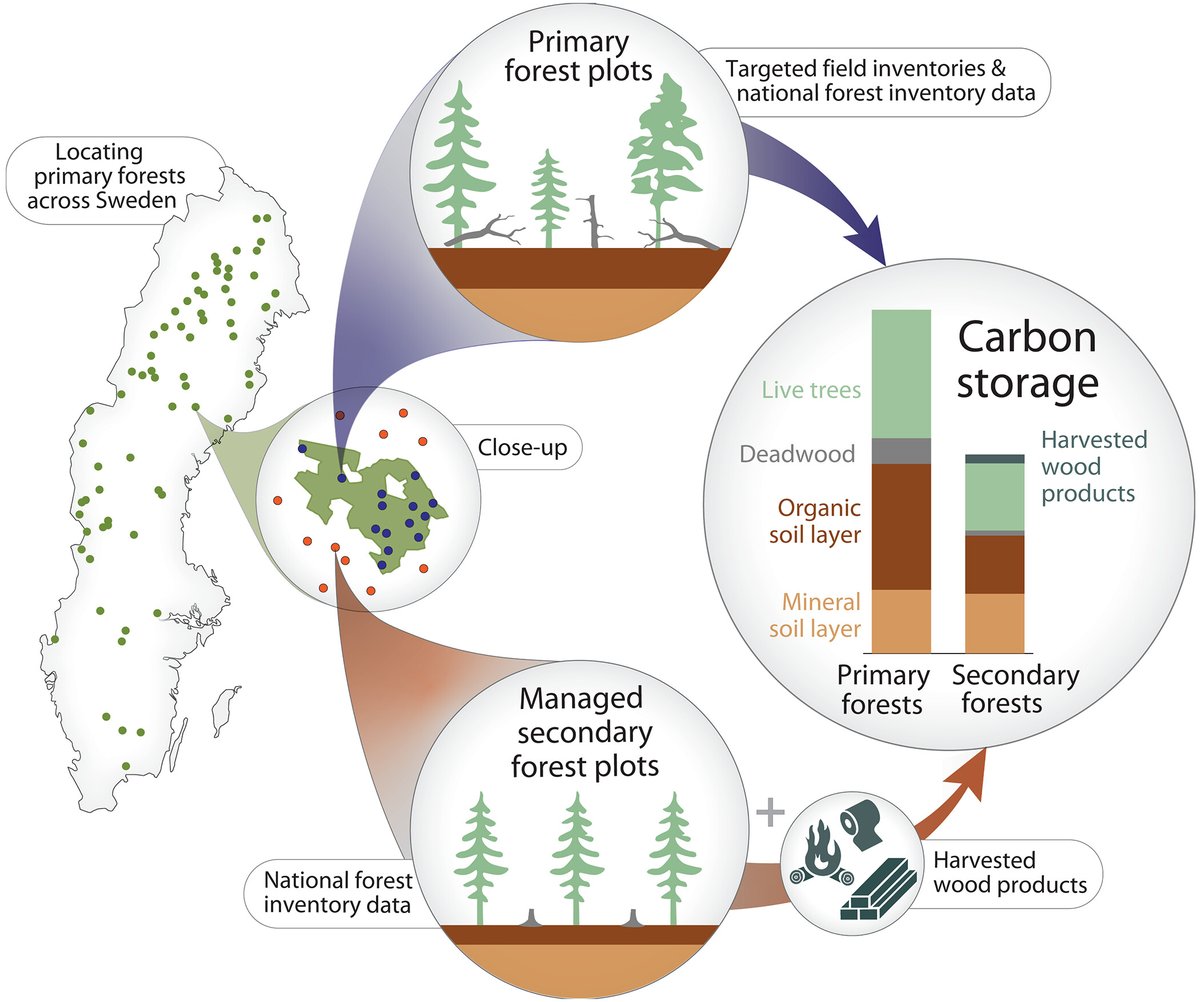
The planet’s undisturbed old-growth boreal forests may be far more important in the fight against climate change than previously realized, according to a new Science study, which finds that primary forests in Sweden store over 70% more carbon than managed secondary forests.
Learn more: https://t.co/jKr1Dgqb2D
Conservation planning experts in training ✨ The annual Spatial conservation planning course at #HelsinkiUni is well underway, led by HELICS members. Today is our second practical on using the cutting-edge Zonation 5 conservation prioritization software. Exciting stuff! 🖥️🌍🌿
Great catch-up and celebrations for a new paper out!
At today’s HELICS meeting, we had our regular catch-up, shared recent research progress, and celebrated Federico’s new paper out with oat cookies, macarons and bubbles.
Cheers!🥂
New in @PLOSONE: Our protocol for a global systematic map of the indirect drivers of biodiversity loss. Full paper: https://t.co/XPkJAfZhv9
Congrats to Federico Grossi & the team! 👏 #ConservationScience#Biodiversity (2/2)
What causes biodiversity loss? Land- and sea-use change, overexploitation, invasive species, climate change, and pollution are the direct drivers pushing species towards extinction - but what are the indirect drivers behind them? 📉(1/2)
Destroying wild ecosystems doesn't just reduce biodiversity but has repercussions for local communities losing ecosystem services and contributes to the climate disaster by eliminating these valuable carbon sinks. At HELICS we're examining the drivers behind trends like this.
Deforestation gets all the attention, but wetlands and grasslands like Brazil’s Cerrado are being converted to agriculture at four times the rate of forests worldwide. Half of the converted land becomes pasture and 27% becomes food crops. In PNAS: https://t.co/JPNzKJuWzh