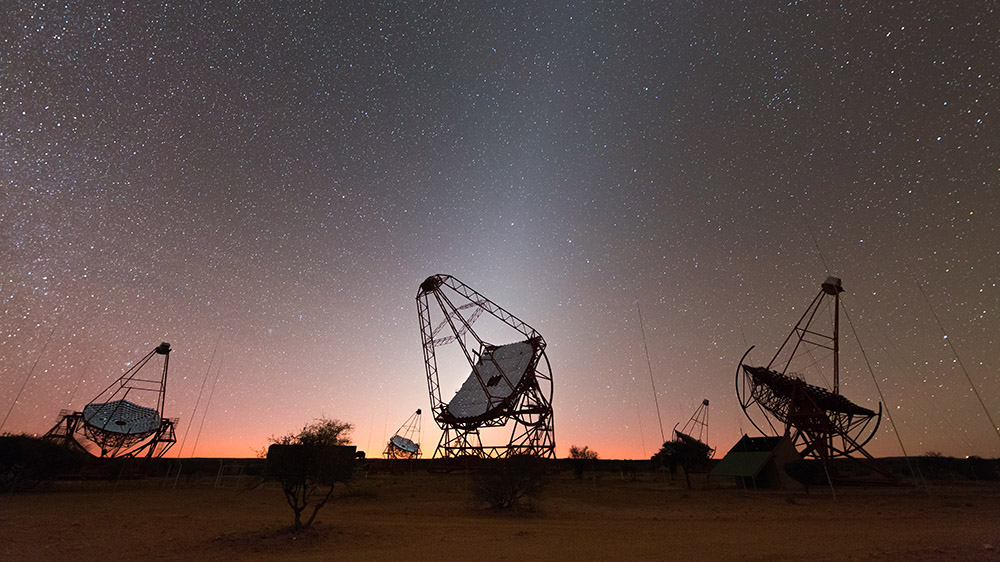
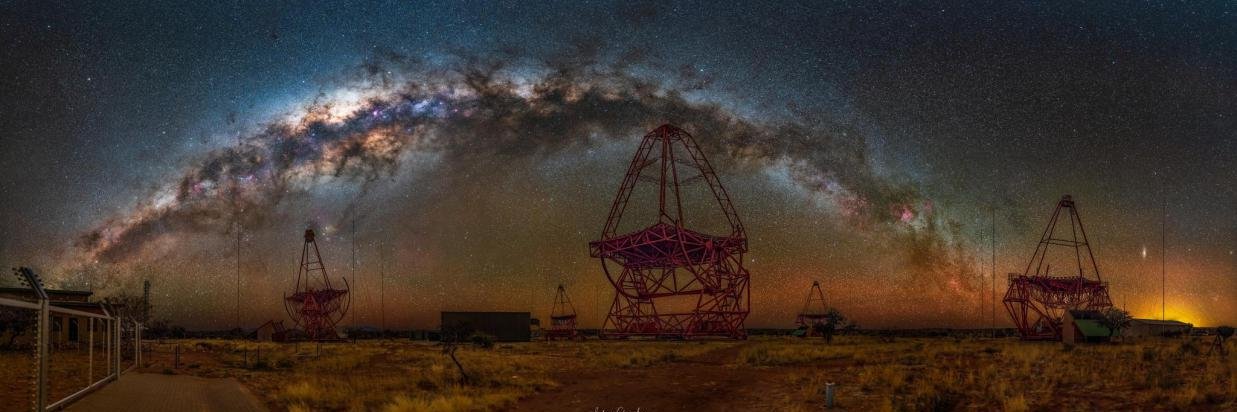
We had a great Open Day, and we hope you did too! Tag us if you have some fun photos to share of your favorite part of the telescope site. You can also find us on FB and Instagram. Come and see us again soon! 👋
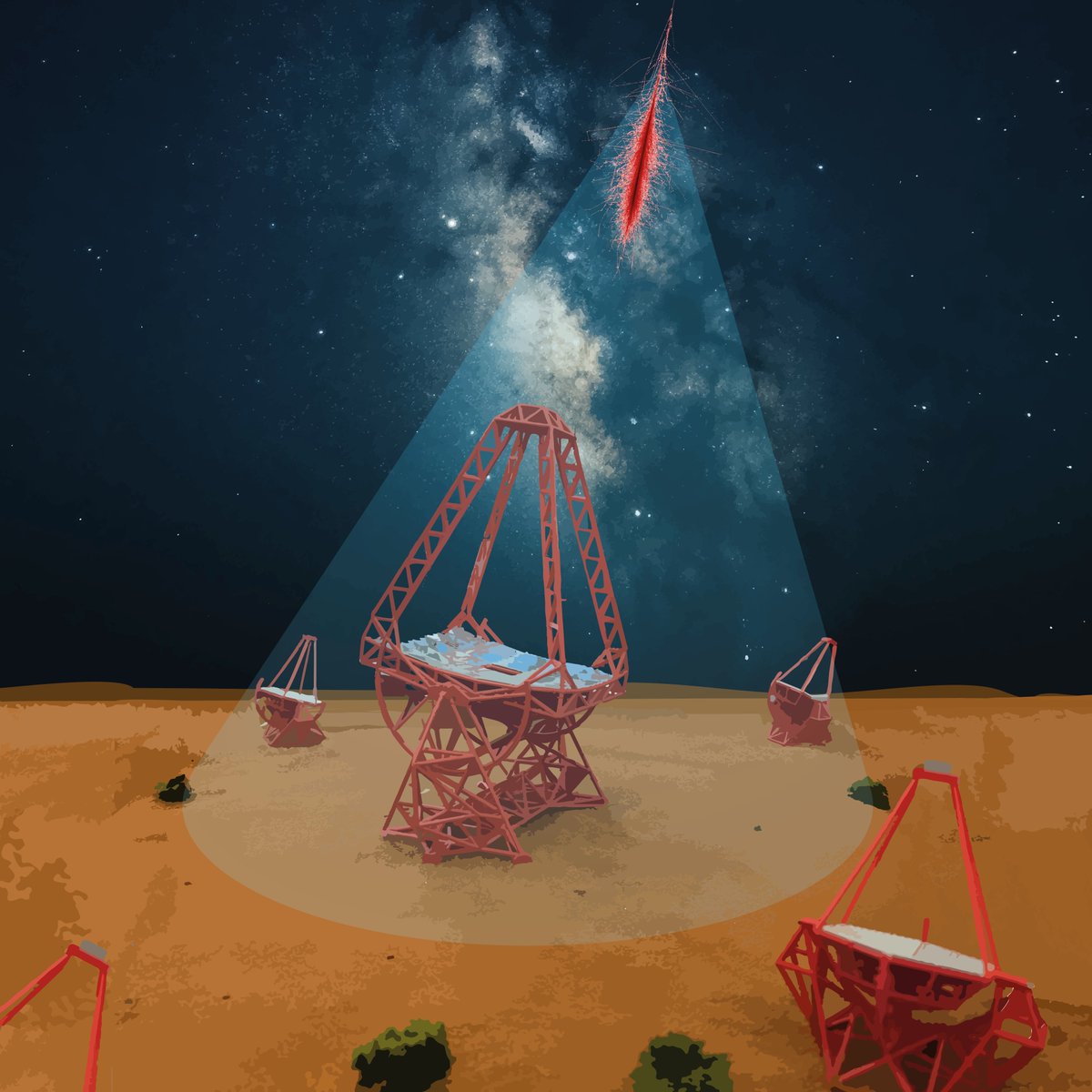
Cosmic ray electrons are often overlooked in studies of the most energetic objects in space. But the H.E.S.S. collaboration has trapped electrons with record energies, hinting at sources in the vicinity of our solar system.
https://t.co/T7q55N8yQe
El chorro que emite el microcuásar SS 433 se hace invisible poco después de salir, pero reaparece luego a decenas de años luz
Investigadores de @hesstelescopes han descubierto dónde y cómo se aceleran sus partículas cuando se vuelve a observar
✨ https://t.co/GsSIMjQ8J5
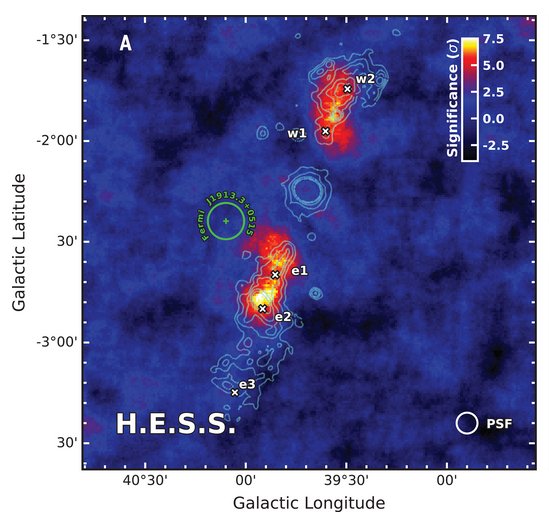
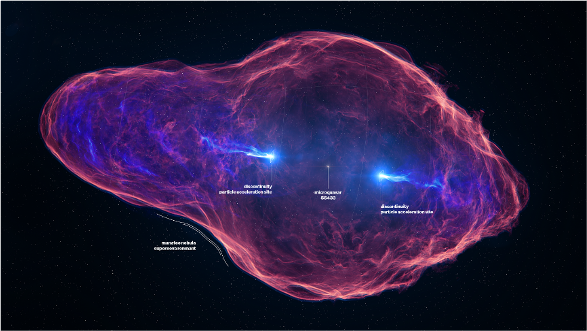
The @HESStelescopes collaboration has mapped gamma-ray emission in a microquasar. They find that particles are accelerated within the jet, about 25 parsecs from the black hole. The results have implications for the origin of cosmic rays.
https://t.co/9MnECAQ6Ad
The recent results obtained by the @hesstelescopes on the microquasar SS 433 are summarized and explained in this very cool video: https://t.co/zZRJGypi59
The paper has just been published in Science: https://t.co/qcGJtEywUD
Un accélérateur de particules des plus efficaces de la galaxie localisé par @hesstelescopes qui "flashe" des jets astrophysiques du microquasar SS433 ! https://t.co/0tcMhV6MfS
Avec le LLR @CNRS_IN2P3@CNRSIdFSud@IP_Paris_@Polytechnique dans Science https://t.co/iF4asGHRgP
✨El microcuásar SS 433 es un sistema donde un agujero negro devora a una estrella, emitiendo chorros de partículas. Ha sido estudiado por una astrofísica española y otros científicos de la colaboración internacional @hesstelescopes
🖊️ Por @enriquesinc
https://t.co/hCin5cZKgJ
New #HESSpaper alert! We have caught an astrophysical jet in a "speed trap"! 💨💨
If you want to know more, watch the cool video that @scicomlab made for us and read the thread below!✨
https://t.co/DK9PWHgtz9
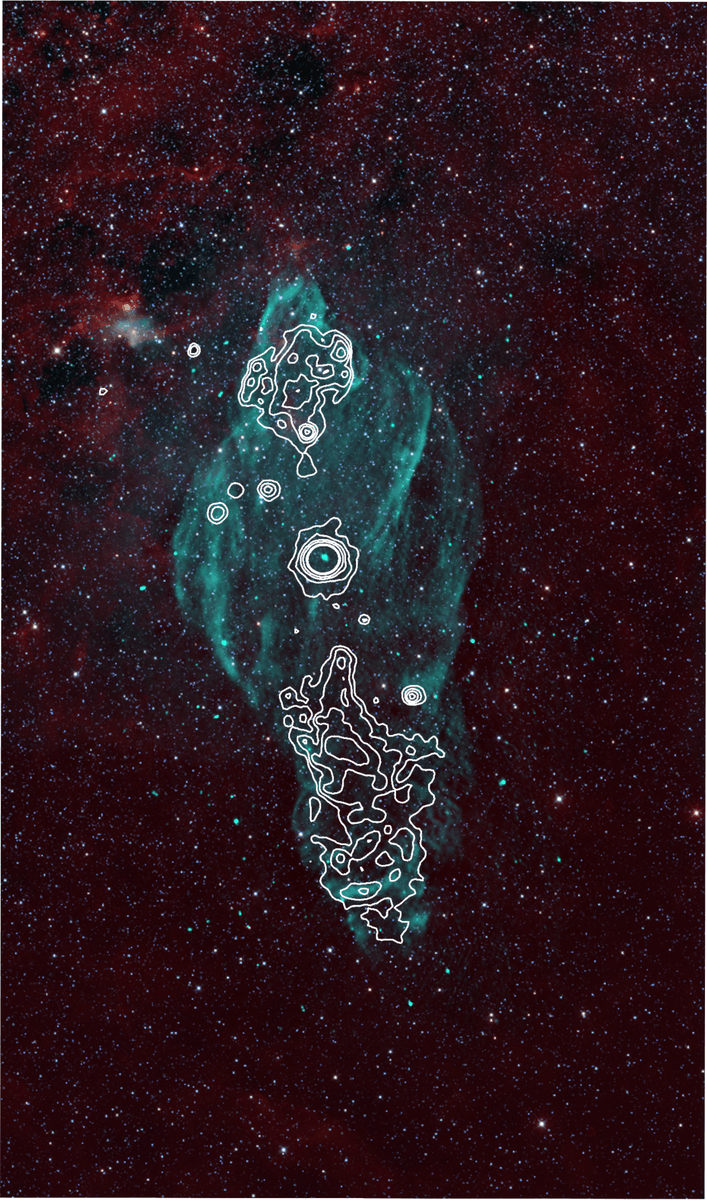
Before showing you what we found, here is a *real* image of the system. Everything above was an artist's impression.
In blue is the Manatee Nebula (you see it? 🦭), in white is the outline of the x-ray emission from the jets.
Credit: @TheNRAO@NASA
The study has been published in @ScienceMagazine, go check it out if you want to know more!
This work was led by @Olippolar, a post-doc at the Max-Plank institute for nuclear physics in Heidelberg.
https://t.co/0aODPNQaA0
Now, finally, let's look at the very high energy radiation detected by H.E.S.S.
But we first split it into three ranges of energy, increasing from left to right.
Now, this is not just interesting because of SS 433, this means that
1) Larger jets in the center of other Galaxies could accelerate particles in a similar way, resulting in the highest energy particles ever detected.
2) Microquasars can be efficient particle accelerators!
Before showing you what we found, here is a *real* image of the system. Everything above was an artist's impression.
In blue is the Manatee Nebula (you see it? 🦭), in white is the outline of the x-ray emission from the jets.
Credit: @TheNRAO@NASA