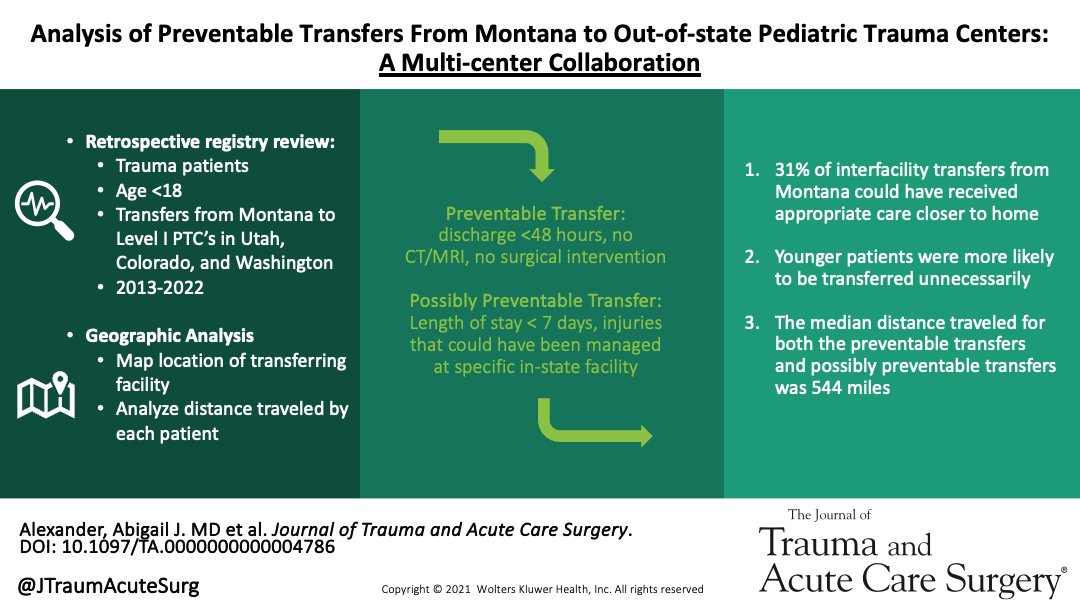
Over 30% of pediatric trauma patients who underwent long distance transfer from Montana to out-of-state Level 1 Pediatric Trauma Centers from 2013-2022 were preventable. This study highlights the need for a state-wide network to optimize care for injured children in Montana.
#JoTACS #TraumaSurg #SurgTwitter #SoMe4Surgery #MedTwitter #MedEd #EmergencyMedicine
https://t.co/C57aRzWkqU
Mortality prediction models use vital signs to help benchmark hospital performance. The use of prehospital blood can improve vital signs on presentation and affect mortality prediction. Patients who receive prehospital blood are more likely to defy mortality prediction estimates.
@bryanacotton1, @mikevangent1, @UTHealthACS, @mercy_trauma
https://t.co/NIwTBbtBPA
A 32-year-old Little Rock mother survived being crushed by a massive falling tree in April this year, and returned to UAMS on Monday to thank the first responders and medical team who saved her life. https://t.co/L5b4bv5erQ
Our review demonstrates that in exsanguinating trauma, delaying intubation to focus on rapid hemorrhage control and balanced transfusion improves survival. #TraumaCare#CAB#HemorrhageControl@pferrada1@InovaHealth
https://t.co/yCP0ybozgj
Rural setting, Patient/Family Hospital Choice, & Falls were strong predictors of undertriage among injured patients meeting high-level triage criteria. Criteria was recognized in >2/3 of rural patients with under triage happening for other system factors.
https://t.co/TOQw2zAsNA
This work presents new findings on the association between EMS level of training (Advanced Life Support vs Basic Life Support) in the prehospital sphere & mortality outcomes in trauma patients. We show an association with ALS level of training & survival
https://t.co/Z9llOO94bC
Changes have occurred in the resuscitation of trauma patients due to a better understanding of trauma-induced coagulopathy. Prehospital, in-hospital transfusions & adjuncts such as TXA, PCC, Calcium, & Fibrinogen/Cryo are now being used.
@RaulCoimbraMD
https://t.co/kK8Soitchk
Changes have occurred in the resuscitation of trauma patients due to a better understanding of trauma-induced coagulopathy. Prehospital, in-hospital transfusions & adjuncts such as TXA, PCC, Calcium, & Fibrinogen/Cryo are now being used.
@RaulCoimbraMD
https://t.co/kK8Soitchk
Great article on Ambulance Patient Offload Delays w/solutions. https://t.co/hKy5Kup7XV
Read the NEMSAC Advisory on this topic w/ 13 recs to the federal govt on how to fix this crisis w/ public comment open now! No doubt will be a hot topic at #NAEMSP2025. https://t.co/sPBkSc6COn
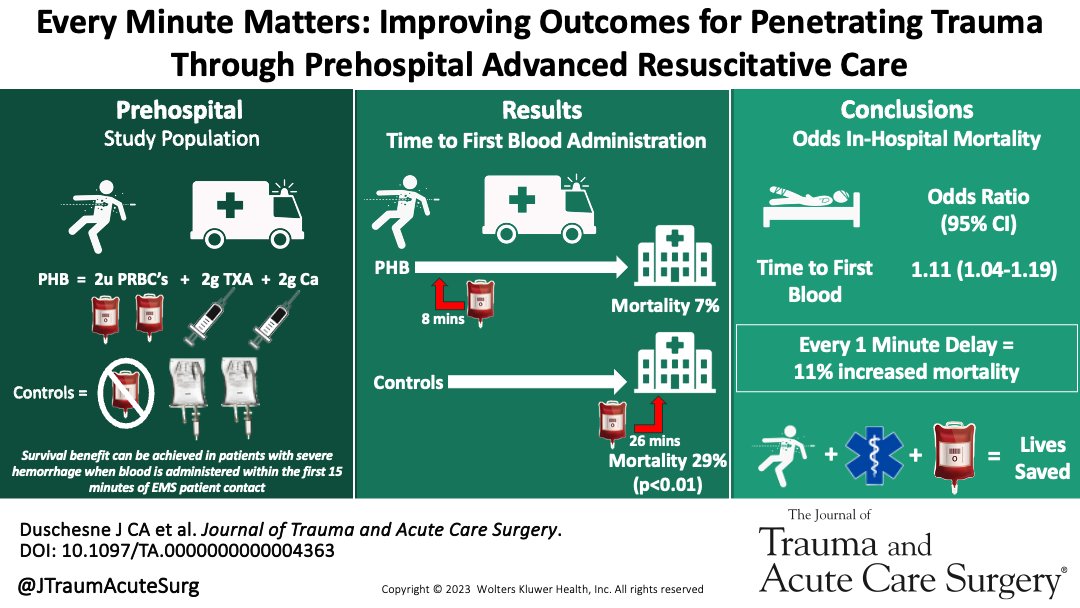
Our data suggest that prioritization of prehospital transfusion improves survivability in patients with severe hemorrhage despite a modest increase in transport time.
@Tulane_Surgery@MarkPiehl@JakeBroome
https://t.co/7UZpIElL1J
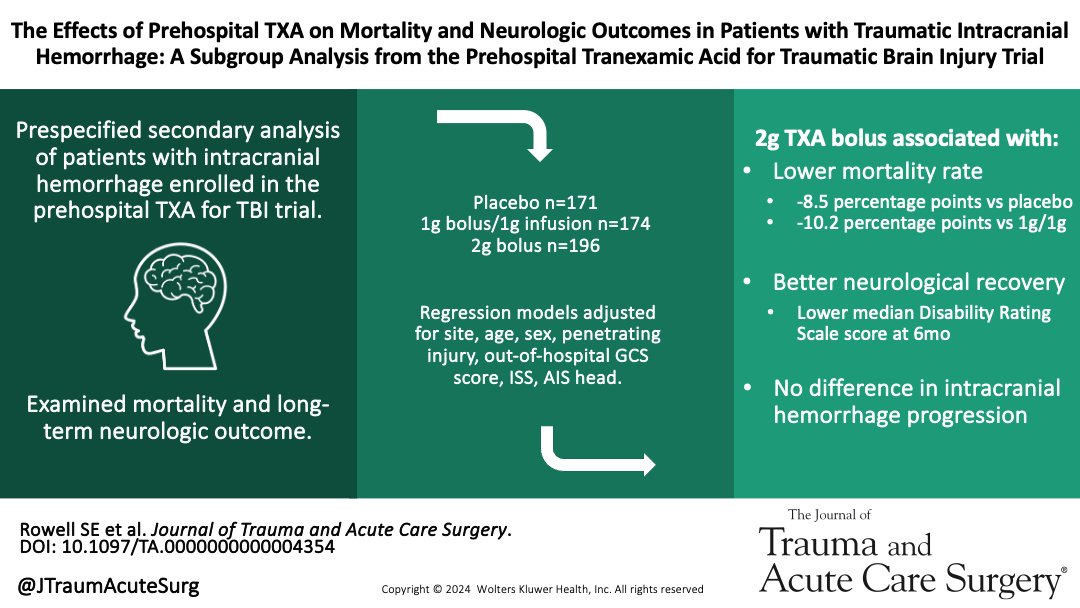
In this prespecified subanalysis of the Prehospital TXA for TBI trial, an association between a 2g prehospital TXA bolus and decreased mortality in patients with intracranial hemorrhage was identified #TBI#TXA@SusanRowellMD
https://t.co/M90NoVQqpJ
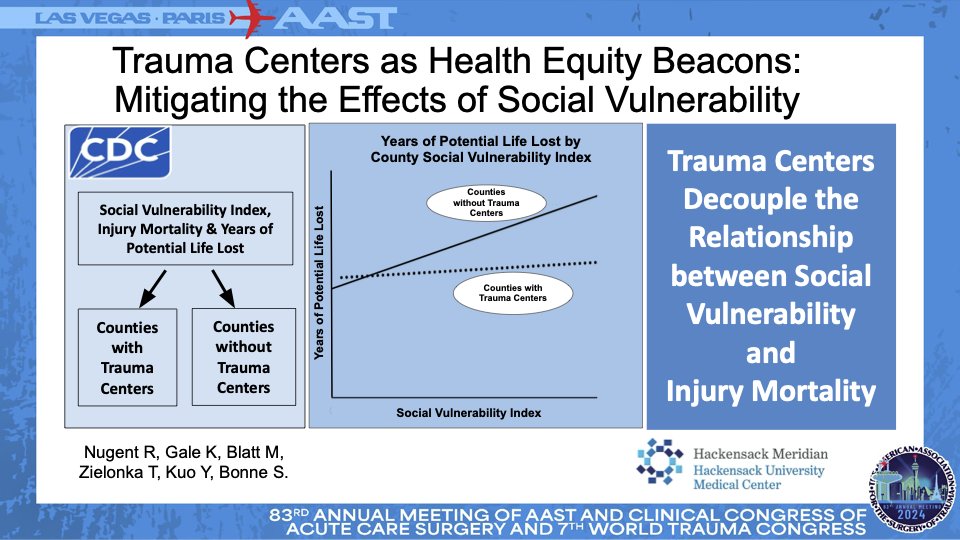
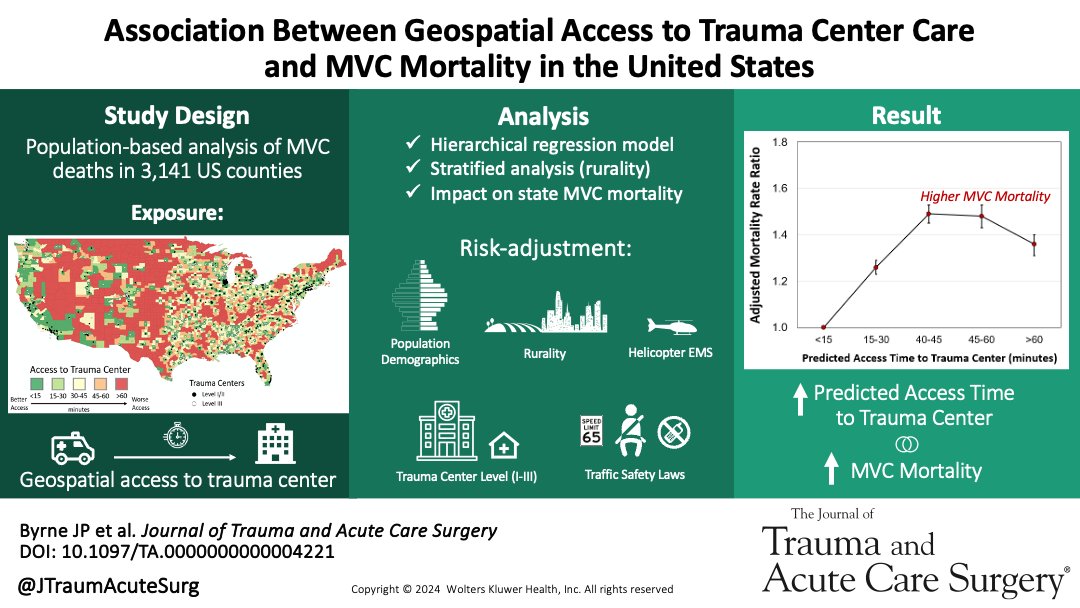
The presence of trauma centers are key components of health equity, and save the lives of patients in at risk communities. When a county has a trauma center, the negative affects of social vulnerably are mitigated.
@scrubbedin@HMHNewJersey@HMHSchoolofMed
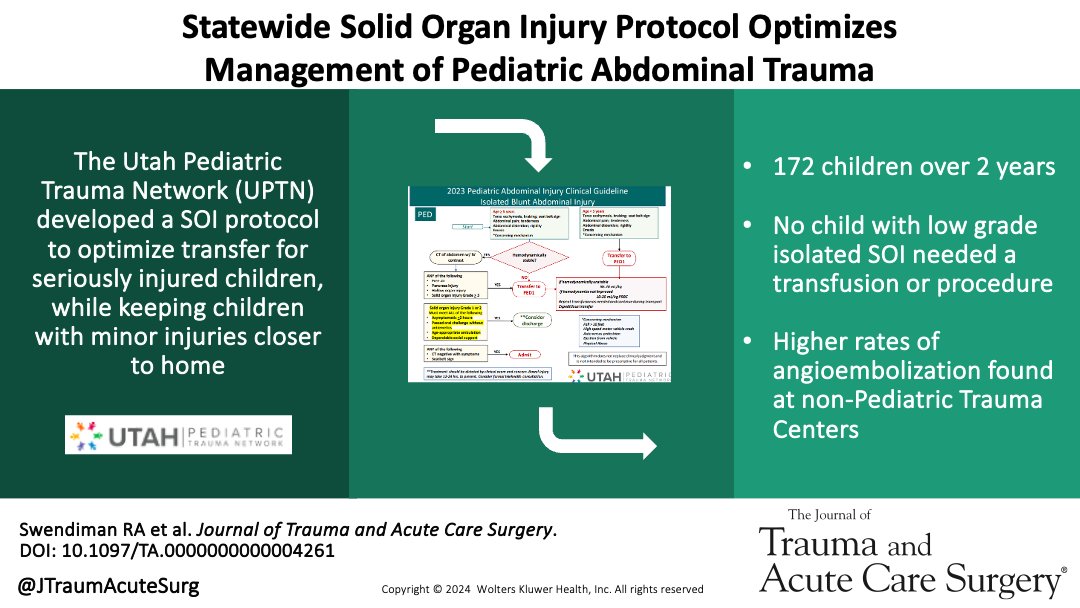
The Utah Pediatric Trauma Network successfully implemented abdominal injury guidelines, allowing non-pediatric hospitals to safely admit children with low grade solid organ injuries, while standardizing pediatric triage for blunt abdominal trauma in Utah.
https://t.co/ALhYj26hN8
@theEMSsiren@nitrok70@rbarishansky Some resources:
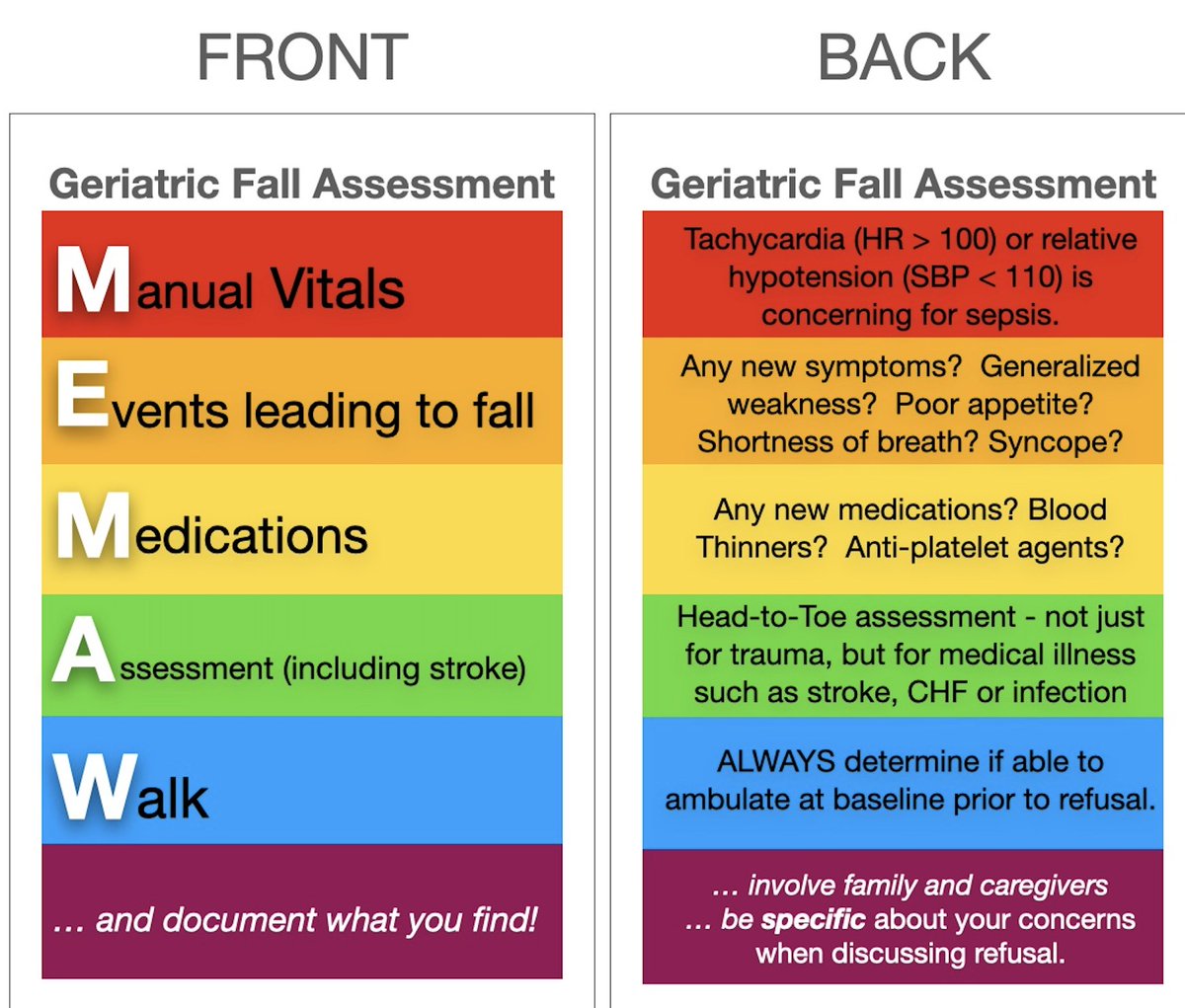
1) educational resources on geriatric fall assessment (and some lift assist data discussion): https://t.co/7ilUC21Cte
2) The MEMAW assessment (the result of a local mneumonic contest won by Dave DeCanzio):
Read the NEW Military Supplement article “Who needs a tourniquet? And who does not? Lessons learned from a review of tourniquet use in the Russo-Ukrainian war” 🏥🩺
All Supplement Articles are Open Access
#militarymedicine#Medx#MilitarySurgery#MedEd
https://t.co/N6vIAdwStu
Read the NEW Military Supplement article “Red line the red line: Optimizing emergency medicine physicians and surgeons collaborative roles on trauma teams” 🏥🩺
All Supplement Articles are Open Access
#militarymedicine#Medx#MilitarySurgery#MedEd
https://t.co/GQw7ynWT60
This summary presents the major findings of the National Trauma Research Action Plan. Knowledge gaps regarding injury prevention & the optimal care of injured patients were identified. A prioritized framework and tools are provided to support researchers.
https://t.co/f1mtzaJIod