Anthropic CEO Dario Amodei:
"The cheapest way to use Claude is also the smartest. Most devs do the exact opposite"
this is one of the best interviews I've seen in a long time
in this interview he breaks down exactly how a system changes everything:
- the memory and context features that turn Claude into a second brain
- the knowledge architecture most users don't know Claude can build
- the integration layer that connects Claude to your actual workflow
- why typing one question at a time is the most expensive way to use Claude
if you've been using Claude for months and still start every conversation from scratch with zero context, you don't have a Claude problem. you have a system problem
instead of another show tonight, watch this
make sure to bookmark it before it gets lost in your feed
full guide in the article below
Jeff Bezos asked a room to imagine going back a hundred years.
When almost everyone was a farmer.
And telling those farmers that in 2018 there’d be a job called “massage therapist.”
Bezos: “They would not have believed you.”
Then a friend took it further.
Bezos: “Forget massage therapist, there are dog psychiatrists.”
He looked it up.
Bezos: “Sure enough, you can easily hire a psychiatrist for your dog.”
The room laughed.
The point under the laughter wasn’t funny at all.
Every time a major technology shift hits, we do the exact same thing.
We count the jobs it will destroy.
We never count the ones it will create.
Because we can’t.
They don’t have names yet.
The fear is always specific.
AI will replace accountants. AI will replace radiologists. AI will replace drivers.
The fear has job titles and timelines and projections.
The opportunity has none of those things.
Because you can’t name what doesn’t exist yet.
A farmer in 1920 could understand losing his job to a tractor.
He could not understand gaining a career as a social media strategist.
Not because he lacked intelligence.
Because the entire chain of inventions between his world and that job hadn’t been built yet.
Radio. Television. The internet. Smartphones. Social platforms. Creator economies.
Every single link in that chain had to exist before “social media strategist” could even be a sentence.
That’s where we are with AI right now.
Everyone is staring at the tractor.
Nobody can see the thing seven inventions away that doesn’t have a name yet.
The fear is loud because it fits inside language we already have.
The opportunity is silent because it doesn’t.
Every technological revolution in history created more jobs than it destroyed.
Every single one.
Not because anyone planned it.
Because human needs expand faster than machines can fill them.
We didn’t need massage therapists when we were breaking our backs on farms.
We needed them after machines freed our backs and stress replaced labor.
The demand didn’t disappear.
It migrated somewhere no one was looking.
That is exactly what’s happening right now.
The jobs AI creates won’t make sense to us yet.
They’ll sound as absurd as “dog psychiatrist” would’ve sounded to a farmer in 1920.
Until someone is running a $200 hourly practice with a six-month waitlist.
The entire conversation right now is about what we’re about to lose.
Nobody is talking about what we’re about to gain.
Because the gains don’t have vocabulary yet.
A hundred years from now, someone will stand on a stage and describe the jobs we couldn’t imagine today.
And the audience will laugh.
The same way we just did.
Inversion is the most powerful thinking tool most people never use correctly.
They invert the goal. They don't invert the system.
I turned Claude into a full inversion engine that runs Charlie Munger's method on any problem mapping every path to failure so precisely that the path to success becomes obvious by elimination.
Here are the 5 prompts:
R.I.P. spending 10+ hours in Premiere Pro
Grok can now create complete video scripts, storyboards, shot lists, editing decisions, B-rolls and color-grade instructions in under 2 minutes.
Use these prompts instead and cut your editing time massively 👇👇
How to Finally Get Your Sh*t Together In Just 20 days
CLEAN THE MESS 🧹
1. Clean your room top to bottom. That mess isn't just physical - it's your mental state in visible form.
2. Open your bank app and actually look. You can't fix what you refuse to face.
3. Delete 1000 photos you'll never look at again. Your phone is a museum of clutter. Close it.
4. Unsubscribe from every email that sells you things you don't need.
5. Make a list of everything you've been avoiding. That pile of "later" is why your chest is heavy at 2AM.
FIX YOUR HEAD 🧠
6. Journal what's actually wrong. Not "I'm stressed." Go deeper. Vague problems create vague lives.
7. Admit one lie you keep telling yourself. "I'm fine" is probably the first one. Replace it with truth.
8. Set 3 goals for March. Not 30. Not a vision board. Three. Clear. Specific. Achievable.
9. Write your non-negotiables. Sleep. Workout. No phone before 8AM. Treat them like laws not suggestions.
10. Stop consuming start thinking. 50,000 reels since January and you remember maybe 10. Your brain is drowning not growing.
BUILD THE SYSTEM ⚡
11. Plan your week every Sunday night. 15 minutes of planning saves 15 hours of panic.
12. Create a 30-minute morning routine. Water. Move. Journal. Not aesthetic. Just consistent.
13. Set a bedtime alarm at 10PM. Your morning routine is only as good as last night's sleep.
14. Batch your tasks. Emails at one time. Deep work at one time. Switching between tasks is multi-failing.
15. Automate one thing this week. Auto-save. Auto-pay. Meal prep. Fewer decisions. Better life.
TAKE CONTROL 🔥
16. Have the conversation you've been rehearsing in the shower for weeks. Speak or keep suffocating.
17. Set one boundary that makes someone uncomfortable. Your peace is worth more than their convenience.
18. Cut one distraction completely. Not "reduce." Cut. Delete the app. Leave the chat. Block the noise.
19. Move your body daily. Not for a glow-up photo. For the anxiety sitting on your chest pretending to be laziness.
20. Look in the mirror tonight and ask - "If March was my last chance to get it together would I be proud of today?" If the answer is no - good. You still have 31 days. But not one more excuse.
🔥EARLY RETIREMENT LIFE HACK: HOW TO BUY $1 MILLION WITH $100,000🔥
Alright, listen closely, because this is the part of the simulation where your uncle calls you a “degenerate gambler” while he proudly contributes 6% to a 401(k) invested in 14 different flavors of S&P 500 index fund, then wonders why eggs cost $11.
Step 1: Borrow $100,000 USDC on Morpho around 2.87%.
That’s about $2,870 a year in interest, which is basically one dental emergency, or half a Target run if you have free will issues.
Step 2: Take that $100,000 and buy STRK at $78.34.
That gets you roughly 1,276.49 shares of STRK.
You are now the proud owner of a security that exists because finance people looked at the human soul and said, “How can we wrap this into a coupon?”
Step 3: STRK yields about 10.21% effective.
On $100,000, that’s roughly $10,210 per year in cash distributions.
So you’re paying $2,870 to borrow the money and collecting $10,210 for holding the thing you bought with it.
That spread is your carry.
Your carry is your emotional support animal.
Your carry is the tiny accountant living in your walls going, “Technically this is positive.”
Net carry: 10.21% − 2.87% = 7.34%.
That’s about $7,340 a year in “free cashflow” before taxes, rate changes, the universe, and your personal talent for suffering.
Now the part that melts brains.
Step 4: Refinance the carry into MSTR.
Meaning, you take that $7,340 a year and you buy MSTR with it over and over. Like a little robot that converts interest spreads into pure chaos.
Meanwhile, the STRK itself has a conversion feature: 1 STRK → 0.1 shares of MSTR.
So after 10 years, if you convert:
1,276.49 STRK → 127.65 shares of MSTR.
If Saylor is correct and we see a Bitcoin CAGR of 30% over the next ten years, MSTR's amplification will mean a ~37.5% CAGR for 10 years.
That implies MSTR goes from $129 today to about $3,116 in 10 years.
Yes, it sounds insane. That’s why it’s on-brand.
So your conversion pile alone becomes:
127.65 shares × $3,116 ≈ $397,771.
Cool, right. Cute. Respectable. A nice little “I stopped drinking soda” kind of gain.
But the carry reinvestment is where the demon lives.
If you recycle that net carry into MSTR every year, under that same growth assumption, you end up with roughly:
~220.6 additional MSTR shares accumulated from the carry buys.
Total MSTR shares at the end:
127.65 (conversion) + 220.6 (carry DCA) ≈ 348.3 shares.
Value in year 10:
348.3 × $3,116 ≈ $1,085,000.
Congrats, your spreadsheet just produced a seven figure outcome using a hundred grand of borrowed stablecoins and a security named like a Star Wars droid.
Now pay the piper. You still owe the principal:
If you repay just the $100,000 at the end, your rough net is $985,000.
If you let interest accrue at 2.87% the whole time, debt becomes about:
$132,705, leaving you around $952,000 net.
So yeah, that is the “buy a million with a hundred grand” story arc.
YOU'RE WELCOME.
A Chinese doctor broke the internet showing how to reset your face with just your hands 💆
‣ Reduce swelling
‣ Lift relaxed muscles
‣ Shape your face naturally no tools no needles
Iran is being bombed right now. This isn't a thought experiment anymore.
A father in Tehran just watched missiles hit his city. His family needs to flee. He has savings. He has gold. He has a bank account. He can't use any of it.
Missiles hitting Tehran. Ministry of Intelligence. Ministry of Defense. IRGC headquarters. 24 provinces under attack.
Supreme Leader evacuated. Cell networks down. Supermarkets stripped bare. Gas station lines for blocks.
If you're an Iranian with wealth how do you access it right now?
Gold? Walk through a warzone carrying metal. Get it confiscated at the first checkpoint. 5,000-year store of value. Completely useless to you today.
Silver? Even worse. You'd need a truck to carry your life savings.
Fiat? The rial was already collapsing before the bombs. Banks closed. ATMs offline. Cell networks down so digital payments don't work. Capital controls incoming within hours. Your government decides if you can touch YOUR money — and your government is currently being bombed.
Real estate? Can't move it. Might have a crater in it.
Stocks? Custodial assets held by institutions whose command and control infrastructure is on fire.
Bitcoin: 12 words in your head.
No vault. No bank. No custodian. No weight. No checkpoint can detect it. No government can freeze it. No bomb can destroy it.
Walk across any border with your entire net worth stored in memory. Open a laptop in Türkiye, Dubai, Berlin. Enter 12 words. Your wealth is there. Intact.
No other asset in human history has had this property.
The insight most people miss:
Bitcoin is the first asset where the bearer instrument is knowledge itself.
Gold is an atom. A dollar is paper. A deed is a document. All require physical custody or institutional trust.
Bitcoin is information. The first time in 10,000 years of commerce that wealth can exist as pure thought weightless, borderless, indestructible.
Every monetary system requires trust in institutions. What happens when those institutions are being struck by precision munitions?
Bitcoin's institution is mathematics. Distributed across 100+ countries. No building to bomb. No server to destroy. No leader to evacuate.
SHA-256 doesn't care about geopolitics.
Right now an Iranian with Bitcoin can send value to family in Türkiye in 10 minutes.
An Iranian with gold is trapped. An Iranian with rials is watching their purchasing power evaporate with no banking system to access what's left.
Bitcoin wins because it's the only money that works when everything else breaks.
The strongest bull case for Bitcoin isn't on a chart. It's on the news. Right now.
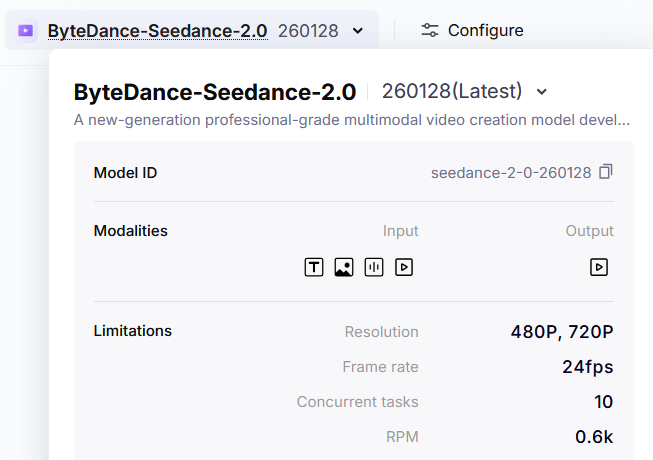
how to use seedance 2 early:
seedance 2 is by far the best video model on the market
right now but it doesn't officially release until feb 24th
here's how to use it before everyone else
it's already available on bytedance's playground
go to the link below, create an account, and start using it directly
https://t.co/IOyO2VnGLq
Strategy didn’t report earnings. It reported whether it survives the next cycle.
Post-earnings call thoughts on $MSTR.
What mattered wasn’t EPS, but balance sheet durability, dividend coverage, and capital markets access heading into 2027–28.
Also worth saying: the YouTube stream was excellent.
60k+ people tuned in, strong questions, and real debate from analysts like @LynAlden and @Fundstrat. This felt more like a capital markets forum than a corporate earnings call.
What actually mattered:
• 713,502 $BTC held as permanent capital
• ~$2.25B USD reserve, covering ~2.5 years of preferred dividends
• Preferred and convert obligations clearly mapped
• No near-term refinancing cliffs
• Capital markets access still open
This is a far more durable balance sheet than the stock price implies.
Trading around NAV isn’t a call on Bitcoin.
It’s the market stress-testing whether Strategy’s issuance flywheel can carry through the 2027–28 refinancing window.
One underappreciated moment on the call: quantum risk. Management didn’t wave it away. They treated it like a long-dated tail risk that’s solvable via protocol upgrades and coordination. That’s institutional thinking.
Zooming out, Strategy isn’t positioning itself as leveraged BTC.
It’s positioning itself as a Bitcoin-native digital bank: issuing credit across the yield curve, dampening volatility for income investors, and converting fiat liabilities into long-duration BTC exposure.
Around-NAV pricing tells you the market is undecided, not bearish.
If the flywheel proves durable, the premium returns.
I just published a deeper breakdown on how this model works, where it breaks, and why this call mattered more than the headlines.
🔥MSTR IS CRASHING! SAYLOR LIQUIDATED SOON!?!?🔥
NO.
THIS VIDEO IS A PUBLIC EXECUTION OF THE LIQUIDATION MYTH.
The bears are squealing again.
Bitcoin dips below $74k and suddenly every couch economist on Twitter is screaming that Strategy is going to margin call itself into oblivion like it's 2022 and Saylor just downloaded the FTX app.
I cover:
- Why Strategy’s balance sheet is a nuclear bunker made of Bitcoin
- How their convertible debt stack is literally free money
- What “perpetual preferred equity” actually means (spoiler: it's never due, you mouthbreathers)
- And the three questions that vaporize the bear thesis in under 60 seconds
If you're still tweeting "MSTR bad because debt," you should legally be required to wear water wings in public:
Elon Musk explains his 5-step algorithm for solving any problem:
"The most common mistake of smart engineers is to optimize a thing that should not exist."
"I have this very basic first principles algorithm that I run as a mantra."
Elon breaks it down:
Step 1: Question the requirements.
"Make the requirements less dumb. The requirements are always dumb to some degree, no matter how smart the person who gave you those requirements. You have to start there, because otherwise you could get the perfect answer to the wrong question."
Step 2: Try to delete it.
"Try to delete the part or the process step entirely. If you're not forced to put back at least 10% of what you delete, you're not deleting enough. Most people feel like they've succeeded if they haven't been forced to put things back in. But actually they haven't, they've been overly conservative and left things in that shouldn't be there."
Step 3: Optimize or simplify.
"The most common mistake of smart engineers is to optimize a thing that should not exist. So you don't optimize until after you've tried to delete."
Step 4: Speed it up.
"Any given thing can be done faster than you think. But you shouldn't speed things up until you've tried to delete it and optimize it otherwise, you're speeding up something that shouldn't exist."
Step 5: Automate.
"And then the fifth thing is to automate it."
Elon explains why the order matters:
"I've gone backwards so many times where I've automated something, sped it up, simplified it, and then deleted it. I got tired of doing that. So that's why I have this mantra."