After exposing the Rachel Notely Doctor that is charging her patients $4,000/family all to make Danielle Smith look bad, she has gone into hiding. I encourage everyone to ask her about it. https://t.co/IHeZWniUn7
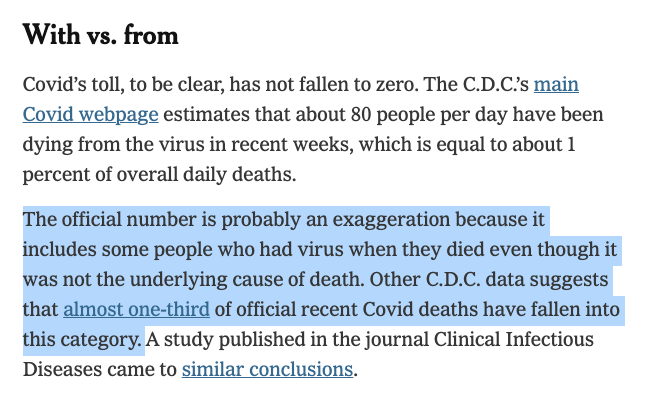
After relentlessly calling it a "conspiracy theory", New York Times and CDC now admit:
Authorities overcounted COVID deaths and overhyped the pandemic.
About 1/3 of "official" COVID deaths, or hundreds of thousands of deaths, were not due to COVID.
https://t.co/MLj6Dx0D0X
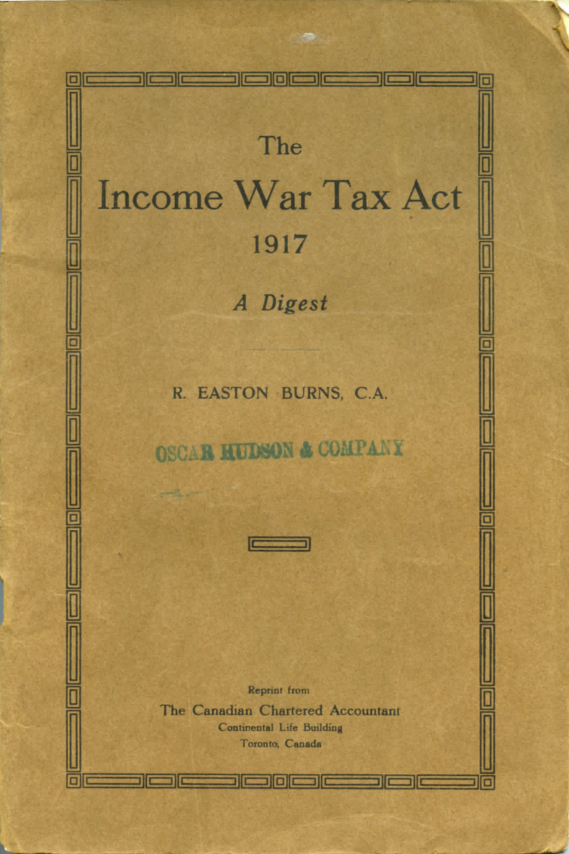
1917 for Canadians. History matters. Learn it.
Most Canadians don't realize this, but before 1917 there was no such thing as an Income Tax. It was imposed on the Canadian people at that time as a temporary measure to pay for the War.
Believing that politicians had any legitimate claim to confiscate any portion of a person's productive income just wasn't a reality at that time. it would have been considered tyrannical to do so back then.
#TaxationIsTheft
https://t.co/0Vegaifzrz
However, as we can clearly see over 100 years later, Canadians have come to not only accept forced income redistribution, but at vastly higher levels than back then. Nowadays, the typical Canadian family is forced to pay more in taxes than they spend on the necessities of life.
When governments strive to gain more power over the people, it is never a temporary act that goes away. In light of the massive power grab by the federal and provincial governments as a response to COVID-19, I don't see Canadians truly gaining all those freedoms lost once again. I do hope to be proven wrong, but based on how Canadians have acted so far, after a full year of this madness, it's not looking good.
A little history on The Income War Tax Act of 1917.
A Temporary Wartime Measure? Income Tax
The First World War placed an unprecedented drain upon the financial resources of the Dominion of Canada. To better utilize Canada's finite resources, every aspect of supply was regulated by the Dominion Government. Rationing was introduced for everyday items from building materials to gasoline, to food. The government, limited in the ways that new revenue could by gained, also issued wartime savings bonds, raised import tariffs and levied new wartime taxes.
A luxury tax on tobacco and alcohol was the first of many taxes to be introduced during the Great War. By 1915, a Dominion tax had also been imposed on transport tickets, telegrams, money orders, cheques and patent medicines. Even staple items, such as tea and coffee, were taxed by the end of the War. After initial goods and services taxes were introduced, the Dominion Government moved to tax the incomes of businesses. The Business Profits War Tax Act of 1916 required all Canadian corporations having $50,000, or more, in capital to file a yearly tax return.
Personal income tax, introduced under the Income War Tax Act of 1917, was conceived -- like the other wartime taxes -- as a temporary measure. This act both expanded the scope of the Business Profits War Tax and introduced a tax based on yearly income to most Canadians. Those individuals who were exempt from the tax included the Governor General, foreign consuls, and those who were on active service overseas. Married Canadians with an income below $2,000, or unmarried Canadians with an income below $1,000 were also exempt from filing a tax return. Under the Income War Tax Act, eligible tax payers that did not submit a tax return were fined $100 per day with a maximum penalty of $10,000. This was an incredible fine considering, for example, that an annual married income of $3,000 was only expected to pay $20 in income tax!
Paxlovid: 44 severe drug interactions - including statins, contains an HIV drug with a black box warning, toxic to liver and kidneys, poorly tolerated due to metallic taste, increased risk of rebound infection. Wonder why the study ended early?
https://t.co/uZ24qr77zH
This report from the Center for Disease Control in the US clearly shows that the decline in disease was due to clean water systems and sanitation — NOT vaccines. This report was written before the CDC became grossly intertwined with the pharmaceutical industry.
https://t.co/m47rWaae5e…
“American drinking water supplies are among the safest in the world. The disinfection of water has played a critical role in improving drinking water quality in the United States. In 1908, Jersey City, New Jersey was the first city in the United States to begin routine disinfection of community drinking water. Over the next decade, thousands of cities and towns across the United States followed suit in routinely disinfecting their drinking water, contributing to a dramatic decrease in disease across the country (Fig 1).”
*Sanitation & Hygiene* are thank for decline in disease not vaccines as seen below. 👇🏾