Four years' work, 178 billion sequencing reads, and nearly 5 million cells went into constructing atlases of gene expression and chromatin accessibility in human development, out now.
First foray into single cell genomics, first postdoc paper, first tweet! Excited to share our human cell atlas of fetal chromatin accessibility, a very fun collaboration with @JShendure@ahill_tweets Riza Daza @cusanovich and others. https://t.co/YRzd4zdtpF (1/5)
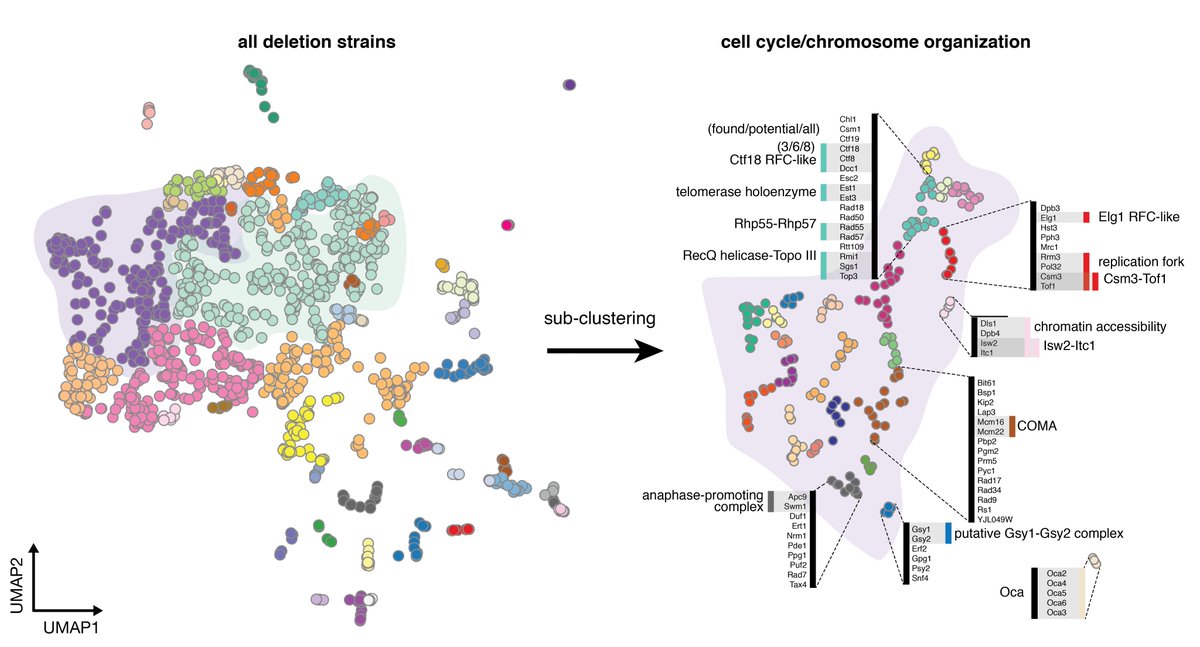
Happy to report that our paper on using UMAP to analyze many mutants is now out in Nature Communications https://t.co/XhEPIfPhMl; we used UMAP to group transcriptomes of >1000 single-gene deletions of yeast and were able to group pathways, protein complexes, and interactions.
As the molecular team behind the @seattleflustudy, @debnick60 and I are excited to begin COVID-19 community testing in partnership with @KCPubHealth through #SCANCOVID https://t.co/7t0fdJQ6Xg Resources and thread 1/8
Thanks to @seattleflustudy and @UWVirology, we have new genomic data on the spread of #COVID19 in Washington State with 2 new #SARSCoV2 genomes sequenced today, bringing the total number of WA genomes to five. 1/8
Thanks to rapid global data sharing of #SARSCoV2 genomic data via https://t.co/tbVb4MAGpy, we can reconstruct large and small scale patterns of #COVID19 spread. This is a thread discussing this intersection of large and small. 1/7
Our paper studying how to infer gene regulatory networks based on single-cell RNA-seq data is out today in Cell Systems: https://t.co/r5Q9zTWuvZ. Led by @Xiaojie_Qiu and Arman Rahimzamani from @sreeramkannan's group. We explore the limits of current tech for network inference.
The team at the @seattleflustudy have sequenced the genome the #COVID19 community case reported yesterday from Snohomish County, WA, and have posted the sequence publicly to https://t.co/tbVb4MAGpy. There are some enormous implications here. 1/9
The new paper from @lkpino and @MacCossLab has been really impactful on my work. Easily drawing full calibration curves for every peptide in a proteome has completely changed collaborator conversations where they insist proteins are present or absent! https://t.co/jwgs5giZji
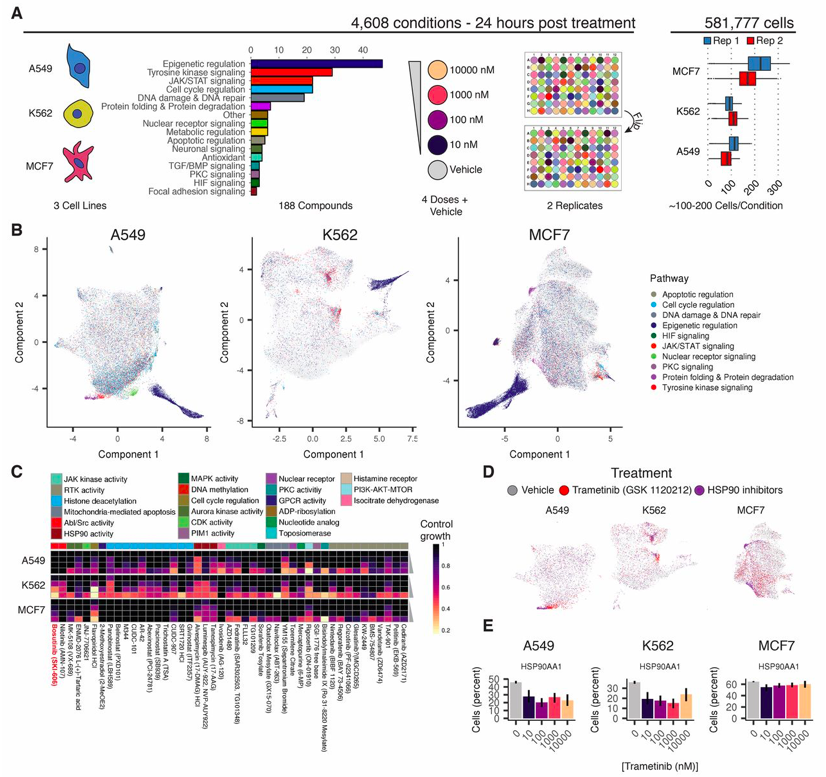
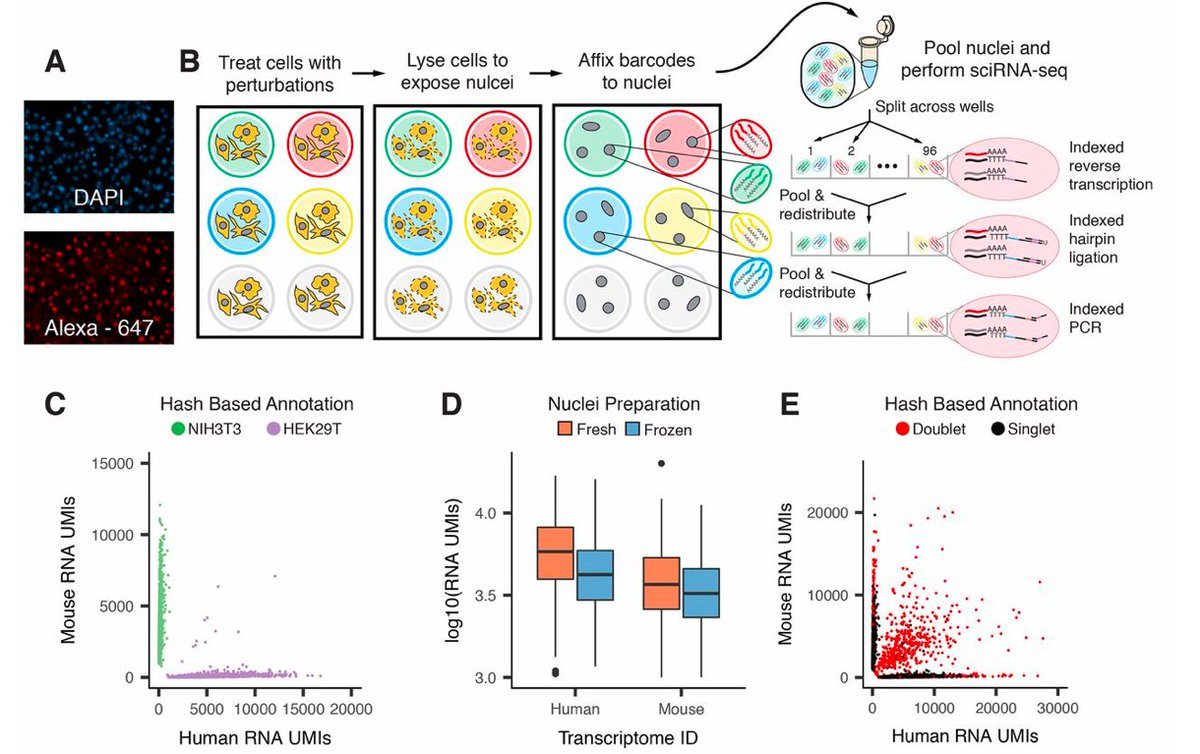
@SRsrivatsan just published his first Ph.D. paper (https://t.co/gIYj4yRzKy), a culmination of endless perseverance, incredible mentorship, and collaborative teamwork-congrats all!
My Haiku summary of #sciPlex:
One experiment
Many single cells profiled
Future of drug screens
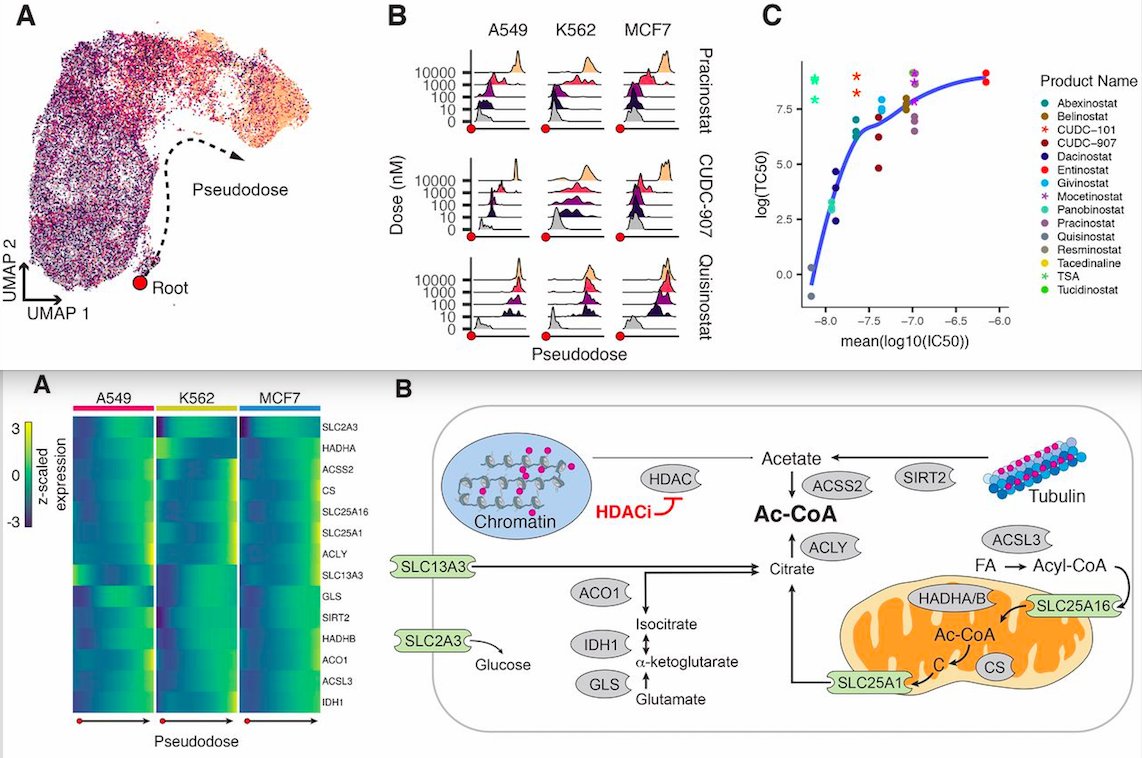
Extremely excited to announce sci-Plex, described in a new paper out today https://t.co/LJfCLXDY0B! Joint work with @JShendure lab, led by a crack team: @SRsrivatsan, @joselmcfaline, and @vram142. With sci-Plex, we can profile expression in single cells from thousands of samples.
@RAEinforma#dudaRAE ¿Cuál es la diferencia entre: 'Me olvidé ...' y 'Se me olvidó ...'? ¿Ambas son correctas? Por ejemplo: 'Me olvidé el teléfono.' o 'Se me olvidó el teléfono.' ¡Gracias!
How do we grow from a single cell to the trillions of cells that make up an adult body? A new @DR_E_A_M Challenge, spearheaded by @JShendure & @ElowitzLab, is launching to help find answers.
https://t.co/12X09JRyuN
Our manuscript on Garnett, which allows you to rapidly annotate cells by type in your scRNA-seq data, is now out in Nature Methods: https://t.co/gIwAs0in5Q. In response to reviewer comments, @HPliner made lots of improvements over the pre-print.
Happy to share our sci-L3 (previously called sci-LIANTI), which stands for "single-cell combinatorial indexing", "linear amplification" and "3-level barcoding" from the happiest postdoc lab ever: @JShendure lab! https://t.co/ybGNnGDd4s
A new study led by @joselmcfaline is now out in @NatureGenet: https://t.co/xTUZUKQcKA. José used single-cell RNA-seq and multiplexed CRISPR screening to dissect the molecular regulation of epithelial-to-mesenchymal transitions.