Associate Professor and group leader at @UCPH_Research @NEXSKU studying diet-#microbiome-host 🥦🦠interactions and microbial metabolites in health and disease
Today we publish an (in my opinion) important paper in @NatureMicrobiol 🍾showing that gut physiology and environment are factors explaining substantial variations in human gut #microbiome composition and #metabolism🦠
Fantastic work @nicolaproch et al. 👏
https://t.co/a6yHpMquqv
Registration for the 4th Copenhagen Gut Microbiome Symposium is now open! 🤩 Join us on 11 November 2026 for a full day of gut microbiome research, discussions & networking 🦠🧫 Participation is free — we look forward to welcoming you in Copenhagen!
We are excited to welcome Lea Müller-Buchholz as our student assistant!😍
Lea will support the administrative, social media, and outreach activities of the Copenhagen Gut Microbiome Hub.🌟
We are very happy to have Lea on board and look forward to working with her! 🙌
The gut microbiome and food are central in the generation of IBS symptoms
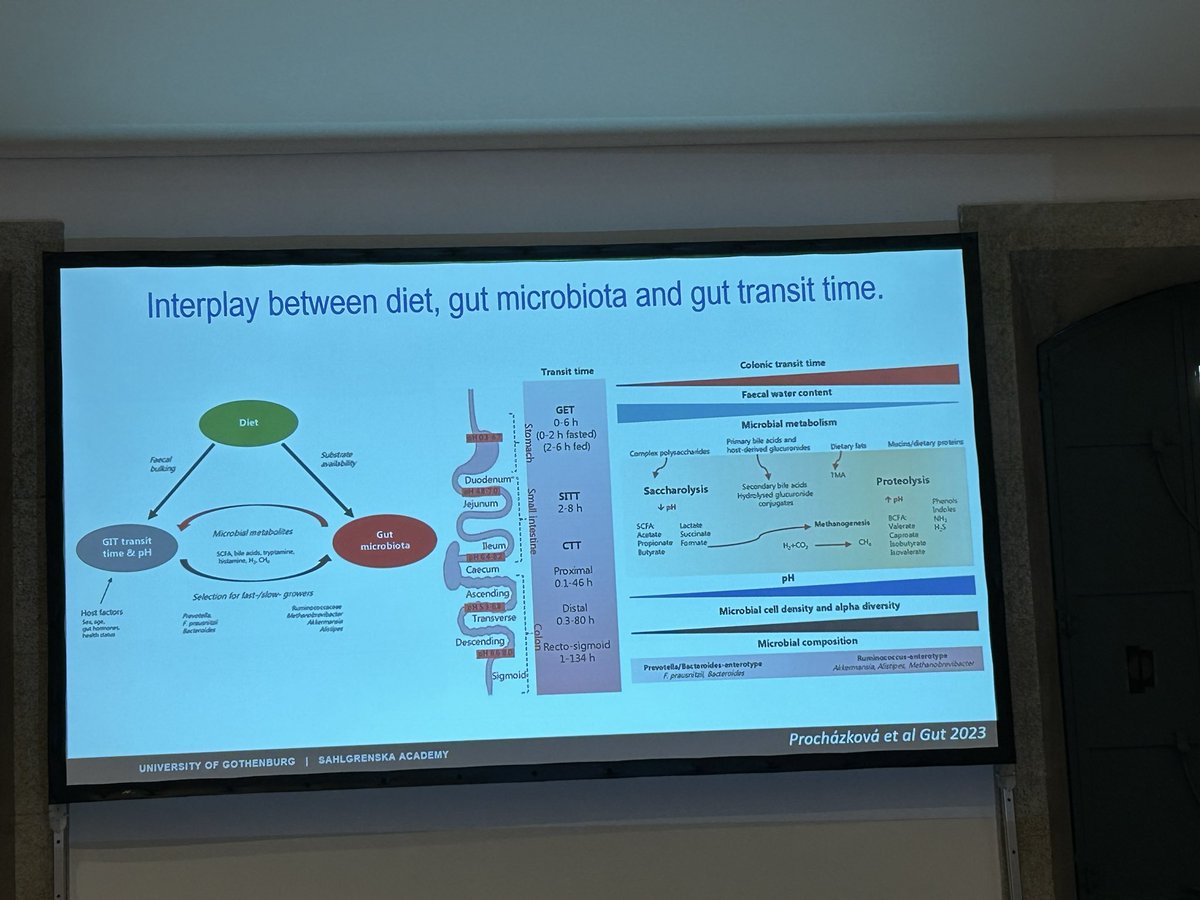
@MagnusSimren highlights the importance of taking into account transit time when interpreting microbiome studies in IBS
#GMFH2026
Is the gut microbiota involved in the beneficial effects of wholegrain intake on cardiometabolic risk?
New findings from @HRoager et al. found clues:
https://t.co/dIHMhbXecI
Microbiome diagnostics is challenging
Aonghus Lavelle presents how the Human Microbiome Action @Pharmabiotic addresses mechanisms, metrics and modifiers for better microbiome science
💡Don’t forget transit time @HRoager@esnm_eu#NeuroGASTRO2025
Concurrent with infants' progression in dietary complexity and gut microbiome diversity, infants gradually change their defecation patterns during the first year of life
@HRoager & colleagues seek to explore this in the MOTILITY Mother-Child Cohort:
https://t.co/hppPwUyJjn
Pro reading tip for your Summer🌞
😍Enjoy our new review: Intestinal pH: a major driver of human gut microbiota composition and metabolism,
🙌Great collaborative effort incl. @SINHA_ANURAG1, @MartinF_Laursen, @RaesLab, @ruvaur, @JensWalter15
https://t.co/uhuNfdZyyt
Our protocol paper describing our 🤱🏼MOTILITY Mother-Child Cohort: a Danish prospective longitudinal cohort study of the #infant gut #microbiome, nutrition and bowel habits has been published in @BMJ_Open ✨
https://t.co/VmgWJWgK0F
Thanks to @DFF_raad for funding our work 🙏
🧫 Save the Date!
We’re excited to announce an upcoming scientific seminar organised by our Early Career Team, with a spotlight on host–microbe crosstalk. Join us for a day of cutting-edge insights, discussion, and networking! Registration is open now - https://t.co/D6RtpvHmgA
The big question that researchers are asking for the time being is what determines the composition of gut bacteria and whether this can be changed to promote health.
Now a new study shows that the composition of gut bacteria very much depends on the physiological and environmental conditions in the gut. And this composition affect health and the risk of developing many diseases.
Our knowledge of the links between environmental factors in the human body, bacteria and health has risen, says Associate Professor Henrik Munch Roager.
Read more at @sciencenewsdk 👇
https://t.co/nkZA0bweCh
#GutBacteria #Health #microbiome
@HRoager@CphGutHub@UCPH_Research@science_ku@novonordiskfond
@JensWalter15@CellCellPress Congratulations @JensWalter15 and team! So happy to see this impressive work coming out 🌟😊 it is up for our journal club already next week, so we can take away the key learnings 💪
Ifølge både @Uniavisen og vores lektor Henrik Munch Roager er tarmen det nye sort.
Hvad det sådan mere specifikt betyder kan du læse om i nedenstående artikel - og din rejse gennem tarmen begynder lige her 👇
https://t.co/VnvpzLbTtR
💩🦠💩🦠💩🦠
@koebenhavns_uni@HRoager
Large variation in gut microbiome is a challenge in the field.
.@HRoager, @nicolaproch et al. showed whole and segmental transit time and luminal pH explained differences in microbiome composition and metabolism in healthy individuals @NatureMicrobiol:
https://t.co/RnWgra9Vih
All people are unique – also in the gut
A new study increases our knowledge about the gut and the life of gut bacteria. The study shows that changes in the gut environment have an impact on the composition and activity of gut bacteria. Ultimately, this may help explain why we all have different gut bacteria and probably also why we react differently to the same food.
According to Associate Professor Henrik Munch Roager the new knowledge could be very useful for future nutritional guidelines.
”Our results show that we are all unique – also in our gut," says Henrik Roager and continues: "We are used to assuming that we all digest and absorb food in the same way and to the same extent, but we can also see that this is not always the case. Our study provides further evidence that individuals react differently to food – and here differences in our gut environment could very well play an important role.”
Read more here 👇
https://t.co/0K6WBarAqK
Among authors are
@nicolaproch@HRoager@MartinF_Laursen @jeroenraes @RaesLab 👏👏
@NatureMicrobiol@UCPH_Research@foodDTUdk@DTUtweet@science_ku