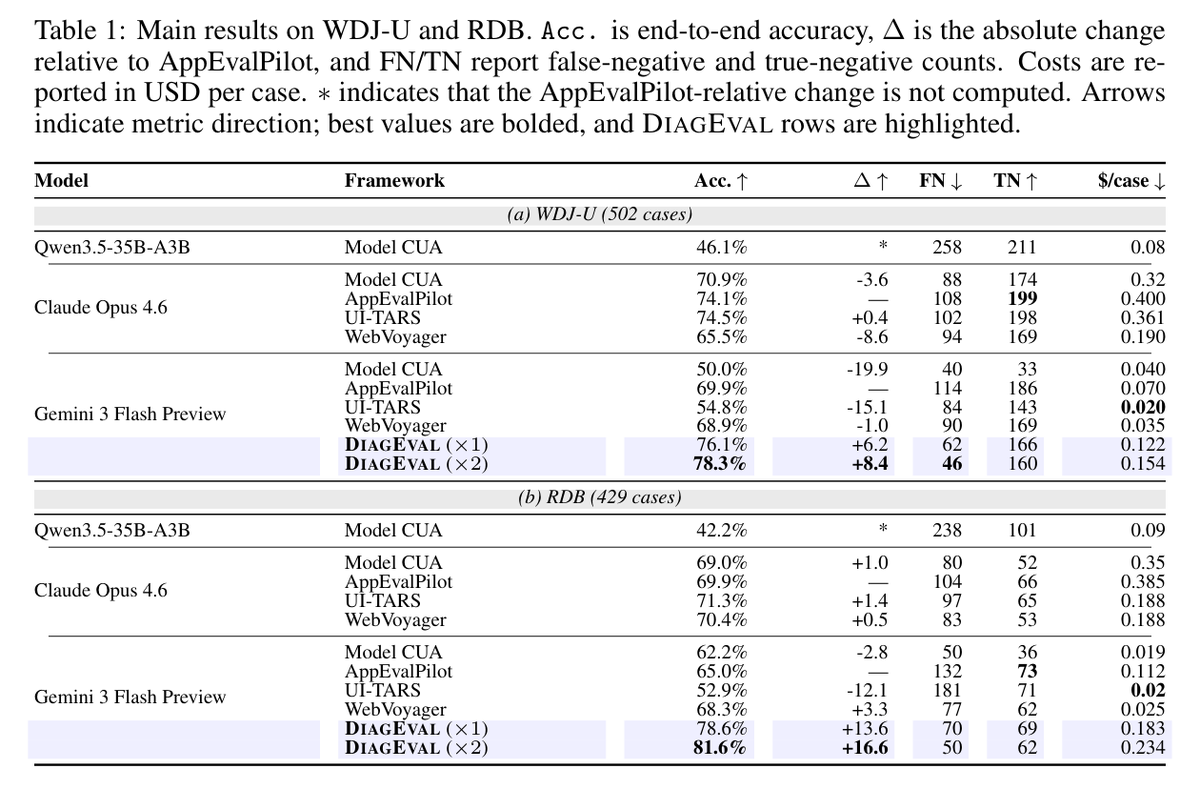
With DiagEval, a Gemini 3 Flash Preview-powered GUI evaluator surpasses the Opus 4.6 baseline in accuracy while costing less than half per case.
📄 Paper: https://t.co/1XS58XePBo
💻 Code: https://t.co/wbeSVryinj
GUI agents are now the default for evaluating vibe-coded apps.
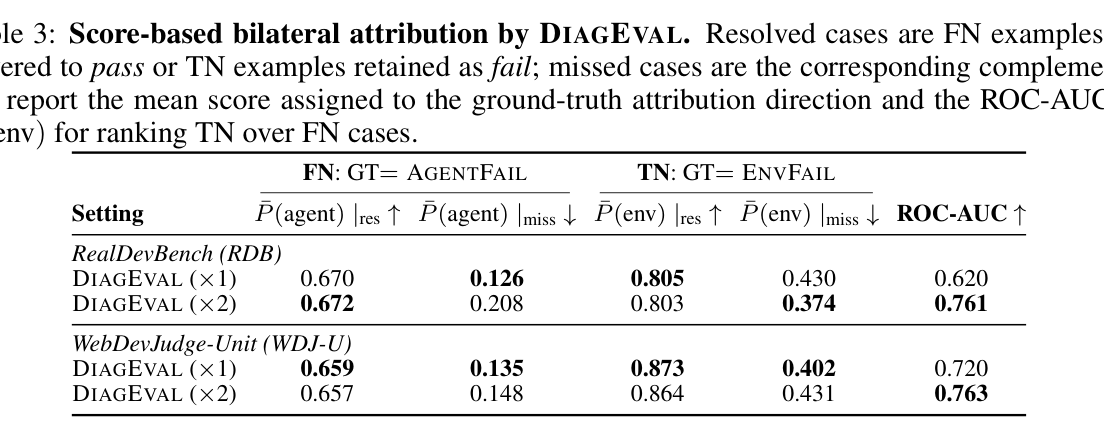
But when an agent says “test failed,” is the app actually broken, or did the agent just fail?
We introduce DiagEval: a post-failure diagnostic framework that treats failed rollouts as evidence, not final verdicts.
As a first step, we ask whether executable dynamics can be learned from collected I/O traces alone, without instrumented program state. Concretely, we model CLI and GUI execution as video rollout from instructions, pixels, and user actions.
Early demos show signals of learned runtime primitives: terminal rendering, execution structure, I/O alignment, short-horizon control, and GUI interaction.
𝐆𝐈𝐅 𝐛𝐞𝐥𝐨𝐰.
🫱 Introducing 𝐍𝐞𝐮𝐫𝐚𝐥 𝐂𝐨𝐦𝐩𝐮𝐭𝐞𝐫s:
𝐰𝐡𝐚𝐭 𝐢𝐟 𝐀𝐈 𝐝𝐨𝐞𝐬 𝐧𝐨𝐭 𝐣𝐮𝐬𝐭 𝐮𝐬𝐞 𝐜𝐨𝐦𝐩𝐮𝐭𝐞𝐫𝐬 𝐛𝐞𝐭𝐭𝐞𝐫, 𝐛𝐮𝐭 𝐛𝐞𝐠𝐢𝐧𝐬 𝐭𝐨 𝐛𝐞𝐜𝐨𝐦𝐞 𝐭𝐡𝐞 𝐫𝐮𝐧𝐧𝐢𝐧𝐠 𝐜𝐨𝐦𝐩𝐮𝐭𝐞𝐫 𝐢𝐭𝐬𝐞𝐥𝐟?
Beyond today's conventional computers, agents, and world models, Neural Computers (NCs) are new frontiers where computation, memory, and I/O move into a learned runtime state.
We ask: whether parts of runtime can move inward into the learning system itself. This is our first step toward the Completely Neural Computer (CNC): a general-purpose neural computer with stable execution, explicit reprogramming, and durable capability reuse.
Work done with Mingchen Zhuge (@MingchenZhuge), Changsheng Zhao, Haozhe Liu (@HaoZhe65347 ), Zijian Zhou (@ZijianZhou524 ), Shuming Liu (@shuming96 ), Wenyi Wang (@Wenyi_AI_Wang ), Ernie Chang (@erniecyc ), Gael Le Lan, Junjie Fei, Wenxuan Zhang, Zhipeng Cai (@cai_zhipeng ), Zechun Liu (@zechunliu ), Yunyang Xiong (@YoungXiong1 ), Yining Yang, Yuandong Tian (@tydsh ), Yangyang Shi, Vikas Chandra (@vikasc), Juergen Schmidhuber (@SchmidhuberAI)
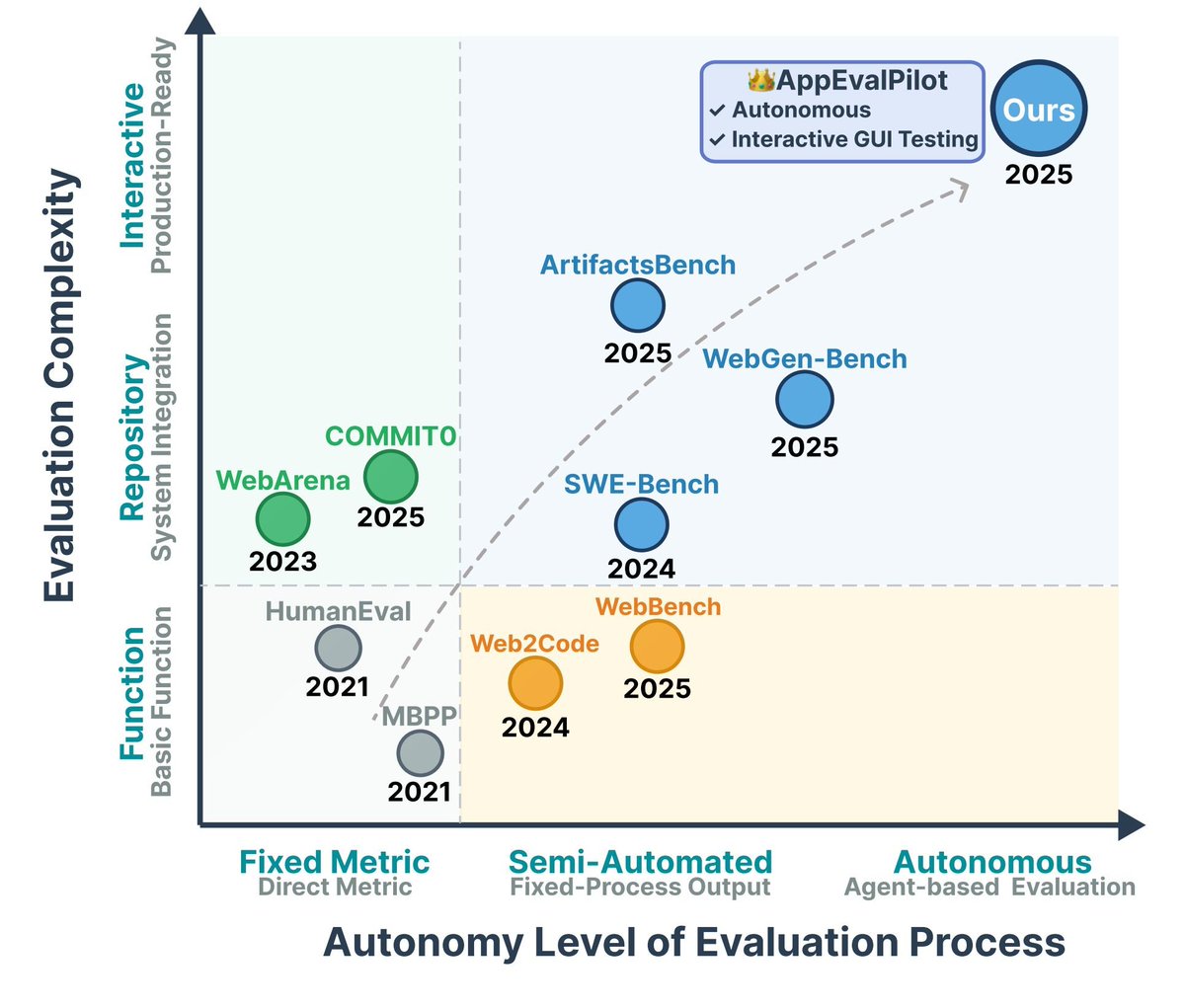
You Don’t Know Until You Click:Automated GUI Testing for Production-Ready Software Evaluation
The paper introduces RealDevWorld, a novel evaluation framework that combines RealDevBench, a diverse set of open-ended software engineering tasks, and AppEvalPilot, an agent-based evaluation system, to effectively assess the functionality and usability of production-ready software generated by Large Language Models through dynamic user interactions.
Yutong Bian @yutong_bian , Xianhao Lin, Yupeng Xie, Tianyang Liu @LtyLeoii22 , Mingchen Zhuge @MingchenZhuge , Siyuan Lu, Haoming Tang, Jinlin Wang, Jiayi Zhang @didiforx , Jiaqi Chen, Xiangru Tang @XiangruTang , Yongxin Ni, Sirui Hong, Chenglin Wu @AlexanderWu0
DeepWisdom; Fudan University; HKUST; UC San Diego; KAUST; Westlake University; Stanford University; Yale University; NUS
https://t.co/r9pL7XhWZY
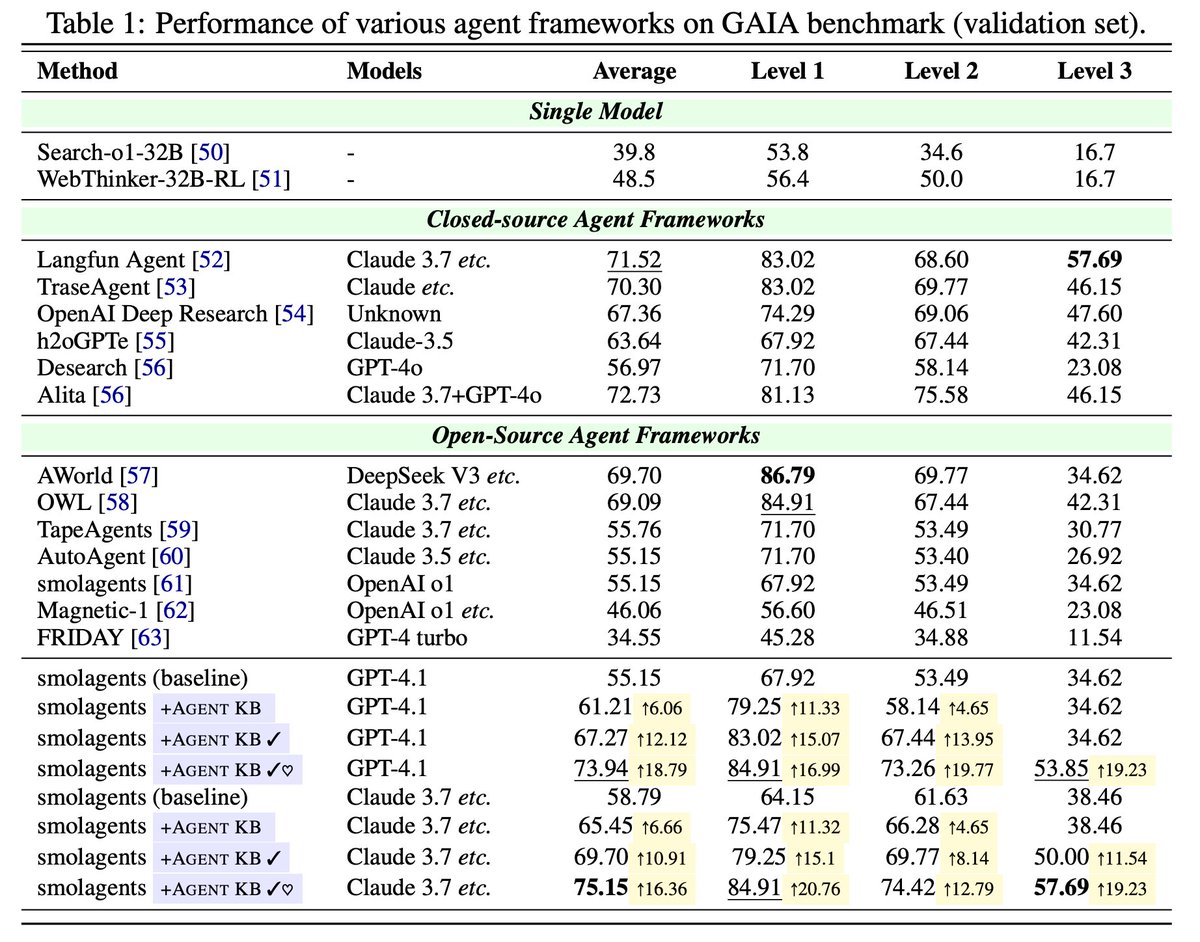
🤔 How can AI Agents learn from past experiences across different tasks, instead of starting from scratch?
🚀 We just released Agent KB! Our framework uses a teacher-student mechanism to let agents reuse experience, enabling cross-task knowledge transfer.
🔥 The results are stunning: A new open-source SOTA on GAIA!
· GPT-4.1 performance +18.8% (55.1% → 73.9%)
· Claude-3.7 on SWE-bench solve rate +12%
📖 Paper: https://t.co/zD0FK3XRwh
💻 Code: https://t.co/L74M9952sQ
Like the idea of experience reuse? A GitHub ⭐ is much appreciated!
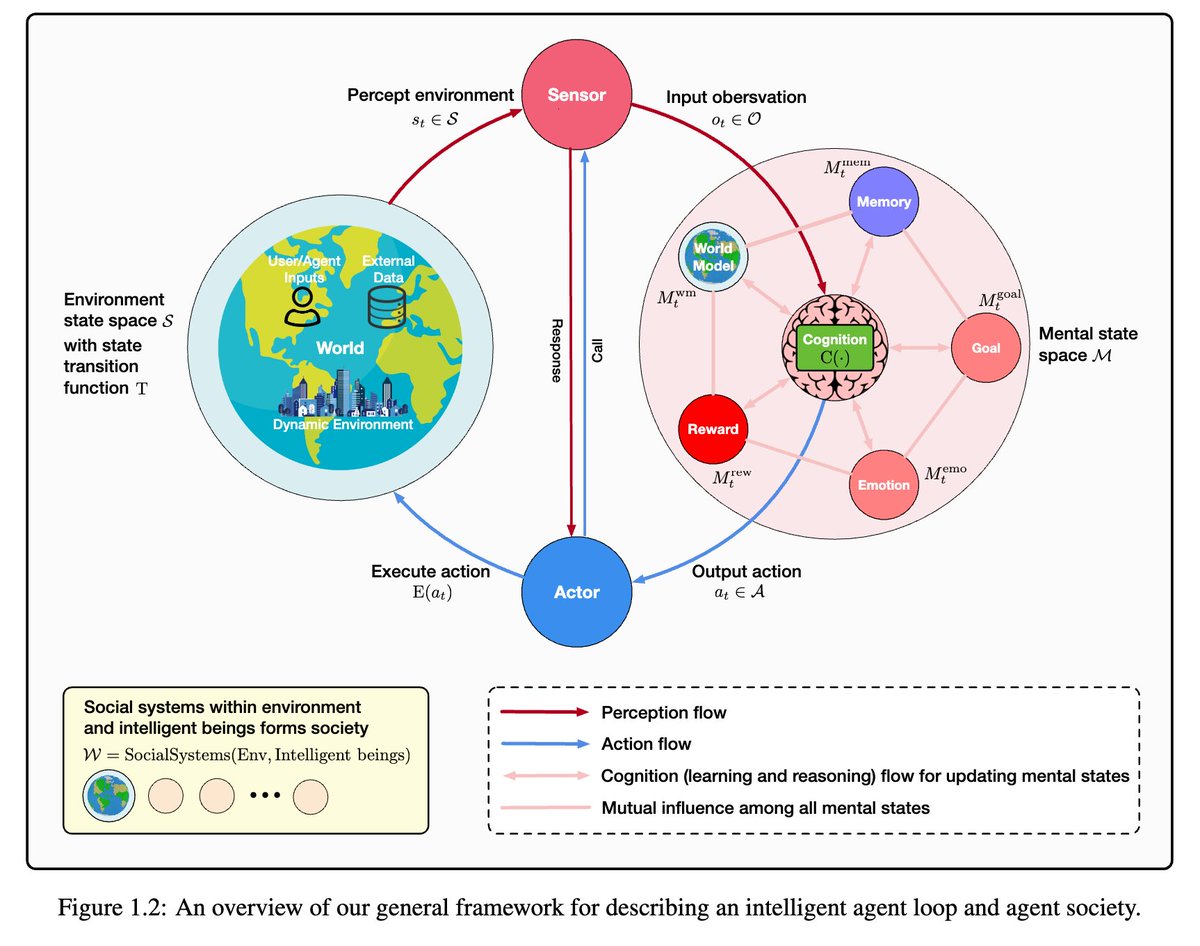
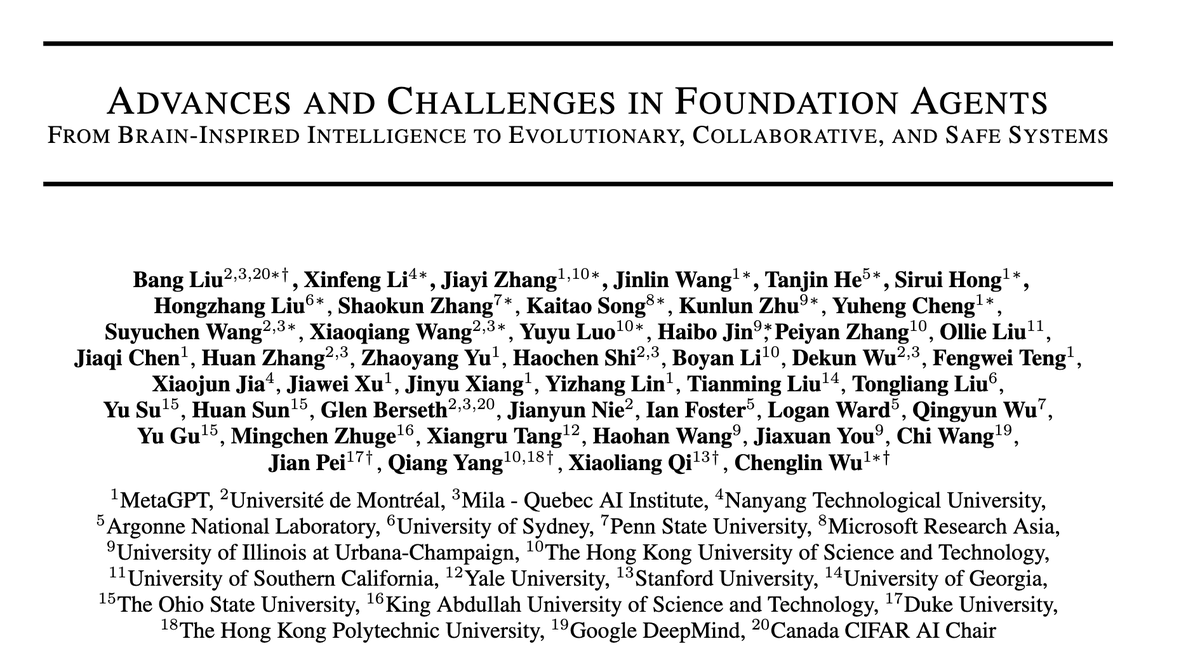
🧠264 pages and 1416 references chart the future of Foundation Agents.
Our latest survey dives deep into agents—covering brain-inspired cognition, self-evolution, multi-agents, and AI safety.
Discover the #1 Paper of the Day on Hugging Face👇:
https://t.co/CvtqGKyCYb
1/3
20 Months: 0 → 7 papers (2 ICLR orals) & 40+ institution collabs.
With a clear vision, we're building the open-source foundation for tomorrow's agents.
We also release MGX (https://t.co/AyzVUF9dH3) and commit to open-source its core soon.
Check threads for what we've built!
1/8