It's official.
MicroStrategy, $MSTR, is now facing its biggest unrealized loss in history, at -$10.8 billion.
In other words, after 6 years of buying Bitcoin, the company is now down -17% on its position.
By comparison, the S&P 500 is up +116% over this same timeframe.
Since MicroStrategy sold 32 Bitcoin at $77,135 per coin, their positions has lost -$11.8 billion in value.
This puts MicroStrategy's stock, $MSTR, down -77% since its record high.
Bear market is an understatement.
🚨The best leading indicators of payrolls, by a comfortable margin, just collapsed.
The NFIB survey's hiring intentions index has dropped to its lowest since May 2020:
Rep. Mike Thompson: "I've searched hard to find constituents in my district who believe this economy is golden…Electricity bills are up 8.5%. Is that golden?"
Bessent: *refuses to answer*
Thompson: "Health insurance costs are up 26% — that's not golden. Childcare costs are up 9% — that's not golden. Gas prices are up nearly 50% — that's not golden. Grocery prices are still straining family budgets — that's not golden."
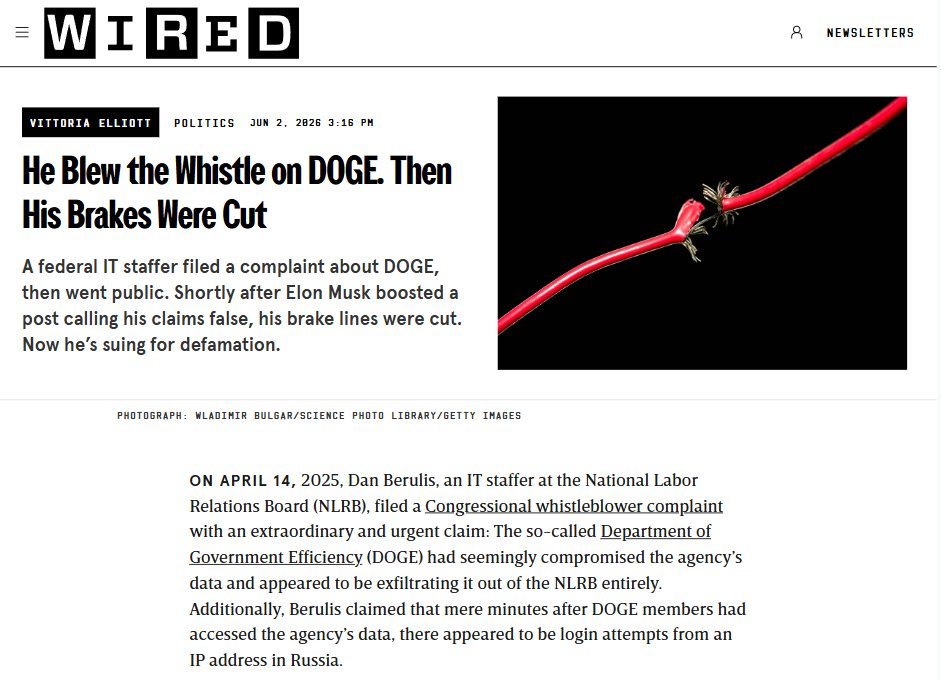
This is an insane story. The DOGE whistleblower who said that login attempts were made to the NLRB from Russian IP addresses minutes after DOGE got access had his brake lines cut and photos of him walking his dog from a drone taped to his door after Musk attacked him on Twitter
I'm amazed at how the Texas GOP keeps telling us how bad our government is while wanting us to continue to vote for that very government they have run for the last 3 decades. It's such bad pretzel logic.
Rep. Angie Craig demolishes Ag Secretary Brooke Rollins: "Joe Biden is no longer the president. Mr. Trump is. Your party controls Congress. You own these numbers at this point. I'm sick of hearing you blame an administration from a year and half ago. You own every single bit of this."
העולם לא באמת גווע ללא נפט...אבל אל תבנו על טיסה זולה לפריז בקיץ הקרוב.
אנאס אל האג'י, המומחה מס אחד בעולם בתחום האנרגיה, מציג תמונה הפוכה לחלוטין ומנפץ את נרטיב המחסור בנפט הגולמי. אל-האג'י מצביע על כך שהשוק סובל מחוסר הבנה מבני של הנתונים, ומסביר את המציאות הפיזית באמצעות שלושה כשלים מרכזיים בנרטיב הקיים.
הטיעון המרכזי של אל-האג'י חושף כי הירידה המדוברת במלאים היא אשליה אופטית בלבד. על פי הנתונים, 98% מהצניחה במלאי העולמי מגיעה ממשיכות מתוך המאגרים האסטרטגיים הממשלתיים ולא מהמלאי המסחרי.
יתרה מכך, כמעט כל המשיכות הללו מוגבלות לשתי מדינות בלבד: ארצות הברית ויפן. בעוד שיפן מושכת נפט בשל אילוצים מקומיים, ארצות הברית משחררת נפט מתוך עמדת שפע ומגדילה את היצוא שלה. המלאי המסחרי הרגיל בעולם נותר יציב לחלוטין, ומכאן שהשוק החופשי אינו חווה מחסור פיזי בנפט גולמי.
ההבחנה החשובה ביותר של אל האג'י היא ההפרדה בין נפט גולמי למוצרים מזוקקים כגון בנזין, סולר ודלק סילוני. הלחץ הממשי בשוק נמצא אך ורק בצד המוצרים ולא בצד חומר הגלם.
חוסר היציבות הגיאופוליטי הוביל להשבתת שלושה בתי זיקוק ענקיים במפרץ הפרסי בסעודיה, כווית ובאיחוד האמירויות, לשיבושים ברוסיה ולהטלת מגבלות יצוא פוליטיות על ידי מדינות כמו סין והודו. כתוצאה מכך, בתי הזיקוק הפעילים במערב כבר פועלים בניצולת שיא של כ-94.5%.
כאשר בתי הזיקוק נמצאים בקצה קיבולת הייצור הפיזית שלהם, הם אינם מסוגלים לקלוט ולעבד חביות נפט נוספות, גם אם הביקוש לדלק בתחנות בשיא הקיץ יהיה גבוה במיוחד. מכיוון שבתי הזיקוק אינם יכולים להגדיל את הביקוש שלהם לנפט גולמי, אין כל סיבה לעלייה חדה במחיר החבית.
אל האג'י מדגיש כי נפט אינו מוצר אחיד. המשבר הגיאופוליטי במזרח התיכון גרע מהשוק בעיקר נפט בינוני-גופרתי, החיוני לייצור סולר. זו הסיבה לדרישה הגבוהה לחביות מתוך המאגר האסטרטגי האמריקאי, המספק את האיכות הספציפית הזו. תפוקת הנפט החדשה של ארה"ב מורכבת מנפט קל ומתוק, שאינו יכול להוות תחליף ישיר לאיכות שאבדה.
הלחץ הנוכחי בשוק ממוקד כולו בצווארי הבקבוק של הזיקוק ובמחסור אזורי במוצרים סופיים, כגון דלק סילוני באירופה או גז בישול באסיה. תמחור הנפט הגולמי הנוכחי מונע מחששות גיאופוליטיים ומפסיכולוגיה של משקיעים, ולא מגירעון פיזי אמיתי באספקת החביות העולמית.
HRH Prince Abdulaziz, likely the most informed and plugged-in energy expert on the planet: “for me to be silent is a humble admission of the fact that I don’t know what will happen, not tomorrow but in half an hour time.” There is no playbook for what we are going through!
NVIDIA IS BUYING ITS OWN CHIPS AND CALLING IT REVENUE
And your retirement account is secretly holding the bag.
This scheme is literally straight out of the Enron playbook...
In January 2026, a special purpose vehicle called Valor Compute Infrastructure was created with one purpose:
Buy Nvidia's chips so Nvidia could book the sale as revenue.
Valor raised $5.4 billion and purchased over 100,000 of Nvidia's GB200 GPUs.
But $1.9 billion of that money came FROM Nvidia itself.
Nvidia invested $1.9 billion into the shell company, then sold that same shell company $5.4 billion worth of its own chips and booked every dollar as revenue.
It's the Girl Scout whose dad bought all the cookies and then she wins the sales contest because Dad was the customer. Except this Girl Scout is a trillion-dollar company and the cookie sale is $5.4 billion.
But it gets MUCH worse:
The remaining $3.5 billion in financing came from Apollo Global Management. Apollo structured the debt, packaged it into securities, and then sold those securities to Athene.
And guess who Athene is? Apollo's OWN insurance subsidiary. The one that sells fixed annuities to American retirees as safe, conservative retirement products.
Follow the chain:
Nvidia funds a shell company with $1.9 billion. The shell company buys $5.4 billion in Nvidia chips. Apollo finances the remaining $3.5 billion. Apollo sells the debt to its own insurance arm. That insurance arm packages it into annuity products and sells them to retirees who think they're buying something safe.
The retirees have no idea that their retirement savings are now backed by 100,000 computer chips sitting in some data center that will be worth pennies on the dollar in three years.
Now look at what's happening inside Athene:
$74.2 billion in US reserves but $217 billion in assets have been shifted to a Bermuda-based captive insurer, outside normal US regulatory oversight.
$103 billion of that portfolio (roughly 35%) is classified as Level 3 assets. That means there is no observable market price.
These assets are valued by internal models, not by actual markets.
And sitting on top of all those unpriced assets? 16.6x leverage.
If you're getting flashbacks to 2008, you should be.
Back then it was mortgages bundled into securities that nobody understood, sold to investors who had no idea what they were holding, rated as safe by agencies that never looked under the hood.
Today it's GPU-backed securities. Computer chips bundled into structured credit instruments, routed through an offshore insurance subsidiary, and sold to you as a retirement product.
The collateral is 100,000 GPUs leased to a single customer through an xAI subsidiary. If xAI stops making lease payments for any reason - financial distress, a pivot in strategy, anything - the entire structure unravels.
And Nvidia releases new architectures every year, so each generation delivers dramatically more compute per watt. A 5 year lease on technology that's obsolete in 2 years creates a mismatch that should terrify every annuity holder in America.
Every single step in this chain is technically legal. The SPV is legal, the lease is legal, Nvidia's equity stake is legal, the securitization is legal, and the Bermuda transfer is legal.
But legality and legitimacy are not the same thing.
I've seen every trick Wall Street has ever pulled in my 45 years of doing this.
And what I'm looking at right now is a pipeline that takes AI infrastructure risk, launders it through 8 layers of financial engineering, and deposits it in the retirement accounts of Americans who never agreed to fund Elon Musk's data centers.
In 2008 it was mortgage-backed securities.
In 2026 it's GPU-backed securities.
Different asset. Same greed. With the same ending.
.@RepLloydDoggett: "Has the IRS recommended that any taxpayer be granted immunity from an audit of their taxes?
Secretary Bessent: "Again, I'm unable to answer that."
Rep. Doggett: "You can answer it; you refuse to answer it."
NEW LONG FORM VIDEO: The rise and fall of Topgolf: the $1.5 billion mistake
At one point, Topgolf was called the best thing to happen to golf since Tiger Woods. But in January 2026, the entire business was sold to a private equity firm in what many considered a fire sale. The price was $1.1 billion, less than half of what the company had been worth just five years earlier.
Here’s the surprising part: during those five years, the business never stopped growing. Topgolf kept opening new locations, attracting new customers, and generating more revenue.
So how does a company with growing sales, expanding locations, and a popular brand lose so much value?
What went wrong? Was it bad management, changing consumer habits, or something deeper hidden in the business model?
This is the rise and fall of Topgolf, version two.
Jeff Currie, former Goldman Sachs head of commodities and now at Kalo writing research, is watching a physical supply shock in the commodities market.
This is a tale of two markets.
Paper crude oil was sitting around $100 a barrel while physical crude being delivered into Asia was trading between $130-$170. Products like jet fuel were spiraling above $200.
The spread between paper and physical has completely disconnected.
On the physical side: a discount airline out of London Gatwick canceled all flights because they couldn't source fuel. The UK just took its last known kerosene shipment with no further arrivals scheduled. Singapore jet fuel spiked to $230 a barrel. Rotterdam hit $220. The shortage is now in Thailand, Philippines, New Zealand and Australia.
Currie called it "molecular contagion."
And here's the critical point: there is no policy fix for this. The supply shock is roughly equal in magnitude to the COVID demand shock. And we all watched what COVID did to global supply chains.
Currie's framing: the paper markets have disconnected from reality. When crude is trading at $100 on NYMEX but delivering into Asia at $130-170, someone is wrong. He thinks it's the paper market.
The mispricing window doesn't stay open forever.
For macro investors, this is exactly the kind of dislocation between financial prices and real-world supply chains that historically creates the biggest moves.
🚨 BREAKING: Bessent Couldn't Name The Case.
Asked what ongoing litigation prevents him from discussing Trump's audit status, Treasury Secretary Scott Bessent said the matter was tied up in court.
Then Rep. Linda Sánchez asked a simple follow-up:
Which case?
He couldn't name it.
Sánchez pointed out that the only litigation she was aware of involved the $1.8 billion DOJ fund and said that case doesn't address presidential audit immunity.
That's what made the exchange awkward.
The administration says litigation prevents answers.
Congress wants to know which litigation.
Texas has reclaimed its spot as the nation’s leading state for Fortune 500 headquarters, with Houston continuing to drive that momentum.
The Houston region is tied for No. 2 among U.S. metros, with 27 Fortune 500 headquarters — and it’s on track to reach 28 once Expand Energy completes its headquarters move to Spring.
🌟View the full list of Houston Fortune 500 headquarters: https://t.co/WsrZntgkMm
New federal data shows UH grads are earning more than the national average, with the Cullen College of Engineering leading the way. 🎓
The top five highest-earning majors for UH bachelor’s graduates all come from Cullen, proof that Coogs launch strong careers from day one.
Mary Trump: “Don’t waste our time running as a Democrat if you are not running on Supreme Court reform. And I don’t mean reform around the edges. I mean you’re gonna add 4-6 seats immediately. You’re going to implement term limits. You’re going to put in an ethics criteria and you’re going to make sure many of these most egregious decisions are undone”
🚨 JUST IN: 6.3% OF US HOUSING LISTINGS ARE UNDERWATER
These are units where the current asking price is BELOW the original purchase price and the seller still can't find a buyer
Washington, DC leads the country with 20% of active listings underwater
Colorado is second with 10.2% of active listings underwater
Florida is third at 9.6%
SITUATION DETECTED: Antares Nuclear’s Mark-0 reactor has achieved initial criticality at Idaho National Laboratory, what the U.S. Department of Energy is calling one of the most significant technological achievements in nuclear energy in over 40 years.