Token spend / consumption trends from my aggregated cloud partner checks:
Model Spend ($): closed model spend shifting from 100% in Dec to 85-90% today.
Token Consumption: closed model tokens shifting from 80-90% to 50-70%. Expectations this shifts towards 40-60% by YE based on customers' maturity curves.
Demand Segments:
The vast majority of open model consumption is cloud natives / software cos for reasons well-discussed on X. Maturity + talent + cost mitigation + proprietary.
The more interesting emerging vector is the Global 2000-types training specialized models on their data in fields like pharma, biotech, underwriting, supply chain, etc.
The gating factor is enterprise maturity & talent. They're solving this with partners like the Clouds (AWS/Azure FDEs) or NVDA. More are starting to explore their own on-prem GPU environments given the durable ROI from training custom models.
None are using Nemotron today but "we are absolutely going to explore it". Jensen hopes to leverage this wedge to build his enterprise-direct business.
Welcome to the second half of the year.
The actions of hyperscalers in terms of their capital commitments will be key as the year proceeds, expect an uptick across the board, the demand is real.
The flip side - the funding sources will need to be from the capital markets. The largest companies will flip to negative cash flow except for one or two.
Hyperscalers have balance sheet capacity to do so (for 1-3 years), however new Frontier labs will need to go public, not sure there's more private market capital available to support their Capex needs. Of course, there's the chip guys, NVIDIA is at the party, will MU join the investment party to keep spending going?
We still need visibility for when AI revenues will start to fund much of this cash need.
Expect more advertising plays from LLMs, Token prices have to decline to drive Enterprise adoption. Expect LLMs to chase more vertical profit pools, legal, life science, expecting physical AI companies. Pure models will continue to see arbitrage with open source touching 30% usage, depth will create a better moat, breadth will commoditize. It's not a demand problem - "it's a monetization problem". Silicon valley has always built product with intensity and the market has funded adoption years.
This time it might just be too big and the market may not have capacity to fund everyone. "Darwinian moment for AI providers?"
If you are a founder, or a CEO - don't be distracted, focus on your product, how it gets better with AI. Eventually product and customer adoption will bring us to the other side, but expect a bit of a wild ride. We are still early in many PMF categories. Speed could create waste, but waiting and watching could leave us behind.
Just finished north of 200 meetings in Europe with customers and technologists. The conversations were primarily around AI, common questions include:
1. Are there examples of organizations who have been able to demonstrate production level systems and do those developments show a return in lower cost, efficiency or better top line?
2. What do you think about agents? How will we discover, govern and stop agents if need be. Perhaps the biggest security concern ATM.
3. The frontier AI models are expensive, what's the business case at these token prices to embed AI in our customer facing products? Where will token prices be in the future.
4. What are the longer term implications of Mythos like models? Do we need to update cyber infrastructure or all IT infrastructure?
5. What do you think of Chinese opensource models? Are they secure and what is the downside of using them if they can be secured and they are cheaper?
The parts that surprised me were:
1. The pausing of Mythos and Fable 5 caused more consternation and concern in Europe both short term and raised longer term concerns on single model reliance or reliance or models not in ones control. I hadn't seen it from their POV.
2. Sovereignity which was always a topic and still is, is getting more nuanced - they want data residency, data localization and local resources, but there seems to be more willingness to accept global services on clouds. Classified systems continue to be an issue.
Net net - we need to ensure we continue to build trust both on our Frontier models and their consistent availability, we need to get the right economics in place and spend more time in Europe communicating and building presence if we want AI adoption to keep pace with the US.
This is a long post below but @gulVasikova has got it right. Virtual patching is the fastest way to be ready for rapid vulnerability discovery. You find an open source vulnerability, inform Lightwell - we build a patch in under an hour and push it to all customers who have deployed a PANW firewall. Organizations can then have some time to analyze blast radius, manage upgrade cycles and decide if they should wait for the open source publisher to resolve or take the lightwell patch.
In addition, this is invaluable for OT environments where patch deployment is hard.
Time to consolidate your FW estate with next generation network security with PANW.
Not sure this is our biggest advantage in the upcoming decade, but hopefully one of many. The key is to constantly obsess about solving customer problems, and we do - so our customers can do what they need to.
The AI Business model trap: LLMs want cash flow to fund the race to AGI or the next model. Enter free consumer AI - they are losing a lot of money on the breadth of models to serve consumers for free! They are caught in the post training data trap, free consumer usage feeds post training needs, it can't be right to stop serving customers for free?
But they need money for the compute:
The monetization challenge is being pointed to Enterprises.
Phase 1 - seemed easy, value capture in coding, the most bottom up motion in enterprise - with low customization per customer. Developers continue to train coding, tasks and eventually will train flawless skills.
Phase 2 is where the challenge lies, showing true enterprise value. The promise of efficiency, accuracy, elimination of resources - that requires a different approach, build depth with harnesses, context, memory, solving for edge cases with deterministic guardrails! Build skill libraries - enter FDEs. Yes,FDEs will train the enterprise Waymos of the world.
The risk - high token pricing for enterprises while consumers for free! Yes for consumer distribution businesses (aka Google, Meta, Apple, etc) it makes sense to hold on the distribution with free AI.
If you want to win enterprise, you should be forward pricing tokens. The cheaper the tokens for enterprises it will allow for experimentation, workflow reimagination - instead CIOs are busy restricting AI use and working on making the use more efficient!
Paradox: They still haven't fully understood and embraced the value of AI in the enterprise.
If I were them:
1. Cut token pricing now, else send enterprises to secure opensource and end up with friction filled routing layers.
2. Show me how enterprises can use their context, training and data as their competitive advantage.
3. Build tools for rapid edge case learning and reducing false positives.
@HarryStebbings@sama@DarioAmodei@demishassabis
In the next few months it will become abundantly clear how mispriced cybersecurity assets are today.
The labs are working with cyber leaders because security is increasingly the bottleneck for agentic adoption in the enterprise. This trend will only grow from here
I’m proud to share that @PaloAltoNtwks Unit 42 Frontier AI Defense is now powered by @AnthropicAI’s Claude Opus 4.7. AI may change what is possible for attackers, but in the hands of defenders, it becomes a decisive advantage. The path forward has never been clearer. We’re partnering with our customers to win what comes next.
https://t.co/826E8Bdi4B
The attackers have AI. So do the defenders.
Cybersecurity has a new shape: AI is both the threat and the only viable solution.
@nikesharora, CEO of @PaloAltoNtwks, joined me at @southpkcommons to break down what’s next.
(00:30) Big problems vs. fast wins
(04:00) Joining Google
(07:00) Larry Page's product obsession
(10:00) He read every hiring packet himself
(13:00) What Silicon Valley gets wrong about Masa Son
(16:00) Successful founders never wish they took less risk
(17:00) Joining Palo Alto knowing nothing about cybersecurity
(20:00) What incumbents got wrong when ChatGPT launched
(23:00) Security was never built into AI
(28:00) No enterprise knows what's running inside its stack
(31:00) AI finds bad code faster than humans ever could
(35:00) The only way to fix the chaos is more AI
(38:00) AI won't just automate work—it raises the floor
(41:00) Foundation models vs. specialized stacks
(45:00) Why communication is 30% of the job at scale
CRWD & PANW part of the critical infrastructure partners highlighted in Mythos
Clear these two are going to bridge the gap, and Anthro pulling them into the AI era. Cannot overstate the importance of this positioning as a signal to customers
Introducing Project Glasswing: an urgent initiative to help secure the world’s most critical software.
It’s powered by our newest frontier model, Claude Mythos Preview, which can find software vulnerabilities better than all but the most skilled humans.
https://t.co/NQ7IfEtYk7
The fastest most sophisticated attacks can now move within 25 minutes.
The new models will make it so across the board.
This can take days for companies to detect and respond.
The companies that make it through will be the ones fighting AI with AI. See my blog post below.
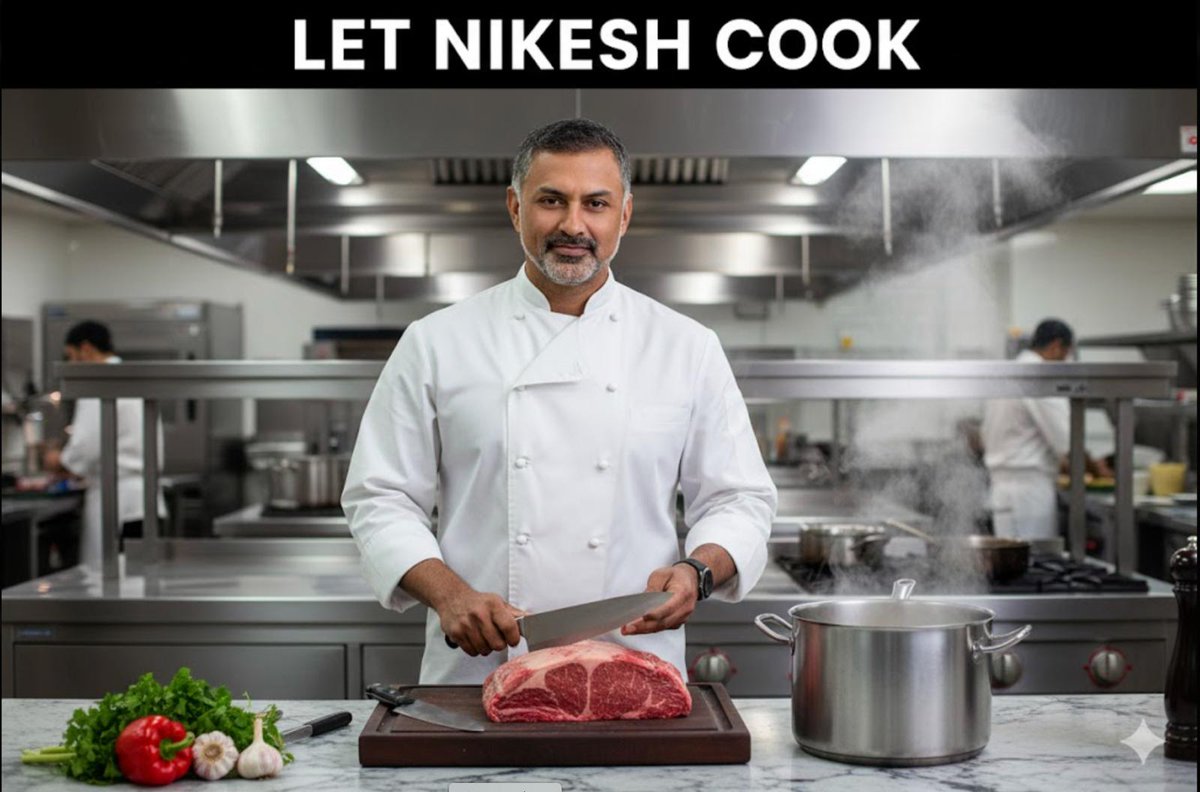
LET NIKESH COOK. $PANW
The Master Chef of Cyber is cooking a fine-dining dish…
a north-of-$300B dish for FY30. 👨🍳🔥
@nikesharora@HamzaFodderwala@PaloAltoNtwks
Bottom line: Palo Alto Networks isn’t just executing, it’s architecting the AI-era security, identity & observability platform. With management now raising the long-term NGS ARR target from $15B → $20B by FY30, the visibility into a $300B+ valuation path keeps improving every quarter.
Another powerhouse print:
• NGS ARR +29% YoY to $5.85B (vs ~$5.8B cons)
• RPO +24% YoY to $15.5B (vs $15.43B cons)
• Revenue +16% YoY to $2.47B (vs ~$2.45B)
• Product +23% YoY (vs 19% est)
• EPS $0.93 (vs $0.89)
• Op margin 30.2% (vs ~29%)
Platformization accelerating across US Fed, Telco & F500.
SASE ARR +34% YoY to >$1.3B.
Software Firewalls now ~44% of product revenue.
XSIAM momentum unmatched. ~$1M+ ARR per customer and an $85M deal, the largest ever for the category.
AI-security adoption inflecting: Prisma AIRS 2.0 deals doubled QoQ.
New integrations added across NVIDIA BlueField, IBM, ServiceNow & Glean.
AgentiX → true autonomous AI agents for the SOC: AI that detects, decides, and acts.
Quantum emerges as a new secular tailwind: PAN-OS Orion, Gen5 firewalls, cipher translation + IBM quantum-safe readiness.
CyberArk + Chronosphere broaden the platform:
• Identity → the control plane for agentic systems
• Observability → LLM-scale telemetry at 1/3 the cost
Combined TAM heading toward ~$300B within 3 years.
Management raised the long-term NGS ARR target from $15B → $20B by FY30, reinforcing confidence in multi-year compounding and platform expansion.
FY26 guide remains strong:
Revenue $10.50-10.54B, NGS ARR $7.0-7.1B, FCFm ≥37%.
Long-term FCF margin: 40%+ by FY28.
One of the cleanest long-duration compounders in software.
$PANW 🚀🔥
#AI #Cybersecurity #SASE #Observability #IdentitySecurity #QuantumSecurity #TechEarnings #NextGenSecurity
@ScottWapnerCNBC @Stephanie_Link@MalcolmOnMoney Scott - I don't care if people sell our stock, but please ensure your guests know their facts. 1. We are not 50% reliant on the fed, how's 5% 2. We are not only on prem, we crossed 5bn in Next Generation Security all delivered through the cloud 3. One of our fastest growing business is Zero Trust - we might know a thing or two. 4. We are platformizing our way not just into customers hearts - also into their cybersecurity budgets, our largest deal this Q was 90M. Thank you Stephanie for standing by your conviction we will do you proud in the long run. https://t.co/IOqaZ8GEC4
There is a lot of conversation around restricting access to AI globally. IMHO - I think we are conflating innovation, global availability of innovation and our ability to scale at the right pace and economics. 1. We are leading in AI innovation, we need to accelerate the pace not declare victory. 2. Restricting models, chips globally will be hard, regulating it is impossible. It's counter intuitive to our desire to export innovation "Made in America" . Embrace it. Focus on protecting the use of AI for the right reasons. (Think nuclear treaties) 3. The true risk is speed on getting to scale and 'at the right price' - we are at risk of many subscale efforts around energy, compute and infrastructure - if widespread deployment is a foregone conclusion - that's where our risk lies. Can we make the robots fast enough, deploy agents in every walk of life. Some countries have proven they have the mettle to get it done.
To be clear - my view is there will be horses for courses, over time models will be task specific, and not all tasks need AGI. The task specificity will make it easier to use LLMs for a lot more, encouraging more pervasive use. However there continues to be a "good data" problem in enterprise and a need for reimagining work. The pace of development will likely make current chips obsolete, newer better and more efficient chips will continue to drive price performance, we are early on that curve.