“Unknown” security forces in Tehran have arrested Iranian conservationists #HoumanJowkar and #SepidehKashani. Again, no clear charges and no explanation. They also detained Sepideh’s sister, Sima, who has MS. The couple had been caring for Sepideh’s father, who had just returned home from the hospital after a heart attack and has a chronic lung condition.
#AnyHopeForNature
#IGO : 23 pollution hotspots were identified along the Tigris River in Baghdad, caused by untreated sewage and industrial discharge. With declining water levels, pollution concentrations are rising, threatening biodiversity, public health, and Iraq’s water security.
عربي/ENGLISH
في #اليوم_العالمي_لحرية_الصحافة، نستطيع القول إن العراق في تراجع كبير في ملف الحريات. يغيب التنظيم، ويُفرض التقيي��، وتغيب المعلومة، ويكثر التضليل.
ازدادت خلال الـ12 شهراً الماضي الانتهاكات بحق الصحافيين بشكل كبير. دعاوى قضائية، اعتداءات، اختطاف، ترهيب رقمي، في محاولة من النافذين تدجين الصحافيين ومنعهم من الوصول إلى الحقائق، أو على الأقل التعبير عن أرائهم.
في هذا البيان، لخصلنا ما يحدث في العراق، وستصدر للمرصد العراقي لحقوق الإنسان في التاسع من هذا الشهر، دراسة كاملة عن الحريات الصحافية في العراق.
لقراءة البيان باللغة العربية: https://t.co/rta56PUmsJ
On #WorldPressFreedomDay, it is evident that Iraq is witnessing a significant decline in its freedom of expression record. Organization is absent, restrictions are imposed, information is withheld, and misinformation is rampant.
Over the past 12 months, violations against journalists have increased dramatically.
Lawsuits, assaults, abductions, and digital intimidation are being used by influential figures in an attempt to "domesticate" journalists, preventing them from accessing facts or, at the very least, expressing their opinions.
In this statement, we have summarized the current situation in Iraq. On the 9th of this month, the Iraqi Observatory for Human Rights (IOHR) will release a comprehensive study on press freedoms in Iraq.
The full statement: https://t.co/hYvxokyKWh
#Iraq #PressFreedom #Journalism #HumanRights #IOHRiraq #WorldPressFreedomDay
Israel’s murder of journalists continues. The details of what happened to Amal Khalil are horrific. The Red Cross tried to rescue her but were themselves fired on.
How is Israel allowed such total impunity? Why is the international press not in uproar?
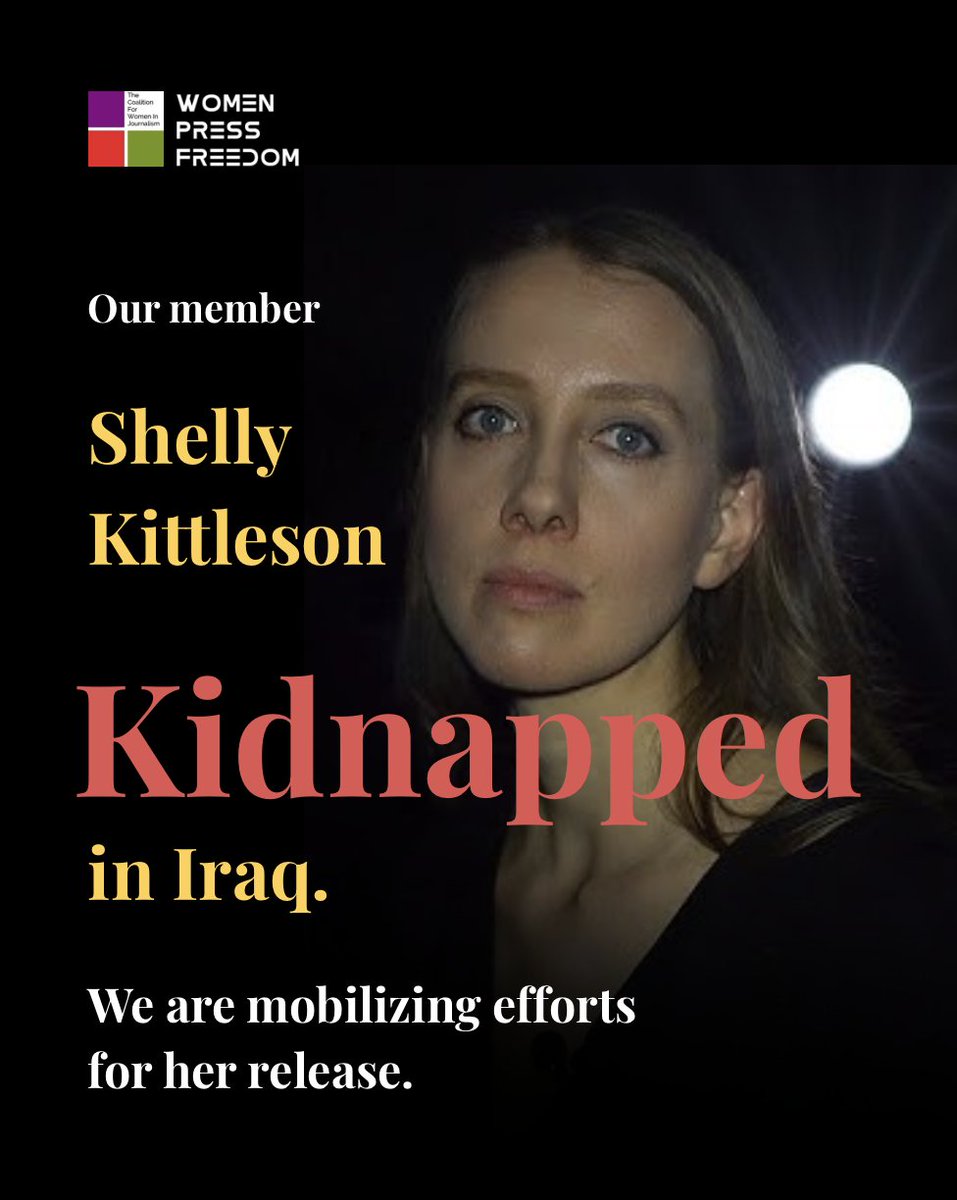
US: Our member, and friend Shelly Kittleson was wrongfully abducted in Baghdad, on March 31st, 2026. We are closely involved in advocacy and support for her release. Read our full statement here.
https://t.co/rkExRLe2z3
“When we saw her father to give our condolences, he told us: ‘No, I celebrate you. Your friend was martyred on the path to freedom. Be happy that you were her friend. Be happy that there was a hero among you,’” said Sahba’s friend.”
At funerals for Iran's protest dead, families are abandoning Shiite mourning rites and embracing dancing and chanting. A new secular term for the fallen is spreading: “javid naam” ("eternal name"), reports @ntabrizy for @newlinesmag. https://t.co/haj7JClofo
A historic moment in France for the Yezidi people 🇫🇷
The court has found Sabri Essid guilty of genocide, crimes against humanity, and complicity in these crimes, committed against Yezidi women and children, and sentenced him to life imprisonment. 1/4
Hengaw confirms that at least 511 civilians have been killed, including 120 minors and 160 women.
The highest number of civilian casualties has been recorded in Hormozgan Province, where a deadly attack on the “Shajareh Tayyebeh” school in Minab killed a large number of elementary school girls.
Additional civilian deaths, including dozens of women and children, have been documented in Tehran, Kurdistan (Sanandaj), Kermanshah, Fars, Razavi Khorasan, Qazvin, Alborz, Ilam, Markazi, Lorestan, West Azerbaijan (Urmia), and East Azerbaijan.
State media initially reported 167 children killed in the Minab school attack. 18 days after the incident, only 58 victims have been identified, including 48 children and 10 adults.
NEW: Our in-depth investigation finds that US has violated international humanitarian law by failing to take all feasible precautions to avoid civilian harm. US is responsible for the deadly attack on a school in #Minab packed full of children.
US authorities must ensure that their investigation is transparent, thorough, and that the results are made public. https://t.co/L89oJOfK0N
Journalist killings reached a record high in 2025 — the deadliest year since CPJ began collecting data more than three decades ago. Israel was responsible for two in three of these killings. Sudan had the highest number of journalists killed in Africa.
Read CPJ’s #2025KilledReport: https://t.co/MCLQ9uHwpW
Children in Sulaymaniyah's #Bestansur went searching for mushrooms—but found ancient silver coins instead. The discovery led to arrests, investigations, and a court case. Peregraf reveals the full story behind the archaeological find.
#AncientCoins
https://t.co/vypyyftAOC
Air pollution in Iraq is not merely an environmental issue; it is a matter that directly affects human health and dignity. The air people breathe every day carries cumulative health risks that have a direct impact on the right to life and the right to health.
The continued rise in pollution levels, alongside weak environmental oversight and limited accountability, raises legitimate concerns about the commitment to protecting the environment as an essential component of human rights.
National and international standards affirm that living in a safe and healthy environment is not a privilege, but a fundamental right.
This carousel aims to highlight this issue in a responsible and constructive manner, and to encourage its treatment as a national priority that requires practical measures placing human health at the center of public policy.
I was sitting in the clinic on the first morning of the cold wave, the kind of cold that does not merely touch the body but gnaws at the soul. A journalist had written to me earlier, asking about the weather and its effects on patients. I read the message and thought I would answer later. I believed, foolishly, that one could still think calmly in a world like this.
Then I raised my eyes.
Before me sat a woman, silent and exhausted, with two small girls clinging to her. They were dressed in thin clothes, the sort one might wear on a mild spring day, not in the cruelty of winter. Over them hung a jacket so worn and torn that it mocked the very idea of protection. On their feet were flimsy plastic slippers, the kind meant for tiled bathrooms, now forced to confront mud, cold, and misery. I felt a strange shame for my own shoes.
I took the hand of one of the girls and placed it on the table. Her fingers were small and delicate, still belonging to a child who should have been learning to draw or to write her name. Instead, they were wounded. The skin was broken. The injuries were deep despite their size and dirty despite their simplicity. They resembled disease, yes, but not a disease I had learned about, not one with a Latin name that could be explained away.
As I examined her hand, she spoke.
She said that while she was sleeping in the tent the night before, rats had eaten her fingers.
She did not cry. She did not dramatize. She stated it as one might state that it had rained, or that the night had been cold. And because the mind rebels when confronted with absolute obscenity, I asked her again, almost angrily, almost begging reality to contradict itself.
“Rats?”
“Yes,” she replied at once, surprised by my surprise.
In that instant, something inside me collapsed. Not slowly, not philosophically, but violently. The world shrank and became cramped and airless, as though God Himself had stepped back to avoid witnessing what His creation had become. I had read about suffering. I had studied it. I had admired its descriptions in books. But this was not suffering. This was humiliation elevated to a principle of existence.
A rat. A living creature driven by hunger and filth, gnawing on the fingers of a sleeping child. And the greater horror was not the rat. It was that this act had become ordinary. That the child found my disbelief strange. That the universe had trained her to accept the unacceptable.
I wanted to scream. I wanted to accuse someone, anyone. Humanity, governments, history, God. But there was no one to accuse. There was only the child’s hand resting quietly on the table.
I realized then that I did not know what to do. No textbook had prepared me for this. No lecture, no exam, no brilliant professor had ever spoken of rats eating children alive while they slept. And even if such a chapter had existed, I am certain I would have skipped it. Who could read such a thing and still believe they lived in a civilized world?
This was not poverty. This was not war. This was moral collapse.
Later, when I remembered the journalist’s question about the cold wave and its impact, I almost laughed. To answer such a question requires no intellect, no statistics, no expert commentary. One must simply walk through the streets of Gaza for an hour. One must look carefully and honestly, without averting the eyes.
The answer will be there, breathing, bleeding, and waiting quietly for someone to finally admit what this world has allowed itself to become.
#WoundedGaza