Up to 20 percent of Iraq’s public funds have been lost to corruption, a UNDP official in Iraq told Rudaw, as the Baghdad government intensified a sweeping anti-corruption crackdown that has led to the arrest of tens of suspects.
https://t.co/h0BvzJgKMn
Trade flows with Iraq are moving in both directions.
While 100s of oil tankers continue to enter #Syria daily via the Tanf border crossing, 21,000 head of cattle from Brazil also transited Syrian territory en route to Iraq after arriving at Tartus port.
A total of 50,000 head of cattle are expected to follow the same route.
#BREAKING: Iraq’s Integrity Commission says it has arrested 47 suspects, including MPs and senior officials, on corruption charges, following a sweeping early-hours operation on Sunday that saw a rare large-scale security deployment in Baghdad - state media
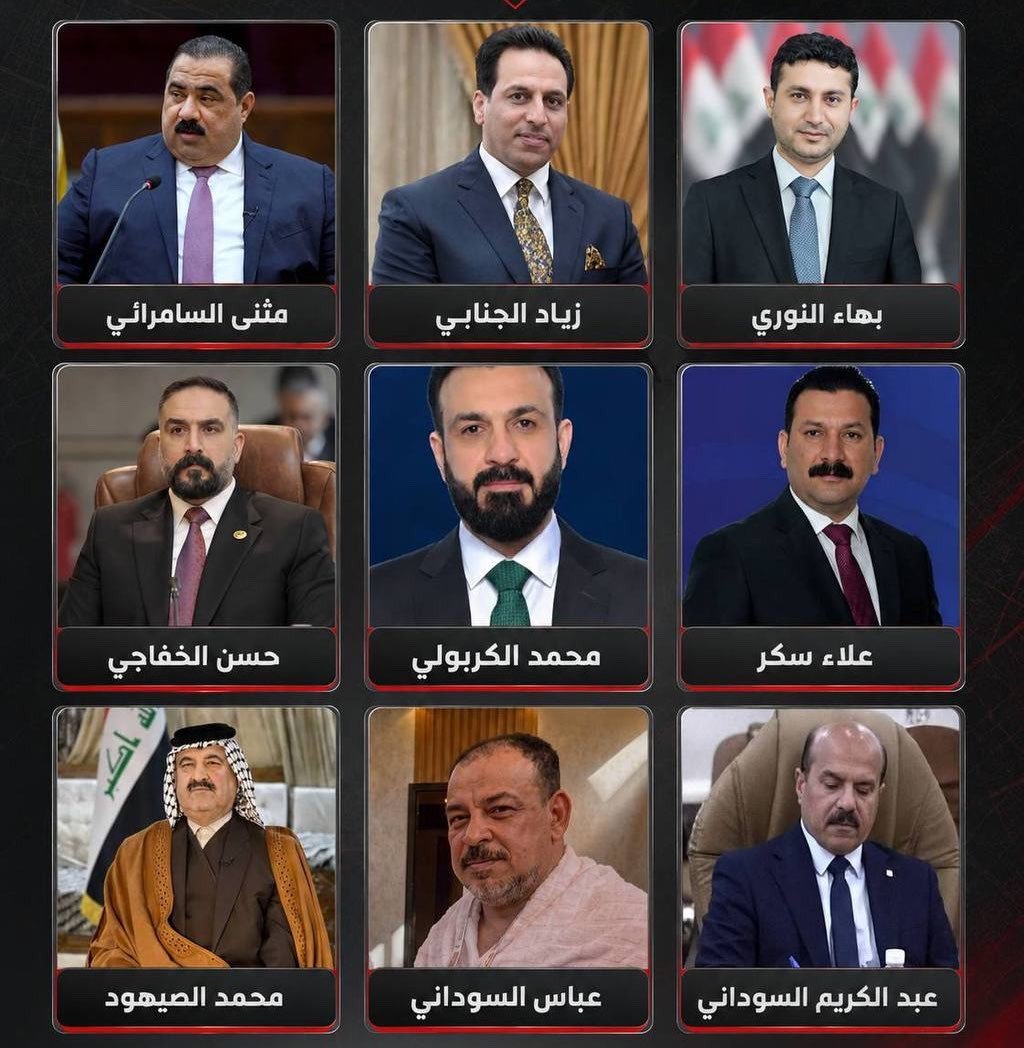
List of prominent politicians' names being circulated, including Muthana Samarrai, leader of the Sunni Azm alliance. Speculation these politicians are being arrested following the corruption investigation that is ballooning after arrest and interrogation of the former deputy minister of oil Adnan Jumaili. Video of significant tank presence in Green Zone -- more senior arrests to come?
🚨🇮🇶 Heavy arrests REPORTED inside the Iraqi capital, Green Zone, today:
- Bahaa Al-Nouri
- Ziad Al-Janabi
- Muthanna Al-Samarrai
- Alaa Sukkar
- Mohammed Al-Karbouli
- Hassan Al-Khafaji
- Abdul Karim Al-Sudani
- Abbas Al-Sudani
- Mohammed Al-Sayhoud
NO OFFICIAL CONFIRMATION YET, but nonetheless, the purge under new PM Ali al-Zaidi is clearly intensifying.
Source: @alrougui / Writer: Claudio
My thoughts on last night's dramatic arrests of up to 20 individuals on corruption charges in Baghdad, including members of parliament, officials & politicians.
▪️Indeed, the arrests are very dramatic and worthy of attention, enhancing the image of the government. But corruption in Iraq is not a matter of individual cases, it is woven into the very functioning of the system. Individual arrests are welcome, but they are not a remedy.
▪️Corruption is not just at the federal/Baghdad level, it is everywhere, more specifically at the local level.
▪️The individuals arrested are well known, but they are not the tier-one leaders.
▪️The possibility that this scenario could lead to the humiliation of the former prime minister, al-Sudani, should not be ruled out. He appears to have crossed certain red lines drawn by the elites.
▪️We should also note that incoming prime ministers want to start with something dramatic to delegitimize their predecessors and build up their own position.
UPDATE | Iraqi security forces are reportedly raiding the headquarters of the Taqaddum Party, the major Sunni political movement led by Mohammed al-Halbousi.
This further suggests that the ongoing arrests may be targeting Halbousi’s political network and other prominent figures within Iraq’s Sunni camp, rather than representing a broad crackdown on pro-Iran actors.
Syria’s White Helmets on their way to Venezuela.
No rescue team on this earth has as much experience with pulling people from under the rubble as these heroes
🇸🇾🇻🇪
Iraq has completed its first-ever cargo transit shipment between Jordan and the UAE, with freight moving from the Port of Aqaba through Iraq's Trebil crossing, overland to Umm Qasr port, then onward by sea to the UAE.
➡️ The milestone repositions Iraq as a regional logistics hub and marks a shift away from oil-only revenues.
➡️ Cargo trips at Iraqi border crossings are projected to double to 2,000 in 2026.
🔗 https://t.co/VumemoR6qB
🚨IMPORTANT: First statement in English from the June 26 anti-Hamas revolution in Gaza: an appeal to international media, human rights organizations, and the international community.
The federal government sent only 42 percent of the Kurdistan Region's total budget allocation – around $38 billion – between 2019 and 2025, the Kurdistan Regional Government's (KRG) finance ministry said on Thursday, adding that some of the disbursements were classified as loans.
https://t.co/gGPDao8mIx
Hamas has launched an industrial‑scale campaign of terror, intimidation, interrogation, and blackmail against thousands of Gazans it suspects of planning to join tomorrow’s June 26 demonstrations against its violent, authoritarian rule. Hospitals across Gaza have been turned into makeshift police stations, interrogation sites, and torture centers. Clan elders are being coerced into issuing statements. Hamas operatives are stealing phones and posting fabricated messages to sabotage the protests. Families are being threatened, people placed under house arrest, and Hamas’s al‑Qassam brigades (the same forces responsible for October 7) have been fully mobilized to reinforce police and intelligence units with explicit shoot‑to‑kill orders.
Meanwhile, the mainstream press is largely absent, apparently because Israel is not involved – so no Jews, no news. And the Western “pro‑Palestine” industry is either celebrating the electoral victories of pro‑Hamas, hard‑left candidates or actively smearing Gaza’s protesters as collaborators undermining the “resistance.” As for the UN, NGOs, and major human‑rights organizations: silence. Not a word for Palestinians risking their lives to say they are done with Hamas’s terror and rule.
This is what the abandonment of Palestinians in Gaza looks like. Shame on all who stay silent in the face of jihadi, ISIS‑like violence against the very people they claim to champion.
Mariam Seif a-Deen, a Lebanese journalist of Shia descent, speaks about an important but rarely discussed phenomenon of Hezbollah's infiltration of Lebanon's Directorate of General Security (DGS). In areas under Hezbollah's dominance (such as the Dahiyeh), citizens who turn to the DGS to address law-and-order problems face retribution from Hezbollah for not turning to the militia. This is a result of Hezbollah's takeover of the DGS stations/HQs throughout their areas of informal (but very real) control. Individuals working within those stations are loyal to Hezbollah and not the Lebanese state.
Recently, the US Treasury levied sanctions against officials working within the Lebanese state, including the Lebanese Armed Forces (LAF) and DGS for sharing intelligence with Hezbollah. https://t.co/EMUusvlB8t
The Lebanese government would not be able to carry out its decision to ban the military activities of Hezbollah as long as its security forces are infiltrated by individuals loyal to Hezbollah rather than the Lebanese state. None of the 3 LAF and DGS officials sanctioned by the US have been removed from their positions.
The #HijabiMan hashtag is going viral, calling out Islam over its gender roles, double standards, child marriage, and the oppression of women.
More hilarious examples in the thread:⤵️
🧵
🚨 The real reason Iran is negotiating SO hard on Lebanon & Hezbollah right now:
Their elite IRGC officers are getting wiped out in Lebanon.
Reports indicate more than 70 top IRGC (Quds Force) commanders and advisors — the people actually running Hezbollah’s operations from behind the scenes — have been killed by Israeli strikes. These aren’t random fighters. These are Iran’s best military minds, embedded deep in Hezbollah’s command structure, rebuilding it after the 2024 hits (Nasrallah, Radwan Force, etc.) and directing the current fight.
Iran spent years (and billions) building Hezbollah as its most powerful proxy. Now that proxy is costing them their own blood at an unsustainable rate. Targeted strikes on IRGC Lebanon Corps officers, hotel meetings in Beirut, and precision ops have turned Lebanon into a graveyard for Iranian military talent.
That’s why Tehran is suddenly treating a Lebanon ceasefire as a red line in U.S. talks. They need to:
• Stop the bleeding of their elite forces
• Save what’s left of Hezbollah’s rebuilt command
• Prevent total collapse of their “Axis of Resistance” influence in the region
• Buy time and extract sanctions relief/oil deals while they still have leverage
Proxy wars feel cheap and deniable… until your own generals start dying in foreign hotels and battlefields. Then the math changes fast.
Iran isn’t negotiating from strength here — they’re negotiating to stop the hemorrhage.
The human (and strategic) cost of their strategy just got very personal for the regime.
De blokkade van de Straat van Hormuz leidt tot plannen voor alternatieve routes. Die nu opeens kansrijker zijn dan ooit, na de geleden verliezen, de dreigende leges en het groeiende wantrouwen jegens Iran.
Gratis, donatie=welkom:
https://t.co/594sOqAE8F
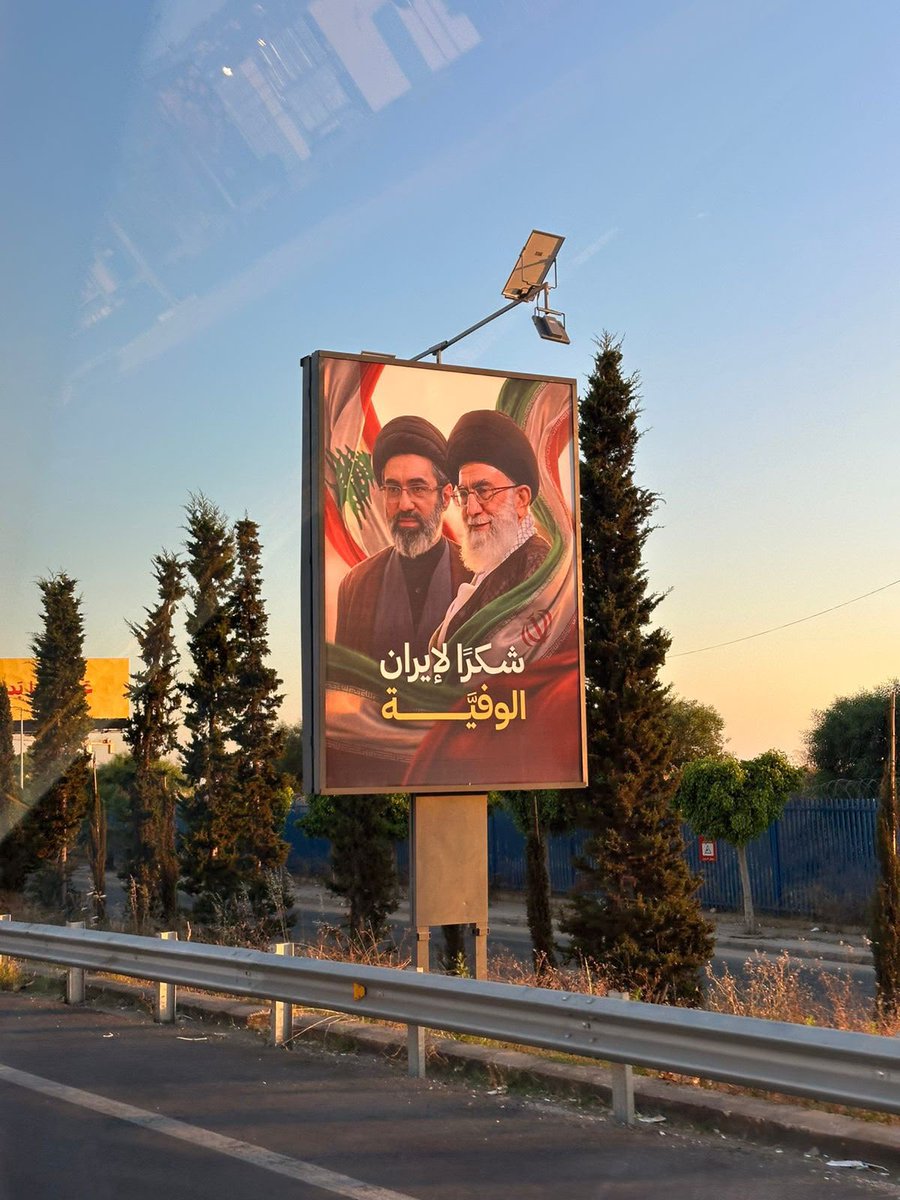
One of the first things that President Aoun and PM Salam did after their election was that they cleaned up the road to the Beirut airport by taking down all of Hezbollah’s Iran propaganda posters.
Today, Hezbollah is signaling to the Lebanese government that it’s back. The militia put up a poster of Iran’s dead tyrant Khamenei and his successor with the comment: Thank you Iran.
There will never be peace in the Middle East without the collapse of Islamic Iran regime.
"Iran faces a stark choice. It can use the Strait of Hormuz either as a tool to make money or as a security guarantee. But it probably can't do both... the moment Iran attempts to monetize passage or otherwise hampers the free flow of commerce through it, it weakens the strongest argument against war: the associated cost of attacking Iran." https://t.co/ROg7LbrxXf
🚨 Hezbollah recruitment ads are now appearing in Tehran, offering salaries of around $1,000 per month - a substantial amount given the collapse of Iran’s currency.
The obvious question is: why is Hezbollah recruiting in Iran?
For decades, Hezbollah relied primarily on Lebanon’s Shiite population for manpower. But after years of fighting in Syria and repeated wars with Israel, the organization appears to be facing new challenges.
Israel has inflicted significant damage on Hezbollah’s leadership, infrastructure, and military capabilities.
If Hezbollah is now recruiting on the streets of Tehran, it raises serious questions about the state of its ranks and its ability to replenish losses from within Lebanon alone.
For an organization that once projected strength across the region, looking to Iran for recruits may be a sign of deeper problems beneath the surface.